

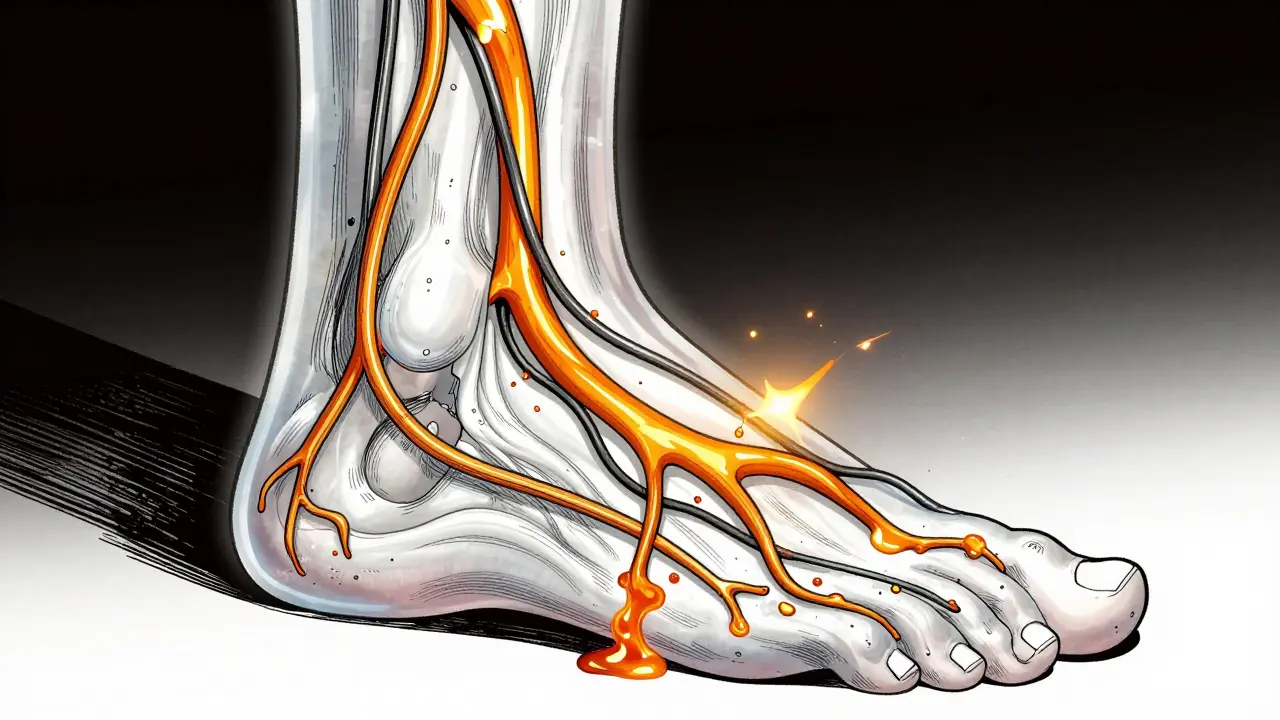
Imagine walking on pebbles when your feet are bare. Or feeling a sudden, sharp electric shock shoot up your leg while you’re just sitting there watching TV. For millions of people living with diabetes, this isn’t a nightmare-it’s their daily reality. This is diabetic neuropathy, a condition where high blood sugar slowly damages the nerves, turning everyday sensations into sources of agony.
You might be wondering if there’s any hope for relief. The short answer is yes. While we can’t always reverse severe nerve damage completely, we have powerful tools to stop it from getting worse and significant strategies to manage the pain. It’s not about waiting for a miracle cure; it’s about taking control through a mix of strict glucose management, targeted medications, and lifestyle shifts.
The Root Cause: Why High Blood Sugar Hurts Your Nerves
To fix the problem, you first need to understand what’s breaking. Diabetic peripheral neuropathy (DPN) is the most common form of nerve damage in diabetes. Think of your nerves like electrical wires. When your blood glucose levels stay too high for too long, the sugar acts like a corrosive acid. It eats away at the protective coating around these wires-the myelin sheath-and damages the nerve fibers themselves.
This damage usually starts in the longest nerves first, which means your feet and legs feel it before your hands or arms. According to the National Institute of Neurological Disorders and Stroke, roughly 60-70% of people with diabetes develop some form of this nerve damage. Of those, about 16-26% suffer from painful symptoms that disrupt sleep, mood, and mobility.
The good news? You can slow down this corrosion. The Diabetes Control and Complications Trial (DCCT) showed that keeping your HbA1c levels below 7% (53 mmol/mol) can reduce the risk of neuropathy progression by up to 60%. It’s the single most effective thing you can do to protect your nerves.
First-Line Medications: What Actually Works?
When pain becomes unmanageable, medication is often necessary. But here’s the catch: standard painkillers like ibuprofen or acetaminophen rarely work for nerve pain. They target inflammation or general pain signals, but they don’t touch the faulty electrical firing happening in your damaged nerves.
Instead, doctors look to specific classes of drugs that calm overactive nerves:
- Duloxetine (Cymbalta): Originally an antidepressant, this SNRI (serotonin-norepinephrine reuptake inhibitor) is FDA-approved for diabetic neuropathy. In clinical trials, it helped about 35% of patients achieve a 50% reduction in pain, compared to just 18% on a placebo. It works by boosting chemicals in the brain that help block pain signals.
- Pregabalin (Lyrica): An anticonvulsant that calms the nervous system. It’s also FDA-approved for this condition. Studies show it helps 30-40% of patients cut their pain in half. However, side effects like dizziness, drowsiness, and weight gain are common, so starting with a low dose is key.
- Amitriptyline: A tricyclic antidepressant that has been used for decades. It can be very effective-some studies show higher pain reduction rates than newer drugs-but it comes with heavier side effects, including dry mouth, constipation, and sedation. It’s often avoided in older adults due to fall risks.
If these first-line options don’t give you enough relief, doctors might move to second-line treatments like tramadol or tapentadol. These are opioid-like medications. While they can provide moderate pain relief (helping 40-50% of patients), they carry a risk of dependence and addiction. The CDC notes that 8-12% of long-term users develop opioid use disorder, so they are generally reserved for severe cases where other treatments fail.
Topical and Interventional Options: Targeted Relief
If you want to avoid systemic side effects like drowsiness or nausea, topical treatments might be your best bet. These apply directly to the skin over the painful area.
Capsaicin 8% Patch (Qutenza): Derived from chili peppers, this patch blocks pain signals from reaching the brain. A 12-week trial showed that 40% of patients experienced a 30% reduction in pain. The application can sting initially, but the relief can last for weeks after a single treatment.
Lidocaine Patches: These numb the area locally and are great for localized pain without affecting the rest of your body. They are particularly useful if you have multiple medical conditions and can’t take many oral medications.
For those who haven’t found relief with pills or patches, interventional procedures are gaining traction:
- Nerve Blocks: Injecting local anesthetics near affected nerves provides immediate but temporary relief, typically lasting 2-6 weeks.
- Peripheral Nerve Stimulation (PNS): A small device is implanted to deliver electrical impulses that modulate pain signals. This is more invasive but offers longer-term management.
- Spinal Cord Stimulation: Emerging research suggests this not only relieves pain but may even improve sensation in patients with long-term numbness, offering a potential shift from just symptom management to functional restoration.
| Treatment Type | Key Benefit | Main Drawback | Best For |
|---|---|---|---|
| Duloxetine | FDA-approved, treats anxiety/depression too | Nausea, dry mouth | Patients with comorbid depression |
| Pregabalin | Fast onset, widely available | Weight gain, dizziness | Generalized burning pain |
| Capsaicin Patch | No systemic side effects | Burning sensation during application | Elderly patients, localized pain |
| Tramadol | Stronger pain relief | Addiction risk, tolerance buildup | Severe, refractory pain (short-term) |
Lifestyle Changes That Protect Your Nerves
Medication manages the symptoms, but lifestyle changes address the cause. You can’t out-medicate poor blood sugar control. Here is how to build a defense plan:
- Glycemic Control: Aim for fasting glucose between 80-130 mg/dL and post-meal levels under 180 mg/dL. Consistency matters more than perfection. Use continuous glucose monitors if possible to see real-time data.
- Anti-Inflammatory Diet: Reduce processed foods and sugars. Focus on fruits, vegetables, whole grains, and lean proteins. Omega-3 fatty acids from fish or flaxseed can help reduce inflammation that exacerbates nerve pain.
- Gentle Exercise: Walking, swimming, or cycling for 30 minutes daily improves blood flow to the nerves. Better circulation delivers oxygen and nutrients that help repair nerve tissue. Start slow if pain limits movement.
- Foot Care: Inspect your feet daily for cuts, blisters, or redness. Loss of sensation means you might not feel an injury, which can lead to serious infections. Wear well-fitted shoes and never walk barefoot.
- Stress Management: Chronic stress raises cortisol, which can spike blood sugar. Techniques like mindfulness, deep breathing, or yoga can lower stress and indirectly help nerve health.

What to Expect: Realistic Timelines
Healing nerve damage is a marathon, not a sprint. If you recently started controlling your blood sugar, you might notice improvements within one year. The Cleveland Clinic notes that mild symptoms like numbness or tingling may fade as glucose levels stabilize. However, if the neuropathy is severe or long-standing, complete reversal is less likely. The goal then shifts to preventing further loss of function and managing pain effectively.
Be patient with yourself. It often takes trying several different medications or combinations to find what works. Side effects are common barriers, but they often diminish over time or can be managed by adjusting doses. Don’t give up because the first pill didn’t work perfectly.
Frequently Asked Questions
Can diabetic neuropathy be reversed?
Mild cases of diabetic neuropathy can sometimes improve or reverse with strict blood sugar control, especially if caught early. Severe, long-term damage is often permanent, but progression can be halted, and pain can be managed effectively. Improvements in symptoms like numbness may be seen within a year of achieving target glucose levels.
Is gabapentin better than pregabalin for nerve pain?
Both are anticonvulsants used for nerve pain. Pregabalin is FDA-approved specifically for diabetic neuropathy and tends to have a faster onset of action and more predictable absorption. Gabapentin is cheaper and often tried first, but it requires more frequent dosing. Response varies by individual, so one may work better than the other for you.
Why don't regular painkillers like ibuprofen work for neuropathy?
Ibuprofen and similar NSAIDs target inflammation and prostaglandins, which cause typical pain from injuries. Neuropathic pain is caused by malfunctioning nerve signals, not inflammation. Therefore, medications that calm nerve activity (like duloxetine or pregabalin) are required. Long-term NSAID use can also harm kidneys, which are already at risk in diabetes.
How long does it take for duloxetine to start working?
Duloxetine may start providing some pain relief within one to two weeks, but full benefits often take four to six weeks. It’s important to stick with the medication during this initial period, even if you don’t feel immediate change, unless side effects are unbearable.
Are there natural supplements that help with nerve pain?
Alpha-lipoic acid and vitamin B12 (if deficient) have shown some promise in reducing symptoms in small studies. However, evidence is mixed, and they should not replace prescribed treatments. Always consult your doctor before adding supplements, as they can interact with diabetes medications.