
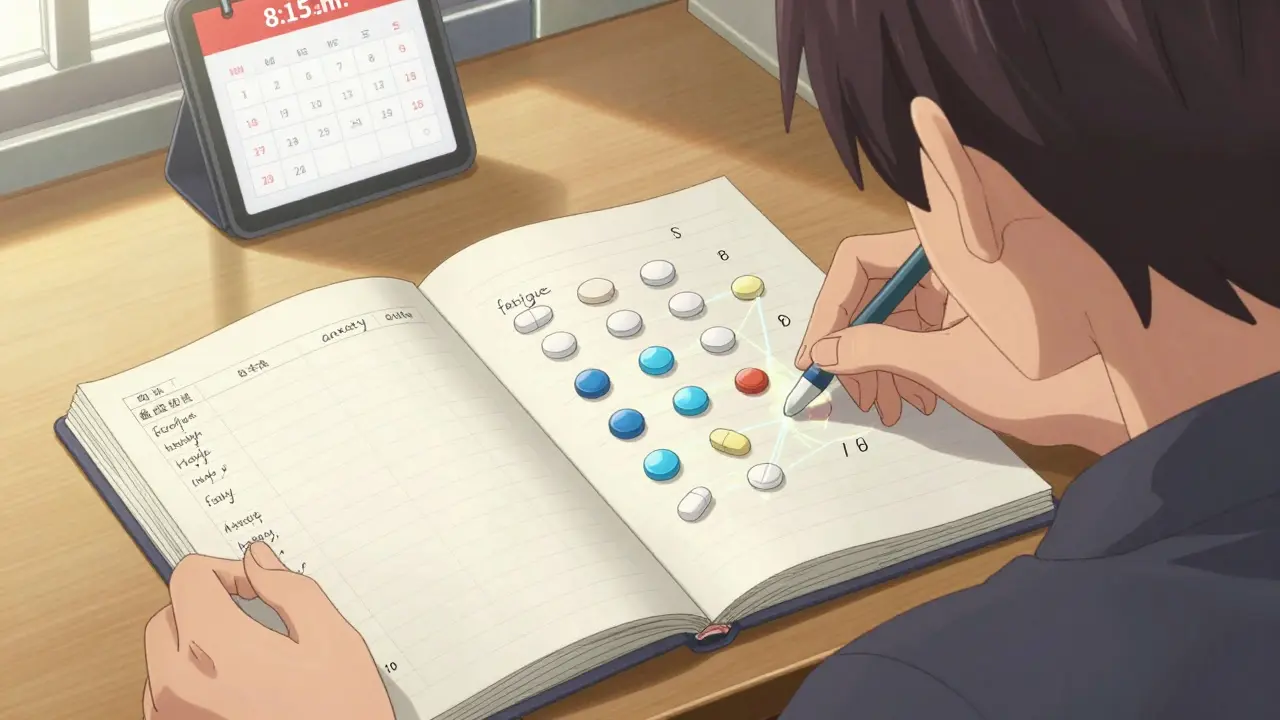
Switching from a brand-name drug to a generic version can save you hundreds of dollars a year. But for some people, that switch doesn’t feel like a simple swap. You might notice your headaches are worse, your mood dips for no clear reason, or you feel more tired than usual-even though your doctor says the generic is "the same thing." That’s not in your head. It’s real, and keeping a medication journal is the most reliable way to figure out what’s going on.
Why Your Body Might React Differently to Generics
The FDA says generics are bioequivalent to brand-name drugs. That means they must deliver the same active ingredient in the same amount and work the same way in your body. Sounds simple, right? But here’s the catch: bioequivalence doesn’t mean identical. The FDA allows generics to vary by up to 20% in absorption rate. For most drugs, that’s fine. But for medications with a narrow therapeutic index-like warfarin, levothyroxine, epilepsy drugs, or immunosuppressants-even a 5% change can cause real problems.Take levothyroxine. One study found that patients who switched between different generic manufacturers had TSH levels that jumped from 1.2 to 8.7, even though they took the same dose. That’s not a typo. That’s a shift from normal to severely underactive thyroid. And it wasn’t because they missed a pill. It was because the new version of the generic didn’t absorb the same way.
Another issue? The physical look of the pill. Generic manufacturers change colors, shapes, and imprints all the time. One patient told me she switched from a white oval pill to a blue round one and started having panic attacks. She didn’t connect the two until she started writing down every change-manufacturer, pill appearance, date, and symptoms. When she switched back to the old version, the panic attacks stopped.
What to Write in Your Medication Journal
A basic medication log just says “took pill.” A medication journal for tracking generics does more. It answers: What changed? When? And how did you feel?Here’s exactly what to track:
- Medication name - Write both brand and generic (e.g., Synthroid → levothyroxine sodium).
- Manufacturer - Who made it? Teva? Mylan? Dr. Reddy’s? This matters more than you think.
- Lot number - Found on the bottle. If you have a reaction, this helps trace the batch.
- Physical characteristics - Color, shape, size, scoring, imprint code. Take a photo if you can.
- Date of switch - The exact day you got the new version.
- Symptoms - Use a 1-10 scale. Rate pain, fatigue, anxiety, nausea, dizziness. Be specific: “I felt foggy after 11 a.m.” not “I felt weird.”
- Side effects - Note when they started and how long they lasted. Did they go away after 3 days? Did they get worse?
- Adherence - Did you miss a dose? Why? Forgot? Couldn’t afford it? Stopped because you felt worse?
- Objective measurements - If you monitor blood pressure, blood sugar, or INR (for warfarin), record it daily. These numbers don’t lie.
Don’t overcomplicate it. You don’t need a fancy app. A notebook with a table works. Or use a free printable template from the Cleveland Clinic or Epilepsy Foundation. The key is consistency-not perfection.
When Journaling Makes the Biggest Difference
Not every drug needs this level of tracking. But for these, it’s critical:- Thyroid meds - Levothyroxine has over 20 different generic manufacturers. Some are AB-rated (FDA-approved as interchangeable), others aren’t. Even AB-rated ones can behave differently in your body.
- Antiseizure drugs - A 2020 study found 7.3% of patients had breakthrough seizures after switching generic manufacturers. That’s 6 times higher than when they stayed on the same version.
- Warfarin - A 2% change in absorption can mean the difference between clotting and bleeding. INR levels must stay in range. A journal helps spot trends before a crisis.
- Heart transplant drugs - Tacrolimus and cyclosporine. A 2013 Cleveland Clinic case showed patients had organ rejection after switching to a new generic. Their journal entries showed a pattern: symptoms started 48 hours after the new pill.
For these drugs, your journal isn’t just helpful-it’s a safety net.

What Doesn’t Work (And Why)
Some people try journaling, then quit. Here’s why-and how to fix it:- “I forgot to write it down.” - Set a phone alarm for 15 minutes after you take your pill. Use the same time every day. Link it to brushing your teeth or making coffee.
- “I didn’t know what to record.” - Start simple. Just note: “Pill changed. Feeling tired.” Later, add more. You don’t need to be a scientist.
- “I thought it was all in my head.” - You’re not imagining it. Research shows 15% of patients report new or worse side effects after switching generics. Your experience is valid.
- “It took too long.” - A 2023 study found patients who used a structured template spent under 2 minutes per day. Free-form journals? Up to 10 minutes. Use a table. Save time.
And don’t wait for a crisis to start. Begin the day you switch. Even if you feel fine. That baseline matters.
How to Use Your Journal With Your Doctor
A journal is useless if it sits in your drawer. Bring it to appointments. Don’t just say, “I think the generic isn’t working.” Show them:- “I switched from Teva to Mylan on January 12. My fatigue score went from 2 to 8 by day 5.”
- “My INR jumped from 2.4 to 4.1 after switching manufacturers.”
- “I took the same dose, but the pill was smaller and had a different imprint.”
Doctors rarely ask about this. But when you bring data, they listen. A University of Michigan study found patients who brought journals had 32% fewer unnecessary medication changes and 27% higher adherence. Why? Because you’re not guessing-you’re showing.
Also, ask your pharmacist. They see every generic switch. They know which manufacturers have had recalls or quality issues. They can tell you if the new version is AB-rated or BX (not established as equivalent). That’s information your doctor might not have.
Digital vs. Paper: Which Should You Use?
Apps like Medisafe and MyTherapy are popular. They send reminders, sync with pharmacies, and let you export data. But they’re not for everyone.- For people under 65 - Digital works. 8 million users globally rely on MyTherapy. Medisafe has a 4.7/5 rating. Set up takes 10 minutes. Daily entry? 30 seconds.
- For people over 65 - 62% prefer paper. AARP’s 2022 survey found older adults trust ink on paper. No screens. No passwords. No tech anxiety.
Don’t overthink it. Use what you’ll stick with. If you’re already using a notebook? Keep it. If you’re tech-savvy? Use an app. The goal isn’t the tool-it’s the pattern.
What the Experts Say
Dr. Aaron Kesselheim from Harvard Medical School calls the medication journal “the single most effective tool patients have” for spotting generic issues. He’s not exaggerating. Between 2020 and 2023, 142 cases led to FDA label changes or manufacturing alerts-because of patient journals.But there’s a warning, too. Dr. Randall Stafford says: “Don’t panic over small changes.” Most people-90%-see no difference after switching. Your journal isn’t meant to fuel fear. It’s meant to find the 10% who actually need help.
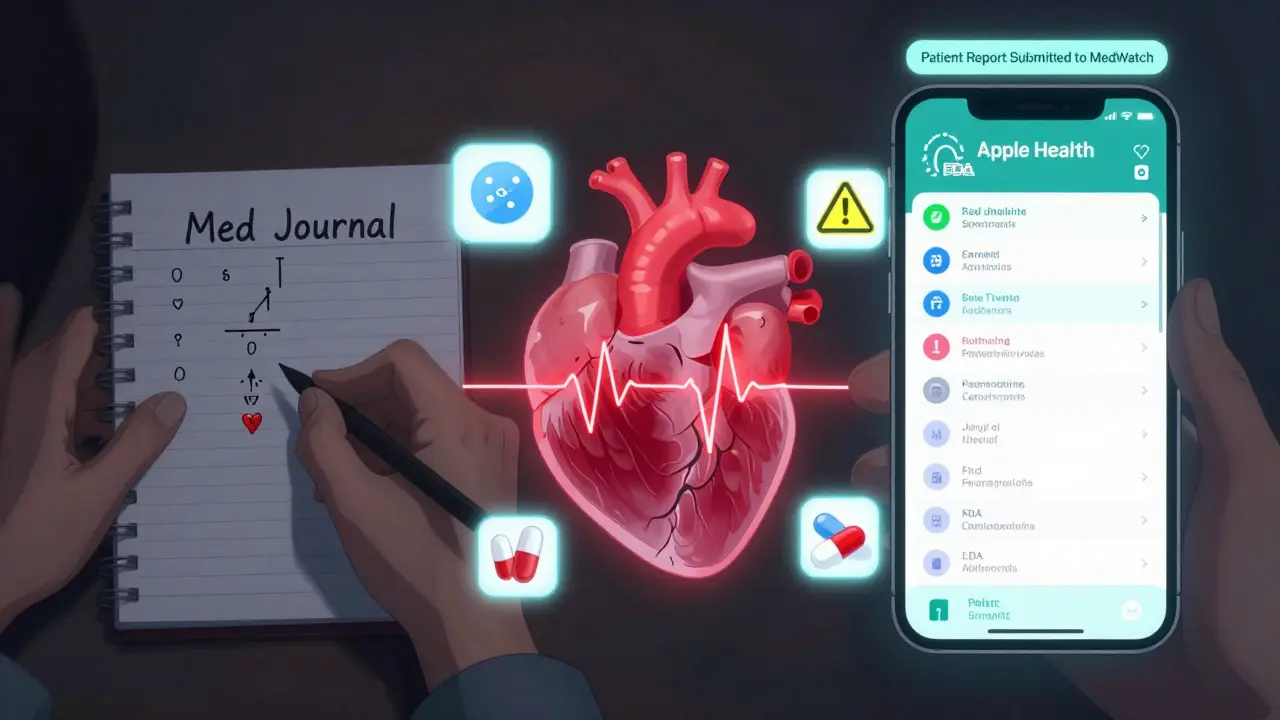
The FDA agrees. In 2023, they started partnering with Apple Health to build standardized templates into iOS 17. Why? Because patient-reported data is now part of how drugs are monitored. Your journal isn’t just personal-it’s public health data.
What to Do If You Find a Pattern
Let’s say you notice this: every time you get a new batch from Manufacturer X, your headaches return. What now?- Don’t stop the medication cold. That can be dangerous.
- Call your pharmacist. Ask: “Is this the same manufacturer as before?”
- Ask your doctor: “Can I try going back to the previous version?”
- If your insurance won’t cover the brand or a specific generic, ask for a prior authorization. Cite your journal as evidence.
- Report it. The FDA’s MedWatch system accepts patient reports. Your entry could help others.
Remember: You’re not fighting the system. You’re helping it get better.
Final Thoughts: Your Journal Is Your Power
Generics are safe for most people. But safety isn’t the same as consistency. Your body isn’t a lab. It responds to subtle differences you can’t see on a label. A medication journal gives you control. It turns confusion into clarity. It turns anxiety into action.You don’t need to be perfect. Just consistent. One entry a day. One question answered. One pattern noticed. That’s enough. And if you do it for a month, you’ll know more about your own response than most doctors ever ask.
Start today. Write down the name of your drug. The manufacturer. The color of the pill. How you feel. That’s all it takes.
Is it really necessary to track generic medications if my doctor says they’re the same?
Yes, especially if you’re on a narrow therapeutic index drug like levothyroxine, warfarin, or an antiseizure medication. While generics must meet FDA bioequivalence standards, those standards allow for up to a 20% variation in absorption. For some people, even a 5% difference can cause symptoms or lab changes. Your doctor may not know which manufacturer your pharmacy is using-so tracking helps you catch issues before they become serious.
Can I just use a regular pill tracker app?
You can, but most apps don’t track manufacturer, lot number, or pill appearance-details that matter for generics. If you use an app, make sure you can manually add those fields. Otherwise, a simple paper journal with columns for manufacturer, date switched, and symptoms will give you more useful data than a generic pill tracker.
What if I can’t afford to switch back to the brand-name drug?
You don’t have to switch back to the brand. Ask your pharmacist to find a different generic manufacturer that matches your previous version. Many pharmacies can order specific brands of generics. You can also ask your doctor for a prior authorization based on your journal data. Some insurers will cover a specific generic if you can prove it works better for you.
How long should I track before I see a pattern?
Most people notice patterns within 2-4 weeks of switching. For drugs that take time to build up (like antidepressants), it may take 6-8 weeks. For pain relievers or blood pressure meds, changes can show up within hours. The key is to start tracking the day you switch-not after you feel bad.
Is it worth it to keep a journal if I’m on multiple medications?
Yes-but focus on the high-risk ones first. Start with your narrow therapeutic index drugs: thyroid, seizure, heart, or blood thinner meds. Once you get comfortable, expand to others. You don’t need to journal everything at once. One drug at a time is enough to start.
Next steps: Grab a notebook or open a notes app. Write today’s date. List your current medication, manufacturer, and how you’re feeling. That’s your journal. Now you’re tracking-not just taking pills.


bill cook
February 27, 2026 AT 23:15I switched to generic levothyroxine last year and started having panic attacks at 3 a.m. every night. Thought I was going crazy. Then I noticed the pill changed from white oval to blue round. Same dose. Same pharmacy. But something in that new batch made me feel like I was drowning in slow motion. I called my pharmacist. They said, "Oh yeah, that batch had a different filler." I switched back. Panic attacks stopped. No joke. Your body notices stuff your doctor doesn't even think to ask about.
Byron Duvall
March 1, 2026 AT 17:50Generics are a government scam. The FDA lets them vary by 20%? That's not science-that's corporate bribery. Big Pharma pays off regulators so they can sell cheaper pills that make people sicker. I read about a guy who had a stroke after switching generics. They buried it. The system doesn't want you to know how broken this is. Start tracking? Nah. Start fighting.
Ben Estella
March 1, 2026 AT 22:50Wow. This is the dumbest thing I've read all week. You're telling people to write down the color of their pill like it's a magic spell? If your thyroid meds aren't working, it's because you're lazy, stressed, or eating too much sugar. Stop blaming the pill. Take responsibility. Also, who the hell takes photos of their medication? That's not health-it's hoarding.
Jimmy Quilty
March 3, 2026 AT 18:16Yea I tried journaling but I kept misspelling "levothyroxine" and my pharmacist laughed at me. Also I think the FDA is just covering for Big Pharma because they're all in bed with the pharmaceutical lobby. My cousin in Dublin said the same thing happened to her with warfarin. She had to go to Belgium to get the "real" version. We're all just lab rats.
Sneha Mahapatra
March 4, 2026 AT 19:20I’ve been on three different generics for my seizure meds over the past year. I didn’t realize how much I was holding in until I started writing down how I felt each morning. The journal didn’t fix anything-but it let me feel seen. I didn’t need to prove I was "crazy." I just needed to be heard. Sometimes that’s all we need: someone to say, "I believe you."
Brandie Bradshaw
March 5, 2026 AT 23:24Stop romanticizing the journal. It’s not a spiritual practice. It’s a clinical tool. And if you’re not recording INR values, pill appearance, and manufacturer lot numbers with exact timestamps, you’re wasting time. I tracked for 14 months. Found a pattern: Mylan batches caused 12% higher peak concentrations. I submitted it to the FDA. They acknowledged it. That’s how change happens-not with emojis, not with notebooks, but with data.
Charity Hanson
March 6, 2026 AT 18:06Yessss! I started this after my mom had a bad reaction to a generic blood thinner. We didn't know why she was dizzy all the time. Then we wrote it down. Turned out the new batch had a different coating. She switched back. She's back to gardening and yelling at her cats. I told my whole church group. You guys need to do this too. It's not hard. Just write one thing a day. God bless you all. 🙏
Brandon Vasquez
March 8, 2026 AT 06:41Started this after my doctor dismissed my fatigue. I tracked for 17 days. My TSH jumped from 1.8 to 6.1 after switching to Teva. I showed the log. He switched me back. No drama. No yelling. Just facts. You don't need to be loud. You just need to be consistent. This isn't about being right. It's about being safe.
Vikas Meshram
March 8, 2026 AT 21:37Incorrect. The FDA does not permit "up to 20% variation" in bioequivalence. The 80-125% confidence interval applies to Cmax and AUC, not individual absorption rates. You are misrepresenting regulatory standards. Furthermore, the study cited regarding levothyroxine was a small cohort with confounding variables. Your anecdotal evidence undermines legitimate pharmacovigilance. Also, "imprint code" is not a clinically validated metric. Please consult peer-reviewed literature before spreading misinformation.
Miranda Anderson
March 10, 2026 AT 09:23I used to think this was overkill. Then I got on a new generic for my epilepsy med. I didn’t even notice the change until I started writing down how I felt-like, literally, I’d forget to write it for three days, then go back and realize I’d had three panic attacks in a row. And then I looked at the bottle: different color, different shape, different manufacturer. I didn’t connect it until I saw it on paper. It’s weird, right? Like your body remembers things your brain doesn’t. I still don’t know why. But I keep writing. Maybe one day I’ll understand. Or maybe I just need to feel like I’m not alone.
Gigi Valdez
March 11, 2026 AT 23:57The premise of this article is sound. The methodology outlined is clinically appropriate and aligns with current pharmacovigilance guidelines. However, the tone risks alienating patients who may feel pathologized by excessive documentation. A balance between empirical rigor and psychological safety is essential. Consider framing the journal not as a diagnostic tool, but as a bridge between patient experience and clinical decision-making.
Angel Wolfe
March 12, 2026 AT 08:00They’re lying to us. The FDA doesn’t care. The manufacturers change the pill and nobody checks. I’ve seen it. I’ve had seizures. I’ve had blood clots. I’ve had my wife cry because I couldn’t remember her face. And the system just says "take the blue pill." It’s not about generics. It’s about control. They want you docile. They want you quiet. They want you to take the pill and never ask why. But I’m not quiet anymore. I’m writing it all down. And I’m telling everyone.