
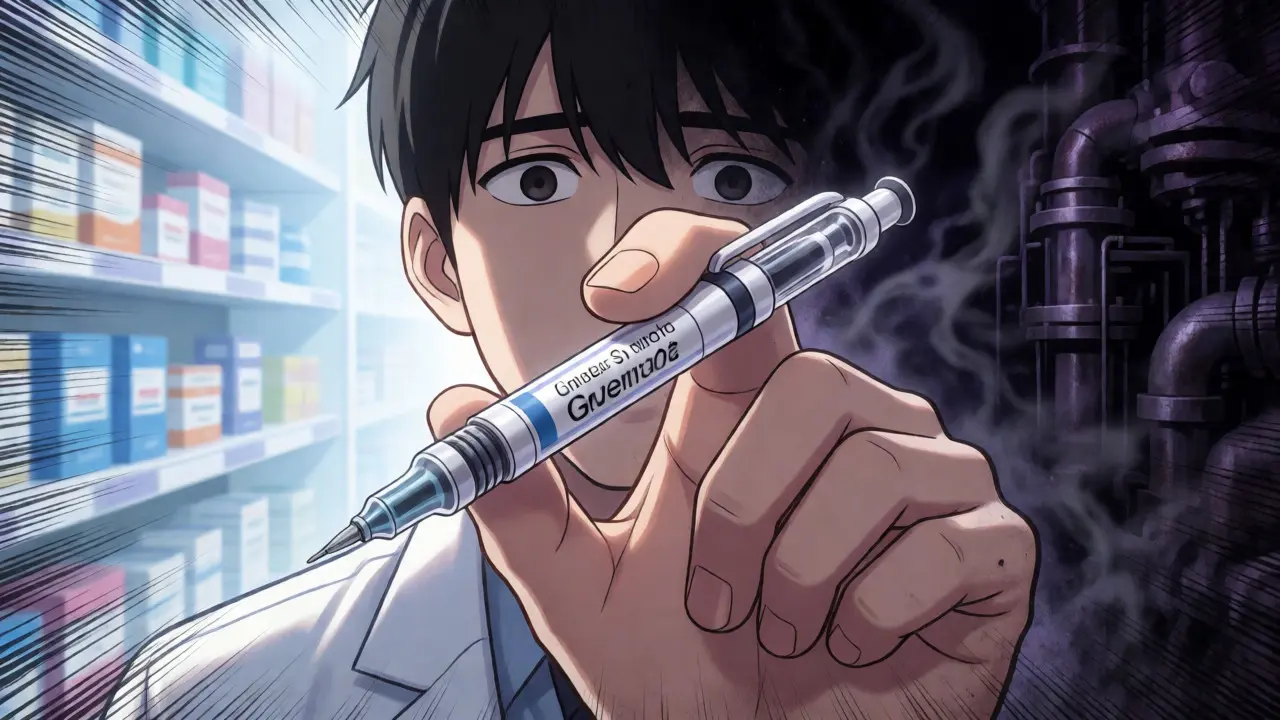
You might think grabbing a weight-loss injection or an allergy pill from a random online shop is a harmless shortcut. But what if that pen contains industrial solvents instead of semaglutide? Or what if your "authentic" Botox was actually produced in a garage in a different continent? Counterfeit medications are not just a nuisance; they are a global public health crisis. In 2024 alone, law enforcement documented over 6,400 incidents of pharmaceutical counterfeiting across 136 countries. That’s thousands of patients unknowingly swallowing fakes.
We’ve seen the headlines about massive seizures, but the stories behind them hold the real lessons. From Interpol’s Operation Pangea XVI to local pharmacy fines, here is what recent cases teach us about keeping our medicine cabinets safe.
The Scale of the Problem Is Bigger Than You Think
It’s easy to assume counterfeit drugs are rare outliers. They aren’t. The Pharmaceutical Security Institute (PSI) reported 2,428 distinct medicines involved in counterfeiting incidents in 2024. These weren’t just cheap painkillers. We’re talking about oncology drugs, biologics, and high-demand treatments like GLP-1 agonists for diabetes and weight loss.
Why the surge? Criminal networks have gotten smarter. They don’t just slap a fake label on a bottle anymore. They mimic packaging down to the font size and hologram placement. In August 2025, U.S. Customs and Border Protection (CBP) intercepted nearly 17,000 counterfeit pre-filled injectable pens. Most came from Hong Kong and China, destined for homes in 40 states. This wasn’t a warehouse bulk buy; these were small parcels sent directly to consumers, bypassing traditional pharmacy checks.
Case Study: The Ozempic and GLP-1 Frenzy
If you follow health trends, you know the demand for Ozempic and similar drugs has exploded. Scammers love this chaos. When legitimate supply chains get tight, black markets thrive. The National Association of Boards of Pharmacy (NABP) found that nearly half of illicit sales for these drugs happen on online marketplaces like Etsy, where users often trust seller ratings more than medical advice.
A case in Iowa highlights the danger. A pharmacy was fined $25,000 for selling counterfeit Ozempic. It wasn’t a shady stall; it was a licensed business caught off guard by sophisticated fakes. Patients using these fakes reported severe adverse reactions. Some products contained no active ingredient at all. Others had heavy metals or industrial contaminants. One patient developed severe cellulitis from counterfeit dermal fillers, proving that even cosmetic injectables carry serious medical risks.
Global Enforcement: Operation Pangea XVI
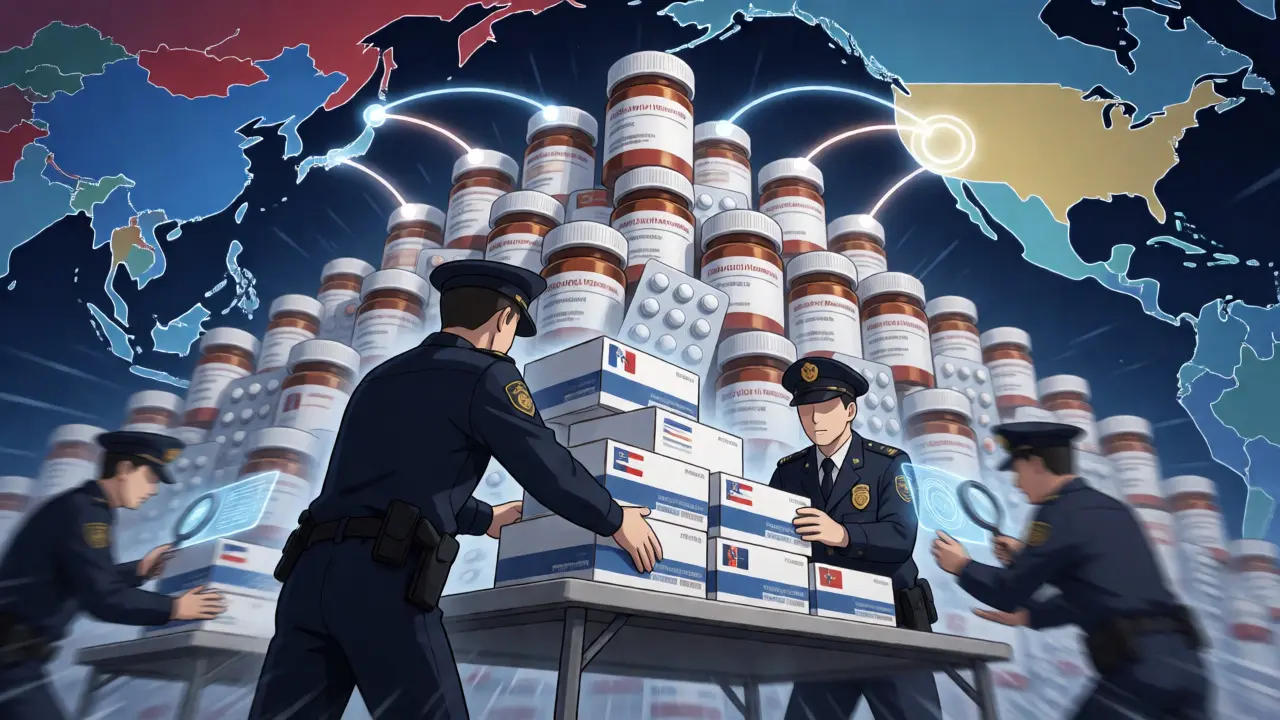
How do authorities fight back? International cooperation is key. Operation Pangea XVI, run by Interpol in 2025, involved 90 countries. The results were staggering: 50.4 million doses of unapproved and counterfeit medicines seized, 769 arrests, and 13,000 illegal websites shut down.
This operation revealed a shift in tactics. Criminals are now "localizing." Instead of shipping finished fake pills from overseas, they ship unassembled parts or empty packaging to warehouses near the end consumer. Then, they assemble the final product locally. This makes detection harder because the components themselves might look legal until they are combined into a fake brand-name drug.
| Metric | Data Point | Source/Context |
|---|---|---|
| Total Incidents (2024) | 6,424 | PSI Global Data |
| Countries Affected | 136 | Includes major economies and developing nations |
| Pangea XVI Doses Seized | 50.4 Million | Interpol Operation, 2025 |
| Top Origin Countries (US Border) | India, China | USTR Special 301 Report, FY 2024 |
| Adverse Event Increase | +43% YoY | FDA MedWatch, H1 2025 |
The Regulatory Gap: Why Some Fakes Slip Through
Here is a frustrating reality: not every bad drug can be seized. Dr. Carmen Catizone from the NABP pointed out a critical loophole. U.S. Customs cannot seize medications that only violate the Federal Food, Drug, and Cosmetic Act (FDCA) unless they are explicitly counterfeit. If a product is simply mislabeled or lacks proper approval but isn't a direct copy of a trademarked brand, it might pass through customs.
This creates a gray area. Many "unapproved" drugs sold online fall into this category. They aren't necessarily fake brands, but they haven't undergone rigorous FDA testing. Consumers often confuse "unapproved" with "safe," assuming that because it looks professional, it must be regulated. It isn’t.
Lessons Learned for Consumers
So, how do you protect yourself? The lessons from these seizures are clear. First, skepticism is your best defense. If a deal seems too good to be true, it probably is. Second, check the source. Legitimate pharmacies require prescriptions for prescription meds. Sites that sell Ozempic without one are red flags.
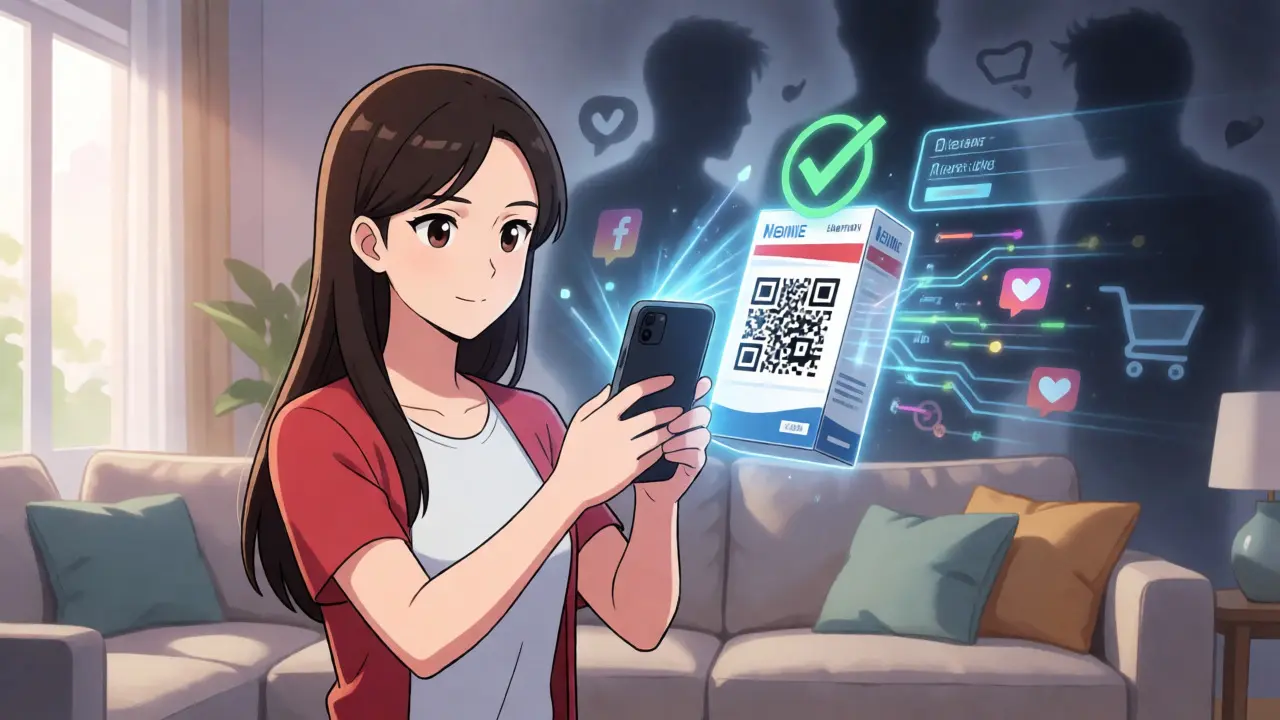
Third, look for authentication features. Major pharmaceutical companies like Pfizer use blockchain-based tracking systems. These pilot programs reduced counterfeit incidents by 37%. While not universal yet, scanning QR codes on packaging can sometimes verify authenticity. If the code doesn’t work or leads to a generic site, stop.
Finally, report suspicious products. The FDA’s MedWatch database saw a 43% increase in adverse event reports linked to suspected counterfeits in early 2025. Your report helps track emerging threats before they become epidemics.
The Future: Technology vs. Criminal Ingenuity
The battle isn’t over. Criminal organizations are adopting new technologies faster than regulators can adapt. They use social media algorithms to target vulnerable demographics. They use drop-shipping models to obscure their location. By 2026, experts predict 78% of counterfeit GLP-1 sales will happen via social media platforms.
However, there is hope. Enhanced international cooperation, like the efforts seen in Pangea XVI, shows that borders aren’t barriers when agencies share data. Stronger authentication tech and stricter enforcement against notorious online markets are underway. The OECD warns that without these steps, counterfeit incidents could rise 15-20% annually. But with vigilance, we can keep the supply chain clean.
What is the most commonly counterfeited medication?
Currently, weight-loss drugs like GLP-1 agonists (e.g., Ozempic, Semaglutide) are among the most frequently counterfeited due to high demand and short supply. Erectile dysfunction medications and Botox also rank highly.
Are all unapproved drugs counterfeit?
No. "Unapproved" means the drug hasn't received regulatory clearance for sale in that country. "Counterfeit" means it is a deliberate imitation of a branded product, usually infringing on trademarks. A drug can be unapproved without being a fake brand, but both pose safety risks.
Which countries produce the most counterfeit drugs?
China accounts for a large portion of global counterfeit seizures overall. However, India has emerged as the top country of origin for counterfeit pharmaceuticals specifically seized at U.S. borders in recent fiscal years.
Can I tell if my medicine is fake by looking at it?
Sometimes, but not always. Modern fakes are sophisticated. Look for spelling errors, blurry logos, or missing lot numbers. However, chemical analysis is often required to detect incorrect ingredients or contaminants like heavy metals.
What should I do if I suspect I bought a counterfeit drug?
Stop taking it immediately. Keep the packaging and contact your pharmacist or doctor. You can also report it to the FDA MedWatch program. Reporting helps authorities track trends and issue warnings to other consumers.

Amy B
September 4, 2026 AT 06:12It is absolutely wild how sophisticated these fakes have gotten. I remember when you could spot a knockoff by the bad font or the misspelled "Vigra" on the box, but now? They are mimicking holograms and batch codes so well that even pharmacists get tripped up sometimes. The fact that they are shipping unassembled parts to local warehouses just to assemble them near the consumer is such a clever, terrifying tactic. It completely bypasses the traditional customs checks for finished goods. We really need better blockchain tracking across the board because relying on QR codes feels like half-measures at this point. If my pen says it has semaglutide but actually contains industrial solvent, that is not just a financial loss, that is potential organ damage waiting to happen. The stats about Etsy being a hotspot for these sales make total sense too, since people trust user reviews more than they trust regulatory bodies these days.
Neil Martin
September 4, 2026 AT 17:56The regulatory gap mentioned here is the most critical failure in our current pharmaceutical oversight framework. You cannot simply rely on Federal Food Drug and Cosmetic Act violations to trigger seizures if the product isn't explicitly trademark infringement. This creates a massive gray market where unapproved biologics slip through with zero scrutiny regarding sterility or potency. The localization strategy described in Operation Pangea XVI demonstrates that criminal networks understand supply chain logistics better than our bureaucratic agencies do. By fragmenting the import process, they exploit jurisdictional blind spots effectively. Until we mandate rigorous chemical analysis at the point of entry rather than just visual inspection, we will continue to see this surge in adverse events linked to counterfeit GLP-1 agonists. It is frankly negligent to allow consumers to act as the final line of defense against industrial contaminants.
Mary Tait
September 4, 2026 AT 20:30India and China are consistently the top sources for these issues, which is why domestic manufacturing needs to be prioritized over cheap imports. We keep sending our money overseas only to have it come back in fake packaging that poisons our citizens. The USTR report clearly highlights India as the primary origin for US border seizures, yet we still treat their exports with kid gloves. American pharmacies should be stocking American-made generics whenever possible to ensure quality control. Relying on international cooperation is nice, but protecting our own borders from substandard pharmaceuticals is a national security issue. We need stricter tariffs and immediate bans on entities that fail FDA inspections repeatedly. Stop letting foreign regulations dictate our safety standards.
Somnath Thombre
September 6, 2026 AT 11:50hey guys great post! its true that india is often blamed but many legit pharma companies are also there providing affordable meds globally. the issue is more about lack of regulation enforcement rather than just geography. i think tech solutions like blockchain can help a lot in tracing the supply chain properly. we need to balance affordability with safety without banning everything imported. hope things improve soon!
Rebecca Makayla Crane
September 6, 2026 AT 22:17Ugh, honestly, seeing people buy Ozempic off Etsy makes me want to scream 🙄. Like, do they not realize that 'seller rating' means nothing when the seller is literally shipping garbage from a garage in Shenzhen? 💅 It’s giving desperate energy. And don’t get me started on the 'wellness influencers' pushing these unapproved supplements as if they’re magic beans. ✨ We have actual medical professionals who are struggling to get enough stock, and then some random dropshipper is selling vials that might contain heavy metals. 🤢 It’s embarrassing. Just go to a doctor, pay your copay, and stop trying to hack biology with Amazon Prime deals. 📦🚫
Jim Bisesi
September 7, 2026 AT 20:56it's all just drama anyway. nobody cares until someone dies. then it's a headline for a week. repeat.
Louis Tarro
September 8, 2026 AT 00:40I appreciate the nuanced take on the distinction between unapproved and counterfeit drugs. As a healthcare worker, I see patients coming in confused about why their 'imported' medication caused a reaction. It is heartbreaking to explain that just because it looks professional does not mean it is safe. The emotional toll on families dealing with unexpected side effects from fakes is immense. We must support the reporting mechanisms like MedWatch because every single data point helps us protect our community. Let us keep our hearts open and our eyes sharp for those around us who might be falling into the trap of convenience over caution. Together, we can advocate for safer practices and better education for our loved ones.
Shu Chowdhury
September 8, 2026 AT 08:16the part about localizing production is scary
criminals adapting faster than regulators
hope the tech catches up
Rob Alderman
September 10, 2026 AT 02:02While the sentiment is understandable, the argument for protectionism ignores the reality of global supply chains. Domestic manufacturing capacity cannot meet current demand spikes overnight. Furthermore, labeling entire nations as sources of fraud overlooks the complex web of intermediaries involved. The focus should remain on authentication technology rather than geopolitical finger-pointing. Quality assurance is a technical problem, not merely a cultural one.
Evelyn Reed
September 11, 2026 AT 17:30totally agree with the jargon-heavy critique earlier
the regulatory loopholes are real
we need systemic change not just individual vigilance
blockchain pilots show promise though
let's stay chill but informed
Jenn Bell
September 11, 2026 AT 18:11This is such an important reminder for everyone! I know it can feel overwhelming to check every little detail, but taking that extra moment to verify a pharmacy's legitimacy can truly save your health. It’s empowering to know that tools like QR codes and official databases exist to help us navigate this. We are all in this together, supporting each other to make smarter choices. Let’s spread the word to friends and family who might be tempted by online shortcuts. Small steps lead to big changes in public health awareness! Keep staying curious and cautious, everyone. We’ve got this!
Aurelio Haney
September 12, 2026 AT 12:06Look, if you aren't checking the NABP VIPPS seal, you're basically gambling with your life 😬. People ignore the basics because they want a deal, but then cry when they end up in the ER. It’s frustrating to watch folks fall for shiny packaging while ignoring proven verification methods. Use your brain before you inject something unknown into your body! 🧠💉
Neil Sahli
September 14, 2026 AT 08:56Sarcastically speaking, yes, because nothing says 'trustworthy healthcare' like buying prescription meds from a guy named 'HealthGuru99' on Facebook Marketplace. But seriously, the resilience of the human spirit to find a cheaper alternative despite the risks is impressive. Maybe if insurance covered these treatments better, we wouldn't have this black market boom. Until then, keep scanning those codes and maybe read a label once in a while. Stay safe out there, warriors.