Corticosteroid Osteoporosis Risk Estimator
Your Parameters
Enter your details to see your risk level and recommended action plan.
Imagine taking a medication that saves your life by calming down an overactive immune system, but quietly eats away at the very structure that holds you up. This is the harsh reality for millions of people prescribed long-term corticosteroids, such as prednisone or methylprednisolone. While these drugs are powerful tools for treating conditions like rheumatoid arthritis, asthma, and lupus, they carry a heavy price tag in the form of bone health. The condition known as Glucocorticoid-Induced Osteoporosis (GIOP) is not just a distant risk; it is the most common form of secondary osteoporosis, striking rapidly and often silently.
If you have been on steroids for more than three months, your bones may already be under attack. Research shows that fracture risk can jump by 70% to 100% within the first six months of starting treatment. That is faster than almost any other type of bone loss. The good news? You do not have to accept this fate. With the right strategy, you can protect your skeleton while still getting the benefits of your medication. Here is how to stop the damage before it starts.
Why Steroids Destroy Bone Density So Fast
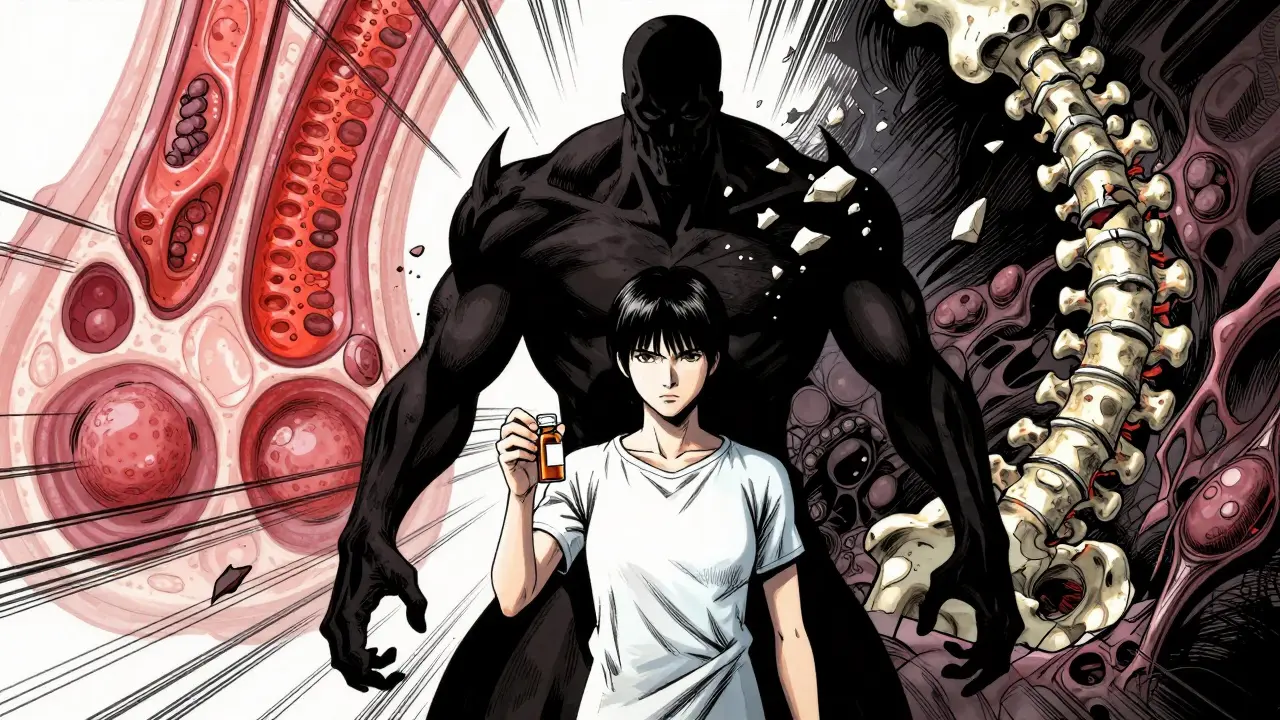
To fight back, you need to understand the enemy. Glucocorticoids do not just slow down bone repair; they actively sabotage the entire bone remodeling process. Think of your bones as a construction site where two teams work in balance: osteoblasts build new bone, and osteoclasts break down old bone. Steroids pull the rug out from under both teams, but in different ways.
First, they inhibit osteoblast function. These builders stop working and even die off prematurely through a process called apoptosis. Without new bone being laid down, your skeleton becomes porous and weak. Second, steroids keep the demolition crew alive longer than necessary. They increase the survival of osteoclasts, leading to excessive bone resorption. The result is a net loss of bone mass that happens incredibly fast.
It gets worse because steroids also mess with your gut and kidneys. They reduce intestinal calcium absorption by about 30% and cause your kidneys to flush more calcium into your urine. Your body tries to compensate by pulling calcium from your bones, further weakening them. Studies show that during the first year of therapy, bone mineral density (BMD) can drop by 5% to 15%, especially in the spine. This rapid decline means waiting until you feel pain or suffer a fracture is too late. Prevention must start day one.
The Foundation: Lifestyle Changes That Actually Work
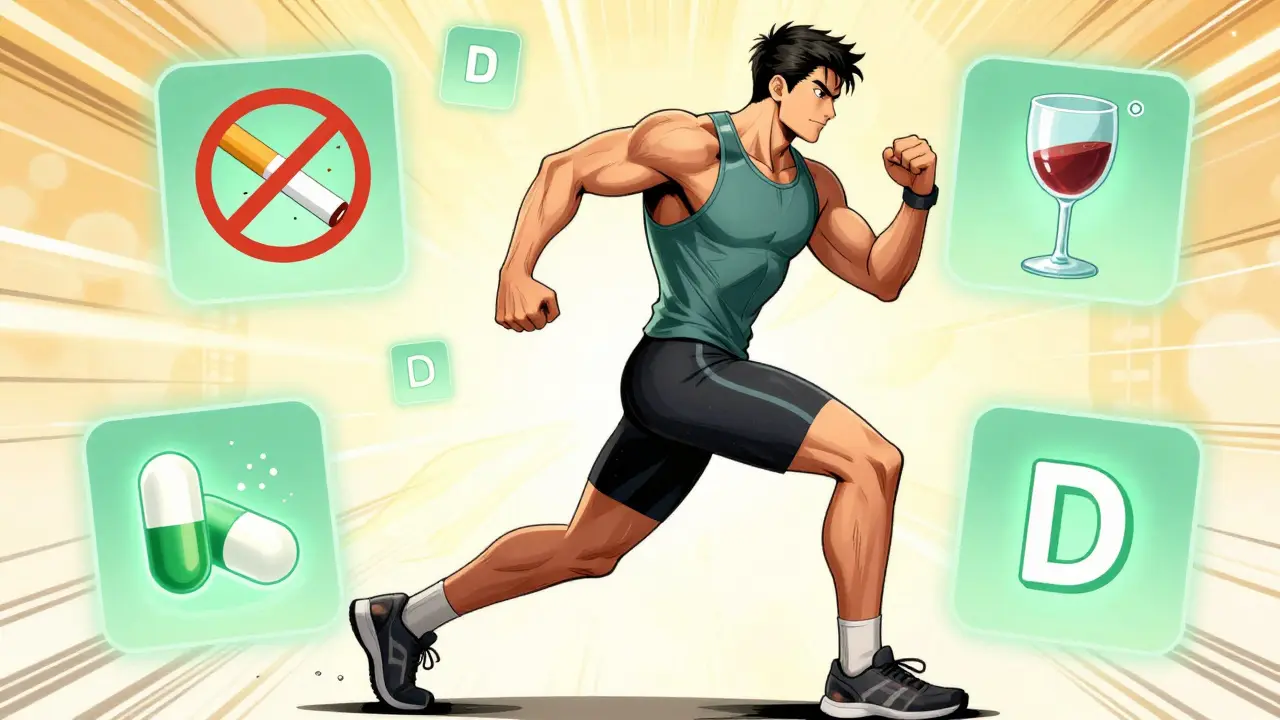
Before reaching for stronger medications, you must lay the groundwork with lifestyle adjustments. Guidelines from the American College of Rheumatology (ACR) emphasize that education and habit changes are non-negotiable parts of care. It sounds simple, but many patients skip this step, assuming pills will do all the work. They won’t.
- Weight-Bearing Exercise: You need to stress your bones gently to tell them to stay strong. Aim for at least 30 minutes of weight-bearing activity on most days. Walking, dancing, or light jogging works well. However, be aware that steroids blunt the skeletal response to exercise by about 25%. This means you might need to push slightly harder or be more consistent than someone not on steroids to see the same benefit.
- Quit Smoking: If you smoke, stopping is one of the best things you can do for your bones. Smoking independently reduces fracture risk by 25% to 30%. When combined with steroids, the damage compounds quickly.
- Limit Alcohol: Keep alcohol consumption to less than 3 units per day. Excessive drinking interferes with calcium balance and increases fall risk, which is dangerous when your bones are fragile.
These steps are not optional extras. They are the baseline defense. Without them, even the strongest drugs will struggle to protect you.
Nutritional Baseline: Calcium and Vitamin D
You cannot build bone without raw materials. Calcium and vitamin D are the universal pharmacological baseline for anyone on long-term steroids. But here is the catch: most people do not get enough from food alone, and supplements need to be dosed correctly.
Target 1,000 to 1,200 mg of calcium daily. Try to get as much as possible from your diet-dairy, leafy greens, fortified plant milks-and use supplements only to fill the gap. Taking massive doses of calcium supplements all at once can lead to kidney stones and digestive issues. Splitting the dose helps absorption.
For vitamin D, aim for 600 to 800 IU daily, though some experts recommend up to 1,000 IU for optimal fracture prevention. The goal is to maintain serum levels above 20 ng/mL. A study published in PMC found that combining 500 IU of vitamin D with 1,000 mg of calcium prevented lumbar spine BMD loss by 0.72% annually compared to placebo groups who lost 2.0%. That difference is significant over five years could mean the difference between a healthy spine and a compression fracture.
When Lifestyle Isn't Enough: Pharmacological Interventions
If you are taking 2.5 mg or more of prednisone equivalent daily for more than three months, you are in the high-risk category. At this point, lifestyle and nutrition alone are rarely sufficient. You likely need prescription medication to halt bone loss. The choice depends on your fracture risk level, which doctors assess using tools like FRAX, adjusted for steroid dose.
| Medication | Type | Dosing | Bone Density Impact | Best For |
|---|---|---|---|---|
| Risedronate | Bisphosphonate | 5 mg daily or 35 mg weekly | Reduces vertebral fractures by 70% | Moderate to high risk; first-line standard |
| Zoledronic Acid | Bisphosphonate (IV) | 5 mg annual infusion | +4.5% lumbar spine BMD at 12 months | Patient adherence issues; avoids stomach upset |
| Denosumab | RANKL Inhibitor | 60 mg subcutaneous every 6 months | +7.0% lumbar spine BMD at 12 months | Kidney impairment; failed bisphosphonates |
| Teriparatide | Anabolic Agent | 20 mcg daily injection | +9.1% lumbar spine BMD at 12 months | Severe osteoporosis (T-score ≤-2.5); prior fractures |
Bisphosphonates, like risedronate, are usually the first line of defense. They work by sticking to the bone surface and blocking the osteoclasts from breaking it down. Risedronate has been shown to cut vertebral fracture risk by 70% in steroid users. If you hate taking daily pills, zoledronic acid offers an annual IV infusion, which is great for adherence but comes with flu-like symptoms after the first dose.
For those with severe bone loss or previous fractures, Teriparatide is a powerhouse. Unlike bisphosphonates that just slow loss, teriparatide actually builds new bone. It produces 2.3 times greater BMD gains than alendronate in high-risk users. However, it requires daily injections and has a lifetime limit of two years due to safety concerns.
The Critical Window: Why Timing Matters
Here is a fact that shocks many patients: 50% of glucocorticoid-related fractures occur within the first year of therapy. Dr. Mary Bouxsein, a leading expert at Harvard Medical School, emphasizes that the "window of opportunity" for prevention is the first three to six months. This is when bone loss is most rapid and aggressive.
Do not wait for your doctor to bring it up. If you are starting a steroid course, ask about a bone density scan (DEXA) immediately. Testing should happen at initiation and then every one to two years if you continue the medication. Early detection allows for early intervention. Waiting until you have lost 15% of your bone density makes recovery much harder and slower.
Overcoming Barriers to Care
Despite clear guidelines, implementation gaps remain huge. Only about 15% of chronic steroid users receive optimal, guideline-concordant care. Why? Communication breakdowns. Often, the specialist prescribing the steroids (like a rheumatologist) assumes the primary care doctor is handling bone health, and vice versa.
Patient misconceptions also play a role. Nearly half of patients believe osteoporosis is an inevitable consequence of steroid therapy, so they don't bother trying to prevent it. This is false. Adherence to calcium and vitamin D drops to 40% after a year, and bisphosphonate adherence falls to 45% due to gastrointestinal side effects.
To fight this, take charge of your own records. Ensure every provider knows you are on steroids and what bone protection measures you are taking. Some health systems now use electronic alerts to flag patients on >2.5 mg of prednisone for over three months, automatically triggering prevention orders. If your system doesn't have this, you must be the alert.
Frequently Asked Questions
How quickly does steroid-induced osteoporosis develop?
It develops very rapidly. Bone mineral density can drop by 5% to 15% in the first year of treatment. Fracture risk increases by 70% to 100% within the first 3 to 6 months of starting therapy. This is why immediate prevention strategies are crucial.
What dose of prednisone puts me at risk for GIOP?
You are considered high-risk if you take 2.5 mg or more of prednisone (or equivalent) daily for three months or longer. The risk doubles if your dose is 7.5 mg or higher per day. Even short bursts of high-dose steroids can impact bone health.
Can I reverse bone loss caused by steroids?
Yes, to an extent. Anabolic agents like Teriparatide can actually rebuild bone density, increasing lumbar spine BMD by up to 9.1% in a year. Bisphosphonates and Denosumab can halt further loss and allow natural remodeling to slowly improve density, typically seeing 3% to 8% improvements within 12 months of appropriate intervention.
Is exercise effective if I am on steroids?
Exercise is still essential, but steroids reduce its effectiveness by about 25%. You may need to be more consistent or slightly more intense with weight-bearing activities like walking or resistance training to achieve the same bone-strengthening benefits as someone not on steroids.
Why are men often overlooked in GIOP prevention?
Studies show significant gender disparities in care. Only 44% of men receiving long-term glucocorticoids get documented osteoporosis prevention interventions, compared to 76% of women. Men often present later with fractures because their baseline bone density is higher, masking the rapid loss caused by steroids.
What is the best medication for preventing steroid fractures?
For most patients, oral bisphosphonates like Risedronate are the first-line choice due to proven efficacy in reducing vertebral fractures by 70%. For those with severe osteoporosis or prior fractures, Teriparatide is superior for building new bone. Zoledronic acid is excellent for patients who struggle with daily pill adherence.