
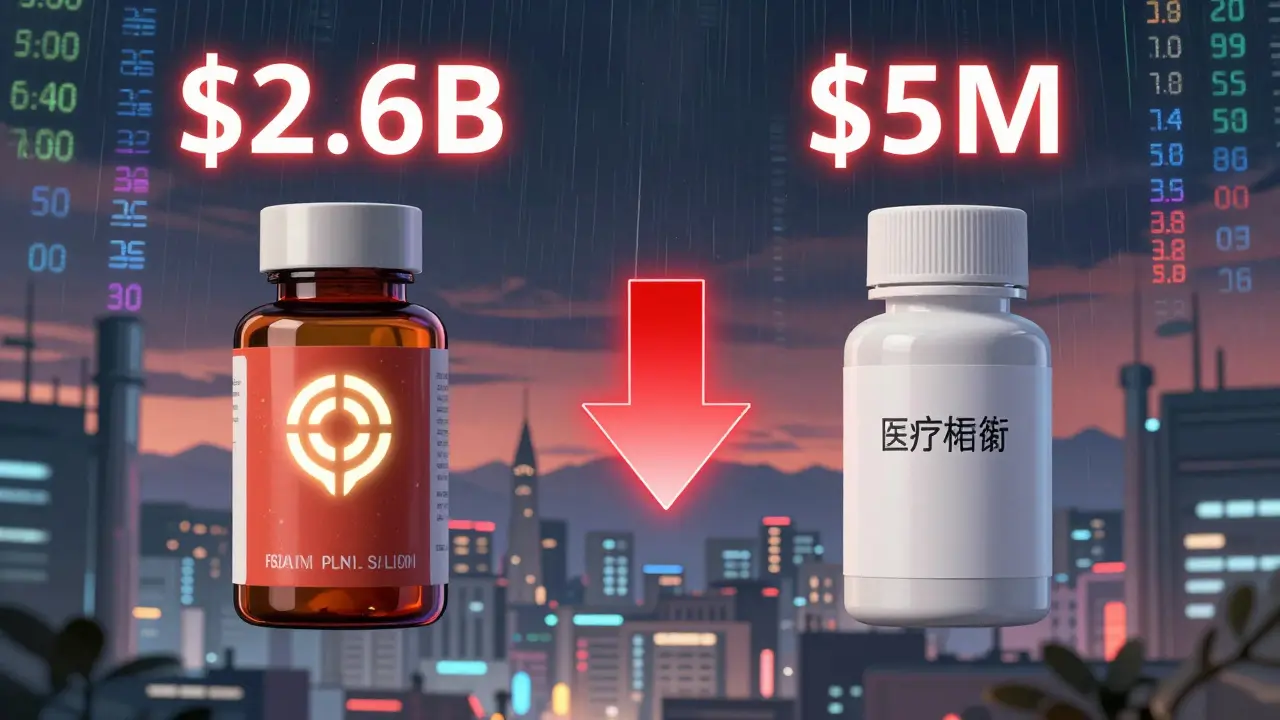
Ever wonder why a bottle of generic ibuprofen costs $5 while the brand-name version next to it costs $25? It’s not magic. It’s math. And the math behind generic drug production is one of the most powerful cost-saving stories in modern healthcare.
Why generics don’t need to spend billions
Branded drugs start with a dream - a new molecule, a patent, a decade of trials. The average cost to bring a new drug to market? Around $2.6 billion. That’s not a typo. It includes 10 to 15 years of research, clinical trials on tens of thousands of patients, and the high risk of failure - most drugs never make it past Phase III. All that cost gets baked into the final price. Generic manufacturers don’t do any of that. They don’t need to. Thanks to the 1984 Hatch-Waxman Act in the U.S., all they have to prove is that their version works the same way as the brand. That’s called bioequivalence. No new safety studies. No massive clinical trials. Just a few hundred volunteers to show their pill dissolves the same way and hits the bloodstream at the same rate. The cost? $2 to $5 million. That’s 99% less than the brand.The real cost breakdown: what you’re actually paying for
When you buy a generic drug, you’re not paying for R&D. You’re paying for four things: the active ingredient, the filler, the packaging, and the quality checks. The biggest chunk - often 50% or more of the total cost - is the Active Pharmaceutical Ingredient (API). This is the actual medicine. For example, in a generic version of metformin, the API is just a few cents per pill. But here’s the catch: API prices swing wildly. If a factory in China shuts down because of a lockdown, or if a key chemical becomes scarce, the price of the API can jump 20% to 30% overnight. That’s why some generics spike in price - not because the manufacturer is greedy, but because their raw material just got expensive. Then there are the excipients - the inactive ingredients that make the pill hold together, dissolve properly, or taste less awful. These are cheap, standardized chemicals. A generic manufacturer buys them in bulk from a handful of suppliers. A branded drugmaker might spend extra to use a fancier coating or slower-release powder. Generics use the bare minimum that works. Quality control is non-negotiable. Every batch of generic pills must meet FDA standards. But here’s the difference: branded companies spend millions on fancy packaging, marketing, and patient support programs. Generics? They put the pill in a plain bottle, slap on a label, and ship it. No TV ads. No free samples. No sales reps visiting doctors. That saves billions.Scale is everything - and it’s brutal
The more you make, the cheaper each pill becomes. For generic manufacturers, every time they double their production volume, their per-unit cost drops by 18%. If they double the volume of a single pill type - say, 10mg lisinopril - the cost per unit can fall by 45%. That’s not theory. That’s what Boston Consulting Group found after analyzing 15 major generic producers. This creates a cutthroat environment. If you’re making 500 million pills a year, you’re in the game. If you’re making 5 billion? You’re probably profitable. But if you’re stuck at 100 million? You’re bleeding money. That’s why so many small generic makers go out of business. And why a few big players - Teva, Sandoz, Mylan - control over half the market. There’s even a sweet spot. Once a factory produces more than 30 to 40 billion oral pills a year, costs start creeping back up. Too much volume strains equipment. Too many SKUs (product types) create chaos. The best manufacturers don’t try to make everything. They focus on a few high-volume drugs and make them as efficiently as possible.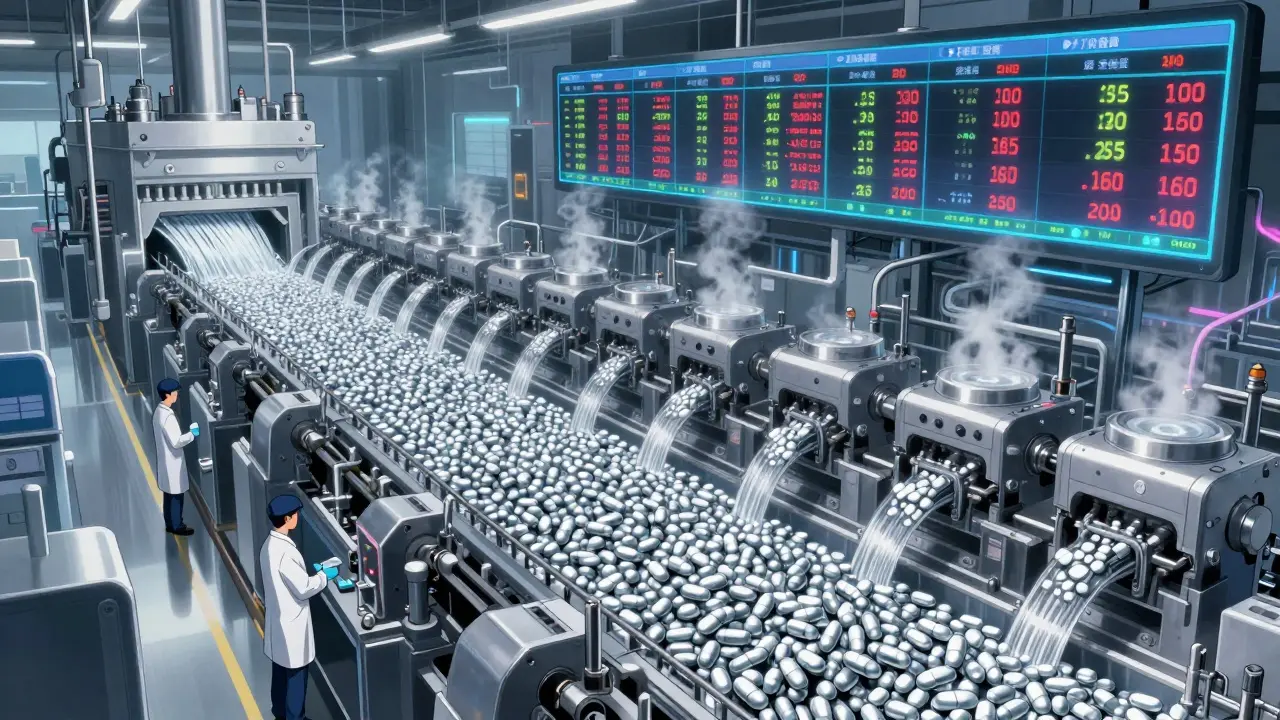
Why generics dominate prescriptions - but not spending
In the U.S., 90% of all prescriptions are filled with generics. That’s 8.9 billion pills a year. But generics only account for 15.8% of total drug spending. Why? Because they’re cheap. A branded drug might cost $100 a month. The generic? $4. Even if you take 10 generic pills a day, your monthly bill is still under $150. Meanwhile, a single branded specialty drug can cost $10,000 a month. This is the paradox: generics save the system money by volume, not by price per pill. A branded drug might make $5 billion in sales. A generic version of that same drug might make $200 million - but it serves 10 times as many people. The numbers don’t lie. According to IQVIA, generics saved the U.S. healthcare system $313 billion in 2022 alone. From 2023 to 2027, they’re projected to save $1.7 trillion. That’s not just a savings. That’s a lifeline for millions of people who can’t afford brand-name drugs.The hidden costs: shortages and supply chain risks
There’s a dark side to this efficiency. When margins are razor-thin - sometimes as low as 5% - there’s no room for error. A single factory failure can trigger a drug shortage. In 2022, there were 350 active drug shortages in the U.S., many of them generics. Why? Because no one wanted to invest in making a low-margin drug unless they were sure they could sell billions of units. Most generic APIs come from India and China. When geopolitical tensions rise, or when a factory gets shut down for safety violations, prices spike and supply vanishes. The FDA is trying to fix this by pushing for more domestic production and diversifying supply chains. But it’s expensive. And in a market where a 1% cost increase can kill profitability, companies won’t spend unless forced.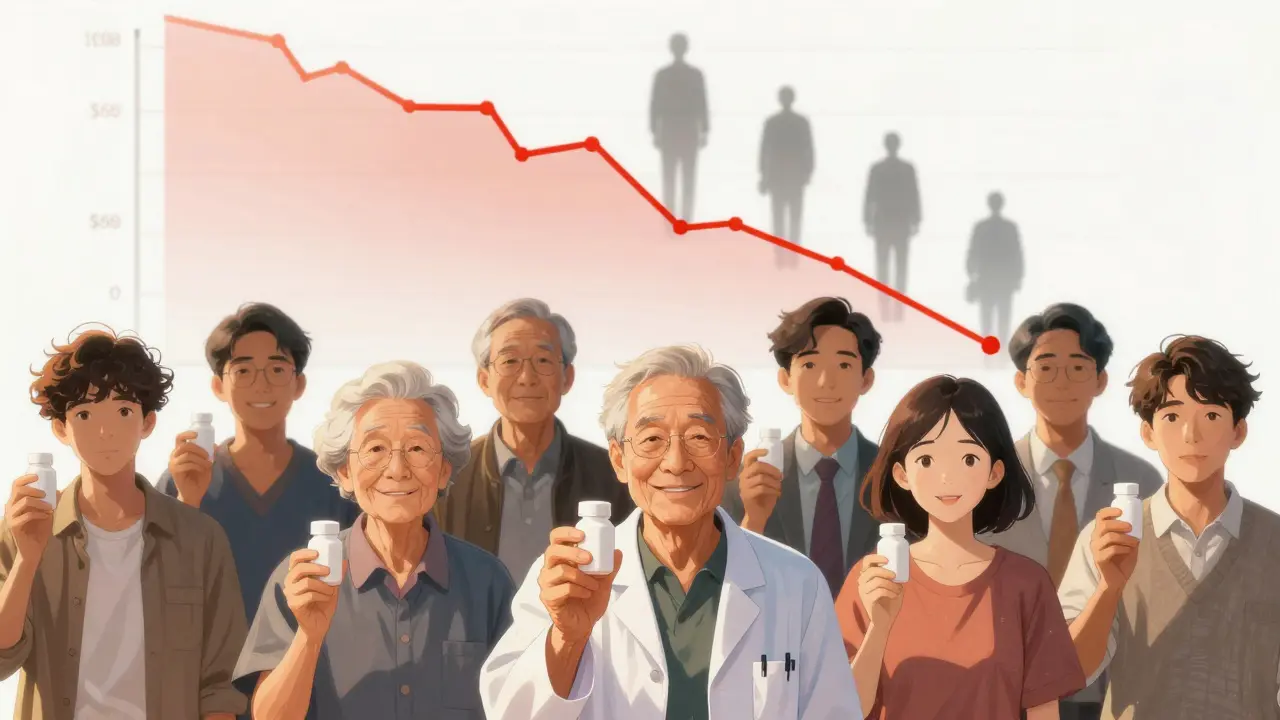
What’s next? Automation, regulation, and biosimilars
The next wave of cost reduction is automation. Continuous manufacturing - where pills are made in one unbroken process instead of batches - is cutting production time and waste. By 2027, the Association for Accessible Medicines predicts automation will reduce generic production costs by another 20% to 25%. The Inflation Reduction Act of 2022 lets Medicare negotiate drug prices. While it mostly targets brand-name drugs, it puts pressure on the entire system. If Medicare starts paying less for a branded drug, the generic version must drop too. That’s already happening with insulin and other high-cost drugs. And then there are biosimilars - the next generation of generics for complex drugs like biologics. They’re harder to make. But the same rules apply: no need to redo clinical trials. Just prove they’re similar. Their production costs are expected to drop 15% every time volume doubles - slightly slower than small-molecule generics, but still a massive win for patients.Final thought: cheaper doesn’t mean worse
Some people still worry that generics are inferior. They’re not. The FDA requires them to be identical in strength, safety, and effectiveness. The only difference? The name on the bottle and the price tag. The real story here isn’t about big pharma versus small manufacturers. It’s about how smart regulation, scale, and ruthless efficiency can make life-saving medicine affordable. Generics aren’t a loophole. They’re a system designed to work - and it’s working. Millions of people take them every day. They get better. They live longer. And they pay a fraction of what they would have paid a decade ago. If you’re on a generic drug, you’re not getting the second-best option. You’re getting the smartest option.Are generic drugs as effective as brand-name drugs?
Yes. The FDA requires generic drugs to have the same active ingredient, strength, dosage form, and route of administration as the brand-name version. They must also be bioequivalent - meaning they work the same way in the body. Thousands of studies confirm that generics perform just as well as brand-name drugs in real-world use.
Why do some generic drugs cost more than others?
Price differences come down to supply and demand. If only one company makes a generic, they can charge more. Once five or six companies start making it, prices drop - sometimes by over 95%. Also, some drugs use rare or hard-to-source active ingredients, which drives up costs. And if a drug is made in small volumes, the per-unit cost stays higher.
Do generic drugs have different side effects?
No. The active ingredient is identical, so side effects are the same. Sometimes people notice differences because the inactive ingredients (fillers, dyes, coatings) vary. These can affect how fast the pill dissolves or how it tastes, but they don’t change how the medicine works. If you feel different on a new generic, talk to your pharmacist - it’s usually not the drug, it’s the filler.
Why are some generic drugs hard to find?
Shortages happen when manufacturing is too profitable to maintain. If a drug has low margins and high production complexity, companies may stop making it unless prices rise. This is common with older, low-cost drugs like antibiotics or thyroid medication. Supply chain issues - like factory closures or raw material shortages - also play a role. The FDA tracks these shortages and works with manufacturers to restore supply.
Can I switch between different generic brands?
Yes. All FDA-approved generics for the same drug are considered interchangeable. But if you’re on a medication where even tiny differences matter - like seizure drugs or blood thinners - your doctor might recommend sticking with one brand. That’s rare, though. For most people, switching generics is safe and saves money.
Will Medicare cover generic drugs?
Yes. Medicare Part D plans cover both brand and generic drugs, but generics usually have much lower copays. In fact, many plans require you to use the generic version unless your doctor says it’s medically necessary. That’s because generics save the program - and you - money.



Katie Mccreary
January 26, 2026 AT 21:12Generics are fine until you get one that makes you feel like your brain is melting. Then you remember: it’s not the drug, it’s the filler. And yeah, I’ve switched brands three times just to not feel like a zombie.
Lance Long
January 27, 2026 AT 23:19Let me tell you something - this is the quiet revolution nobody talks about. Imagine your grandma taking her blood pressure med every day for $3 instead of $120. That’s not a savings. That’s dignity. And it’s because of people who didn’t care about branding, just about keeping people alive. The system’s broken? Maybe. But generics? They’re the duct tape holding it together.
Timothy Davis
January 29, 2026 AT 22:10Actually, the $2.6B figure is misleading - it includes failed drugs that never made it to market, which is a sunk cost fallacy. The real marginal cost per successful drug is closer to $650M. Also, bioequivalence studies aren’t just ‘a few hundred volunteers’ - they’re tightly controlled, double-blind, crossover trials with pharmacokinetic sampling every 30 minutes for 72 hours. Don’t oversimplify. And yes, I’ve reviewed FDA submissions.
fiona vaz
January 31, 2026 AT 17:24I work in a pharmacy. Every day, someone comes in terrified they’re getting ‘fake medicine.’ I hand them the FDA’s bioequivalence report, show them the batch numbers, and watch their shoulders drop. It’s not magic. It’s science. And it’s working. Keep taking your generics. You’re not cheating - you’re being smart.
Sue Latham
January 31, 2026 AT 18:20Ugh, I can’t believe people still think generics are ‘just as good.’ I mean, really? You’re okay with some Chinese factory’s dust in your pill? At least with brand names, you know you’re paying for quality - and a little peace of mind. I’d rather pay $25 and sleep at night.
John Rose
February 2, 2026 AT 11:21This is one of the most underappreciated public health victories in modern history. The Hatch-Waxman Act didn’t just lower prices - it redefined access. And now, with biosimilars entering the market, we’re on the cusp of another leap. The challenge isn’t efficacy - it’s political will to fund domestic manufacturing. We need policy, not panic.
Lexi Karuzis
February 2, 2026 AT 22:06Brittany Fiddes
February 3, 2026 AT 12:35Oh please. America thinks it’s so clever with its generics - but let’s be honest, the UK’s NHS has been doing this properly for decades. We don’t have $25 ibuprofen because we don’t need to. We have a system. You have a free market circus where people are just lucky if they can afford to live. Your ‘smart option’ is a symptom of a broken system. We don’t need cheaper pills - we need better healthcare.