
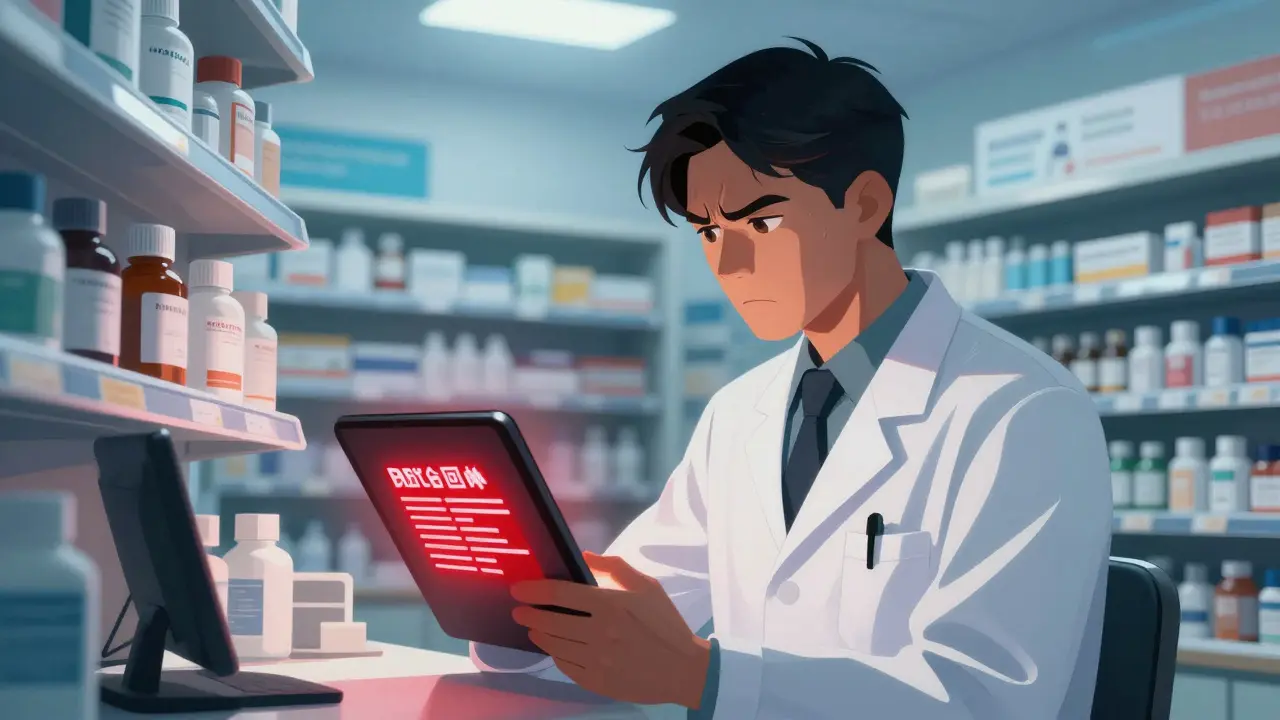
Imagine waking up to find that a medication you or your patient has been taking for months was just recalled due to a manufacturing defect. The panic is real, but the solution lies in a precise, systematic process. Whether you are a pharmacist in a busy hospital or a patient checking your home cabinet, knowing how to verify recall notices isn't just about reading an email-it is about matching specific alphanumeric codes to ensure no dangerous product remains in use.
The core problem is that not every bottle of a specific drug is bad; usually, only certain "lots" or batches are affected. If you miss a single digit during verification, you might either keep a dangerous drug or throw away perfectly good, expensive medication. This guide breaks down the exact steps to confirm if a product is actually affected and how to handle it according to safety standards.
| Key Action | Timeframe (Industry Standard) | Critical Identifier |
|---|---|---|
| Notice Receipt | Within 24 hours | NDC Number |
| Lot Verification | Within 72 hours | Lot/Batch Number |
| Product Removal | Immediate (under 24h) | Expiration Date |
Understanding the Risk: Why Some Recalls Matter More
Before you start scrubbing your inventory, you need to know what you're dealing with. Not all recalls are created equal. The FDA is the primary regulatory body in the US that classifies drug recalls based on the severity of the health risk.
- Class I Recalls: These are the "red alerts." There is a reasonable probability that using the product will cause serious adverse health consequences or death. For these, verification must be 100% accurate and immediate.
- Class II Recalls: These are moderate risks. The product might cause temporary or medically reversible health problems.
- Class III Recalls: These are the lowest risk. The product is unlikely to cause adverse health consequences, but it might violate some labeling or packaging rules.
Why does this matter? Because if you're handling a Class I recall, you cannot just check your computer records. You have to physically verify every single bottle, including those tucked away in emergency kits or satellite clinics.
The 7-Step Verification Process
Professional healthcare facilities follow a strict protocol to ensure no medication slips through the cracks. If you're managing a pharmacy or a clinic, this workflow is your safety net.
- Multi-Channel Monitoring: Don't rely on just one source. Some notices come via email, others by fax or physical mail. The ASHP (American Society of Health-System Pharmacists) warns that relying solely on the US Postal Service is a recipe for disaster.
- Inventory Cross-Referencing: This is the meat of the process. You take the lot numbers provided in the notice and compare them against your National Drug Code (NDC) and inventory logs.
- Immediate Quarantine: Once a match is found, remove the product from all patient care areas within 24 hours. Don't just mark it "do not use"-physically move it to a secure, quarantined area.
- Patient Identification: Check your dispensing records. Which patients received medication from that specific lot? This is where the real safety work happens.
- Sourcing Alternatives: You can't just remove a drug; you need to replace it. Identify a safe alternative product to prevent treatment gaps.
- Safe Return: Follow the manufacturer's instructions to ship the quarantined products back or destroy them as required.
- Full Documentation: If it isn't written down, it didn't happen. Record the date of notification, the exact quantities removed, and every patient you contacted.

How to Match Lot Numbers Without Making Mistakes
Matching lot numbers seems simple until you realize that different manufacturers use different formats. Some use only numbers, while others use a mix of letters and numbers that look nearly identical (like the letter 'O' and the number '0').
To do this right, you need to match four specific data points: the NDC, the Lot Number, the Expiration Date, and the Packaging Size. If the recall notice says "Lot #AB123, 100ml bottle," but you have "Lot #AB123, 50ml bottle," you need to double-check if the recall applies to all sizes or just one.
A major pitfall is the "electronic ghost." Your computer might say you have zero units of a recalled lot, but a bottle might be sitting in a nurse's medication drawer or an unopened emergency crash cart. Expert advice from the FDA suggests that about 23% of recalls involve products that were simply misfiled in the wrong storage location. Physical checks are non-negotiable.
Manual vs. Automated Verification: Which is Better?
Most small clinics still do this by hand-printing a fax and walking through the pharmacy with a highlighter. Large hospitals are moving toward automation. Here is how they stack up based on recent industry data.
| Feature | Manual Verification | Automated Systems (e.g., TruMed) |
|---|---|---|
| Avg. Time per Recall | 4.7 Hours | 1.2 Hours |
| Error Rate | ~18.3% | ~2.1% |
| Reliability | Prone to human oversight | High (99.8% accuracy) |
| Best For | Rural clinics, low volume | Hospitals, high-volume pharmacies |
Automated systems integrate directly with your pharmacy management software. When a recall is issued, the system automatically flags any matching lot numbers in your inventory. However, these systems are expensive and can sometimes produce "false positives," flagging products that aren't actually part of the recall, which can waste a few hours of staff time.
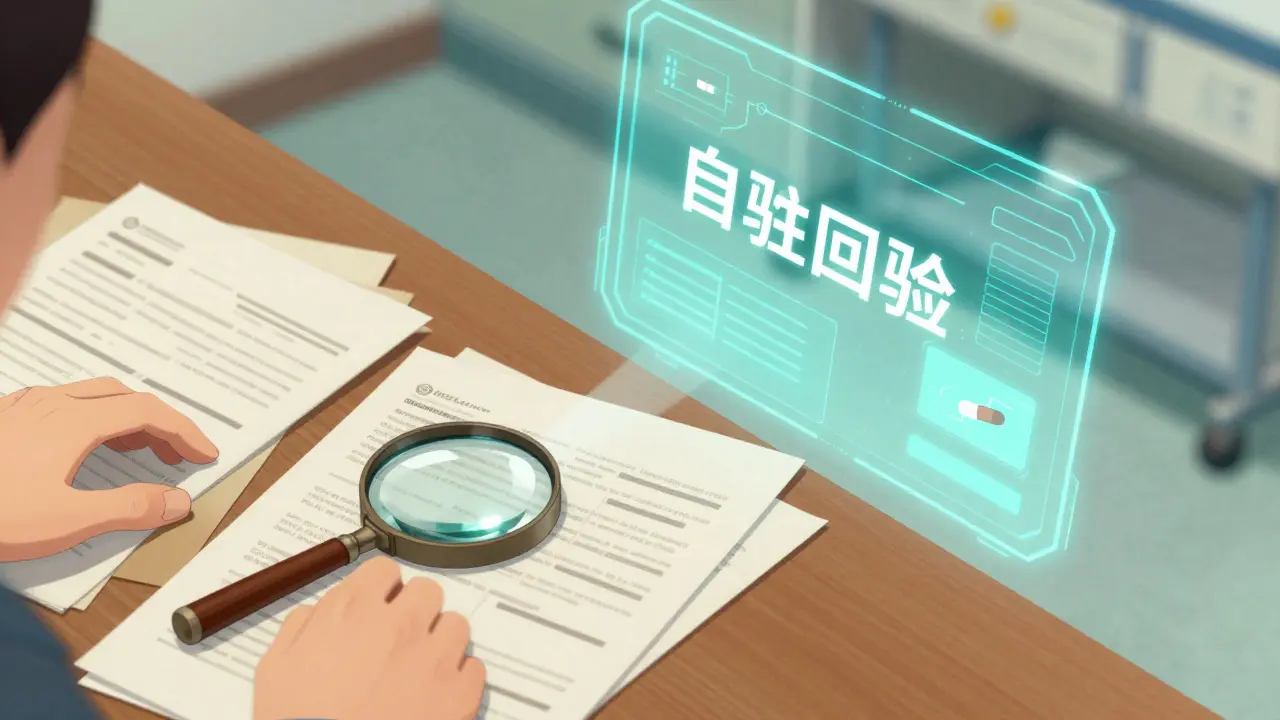
Common Pitfalls to Avoid
Even experienced pharmacists make mistakes during verification. One of the biggest errors is the "Manufacturer Trap." Many facilities wait for the manufacturer to tell them there is a problem. But analysis by the ISMP (Institute for Safe Medication Practices) shows that relying only on manufacturers can cause you to miss up to 37% of recalls. You have to be proactive.
Another common mistake is ignoring the "hidden" inventory. FDA audits have found that over 40% of verification failures happen because staff forgot to check unopened emergency kits. If the drug is in the building, it needs to be checked, regardless of whether it's currently "in use."
Finally, beware of the timing. A huge percentage of recalls are issued outside of standard business hours. If you don't have an after-hours response team or a clear "recall playbook," the first few hours of a critical Class I recall-the most dangerous window-could be lost.
What is a medication lot number?
A lot number is a unique identification combination of letters and numbers assigned to a specific batch of medication. It allows manufacturers and regulators to track exactly when, where, and how a specific group of drugs was produced. If a problem is found in one batch, the lot number is used to find and recall only the affected products rather than every single bottle of that drug on the market.
How do I know if my medication is recalled?
First, check the official FDA MedWatch portal or the manufacturer's website for active recall notices. Once you find a notice for your medication, locate the lot number on your prescription bottle or packaging. Compare your lot number exactly to the numbers listed in the recall notice. If they match perfectly, contact your pharmacist or healthcare provider immediately.
Should I stop taking my medication immediately if I see a recall?
Not necessarily. Some recalls are for minor issues (Class III) that don't pose a health risk. Stopping critical medication abruptly can sometimes be more dangerous than the recall itself. Always consult your doctor or pharmacist first to determine the risk level and get a safe replacement plan.
What does a Class I recall actually mean?
A Class I recall is the most serious type. It means there is a high probability that the medication could cause serious health problems or even death. In these cases, verification and removal of the drug must happen as quickly as possible, often within 24 to 48 hours.
Why do drug recalls happen?
The majority of recalls-about 68%-are due to manufacturing defects. This could include contamination, incorrect dosage levels, unstable chemical compounds, or issues with the packaging that could lead to degradation of the drug.
Next Steps for Healthcare Providers
If you are managing a facility, your first step should be to create a "Recall Playbook." This is a simple document that lists exactly who is responsible for checking the inventory, who contacts the patients, and where the quarantined drugs are stored. Having this ready means you aren't scrambling when a high-priority notice hits your inbox.
For those in smaller clinics, a simple spreadsheet template for lot cross-referencing can reduce errors. For larger operations, consider auditing your current software to see if it supports real-time electronic verification, as upcoming regulations will likely make this a requirement for all prescription drugs by 2027.


Anastasios Kyriacou
April 22, 2026 AT 10:49too much reading lol just check the box and bin it if it looks weird
Ajinkya Joshi
April 24, 2026 AT 01:26Imagine thinking a "Recall Playbook" is the secret sauce to pharmacy management. Truly groundbreaking stuff here. I'm sure the 18% error rate for manual checks is just a coincidence and not a result of people actually trying to do their jobs while understaffed. 🙄
Mel Glick
April 25, 2026 AT 15:20The FDA is the gold standard for a reason! If you aren't following these classifications to the letter, you're basically gambling with lives. Get your act together and physically check the bins or get out of the pharmacy! Period.
Sue Stoller
April 27, 2026 AT 12:56This is such a helpful breakdown! 🌟 It's so important to look out for one another and make sure everyone stays safe. Let's all try to be a bit more proactive with our health and support our local pharmacists in doing this heavy lifting! You've got this! 💪💖
Nicole Antunes
April 27, 2026 AT 21:20It is quite reassuring to see a structured approach to such a critical safety issue. Maintaining these standards is the only way to ensure patient trust in the healthcare system. (^_^)
Mayur Pankhi Saikia
April 29, 2026 AT 17:17Actually... the reliance on NDC is fundametally flawwed in high-volumme settings... the systemic failure is not the humans but the logic of the recall notice itself... totaly absurd to trust a fax in 2024!!!
Mike Arrant
May 1, 2026 AT 09:14Look, if you're still doing this manually, you're basically living in the stone age. Just buy the software already and stop pretending your "highlighter method" is some kind of artisanal craft. It's laziness, plain and simple.
Dave Edwards
May 3, 2026 AT 03:06The absolute audacity of these pharmaceutical companies to put us in this position in the first place! 😱 It's a moral failing of the highest order that we even need a "guide" to not be poisoned by our meds! Absolute madness!! 😡
vimal purwal
May 3, 2026 AT 03:55I strongly agree with the emphasis on documentation because as we all know in the professional medical community, if a process is not meticulously recorded in the logs, it is effectively non-existent in the eyes of the regulators, and therefore we must all commit ourselves to the rigorous standard of double-checking every single lot number regardless of the time it takes.
Sarah Watters
May 3, 2026 AT 16:17Funny how these "recalls" always happen right when the government wants to push a new kind of medication on us. Just a little "manufacturing defect" here and there to scare us into switching brands. I'll believe the FDA when I see the raw data, not a polished guide.
Chidi Prosper
May 4, 2026 AT 22:49The point about hidden inventory in emergency kits is spot on. I've seen too many clinics ignore the crash carts and then fail their audits. Be assertive about checking every corner of the building.
Anantha Lakshmi
May 5, 2026 AT 16:40Let's keep the energy high and focus on the solution! 🌈 We can totally implement these playbooks in our clinics and make sure no one gets hurt. Together we can make healthcare safer for everyone! ✨
Odicha ude Somtochukwu
May 6, 2026 AT 04:15The commitment to patient safety outlined here is truly commendable!!! It is the duty of every provider to ensure that the highest standards of care are maintained, without exception... always!!!
Dan Wizard
May 7, 2026 AT 00:26I find it quite interesting that there is such a wide gap between manual and automated error rates, and it makes me wonder if the human element of a manual check provides some sort of intuition that a software system might miss, although the data clearly suggests otherwise in terms of raw accuracy and speed of removal.
Emma Cozad
May 7, 2026 AT 01:39Typical US bureaucrcy making a simple check into a 7-step nightmare. Just fix the factorys so we dont have to spend half our day checking lot numbers like we're in a math class. Ridiculus.