
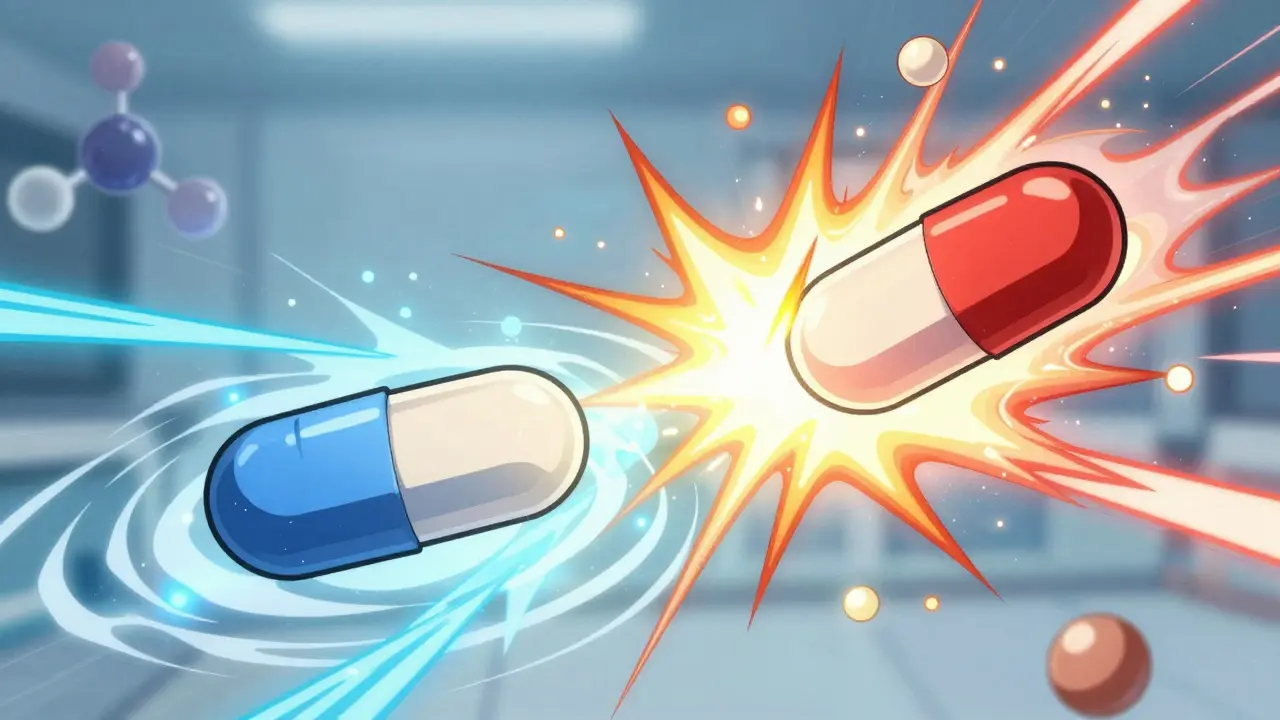
Adding a new pill to your daily routine might seem simple, but it can act like a chemical trigger that changes how your other medicines work. When two drugs clash, it is called a drug-drug interaction is a situation where one medication alters the pharmacological effect of another, potentially reducing its efficacy or causing dangerous side effects . For some, this just means a medicine doesn't work as well. For others, it can lead to a trip to the emergency room. In fact, clinical data shows that about 3-5% of all outpatient prescriptions have significant interactions, and that number jumps to 30% for people taking five or more medications.
Why Some Medications Clash
Not all interactions happen for the same reason. Generally, they fall into two buckets: how your body processes the drug and how the drug affects your system.
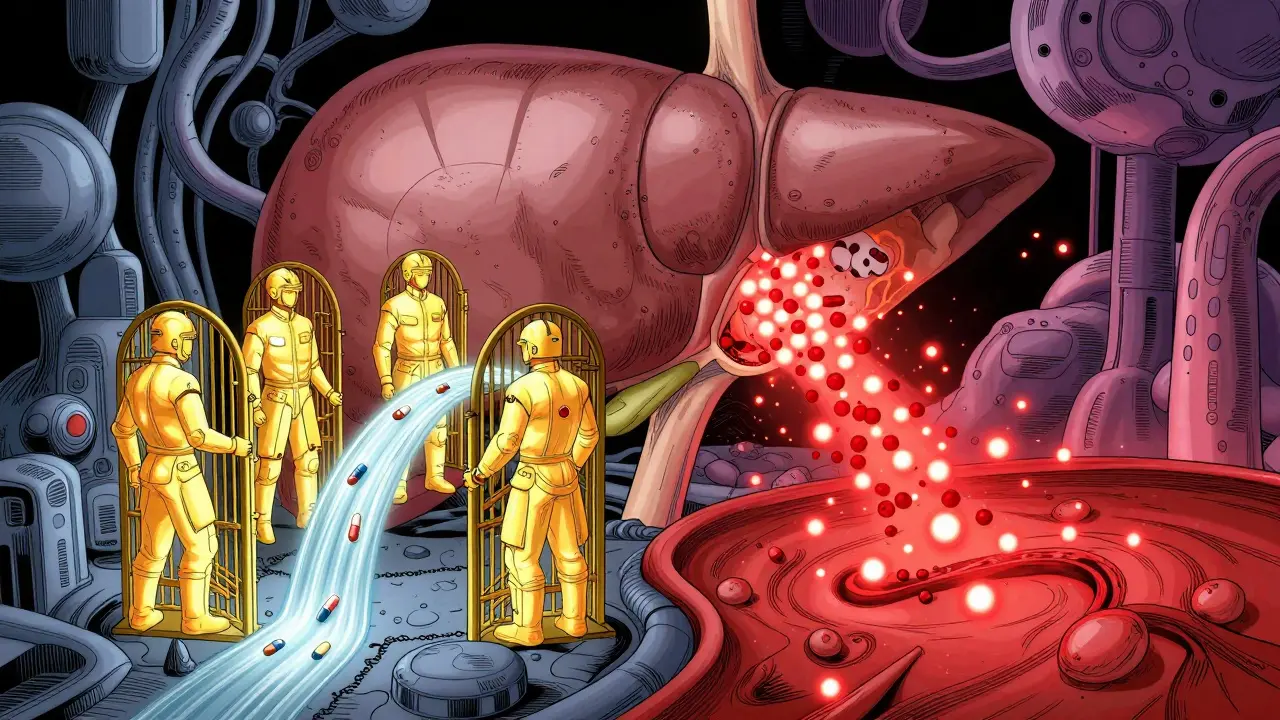
First, there are pharmacokinetic interactions. This is all about the journey the drug takes through your body-how it's absorbed, distributed, metabolized, and excreted. A huge player here is the Cytochrome P450 is a family of enzymes in the liver responsible for metabolizing most medications . Specifically, the CYP3A4 enzyme handles about 50% of all clinically significant interactions. If a new drug blocks this enzyme, your other medications can build up to toxic levels in your blood. If it speeds the enzyme up, your meds might be flushed out too quickly to work.
Then you have pharmacodynamic interactions. This is when two drugs don't necessarily interfere with each other's chemistry but create a combined effect that's too strong. Imagine taking a blood thinner like a direct oral anticoagulant (DOAC) and then adding a low molecular weight heparin (LMWH). Together, they can increase your bleeding risk by 300-400% because they are both pushing the same "stop clotting" button in your body.
High-Risk Pairings to Watch Out For
Some combinations are so well-known for being risky that pharmacists have strict rules about them. For example, combining certain cholesterol medications with blood pressure drugs requires a careful dose cap. If you take simvastatin and amlodipine, doctors usually cap the simvastatin at 20 mg per day to avoid muscle damage.
Other dangerous pairs include:
- Warfarin and Amiodarone: Adding amiodarone can make warfarin much more potent, often requiring a 30-50% dose reduction of the blood thinner to prevent internal bleeding.
- Opioids and Promethazine: This combo can increase sedative and respiratory depression effects by 200-300%, making it dangerously easy to stop breathing during sleep.
- MAO Inhibitors and Tyramine: Drugs like phenelzine (Nardil) can react with tyramine found in aged cheeses, potentially causing a hypertensive crisis where systolic blood pressure spikes over 200 mmHg.
| Medication A | Medication B | Potential Outcome | Management Action |
|---|---|---|---|
| Simvastatin | Amlodipine | Increased muscle toxicity | Cap Simvastatin at 20mg/day |
| Warfarin | Amiodarone | Excessive bleeding risk | Reduce Warfarin dose by 30-50% |
| Opioids | Promethazine | Severe respiratory depression | Lower opioid dosage |
| Cyclosporine | St. John's Wort | Reduced drug efficacy | Avoid supplement use |
How to Safely Start a New Medication
Managing your health shouldn't feel like a guessing game. The best way to avoid a bad reaction is to be proactive during the first few days of a new prescription. Since error rates during transitions of care can reach 50-70%, you need a system.
Start by creating a comprehensive list. Don't just list your prescriptions. Include over-the-counter painkillers, vitamins, and herbal supplements. Many people forget to mention St. John's Wort is a herbal supplement often used for depression that can significantly reduce the levels of other medications in the bloodstream , but it can slash the levels of critical drugs like cyclosporine by 40-60%.
Once you have your list, ask your pharmacist for a medication reconciliation. Clinical pharmacists are often better at spotting interactions than doctors alone, identifying 40-60% more potential issues. Ask them specifically: "Does this new drug change how I take my current ones?" and "What side effects should I look for in the first 72 hours?"

Monitoring and Red Flags
The first few weeks on a new drug are the "observation window." You want to look for early signs of toxicity or a loss of effectiveness. If you are on a high-risk combination like warfarin and amiodarone, you should expect blood tests (like INR monitoring) within 3-5 days of starting the new drug, then weekly for a month.
Be careful with instructions. A common mistake is misunderstanding "take on an empty stomach." Many people think this means no food for two hours before and after. In reality, it usually means one hour before or two hours after eating. Getting this wrong can change how much of the drug actually enters your bloodstream.
If you experience sudden dizziness, unexplained bruising, or extreme drowsiness, contact your provider immediately. These aren't always "normal" side effects; they can be the first sign that a drug interaction is pushing your medication levels too high.
Strategies for Long-Term Safety
If you are managing polypharmacy-which is the medical term for taking five or more medications-the risk grows. This is especially true for adults over 65, where nearly 45% experience this. The goal is to lean out your medicine cabinet.
Every 3 to 6 months, do a "medication audit" with your doctor. Ask if any drugs can be stopped or replaced with non-drug alternatives, like lifestyle changes or physical therapy. Research shows that about 12-18% of medication interactions can be avoided entirely through these modifications.
Keep a Personal Medication Record (PMR). This isn't just a list of names; it should include the dose, why you're taking it, and specifically which substances you've been told to avoid. Having this in your pocket during an emergency room visit can be a lifesaver, as it prevents doctors from prescribing something that clashes with your current regime.
What should I do if I suspect a drug interaction?
Do not stop taking your medication abruptly without consulting a professional, as this can cause withdrawal or a relapse of your condition. Instead, contact your pharmacist or prescribing doctor immediately. Provide them with a full list of everything you are taking, including supplements and vitamins, and describe your symptoms in detail.
Do herbal supplements cause interactions?
Yes, and often more severely than people realize. Because supplements aren't regulated like prescription drugs, their potency varies. For example, St. John's Wort can speed up the liver's metabolism, causing other drugs to leave your system too quickly, while others may slow down metabolism, leading to toxic buildup.
How often should I review my medications?
For those with chronic conditions or those taking multiple medications, a comprehensive review every 3 to 6 months is recommended. This allows your doctor to adjust doses based on your current kidney and liver function, which change as you age and affect how drugs are cleared from your body.
Can food or drink cause drug interactions?
Absolutely. Some of the most dangerous interactions are food-based. For example, tyramine-rich foods like aged cheeses can cause a dangerous spike in blood pressure if you are taking MAO inhibitors. Similarly, grapefruit juice can inhibit the CYP3A4 enzyme, potentially increasing the levels of certain statins or calcium channel blockers in your blood.
Why does my doctor sometimes ignore the pharmacy's interaction warnings?
This is often due to "alert fatigue," where doctors see so many automated warnings that they begin to override them. However, many interactions are manageable if the doctor monitors you closely or adjusts the dose. The key is to ensure your doctor is aware of the specific risk and has a plan for monitoring your response.



Del Bourne
April 9, 2026 AT 09:47It's so important to mention the role of the pharmacist here. Many people treat them like a vending machine, but they are actually the final safety check in the medical chain. If you're starting a new medication, definitely ask for a full medication review. It's a great way to catch those CYP3A4 interactions before they even happen!
Alexander Idle
April 10, 2026 AT 14:01Oh for goodness sake, imagine the sheer audacity of these pharmaceutical giants pretending we should just trust their 'automated warnings' while they rake in billions. It's honestly a tragedy that we're expected to do the heavy lifting of medication reconciliation ourselves because the doctors are too exhausted to click a button. Absolutely scandalous behavior from the healthcare system!
Grace Lottering
April 11, 2026 AT 19:10Big Pharma wants us addicted. The 'interactions' are just control mechanisms.
Rauf Ronald
April 12, 2026 AT 06:45Great breakdown of the science! For anyone feeling overwhelmed by polypharmacy, just remember that the 'medication audit' is your best tool. Start a simple spreadsheet with the drug name, dose, and the prescribing doctor. It makes the conversation with your provider way more efficient and ensures nothing slips through the cracks. You've got this!
Christopher Cooper
April 12, 2026 AT 13:05The part about the CYP3A4 enzyme is fascinating. It's wild how a single biological pathway can be the bottleneck for so many different drugs. I wonder if there's a way to test for individual enzyme activity levels to personalize these dosages even further, rather than just relying on general guidelines and dose caps.
Daniel Trezub
April 13, 2026 AT 07:11Actually, the 30-50% reduction for Warfarin is a bit of a generalization. Depending on the patient's baseline INR and the specific dosage of Amiodarone, you might only need a tiny tweak or a massive drop. But hey, keep it simple for the masses, right?
Vivek Hattangadi
April 14, 2026 AT 21:02I really appreciate the tip about the Personal Medication Record. I've seen so many elderly relatives struggle during hospital admissions because they can't remember everything they're taking. Creating a physical card or a digital note that can be shared instantly is a total game changer for patient safety. Let's all encourage our families to start one today!
Timothy Burroughs
April 15, 2026 AT 06:51you people are so soft these days relying on pills to fix everything while our great nation crumbles because nobody wants to actually discipline their own bodies anymore just take a walk and shut up about your enzymes lol
Rupert McKelvie
April 16, 2026 AT 14:06It is truly heartening to see such a clear guide on how to stay safe. Taking proactive steps like the medication audit can make a world of difference in quality of life. Keep staying informed and taking care of yourselves.
charles mcbride
April 17, 2026 AT 09:01This is such a helpful resource for anyone feeling anxious about their prescriptions. It is wonderful that we have the tools to manage these risks effectively. Wishing everyone health and success in their wellness journeys!
Sarabjeet Singh
April 18, 2026 AT 16:15Good advice. Staying organized with a list is the way to go.