
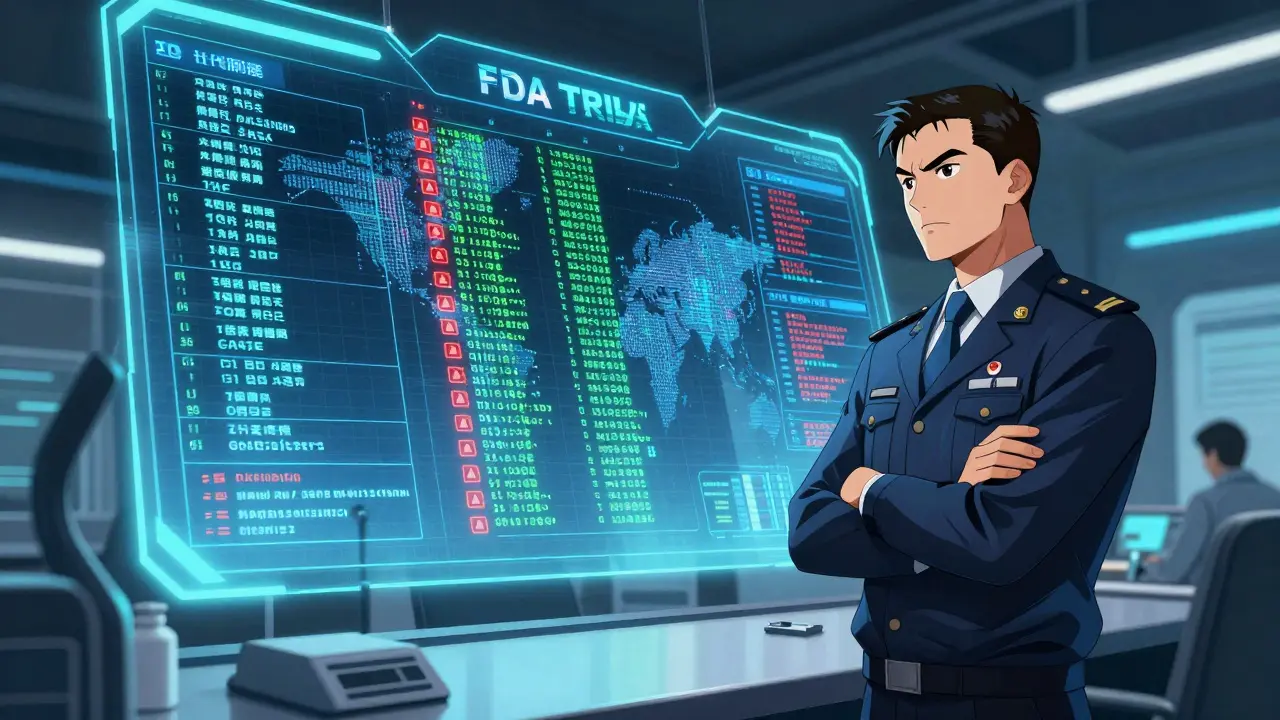
Every time you pick up a prescription at your local pharmacy, you are trusting a complex global system. The United States consumes nearly half of its pharmaceuticals from foreign sources, with over $186 billion worth of drugs imported in 2022 alone. Most of these products travel thousands of miles before they reach your hands. But how do we know they are safe? The answer lies in the rigorous, albeit imperfect, FDA import inspections that guard the nation’s borders against counterfeit, adulterated, or substandard medications.
The U.S. Food and Drug Administration (FDA) does not just wave a wand at every package arriving at the port. Instead, it operates a sophisticated risk-based framework designed to catch dangerous products while keeping legitimate trade moving. For manufacturers, researchers, and patients, understanding this process is no longer optional-it is critical for ensuring access to medicine without compromising safety.
How the FDA Screens Imports Before They Arrive
The inspection process begins long before a container ship docks or a cargo plane lands. It starts with data. Under the Federal Food, Drug, and Cosmetic Act (FDCA), all FDA-regulated products must submit an entry notification via the Prior Notice System Interface (PNSI). This electronic submission acts as the first line of defense.
Once the data is in, the FDA’s automated analytics tools go to work. According to agency documentation from late 2023, about 98% of entries are screened electronically without any human intervention initially. The system looks for red flags: incomplete information, companies with poor compliance histories, or products known to be high-risk. If the algorithm clears the shipment, it moves through customs quickly. If it raises a flag, the product is held intact until a specialist reviews it.
This digital triage allows the FDA to manage roughly 1.2 million import entries annually. However, the sheer volume means that physical inspections are reserved for specific cases. Only about 1.2% of the 100 million+ drug shipments entering the country undergo a full physical examination. This reliance on data targeting is efficient but carries risks, as seen in past incidents where contaminated active pharmaceutical ingredients slipped through non-targeted shipments.
What Happens During a Physical Inspection?
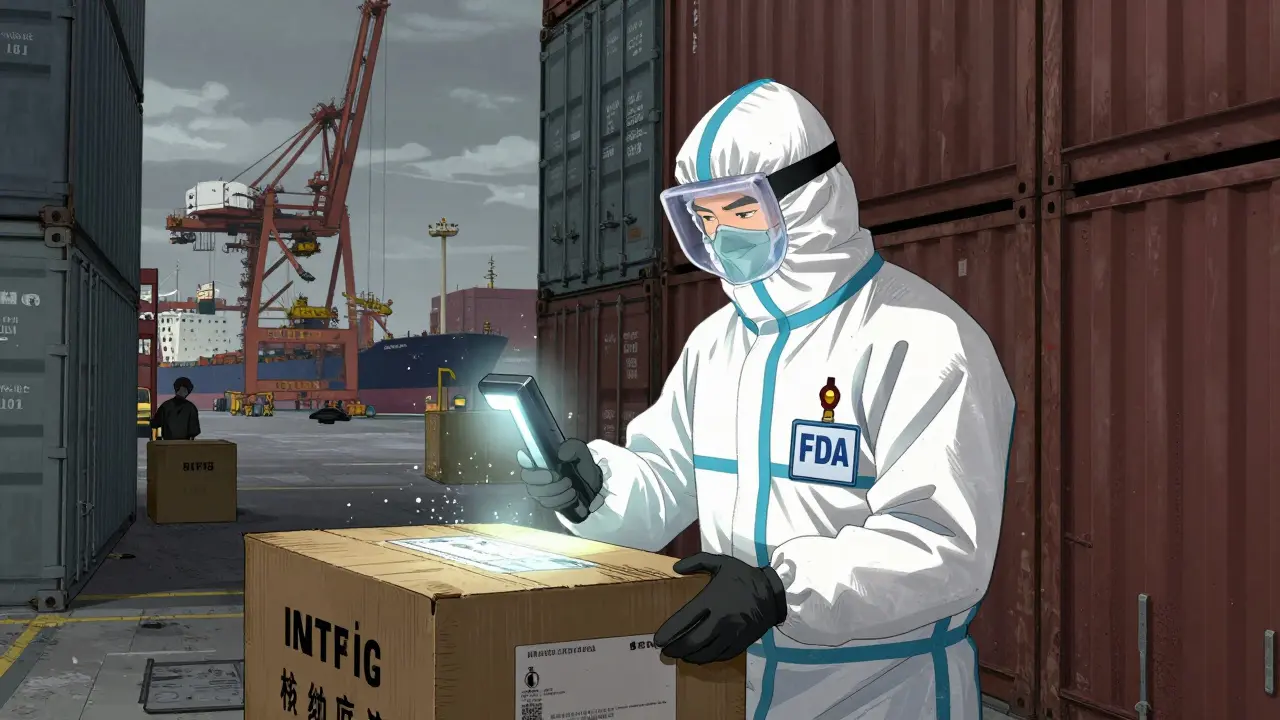
When a shipment is flagged for deeper scrutiny, it enters the Examination and Sampling phase. This is where the rubber meets the road-literally, at one of the 330+ ports of entry across the U.S. The FDA’s Coordinated National Response system ensures that expert teams can deploy resources where needed most. If a tainted product is found at one port, the Harmonized Real-Time Alert System notifies all other ports within 45 minutes, creating a nationwide net.
A physical inspection typically involves three components:
- Field Examinations: Inspectors physically check the condition of the packaging and storage conditions to ensure the product hasn’t been damaged or tampered with during transit.
- Label Examinations: Staff verify that the labeling complies with strict regulations (21 CFR Part 201), ensuring that dosage instructions, warnings, and manufacturer details are accurate and legally compliant.
- Sample Collections: Inspectors usually take 1 to 3 units from the shipment for laboratory testing. These samples are analyzed for potency, purity, and the presence of harmful contaminants.
If a product fails these checks, it faces detention. In fiscal year 2022, 14.3% of physically examined drug shipments were detained, and nearly two-thirds of those were ultimately refused entry into the U.S. market. This harsh reality underscores the stakes involved in maintaining manufacturing quality standards abroad.
The Game Changer: Eliminating De Minimis Exemptions
For years, there was a loophole in the system known as the "de minimis" exemption. Shipments valued under $800 could enter the U.S. with minimal scrutiny. While intended for small personal purchases, this loophole was exploited by bad actors to smuggle pill presses, illicit narcotics, and counterfeit drugs into the country.
In a major policy shift announced by U.S. Customs and Border Protection (CBP) in October 2023, this exemption was completely eliminated for all FDA-regulated products. Now, every single package, regardless of value, is subject to review. This change was necessary to plug a massive security hole, but it has also disrupted the industry.
Academic researchers and biotech startups have felt the pinch. A survey by the Association of American Medical Colleges estimated that the cost of importing biological samples increased by 22-35%, with timelines extending by several days. While frustrating for scientists, this move has significantly tightened the net around illegal goods, forcing all importers to adhere to the same rigorous standards as large pharmaceutical corporations.
Fast-Tracking Trust: The Secure Supply Chain Pilot Program
Not all importers face the same hurdles. The FDA recognizes that some manufacturers consistently produce high-quality drugs and poses little risk. To reward these companies, the agency launched the Secure Supply Chain Pilot Program (SSCPP) in 2019. This program offers a fast lane for trusted partners.
Companies in the SSCPP benefit from expedited clearance, reducing average processing times from 7-10 business days to just 24-48 hours. As of late 2023, 27 manufacturers participated in this program, each allowed to designate up to five products for rapid entry. However, getting in is tough. Participants must maintain perfect compliance records for at least three consecutive years and pass rigorous internal controls reviews. This creates a significant barrier for smaller generic drug makers, who often struggle with inconsistent detention rates at various ports.
| Feature | Standard Import Process | SSCPP (Trusted Partners) |
|---|---|---|
| Average Clearance Time | 7-10 Business Days | 24-48 Hours |
| Inspection Frequency | Risk-Based (Higher Chance of Detention) | Minimal/Expedited |
| Eligibility Requirements | Basic Registration & Listing | 3 Years Perfect Compliance + Rigorous Audits |
| Ideal For | New Entrants, Small Batch Imports | Large Manufacturers, Consistent Suppliers |
Common Pitfalls That Cause Delays
Even if you are not part of the SSCPP, you can avoid many headaches by preparing correctly. The learning curve for new importers is steep, often taking 3-6 months to master the nuances of FDA regulations. Mistakes in documentation are the leading cause of delays, adding an average of 4.7 business days to processing times.
Here are the top reasons shipments get stuck:
- Incorrect Product Coding: Using the wrong Harmonized Tariff Schedule codes leads to misclassification and automatic holds. This accounts for nearly 28% of all delays.
- Incomplete Registration: The FDA requires facilities to be registered and products listed. Missing this step triggers immediate detention. About 21% of issues stem from verification failures here.
- Labeling Discrepancies: Even minor errors in spelling or formatting on labels can result in refusal. Labeling problems make up 19% of compliance issues.
To mitigate these risks, experienced importers recommend building direct relationships with FDA entry reviewers at specific ports. Surveys suggest that having a point of contact can reduce processing variability by up to 35%. Additionally, maintaining meticulous records for at least three years post-entry is mandatory under 21 CFR 1.331. Failure to do so can lead to Import Alerts, which automatically detain all future shipments from that company.
The Future of Drug Import Monitoring
The landscape of drug importation is evolving rapidly. The FDA is investing heavily in technology to improve its oversight capabilities. By 2025, the agency aims to deploy AI-driven risk assessment tools that will improve targeting accuracy by 25%. There are also pilot programs exploring blockchain integration to create immutable records of the supply chain, making it harder for counterfeiters to hide.
However, challenges remain. The rise of e-commerce has created a shadow market where 41% of websites selling drugs to U.S. consumers operate outside regulatory oversight. The FDA acknowledges this gap and is working to harmonize its efforts with international bodies like the Pharmaceutical Inspection Co-operation Scheme (PIC/S). While the U.S. system ranks second globally in medicines security, behind only Switzerland, the agency admits that resource constraints still limit its ability to inspect every shipment physically.
For now, the burden of proof remains largely on the importer. Whether you are a large pharmaceutical giant or a small biotech startup, understanding the FDA’s import inspection framework is essential. It is not just about avoiding fines; it is about protecting public health and ensuring that the medicine reaching patients is safe, effective, and genuine.
Does the FDA inspect every drug shipment entering the US?
No, the FDA does not physically inspect every shipment due to resource constraints. Approximately 98% of entries are screened electronically using risk-based algorithms. Only about 1.2% of the over 100 million annual drug shipments undergo physical examination. However, since 2023, all shipments, including those under $800, are subject to review, eliminating previous exemptions.
What happens if my drug shipment is detained by the FDA?
If a shipment is detained, it is held at the port of entry until the FDA makes a final decision. The agency may conduct further testing or request additional documentation. If the product is found to be adulterated or misbranded, it will be refused entry and likely destroyed. Repeated detentions can lead to Import Alerts, which block future shipments.
How can I speed up the FDA import inspection process?
The fastest way to clear imports is to join the Secure Supply Chain Pilot Program (SSCPP), which reduces clearance times to 24-48 hours for eligible manufacturers. For others, ensuring accurate product coding, complete facility registration, and flawless labeling can prevent delays. Building relationships with port-specific FDA reviewers can also help resolve issues faster.
Why did the FDA eliminate the de minimis exemption?
The de minimis exemption allowed low-value shipments (under $800) to bypass standard inspections. This loophole was exploited to smuggle counterfeit drugs, illicit narcotics, and pill presses into the country. Eliminating this exemption ensures that all FDA-regulated products meet safety standards, closing a significant security gap.
What are the most common reasons for FDA import delays?
The top causes of delay include incorrect product coding (28% of delays), incomplete registration verification (21%), and labeling discrepancies (19%). Errors in commercial invoices or bills of lading can also trigger holds. Proper preparation and double-checking documentation before submission are crucial to avoiding these pitfalls.




Sydney Jarrett
July 7, 2026 AT 18:40It is absolutely fascinating to observe the intricate bureaucratic machinery that governs our pharmaceutical supply chain, isn't it? The notion that we rely on a risk-based framework rather than comprehensive physical inspection for every single unit is a testament to the efficiency of modern data analytics. One must consider the statistical probability of failure versus the logistical impossibility of inspecting 100 million shipments manually. The implementation of the Prior Notice System Interface (PNSI) serves as a critical digital triage mechanism, effectively filtering out the low-risk entities while flagging those with poor compliance histories. This algorithmic approach, while seemingly cold and detached, is precisely what allows the FDA to manage the sheer volume of import entries without collapsing under the weight of its own mandate. Furthermore, the elimination of the de minimis exemption was a necessary corrective measure to prevent bad actors from exploiting regulatory loopholes for illicit gain. We cannot allow the convenience of small packages to override the imperative of public health safety. The Secure Supply Chain Pilot Program (SSCPP) represents a sophisticated incentive structure that rewards consistent compliance with expedited clearance, thereby creating a tiered system of trust. It is crucial that stakeholders understand that this is not merely about red tape but about maintaining the integrity of the national healthcare infrastructure. The integration of AI-driven risk assessment tools by 2025 will undoubtedly enhance targeting accuracy, reducing the cognitive load on human inspectors. However, one must remain vigilant against the potential for algorithmic bias or systemic errors in these automated systems. The burden of proof remains squarely on the importer, which is a fair distribution of responsibility given the global nature of the pharmaceutical industry. Ultimately, this complex web of regulations, inspections, and digital monitoring is the only thing standing between us and a world of counterfeit medications.
Marlon Tomio
July 8, 2026 AT 03:55The moral hazard here is palpable. We prioritize speed over safety.
Sherrie Trecker
July 9, 2026 AT 14:41Oh, please. Spare me the dramatic lecture on 'moral hazards.' You clearly have no understanding of the economic realities at play. If every shipment were inspected, the cost of medicine would skyrocket, and people would die from lack of access. It is a balanced system, whether you like it or not. Your contrarian stance is as tiresome as it is uninformed.
rob van oudernallern
July 11, 2026 AT 09:50i mean sydney makes a good point bout the algos tho. its crazy how much they do now. my uncle works in logistics and he says the old days were wild. now everything is tracked before it even leaves the factory. kinda scary but also cool i guess. just dont mess up your paperwork or u get stuck for weeks lol
Mary Howarth
July 12, 2026 AT 03:41I am so incredibly glad that someone brought up the human element of this process! It is truly heartwarming to see how technology and bureaucracy can work together to protect us all, don't you think? I always feel such a sense of relief knowing that there are dedicated professionals reviewing these flags, even if it is mostly automated. The fact that they eliminated the de minimis exemption shows such a strong commitment to keeping our communities safe from harmful substances! It gives me so much peace of mind when I pick up my prescriptions, knowing that rigorous standards are being upheld. I hope everyone here appreciates the hard work of the FDA staff who ensure that these systems run smoothly! Let's keep supporting these efforts because safety really is paramount!
Sean Estabrooks
July 12, 2026 AT 12:38Do not be fooled by the sanitized narrative of 'efficiency' and 'safety protocols.' This entire apparatus is a facade designed to maintain control over the population's biological inputs. The 'risk-based framework' is merely a euphemism for selective enforcement, allowing Big Pharma to dictate which products reach the market while suppressing alternatives that threaten their monopolies. The elimination of the de minimis exemption is not about stopping counterfeits; it is about closing off avenues for independent research and alternative medicine imports that bypass corporate gatekeepers. The SSCPP is a cartel mechanism, rewarding the very entities that profit from the status quo. They want you to believe in the infallibility of their algorithms, but these AI tools are trained on data curated by the same institutions they regulate. It is a closed loop of power. Wake up and realize that your 'safe' medication is part of a larger surveillance state strategy.
Alana Frassinelli
July 12, 2026 AT 19:51i hear where sean is coming from but i think hes taking it a bit far maybe. i just know that when i order stuff online sometimes it gets held up and it sucks. but i guess if it keeps bad stuff out then its worth it right. i try to stay positive about it all because getting sick from bad meds would be awful. lets just hope the system works for most people i suppose
Gavin Edley
July 13, 2026 AT 23:24You Americans are obsessed with rules. In the UK we just trust the pharmacist. Why do you need an army of bureaucrats to check every pill? It’s ridiculous. And don’t get me started on your healthcare costs. You’re paying for all this inspection nonsense and still ending up with worse outcomes. Just let the market decide. If a drug is bad, people will stop buying it. Simple as that. Your paranoia is showing.
jeremy pritchett
July 14, 2026 AT 14:31listen gavin ur totally wrong dude. the market doesnt self correct fast enough when lives are on the line. we gotta have standards. i mean look at the stats 14 percent detention rate is huge. thats real protection. dont be hater just appreciate the security. lets go team usa
Kimberly Simbulan
July 15, 2026 AT 22:52Wow, Jeremy, you are certainly full of energy today! It is almost refreshing to see such passion, though perhaps a bit misplaced. I’m sure Gavin meant well, even if his perspective is... distinctively British. Let’s not start a transatlantic feud over drug inspections, shall we? We should all just smile and nod at the complexity of global trade. After all, sarcasm is the best spice, and reality is the main course!
kavitha kumar
July 17, 2026 AT 06:18here in india we export so many drugs to us. it is stressful for manufacturers. one small mistake in label and whole shipment stuck. we follow all rules but still face issues. please understand our side too. it is not easy to maintain perfect records for three years. many small companies suffer because of this strictness. we want quality but also survival
fred morgan
July 17, 2026 AT 15:37Your concerns are noted. However, regulatory compliance is non-negotiable for public safety.
Sarah Boomgaard
July 18, 2026 AT 09:11You are all missing the bigger picture. The real issue is not the inspection but the philosophy behind it. Why do we need to import half our drugs? This dependency is a weakness. We should be producing locally. But instead, we rely on foreign factories and hope the FDA catches the mistakes. It is a flawed system built on greed. The rich get fast lanes, the poor get detained shipments. It is unjust. We need to rethink the entire model of pharmaceutical production, not just tweak the inspection rates.
Gilbert Bankual
July 19, 2026 AT 09:03Sarah, you make a valid point about local production. But right now, this system works. Stay positive. Focus on solutions not just problems. We can improve it.