

When you walk into a doctor’s office, emergency room, or hospital, the most important thing you can bring isn’t your insurance card or ID-it’s your medical history. Not the summary you think you remember. Not the list you wrote down last year. But the full, up-to-date, honest record of everything you’re taking-prescription, over-the-counter, vitamins, herbs, even that tea you drink for sleep.
Medication errors are one of the leading causes of preventable harm in healthcare. In the U.S. alone, they contribute to 7,000 to 9,000 deaths every year. Many of these errors happen not because doctors make mistakes, but because the full picture of what a patient is taking never gets shared properly. That’s where medication reconciliation comes in-a formal process to compare your actual medications with what’s documented in your medical record. It’s not optional. It’s required by law in every hospital, clinic, and nursing home in the country.
Why Your Medication List Matters More Than You Think
Think of your medication list like a car’s maintenance log. If you don’t know what oil was last used, what filters were replaced, or if the brakes were fixed, you’re driving blind. The same goes for your body. Taking five or more medications? You’re at 88% higher risk of a dangerous mix-up. That’s not a guess-it’s backed by data from the American Society of Health-System Pharmacists.
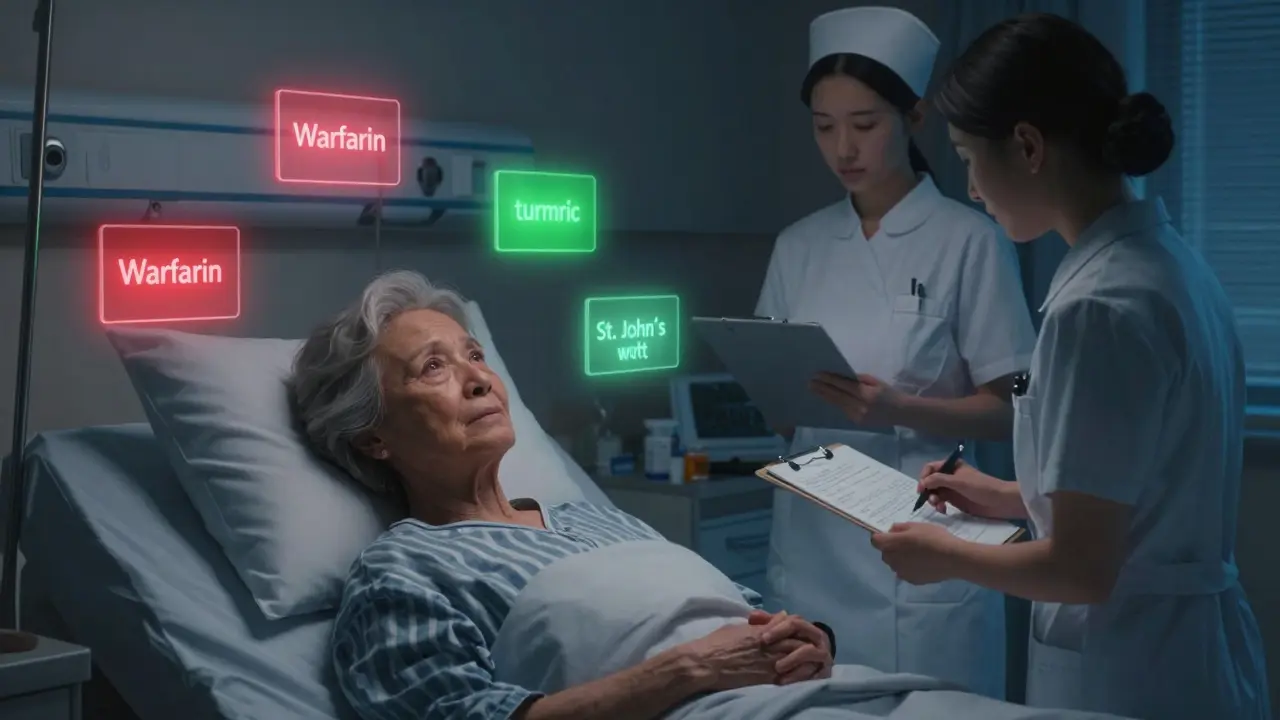
Common mistakes? Missing a daily blood pressure pill because you forgot you took it. Not telling your doctor about the ibuprofen you pop for back pain. Forgetting to mention the turmeric supplement your cousin swears by. These aren’t small details. They’re red flags. Ibuprofen can raise your blood pressure and interfere with your heart meds. Turmeric can thin your blood and cause dangerous bleeding if you’re on warfarin.
One patient in Melbourne brought in a list of three prescriptions. During admission, the hospital’s electronic system pulled up a history from another pharmacy showing seven more medications-including two blood thinners she didn’t realize she was still taking. That single discovery prevented a potentially fatal bleed.
What You Must Include on Your List
Don’t just list your prescriptions. Include everything:
- Brand and generic names of all prescription drugs
- Dosage and how often you take them (e.g., 10 mg once daily)
- Over-the-counter meds: pain relievers, antacids, sleep aids, allergy pills
- Vitamins, minerals, and supplements-even the ones you only take “when I feel off”
- Herbal remedies and teas: St. John’s Wort, ginkgo, ginger, chamomile
- Any injections, patches, or inhalers
- When you last took each one
Why include OTCs and supplements? Because 67% of patients don’t mention them-and that’s the biggest gap in medication safety. A 2023 study found that nearly half of all medication errors in older adults came from unreported supplements. One woman ended up in the ER after taking garlic capsules with her blood thinner. She thought it was “just natural.” It wasn’t.
The Brown Bag Method: Your Best Tool
Doctors and nurses aren’t mind readers. Even the best EHR system can’t guess what’s in your bathroom cabinet. The most effective way to make sure nothing gets missed? The brown bag method.
Bring every pill bottle, capsule, patch, and liquid you’re currently using to every appointment. No exceptions. Don’t rely on memory. Don’t trust your pill organizer. Just bring the bag.
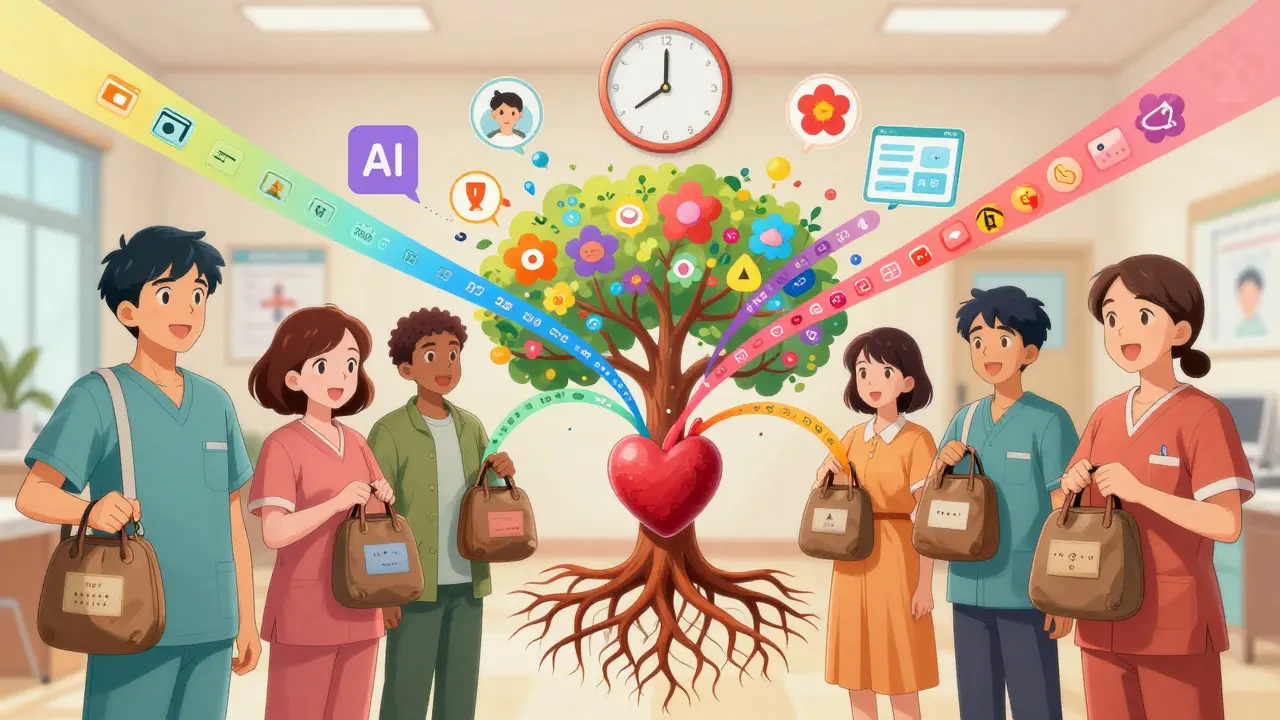
Studies show this simple step cuts medication discrepancies by 40%. Why? Because it’s visual. Your provider sees the actual bottles-labels, expiration dates, instructions. They spot duplicates, outdated prescriptions, or pills you stopped taking but forgot to mention.
One nurse in a rural clinic told me she used to spend 20 minutes asking a patient about meds. After introducing the brown bag method, that time dropped to 8 minutes-and she caught three hidden interactions the patient didn’t even know were risky.
How Technology Helps (and Where It Falls Short)
Most hospitals now use electronic systems that pull your medication history from pharmacies and insurers. In the U.S., services like Surescripts deliver over 3 billion medication histories a year. These systems can flag dangerous combinations you didn’t know about.
But here’s the catch: they’re only as good as the data they have. If you paid cash for a medication, bought it overseas, or got it from a small local pharmacy, it might not show up. If you take a supplement that’s not tracked by any pharmacy network? Gone. If your allergy is written as “rash from penicillin” in one system and “allergic to penicillin” in another? The system might miss it.
Even with all this tech, studies show electronic systems still miss over half of actual medication discrepancies. That’s why your input still matters more than any algorithm.
High-Alert Medications: The Ones That Can Kill You
Some drugs are called “high-alert” because even a small mistake can cause serious harm. These include:
- Insulin
- Warfarin and other blood thinners
- IV opioids like morphine
- Anticoagulants like heparin
- Chemotherapy drugs
If you take any of these, your medical history isn’t just important-it’s life-or-death. A 2022 Johns Hopkins study found that when medication reconciliation was done properly for cardiac patients on blood thinners, adverse events dropped by 62%.
Don’t assume your doctor knows you’re on one of these. Say it clearly: “I’m on warfarin. My last INR was 2.8.” Or: “I take 10 units of insulin at night.” Be specific. Write it down. Bring the bottle.
What to Do If You’re Overwhelmed
Managing multiple meds is hard. Especially if you’re older, have chronic conditions, or care for someone who does. 83% of family caregivers say tracking medications is one of their biggest challenges.
Here’s what works:
- Use a free app like Medisafe or MyTherapy to track doses and set reminders
- Keep a printed copy in your wallet or purse
- Ask your pharmacist to print a current list every time you refill
- Update it after every doctor visit-even if nothing changed
- Share the list with a trusted family member or friend
And don’t be afraid to say: “I’m not sure if I’m still supposed to take this.” That’s not ignorance-it’s smart.
How to Talk to Your Provider
Many patients stay quiet because they don’t want to seem like they’re questioning their doctor. But your voice is part of the safety system.
Use this simple script:
- Situation: “I’ve been feeling dizzy since I started this new pill.”
- Background: “I’ve been on metformin for five years, and I added a new magnesium supplement last month.”
- Assessment: “I think the magnesium might be interacting with my blood pressure meds.”
- Recommendation: “Can we check if this is a known interaction?”
This is called SBAR-and it’s used by nurses and doctors everywhere because it works. It turns confusion into clarity.
What Happens When You Don’t Share
One man in his 70s went to the ER for chest pain. He didn’t mention he was taking St. John’s Wort for depression. The ER doctor prescribed an antibiotic. The combination caused a dangerous spike in his heart rhythm. He spent three days in the ICU.
Another patient was admitted for pneumonia. She forgot to mention she was taking a daily aspirin. The hospital gave her a strong anti-inflammatory. She ended up with a stomach bleed.
These aren’t rare. They happen every day. And they’re almost always preventable.
What’s Changing Now
By 2026, more patients will be able to view their full medication history through patient portals. The FDA is pushing for clearer labeling on high-alert drugs. AI tools are being tested to automatically scan your list and flag risks before your doctor even sees you.
But none of that replaces you. Technology can’t tell your doctor that you stopped taking your blood pressure pill because it made you feel weak. It can’t explain why you started taking melatonin after your husband passed away. It can’t know that you’re embarrassed to say you’re using CBD oil.
Your story matters. Your honesty saves lives.
Start Today
Right now, grab a piece of paper or open a note on your phone. Write down every single thing you’ve taken in the last 30 days. Include the name, dose, and how often. Then, bring it to your next appointment. Don’t wait for a crisis. Don’t hope your doctor will ask.
Medication safety isn’t just the job of your doctor or pharmacist. It’s your job too. And the simplest thing you can do-sharing your full history-is also the most powerful.



Zoe Brooks
January 17, 2026 AT 23:50Just brought my brown bag to my doc yesterday-turned out I was still taking that fish oil I swore I quit last year. She caught it, adjusted my blood thinner, and I didn’t even realize I was at risk. So simple. So life-saving. Thanks for the reminder.
Stacey Marsengill
January 18, 2026 AT 08:07Ugh. I hate how doctors act like you’re lying if you don’t remember every pill you took since 2017. Meanwhile, they don’t even look at your chart before walking in. This whole system is a circus. I stopped trusting them after they prescribed me Adderall for ‘fatigue’-turns out I was just chronically sleep-deprived from working two jobs. They don’t care. They just want to check the box.
Tyler Myers
January 18, 2026 AT 08:47Let’s be real-this isn’t about medication safety. It’s about control. The pharmaceutical-industrial complex wants you dependent on their pills, so they’ve turned ‘medication reconciliation’ into a bureaucratic nightmare to keep you confused and compliant. Did you know the FDA approves 80% of new drugs based on industry-funded trials? And now they want you to hand over your entire pharmacy history like it’s a loyalty card? Wake up. They’re not saving lives-they’re monetizing your vulnerability.
Meanwhile, your ‘brown bag method’? That’s just a distraction. The real issue is that 90% of meds are prescribed for symptoms, not root causes. You think turmeric interferes with warfarin? Fine. But why are you on warfarin in the first place? Because your diet’s full of processed junk and your doctor won’t talk about inflammation. This whole system is a scam.
I’ve been off all my meds for three years. My blood pressure’s better. My cholesterol’s lower. My doctor called me ‘non-compliant.’ I called it liberation.
Jay Clarke
January 19, 2026 AT 18:28Y’all are missing the point. It’s not about the list. It’s about the *story*. I had my grandma bring her brown bag to the ER after a fall. Turned out she was taking four different sleep aids because her daughter ‘swore’ they were all safe. One of them was expired. Another was for dogs. She didn’t even know what half of them were for. The nurse cried. So did I. This isn’t just medical-it’s emotional. We’re not just pills. We’re people who forget, who are scared, who are tired. And someone needs to see that.
Ryan Otto
January 20, 2026 AT 22:20While I appreciate the sentiment, the entire premise of this article is predicated on a fundamentally flawed assumption: that Western pharmacological paradigms are universally valid. In South Africa, where I reside, over 70% of the population relies on traditional herbal medicine, much of which is undocumented by any electronic system. The notion that a ‘brown bag’ of pills is the gold standard of safety is ethnocentric and ignores centuries of ethnopharmacological knowledge. Moreover, the reliance on Surescripts and EHRs reflects a dangerous overtrust in corporate data infrastructure-systems that are notoriously vulnerable to breaches and algorithmic bias. Until the medical establishment acknowledges non-Western healing modalities as legitimate, this ‘safety’ initiative is merely performative.
Chuck Dickson
January 22, 2026 AT 13:51My mom’s 82 and takes 11 different meds. I used to dread her appointments-she’d forget half of them, and the doctor would just nod. Then I started printing her list every month, laminating it, and keeping one in her purse and one in mine. Last month, the pharmacist spotted a duplicate dose of lisinopril she didn’t know she was taking. She could’ve had a stroke. Now I bring her brown bag every time. It’s not glamorous. It’s not easy. But it’s the only thing keeping her alive. If you’re reading this and you care about someone-do this. Just do it.
Eric Gebeke
January 23, 2026 AT 19:38Of course you’re supposed to tell your doctor everything. But let’s be honest-half the time they don’t even listen. I told my cardiologist I was taking CBD oil for anxiety. He rolled his eyes and said, ‘That’s just weed.’ Then he prescribed me another SSRI. I didn’t say anything after that. Why bother? They don’t want to hear it. They want you to take the pill and shut up. This article is nice. But it’s preaching to the choir. The system doesn’t change because someone writes a blog post. It changes when we stop being polite and start demanding better.
Robert Cassidy
January 25, 2026 AT 03:31THIS is why America is collapsing. We’ve turned healthcare into a religion of compliance. You’re not supposed to think. You’re not supposed to question. You’re supposed to hand over your pills, your history, your dignity-and trust the algorithm. And if you don’t? You’re ‘non-compliant.’ If you’re on insulin and you skip a dose because you can’t afford it? That’s your fault. If you take garlic because your abuela said it cleanses the blood? That’s ‘dangerous.’ We’ve lost our humanity. The real crisis isn’t medication errors-it’s the fact that we’ve been taught to be silent. And now we’re too afraid to speak.
Pat Dean
January 26, 2026 AT 03:25Wow. So you’re telling me I have to bring my entire medicine cabinet to every appointment? What am I, a pharmacy? I don’t have time for this. I work two jobs, take care of three kids, and you want me to alphabetize my supplements? Meanwhile, my insurance won’t cover the damn pill organizer. This is a luxury for rich people who have time to sit around counting pills. Real people just want to live.
christian Espinola
January 26, 2026 AT 13:26Correction: The article states ‘67% of patients don’t mention OTCs.’ That’s inaccurate. The CDC’s 2023 report on medication non-disclosure shows 71.3% of adults aged 55+ omit supplements, while only 59% of adults under 35 do. Also, ‘turmeric interferes with warfarin’ is a correlation, not causation-most studies are in vitro or on rodents. The clinical significance is negligible unless INR is unstable. And the brown bag method? It’s been shown to increase misidentification by 12% due to expired labels and unlabeled generics. This article is dangerously oversimplified.