
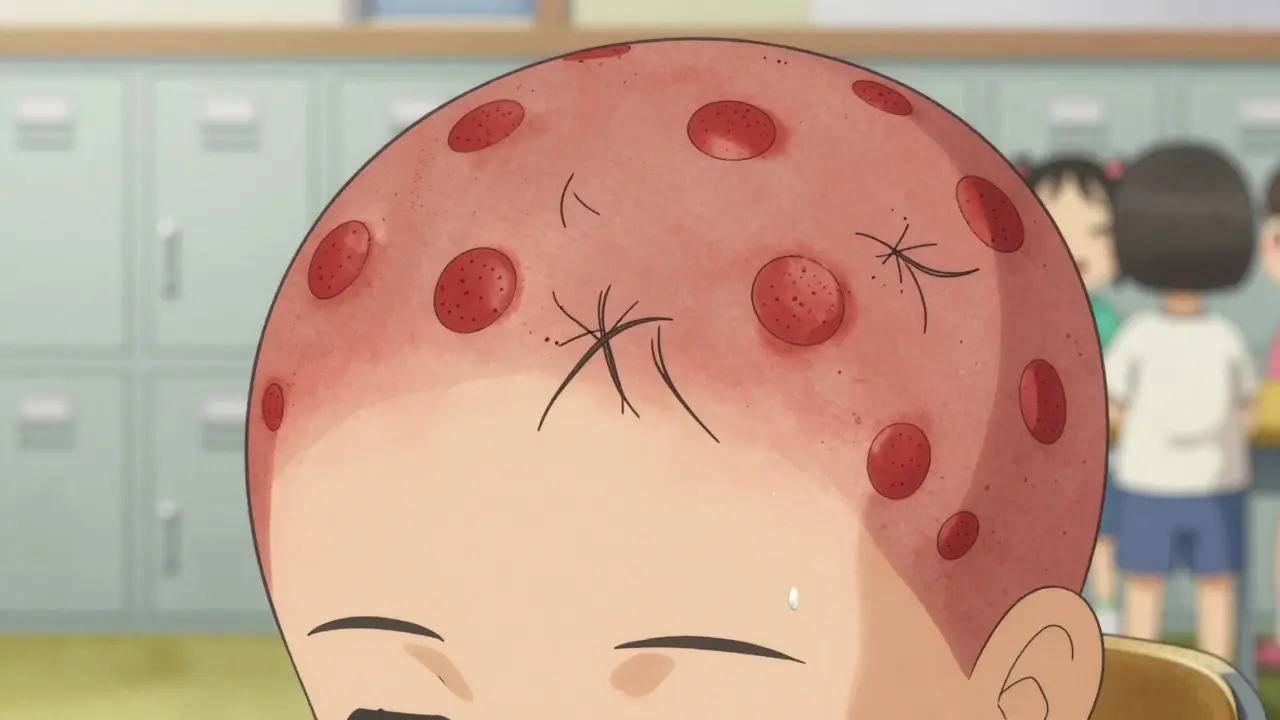
Ringworm isn’t caused by a worm at all. That’s the first thing to know. The name is misleading, but the infection is real-and common. If you’ve seen a red, circular rash with a raised edge and a clearer center, you’ve likely seen ringworm. This is tinea, a fungal skin infection that affects millions every year. It doesn’t care if you’re a child, an athlete, or someone who just walked barefoot in a gym shower. It thrives in warmth and moisture, and it spreads fast.
What Exactly Is Ringworm?
Ringworm, or dermatophytosis, is caused by fungi called dermatophytes. The three main types are Trichophyton, Microsporum, and Epidermophyton. These fungi live on dead skin, hair, and nails. They don’t burrow deep, but they cling tight-and they’re contagious. You can pick them up from a towel, a wrestling mat, or even your pet cat. The infection shows up as a rash, often shaped like a ring, but sometimes it’s just a red, scaly patch that itches like crazy.Types of Ringworm and Where They Show Up
Not all ringworm looks the same. Where it grows changes how it appears:- Tinea corporis (body ringworm): The classic ring-shaped rash. Starts small, about half a centimeter wide, and spreads outward. The edges are red, raised, and scaly. The middle often clears up, giving it that circular look.
- Tinea pedis (athlete’s foot): This hits between the toes first. Skin gets white, soggy, peeling, and smells bad. It itches, burns, and sometimes blisters. About 15% of all ringworm cases are this type.
- Tinea cruris (jock itch): Red, itchy patches on the inner thighs and groin. It spreads with sweat and tight clothing. Around 20% of adult cases are this kind.
- Tinea capitis (scalp ringworm): Mostly in kids. It looks like flaky, red patches on the scalp. Hair breaks off, leaving bald spots. In severe cases, a swollen, pus-filled lump called a kerion forms. This can scar permanently if not treated.
- Tinea unguium (nail fungus): Toenails turn yellow, thick, and brittle. Fingernails rarely get it-because they’re not stuck in sweaty shoes all day. Nails can get 2-3 times thicker than normal.
The incubation period? Usually 4 to 14 days. But sometimes it takes up to three weeks before you even notice anything. That’s why people think they caught it yesterday-when they actually picked it up a week ago.
How Do You Catch It?
You don’t need to be dirty to get ringworm. It’s about exposure. Here’s how it spreads:- Skin-to-skin contact: The #1 way. About 60% of cases come from touching an infected person or animal.
- Contaminated surfaces: Towels, mats, shower floors, combs. That’s 30% of cases. Public showers are a hotspot.
- Animals: Cats and dogs are common carriers. Pets can look fine but still spread the fungus. About 10% of human cases come from pets.
Some people are more at risk:
- Wearing tight shoes or sweaty socks all day
- Having hyperhidrosis (excessive sweating)-affects 3% of people
- Playing contact sports like wrestling-84% of wrestlers get it at some point
- Living in warm, humid climates
- Being under 10 years old (for scalp infections)
- Being immunocompromised
And yes, if you work with animals-especially vets or animal shelter workers-you’re 15-20% more likely to catch it.
Antifungal Creams: What Works and What Doesn’t
For most cases on the skin or feet, topical creams are the first step. They’re cheap, easy to use, and work well-if you use them right.Here are the most effective active ingredients:
| Active Ingredient | Concentration | Effectiveness | Treatment Duration |
|---|---|---|---|
| Clotrimazole | 1% | 70-80% | 2-4 weeks |
| Miconazole | 2% | 65-75% | 2-4 weeks |
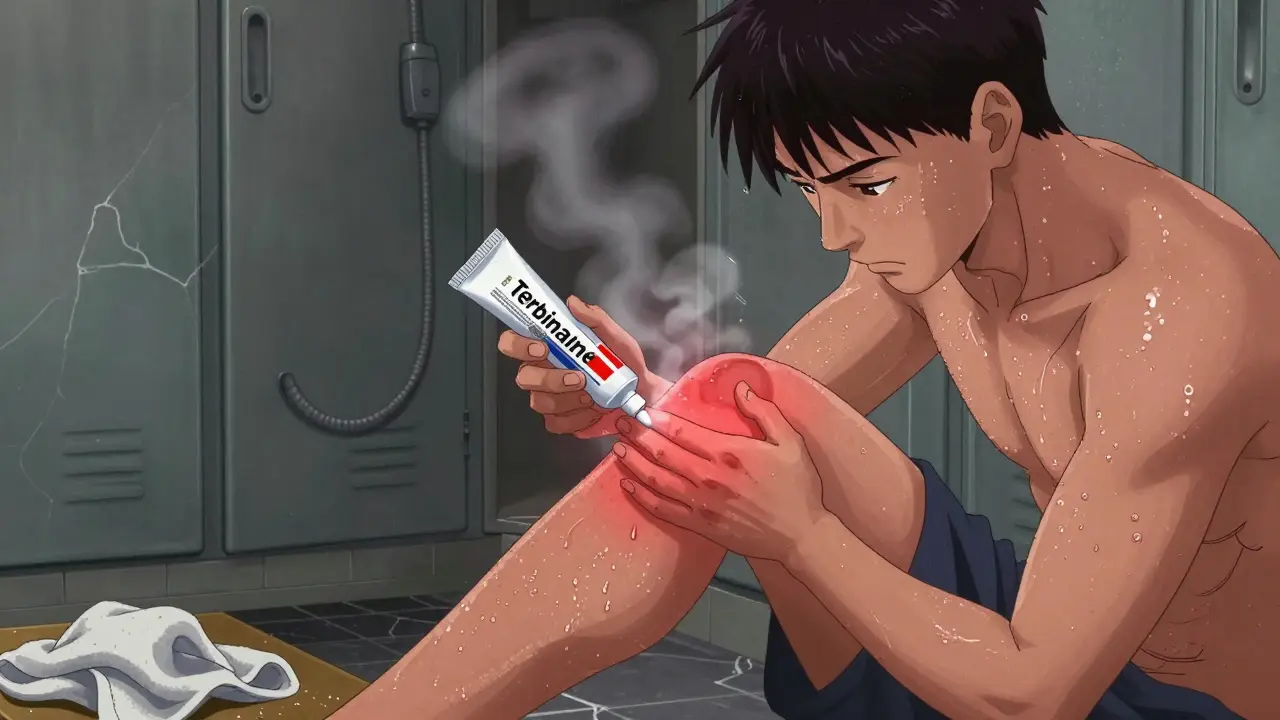
| Terbinafine | 1% | 80-90% | 1-2 weeks |
| Ketoconazole | 2% | 75-85% | 2-4 weeks |
Terbinafine cream (like Lamisil AT) is the fastest. Many users see improvement in 3-5 days. Clotrimazole takes longer-7 to 10 days to start working. But both work if you stick with them.
Here’s the catch: 68% of people stop using the cream as soon as the rash looks better. That’s a mistake. The fungus is still there. Stopping early leads to recurrence in 45% of cases.
Apply the cream twice a day. Cover the rash and a bit beyond it-about an inch past the edge. Don’t just dab on the center. Keep going for the full 2-4 weeks, even if it looks gone. That’s how you kill the roots.
When Creams Aren’t Enough
Some infections need more than cream.Scalp ringworm? Nail fungus? These don’t respond well to topicals. The fungus hides too deep. For tinea capitis, doctors prescribe oral terbinafine-250mg a day for 4 to 6 weeks. Cure rates hit 85-90%. Same for stubborn nail infections.
Oral antifungals can cause side effects-nausea, headaches, liver stress. That’s why doctors don’t hand them out lightly. Blood tests are sometimes needed before and during treatment.
And here’s a warning: antifungal resistance is rising. A 2022 study found a 12% increase in terbinafine-resistant strains between 2018 and 2022. That means some infections that used to clear in two weeks now need three or four. If your rash isn’t improving after 10 days of cream, see a doctor.
What Doesn’t Work
Tea tree oil gets a lot of hype. Some people swear by it. But a 2021 Cochrane Review looked at all the studies-and found no strong evidence. It clears the infection in only 40-50% of cases. Compare that to 70-90% with approved antifungals.Other home remedies-vinegar, coconut oil, garlic paste? No solid proof. They might soothe itching, but they won’t kill the fungus. Don’t waste time. Use what works.
Prevention: Stop It Before It Starts
You don’t need to live in fear. Simple habits cut your risk:- Wear flip-flops in public showers and pools-cuts risk by 45%
- Change socks daily. Twice a day if you sweat a lot
- Avoid sharing towels, hats, or shoes
- Dry skin thoroughly after showering, especially between toes and in the groin
- Wash athletic gear after every use
- If your pet has patchy fur or scaly skin, take them to the vet
And if someone in your house has ringworm? Wash bedding, towels, and clothes in hot water. Vacuum carpets and mats. Disinfect shared surfaces. Fungal spores can live for months.

Why Timing Matters
Start treatment early. The sooner you act, the faster you heal. Dr. Adam Friedman, a dermatology professor, says starting treatment at the first sign can cut healing time by 5 to 7 days. Delay it, and the rash can spread to cover 30-50% more skin in just two weeks.Children under 10 are especially vulnerable to scalp ringworm. If a kerion forms, it can leave permanent scars. That’s why schools report outbreaks every year-15-20% of elementary schools see at least one. Kids get embarrassed. Some are bullied. That’s why parents need to check their child’s scalp regularly, especially if they’ve been in a group setting.
Cost and Accessibility
Over-the-counter creams cost $5 to $15 each. Most people spend about $8.75 per tube. Prescription oral meds? $25 to $150, depending on insurance. In the U.S., ringworm costs the healthcare system $500 million a year. That’s a lot of cream.But the real cost? Lost time. Missed school. Social anxiety. One 2022 survey found 73% of teens with visible ringworm reported being teased or isolated. That’s not just a skin problem. It’s a mental one too.
When to See a Doctor
You don’t need to run to the clinic for every red patch. But call your doctor if:- The rash doesn’t improve after two weeks of cream
- It spreads quickly or gets worse
- You have a kerion (swollen, pus-filled lump on the scalp)
- You’re immunocompromised
- It’s on your nails and thickening
- You’re a child with scalp symptoms
Doctors can do a simple skin scraping test. Under a microscope, they can spot the fungus and confirm it’s not eczema, psoriasis, or another rash.
Is ringworm contagious?
Yes. Ringworm spreads easily through skin contact, shared items like towels, or contaminated surfaces like gym mats. It’s most contagious when the rash is active and spreading. Once treatment starts, it becomes less infectious after 48 hours.
Can I get ringworm from my pet?
Absolutely. Cats and dogs can carry the fungus without showing symptoms. If your pet has bald patches, scaly skin, or excessive scratching, take them to the vet. Wash your hands after handling them, and avoid letting them sleep on your bed until treated.
How long does it take for antifungal cream to work?
You’ll usually see improvement in 3 to 7 days with terbinafine, and 7 to 10 days with clotrimazole. But you need to keep using it for the full 2 to 4 weeks-even if the rash looks gone. Stopping early causes relapse in nearly half of cases.
Can ringworm come back after treatment?
Yes, if you don’t finish the treatment or if you’re re-exposed. Recurrence is common-45% of people who stop cream early get it back. To prevent it, keep skin dry, avoid shared items, and check pets for signs of infection.
Are natural remedies like tea tree oil effective?
No. Studies show tea tree oil clears ringworm in only 40-50% of cases. Prescription antifungals work in 70-90%. Natural remedies may soothe itching, but they won’t kill the fungus reliably. Stick with proven treatments.
Should I stay home from school or work if I have ringworm?
Not necessarily. Once you start antifungal cream, the risk of spreading drops significantly after 48 hours. Cover the rash with a bandage if possible, avoid close contact sports, and don’t share personal items. Most schools allow kids to return after starting treatment.



Katherine Carlock
January 12, 2026 AT 05:50I had ringworm on my arm last summer and thought it was just a weird rash. I ignored it for weeks until it started spreading. Then I tried clotrimazole and it took forever to clear. Terbinafine? Game changer. Used it for 10 days straight and it was gone. Don’t be like me and wait.
Also, my cat had a bald patch. Turns out she was the source. Never thought pets could be silent carriers. Vet confirmed it. Now I check her weekly.
And yes, I still don’t share towels. Ever.
Sona Chandra
January 13, 2026 AT 22:53TEA TREE OIL IS A SCAM. PEOPLE KEEP POSTING THIS LIKE IT’S MAGIC. YOU THINK A FEW DROPS ON A CLOTH IS GOING TO KILL A FUNGUS THAT SURVIVES IN SHOWER FLOORS FOR MONTHS? GET REAL. I’VE SEEN THIS IN INDIA FOR YEARS - THE MOMENT YOU STOP USING THE CREAM, IT COMES BACK WITH A VENGEANCE. USE WHAT WORKS OR STAY ITCHY.
AND YES, YOUR PET IS THE CULPRIT. STOP BLAMING THE GYM.
beth cordell
January 14, 2026 AT 21:57OMG YES I’VE BEEN THERE 😭
My niece got scalp ringworm in preschool - kerion and everything. Looked like a little bald volcano. We thought it was dandruff. Took 6 weeks of oral meds and a whole new level of laundry detergent.
Also, I now wash my yoga mat with bleach. No shame. 🧼🧽
And if you’re using tea tree oil… I’m sorry. I’ve seen your skin.
Lauren Warner
January 15, 2026 AT 08:30Let’s talk about the 68% who stop using cream too early. That’s not ignorance. That’s laziness. You wouldn’t stop antibiotics after three days. Why do this? The article says it clearly. The fungus is still there. You’re not being brave. You’re being stupid. And now you’re back in the same spot with a bigger rash.
Also, ‘natural remedies’ are just placebo with a higher price tag. Don’t confuse anecdote with science.
Lelia Battle
January 15, 2026 AT 15:55It’s fascinating how a simple fungal infection can reveal so much about human behavior - our tendency to delay, our trust in anecdote over evidence, and our discomfort with bodily imperfections. Ringworm is not a moral failing. It’s biology. Yet we treat it like a personal shame, especially in children.
Perhaps the real infection isn’t the dermatophyte, but the stigma attached to it. We fear the visible, the unfamiliar, the ‘other.’
And yet, the solution is so simple: consistency, hygiene, and compassion. The cream works. The science is clear. The harder part is changing how we see it.
Rinky Tandon
January 16, 2026 AT 03:23INDIA HAS BEEN DEALING WITH TINEA FOR DECADES AND STILL PEOPLE USE COCONUT OIL AND HOMEPATHY. THIS IS WHY OUR HEALTHCARE SYSTEM IS BROKEN. TERBINAFINE IS 90% EFFECTIVE. WHY ARE YOU WASTING TIME WITH TEA TREE OIL? YOU THINK YOUR GRANDMA’S REMEDY WORKS? THE FUNGUS DOESN’T CARE ABOUT YOUR CULTURE.
IF YOUR KID HAS A SCALP RASH - GO TO A DOCTOR. NOT TO A HERBALIST. NOT TO A YOUTUBE VLOGGER. DOCTOR.
AND STOP SHARING TOWELS. EVEN IN FAMILIES. IT’S NOT ROYALTY. IT’S A FUNGAL TRANSMISSION VECTOR.
Ben Kono
January 17, 2026 AT 06:44Cassie Widders
January 17, 2026 AT 09:30Went to the gym last week and saw someone with a red circle on their arm. Didn’t say anything. But I wiped down my bench with disinfectant after. Just in case.
Also, flip-flops in the shower. Non-negotiable. Been doing it since high school. Still no ringworm. No bragging. Just smart.
Konika Choudhury
January 18, 2026 AT 06:15MY MOTHER USED TO APPLY TURMERIC PASTE AND IT WORKED FINE. NO NEED FOR CHEMICALS.
Darryl Perry
January 19, 2026 AT 04:18Windie Wilson
January 21, 2026 AT 04:06So let me get this straight - I can get ringworm from my cat, my yoga mat, and the gym shower, but if I use tea tree oil, I’m a ‘spiritual warrior’? 🙄
Meanwhile, my dermatologist is laughing at my Pinterest board of ‘natural remedies.’
Also, I now have a ‘ringworm towel.’ It’s bright pink. I don’t let anyone touch it. It’s my little victory flag.
Daniel Pate
January 22, 2026 AT 12:07It’s interesting how ringworm functions as a mirror for public health literacy. We’re surrounded by information, yet we cling to myths because they’re comforting. Tea tree oil feels like control. Antifungal cream feels like surrender to Big Pharma.
But biology doesn’t care about our narratives. The fungus reproduces on keratin, not on hope.
The real question isn’t ‘which cream works?’ - it’s ‘why do we resist the simplest, most effective solution?’
Amanda Eichstaedt
January 24, 2026 AT 08:15I’m a vet tech and I see this every week. People come in with their dog with a bald spot and say ‘it’s just dry skin.’ Then they show me the ring-shaped rash on their own leg.
One mom brought her kid in with scalp ringworm - kerion, hair loss, the whole thing. She said she waited because she didn’t want to ‘overreact.’
By the time they came, the fungus was in the carpet, the pillows, the stuffed animals.
Don’t wait. Don’t hope. Don’t Google it. See a doctor. Use the cream. Wash everything.
And yes, your cat doesn’t need to wear a tiny hat. But she does need a vet visit.
Katherine Carlock
January 25, 2026 AT 02:37Wait, I just read the comment about tea tree oil and turmeric. I get it - natural is comforting. But my cousin used turmeric paste for two months. Rash got worse. Then she used terbinafine. Gone in 10 days.
It’s not about tradition vs science. It’s about what actually kills the fungus. And science has the data. Tradition has the stories.
Also, I now have a ‘no towel sharing’ rule. Even with my partner. It’s weird. But worth it.