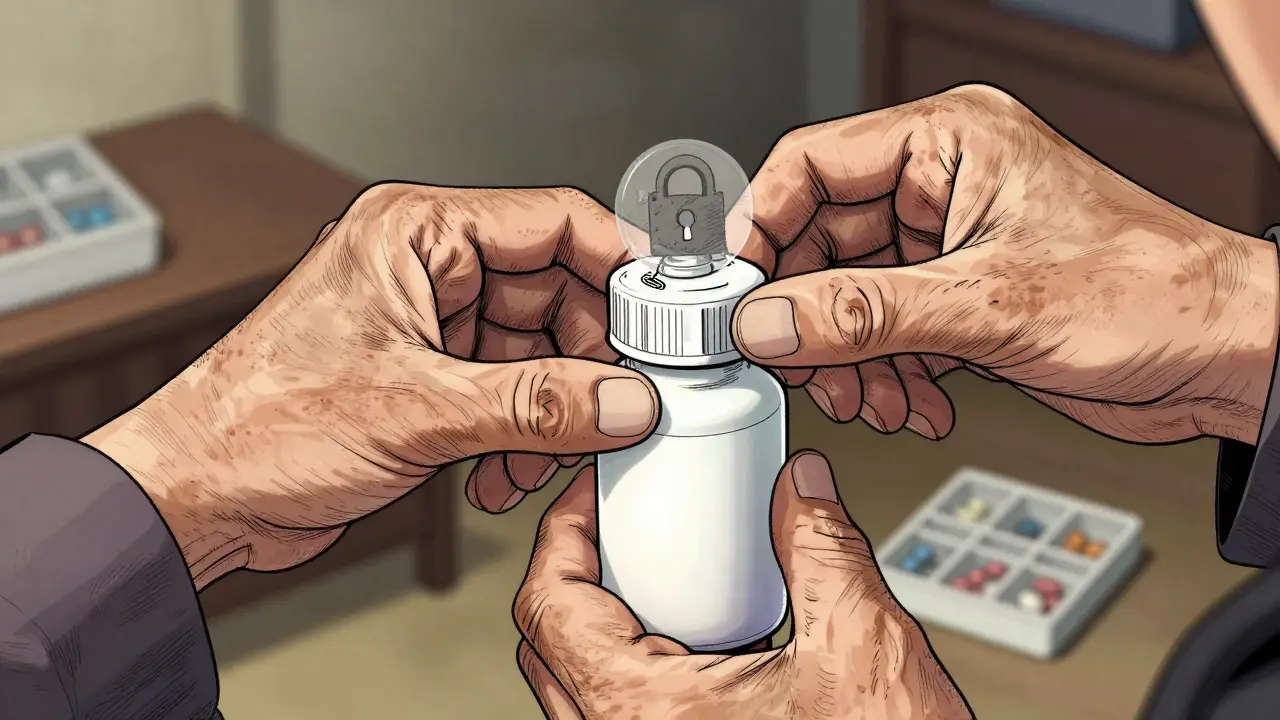
Have you ever struggled to open a medicine bottle until your hands shook or gave up entirely? You are not alone. For millions of people, especially those over 65 with arthritis or limited dexterity, standard child-resistant packaging is a mandatory safety feature designed to prevent accidental poisoning in children but often creates significant barriers for seniors can feel like a locked vault. While these caps save lives by keeping toddlers safe, they can also lead to missed doses, medication errors, and frustration for older adults who simply need their daily pills.
The good news is that you have the right to request alternatives. Whether you need easy-open caps are senior-friendly closures that require significantly less force to open while maintaining child safety standards or large-print labels, pharmacies are required to accommodate your needs. This guide will walk you through exactly how to request these changes, what types of packaging exist, and how to ensure you get them without unnecessary delays.
Understanding Your Rights and Options
First, it helps to know that requesting accessible packaging isn't just a favor you're asking for-it's often a regulated requirement. The Poison Prevention Packaging Act (PPPA) is U.S. federal legislation from 1970 that mandates child-resistant packaging for certain household substances, including prescription drugs was passed to protect young children, but regulations have evolved. Today, agencies like the FDA and the Access Board recognize that accessibility matters too. In fact, approximately 49% of adults over 65 report difficulty opening standard child-resistant closures. That’s nearly half of the senior population struggling with something as basic as taking their medicine.
You don’t need a doctor’s note to request easier-to-open bottles or clearer labels, although having one can sometimes speed up the process. Pharmacies must provide accessible options upon request. The key is knowing what to ask for. There are several types of senior-friendly closures available today:
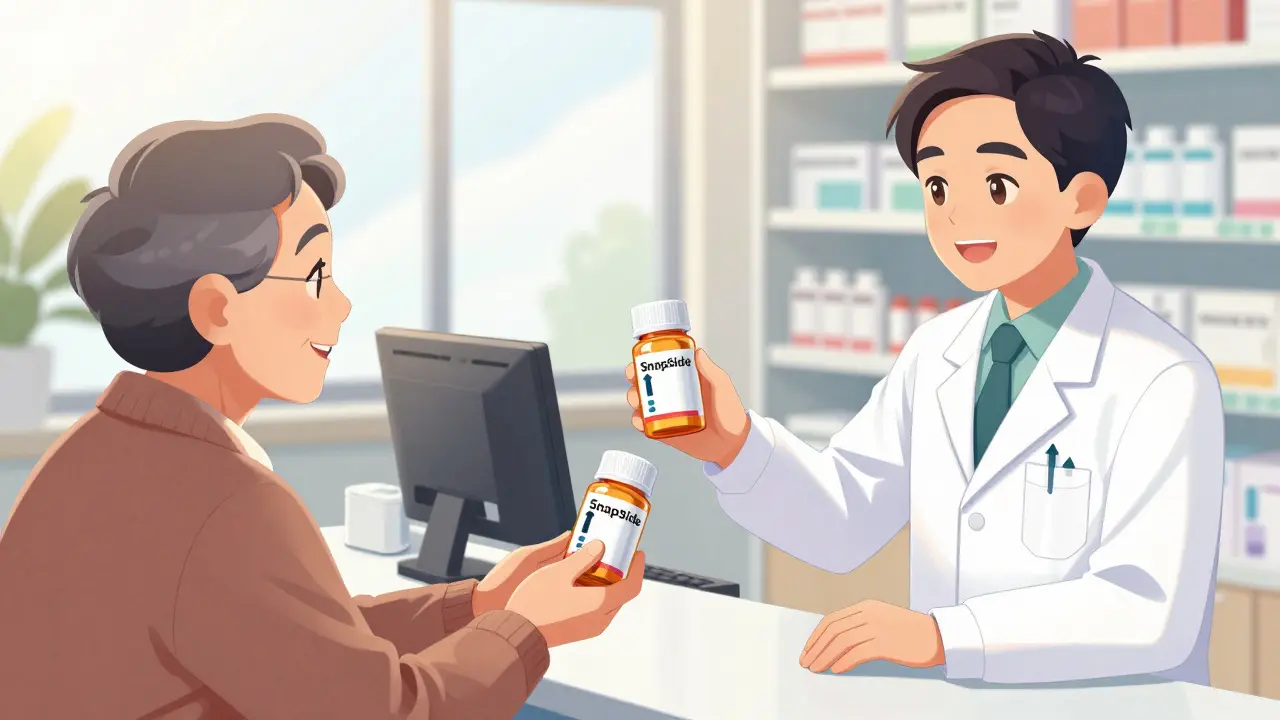
- SnapSlide Rx Closures: These use a sliding mechanism rather than twisting. They require less than 2.5 pounds of force to open, making them ideal for those with severe arthritis. Independent testing showed that 87% of seniors with arthritis could open these within 30 seconds.
- Flip Caps: These offer a balance between security and ease. While still child-resistant, they reduce the effort needed compared to traditional push-and-turn caps. Senior opening difficulties drop to 22% with these caps.
- EZ-Open Bottles: These feature large serrations for better grip. However, note that some versions lack child-resistance, so clarify this with your pharmacist if you have grandchildren visiting frequently.
When it comes to labels, options include large print (minimum 16-point font), Braille labels following Grade 2 standards, and even audible formats that read out label information within 90 seconds. Knowing these specific terms helps you communicate clearly with pharmacy staff.
Step-by-Step: How to Request Accessible Packaging
Getting the right packaging starts with timing. Many patients make the mistake of waiting until pickup day to request changes. By then, the medication has already been dispensed in standard packaging. Here’s how to do it right:
- Request at Prescription Creation: When you send your prescription to the pharmacy-whether via app, phone, or in person-immediately specify that you need easy-open caps or accessible labels. If you’re filling a new prescription, mention it before the pharmacist processes it.
- Provide Documentation (Optional but Helpful): While not legally required, bringing a note from your rheumatologist or optometrist confirming your condition can help resolve disputes quickly. Some independent pharmacies may hesitate without proof, though chain stores like CVS Health have system-wide policies supporting accessible packaging.
- Plan Ahead: Pharmacies typically need 24-72 hours to prepare accessible packaging because they may need to repackage medications or order special stock. Don’t wait until you’re out of meds; give them notice.
- Be Specific: Instead of saying “I can’t open this,” say “I need a SnapSlide cap” or “I need large-print labels.” Specificity reduces confusion and ensures you get exactly what works for you.
If you’re picking up an existing prescription, go to the counter and politely explain your situation. Say something like, “I’m having trouble opening my current bottles due to arthritis. Can we switch me to senior-friendly packaging for future refills?” Most pharmacists are happy to help once they understand the issue.
Comparing Standard vs. Accessible Packaging
| Feature | Standard Push-and-Turn Cap | SnapSlide Rx Closure | Flip Cap |
|---|---|---|---|
| Child Resistance Effectiveness | 98% | 94% | 92% |
| Senior Opening Difficulty Rate | 49% | 13% | 22% |
| Force Required to Open | 4.5-8.5 lbf | <2.5 lbf | 3-5 lbf |
| Availability in Major Chains | Universal | Growing (CVS, Walgreens) | Common |
| Cost Premium | None | 15-20% higher | 10-15% higher |
This table shows why switching might be worth it. Yes, accessible packaging costs slightly more to manufacture, but Medicare Part D now covers these extra costs for beneficiaries with documented dexterity or vision limitations. So, financially, there’s little reason to stick with hard-to-open bottles if you qualify.
Dealing with Pharmacy Pushback
Not every experience will be smooth. A January 2024 Yelp review highlighted a case where a patient requested large-print labels three times before citing HIPAA regulations finally got results. Unfortunately, inconsistent availability remains a problem, especially at independent pharmacies. Only 37% of independent locations consistently offer accessible packaging due to inventory constraints.
If you face resistance, here’s what to do:
- Cite Regulations: Politely remind the pharmacist that the Access Board’s 2019 guidelines require accessible labeling formats. Mentioning specific rules often prompts action.
- Ask for Manager Assistance: Frontline staff may not know all options. A manager can check inventory systems or place special orders.
- Switch Pharmacies: If one location repeatedly fails you, consider moving to a chain like CVS or Walgreens, which have implemented system-wide accessible packaging programs since late 2023.
- Use Support Resources: Call the National Council on Aging’s Medication Access Hotline (1-800-555-0123). They reported handling over 12,500 calls in early 2024 with a 94% success rate resolving issues.
Remember, persistence pays off. Many users report dramatic improvements in medication adherence after switching. One Reddit user noted their pain medication adherence jumped from 65% to 95% after getting SnapSlide caps.
Future Trends and What’s Coming Next
The landscape is changing fast. The FDA released draft guidance in May 2024 proposing mandatory accessibility assessments for all new prescription products. Compliance would be required within 18 months of finalization. Meanwhile, SnapSlide LLC announced Version 2.0 of their closure in June 2024, featuring biometric authentication to enhance child safety further while keeping senior access easy. Commercial availability is expected in early 2025.
In Europe, the Medical Device Regulation (MDR) 2024/123 update, effective January 2025, requires dual testing for both child resistance and senior accessibility using ISO 17480 protocols. Industry analysts predict that by 2027, 65% of prescription medications will feature integrated accessibility features, up from just 28% in 2023.
These trends mean that accessible packaging won’t just be an option-it’ll become the norm. But until then, advocating for yourself ensures you don’t miss out on safer, easier medication management.
Do I need a doctor’s note to get easy-open caps?
No, you do not legally need a doctor’s note. Pharmacies must provide accessible packaging upon request according to Access Board guidelines. However, having documentation can help resolve disputes faster, especially at independent pharmacies.
Are easy-open caps still child-resistant?
Yes, most senior-friendly closures like SnapSlide Rx and flip caps maintain high levels of child resistance (92-94%). They are tested under ISO 8317 standards to ensure they meet safety requirements while being easier for adults to open.
How long does it take to get accessible packaging?
Pharmacies typically require 24-72 hours to prepare accessible packaging. Plan ahead when requesting changes to avoid running out of medication.
Does Medicare cover the cost of accessible packaging?
Yes, Medicare Part D’s 2024 policy update covers the additional costs for accessible packaging for beneficiaries with documented dexterity or vision limitations.
What should I do if my pharmacy refuses to provide accessible labels?
Politely cite the Access Board’s 2019 guidelines, ask to speak with a manager, or contact the National Council on Aging’s hotline for support. Consider switching to a pharmacy chain with established accessible packaging programs.
Which pharmacies offer the best accessible packaging options?
Major chains like CVS Health and Walgreens have implemented system-wide accessible packaging options since late 2023. Independent pharmacies vary widely, with only about 37% consistently offering these solutions.
Can I request Braille or large-print labels for my prescriptions?
Absolutely. Large-print labels must use at least 16-point font, and Braille labels follow Grade 2 standards. Audible formats are also available for complete label information within 90 seconds.
Will accessible packaging become mandatory soon?
The FDA proposed mandatory accessibility assessments for new prescription products in May 2024, with compliance expected within 18 months. By 2027, industry analysts predict 65% of prescriptions will feature integrated accessibility features.