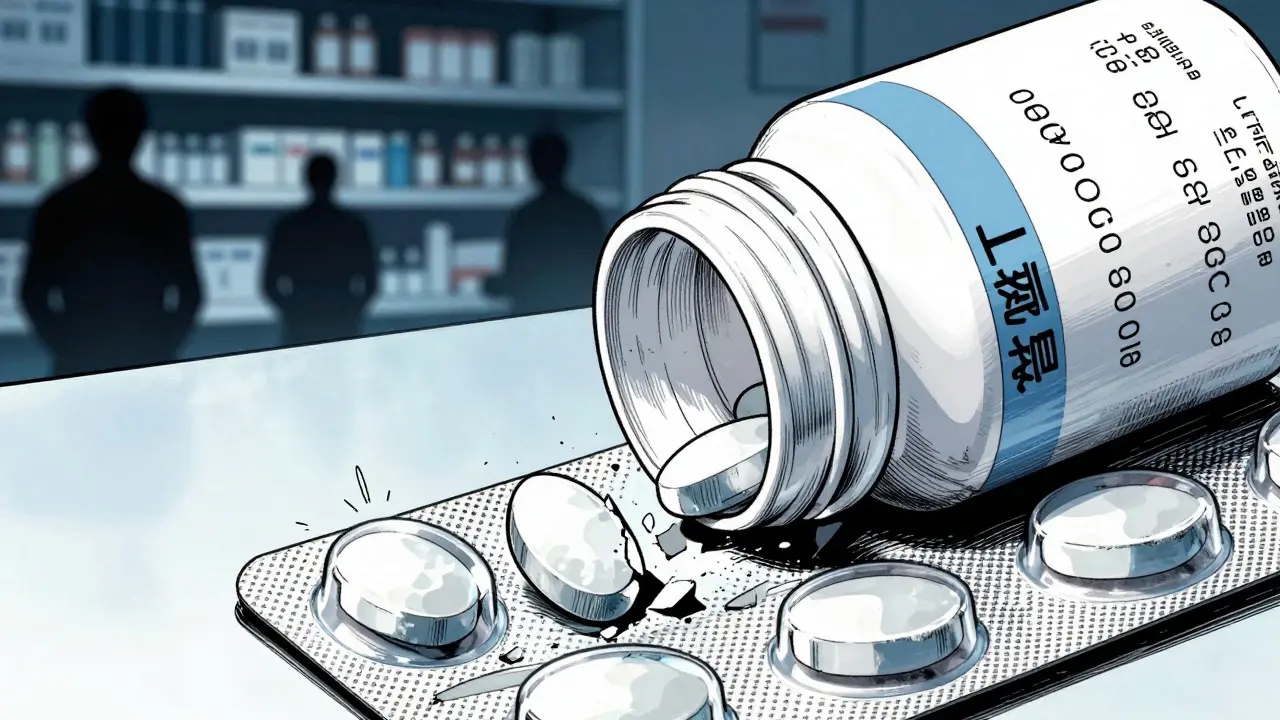
You just got your prescription filled. You pop a pill, and two days later, you feel worse than before. Or maybe the pill looks slightly different from last month-wrong color, weird smell, or it crumbles in your hand. It’s not just your imagination. Counterfeit medications are pharmaceutical products deliberately mislabeled regarding identity or source, often containing wrong ingredients, incorrect dosages, or no active ingredient at all. According to the World Health Organization (WHO), these fakes kill an estimated 500,000 people annually from diseases like malaria and pneumonia alone. In developed nations, they make up about 1% of the trade, but in some regions, that number jumps to 30%. This isn’t a distant threat; it’s a $200 billion criminal industry right under our noses.
Identifying these red flags is no longer optional-it’s a survival skill. With the rise of online pharmacies and sophisticated printing technology, spotting a fake requires more than a quick glance. Let’s break down exactly what to look for, from the box to the bottle, so you can protect yourself and your family.
The Price Is Too Good to Be True
If you see a discount of 50% or more on a brand-name drug, stop scrolling. Legitimate pharmaceutical companies rarely discount their products by more than 20% below market rate. Counterfeiters rely on greed and desperation. The Drug Enforcement Administration (DEA) documented this in their September 2024 Operation Press Your Luck, where fake opioids were sold at massive mark-downs to lure buyers. A study by Consumer Reports found that websites offering prices 60% below retail had an 87% counterfeit rate. If the price drops significantly without a clear reason (like a manufacturer coupon or insurance copay), assume it’s fake until proven otherwise.
Cracking the Code: Packaging and Labeling Clues
Packaging inconsistencies are the most common giveaway, appearing in 78% of identified counterfeit cases according to the FDA’s 2023 database. Here is what to scrutinize:
- Spelling Errors: Present in 63% of fakes. Look for typos in instructions, brand names, or manufacturer addresses. English might be perfect, but small details like 'Pharmaceuticals' misspelled as 'Pharamceuticals' are dead giveaways.
- Batch and Expiry Dates: Missing or incorrect batch numbers appear in 41% of cases. Misplaced expiry dates happen in 37%. Legitimate drugs have laser-etched or clearly printed codes that match the manufacturer’s format.
- Print Quality: Low-quality printing with visible pixelation is a major red flag. Under 10x magnification, legitimate text is crisp. Fakes often show blurry edges or inconsistent ink density.
- Holograms: Sophisticated counterfeits now replicate holograms with 95% visual accuracy. However, legitimate holograms contain proprietary microtext visible only at 50x magnification. If you don’t have a microscope, check if the hologram changes color smoothly when tilted. Cheap fakes often look static or flat.
| Feature | Legitimate Product | Counterfeit Product |
|---|---|---|
| Price Discount | Typically <20% | Often 50-80% |
| Text Quality | Crisp, sharp, consistent font | Blurry, pixelated, variable font sizes |
| Batch/Lot Numbers | Laser-etched, matches manufacturer records | Missing, generic, or unverifiable |
| Seal Integrity | Tamper-evident, irreversible damage if opened | Easily removed, reapplied, or missing |
| Hologram Detail | Microtext visible at 50x magnification | Visual copy only, no micro-details |
Physical Inspection: The Pill Itself
Once you open the package, examine the medication. Legitimate pharmaceuticals follow strict specifications defined by the United States Pharmacopeia (USP). Tablets should not vary more than 5% in weight or 2% in diameter. They should be uniform in color and shape.
Watch out for these physical defects:
- Texture and Coating: Cracking, bubbling coatings, or crumbliness indicate poor manufacturing. Pfizer’s 2023 identification guide emphasizes that legitimate pills have smooth, consistent coatings.
- Smell and Taste: A strong chemical odor or unusual taste is a warning sign. Reddit’s r/pharmacy community reported 623 instances where users noted a 'different smell than previous refill.'
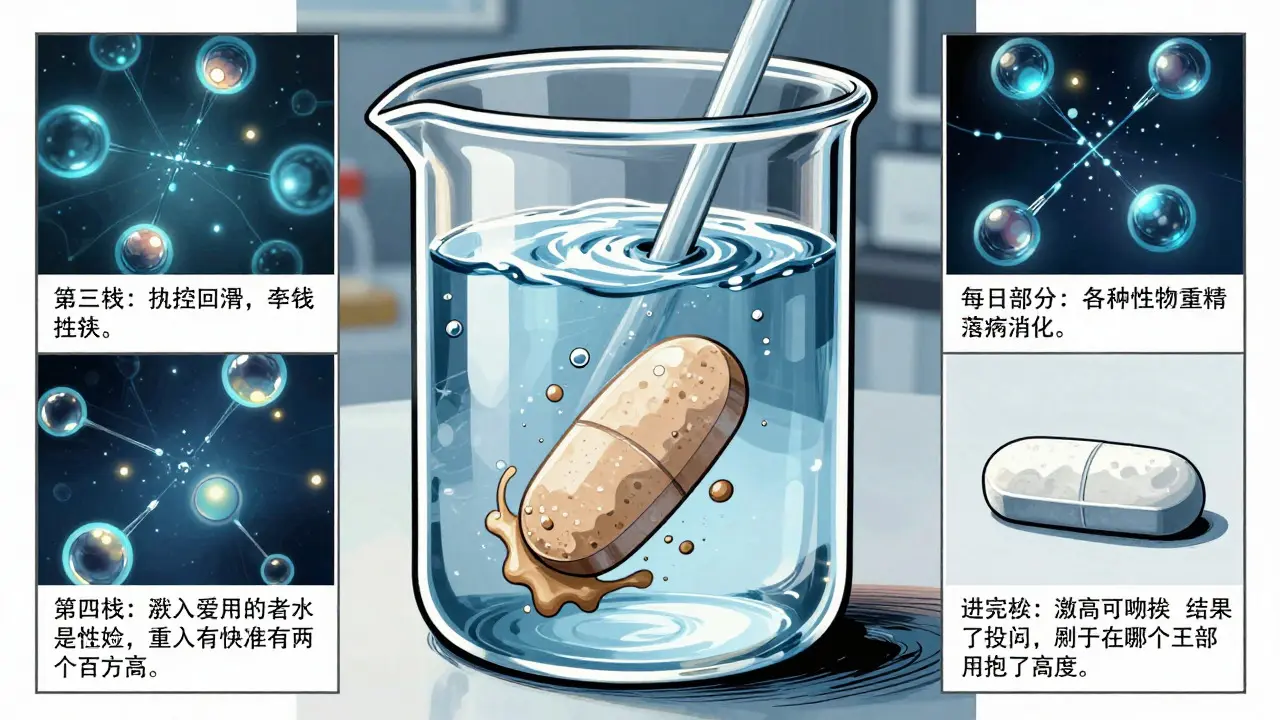
- Dissolution Test: Legitimate tablets shouldn’t fully dissolve in water within 30 minutes of gentle agitation. Dr. Roger Bate’s 2023 study showed that 98.7% of counterfeit antimalarials failed disintegration testing within 30 minutes, while 100% of legitimate products met USP standards. If your pill turns into mush in 2 minutes, throw it out.
- Embossing Patterns: Even microscopic differences in embossing can indicate fakes. Legitimate manufacturers use precision tooling. If the logo looks shallow or distorted, be suspicious.
Online Pharmacy Verification
The internet is the primary marketplace for counterfeit drugs. Interpol identified over 35,000 illegal online pharmacies in 2024. To stay safe, verify the site before buying.
- Check the Domain: Look for the .pharmacy domain registered through the National Association of Boards of Pharmacy (NABP). As of January 2025, only 6,214 sites were verified. Most fakes use .com, .net, or obscure domains.
- Prescription Requirement: 92% of verified counterfeit incidents involved online pharmacies that did not require a prescription. If a site sells prescription-only drugs without asking for one, it’s likely illegal and unsafe.
- Contact Information: Legitimate pharmacies provide a physical address and phone number. Fakes often list P.O. boxes or non-working numbers.
- NDC Code Check: Verify the National Drug Code (NDC) against the FDA’s National Drug Code Directory, which is updated weekly. If the code doesn’t exist, don’t buy it.
Symptoms and Side Effects
Sometimes, the pill looks fine, but the effect is wrong. Unexpected side effects are reported in 43% of counterfeit cases. For example, patients taking counterfeit metformin experienced severe hypoglycemia because the fake contained glyburide instead. If you experience new or worsening symptoms after starting a medication, contact your doctor immediately. Do not assume it’s just your body adjusting.
What to Do If You Suspect a Fake
If you find multiple red flags, do not take another dose. Follow these steps:
- Stop Use: Discontinue the medication immediately.
- Save Evidence: Keep the packaging, pills, and any receipts. Take photos of the label, batch number, and pill appearance.
- Report It: Submit a report to the FDA MedWatch program within 24 hours. You can also contact your local health department or the DEA.
- Consult a Professional: Talk to your pharmacist or doctor. They can help verify the drug and suggest alternatives.
Emerging Threats and Future Trends
Counterfeiters are getting smarter. The WHO warned in November 2024 about 'deep fake' medication packaging that fools 68% of consumers in initial visual inspections. AI-generated labels now mimic legitimate designs perfectly. Additionally, there is a 400% year-over-year increase in counterfeit biologics, which require specialized cold chain verification. Fake versions of high-cost drugs like Ozempic and Humira are surging due to their $969 average monthly cost.
To combat this, the FDA announced 'PharmMark' in October 2024-a mandatory microscopic marking system using luminescent nanoparticles visible only under UV light. By December 2026, all Schedule II-V controlled substances will need this mark. Until then, vigilance is your best defense.
How common are counterfeit medications?
Counterfeit medicines constitute approximately 1% of legitimate pharmaceutical trade in developed countries but reach up to 30% in some developing regions. Globally, it is a $200 billion annual criminal enterprise.
What is the biggest red flag for fake drugs?
Unusually low pricing is the biggest red flag. Legitimate pharmaceuticals rarely discount more than 20%, while counterfeits often offer 50-80% off. Packaging inconsistencies, such as spelling errors and missing batch numbers, are also critical indicators.
Can I trust online pharmacies?
Only if they are verified. Look for the .pharmacy domain registered through the NABP. Avoid sites that sell prescription drugs without requiring a prescription, as 92% of counterfeit incidents involve such sites.
How do I perform a simple test for fake pills?
You can perform a dissolution test. Place the tablet in water with gentle agitation. Legitimate tablets should not fully dissolve within 30 minutes. If it dissolves in 2 minutes or less, it may be counterfeit.
What should I do if I suspect my medication is fake?
Stop taking the medication immediately. Save the packaging and pills as evidence. Report the suspicion to the FDA MedWatch program within 24 hours and consult your doctor or pharmacist for guidance.
Are expensive drugs more likely to be counterfeited?
Yes. The DEA documented that 98 of the 100 most commonly counterfeited drugs in 2024 were specialty pharmaceuticals with list prices exceeding $1,000 per month, creating significant profit margins for criminals.
What is PharmMark?
PharmMark is a new FDA-mandated microscopic marking system using luminescent nanoparticles visible only under UV light. It will be required for all Schedule II-V controlled substances by December 2026 to help detect counterfeits.