
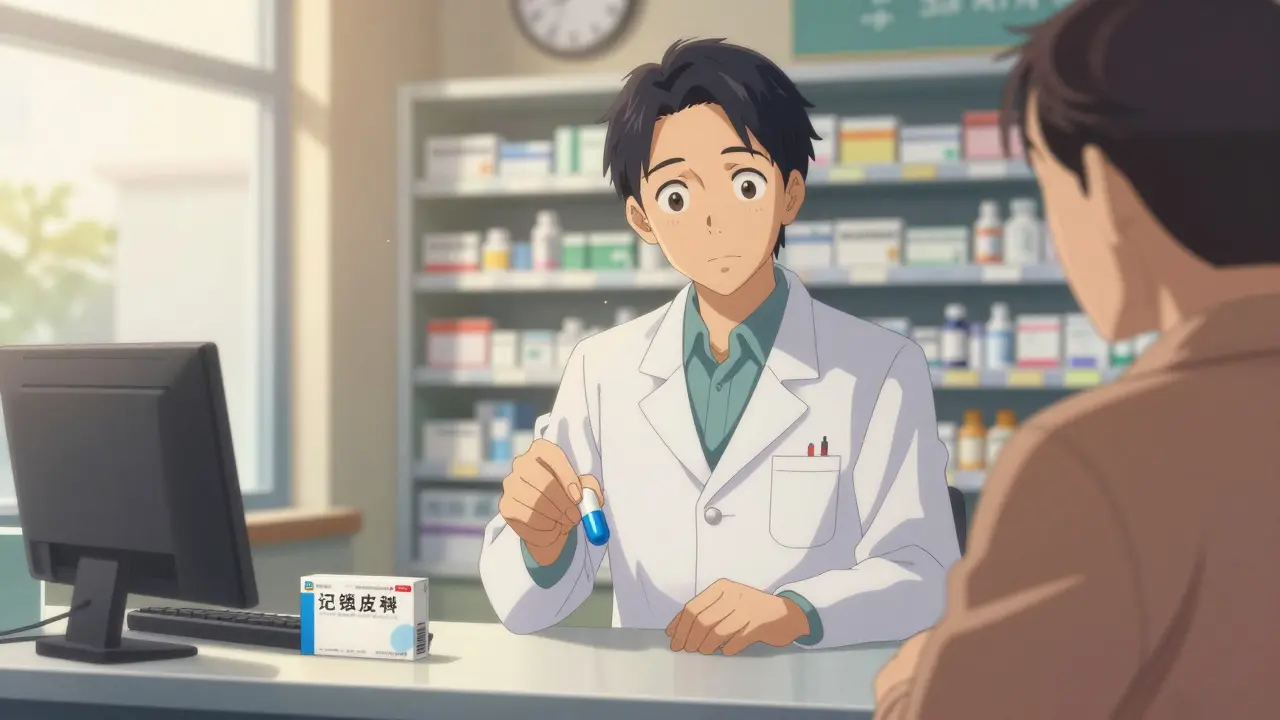
Every day, pharmacists face a quiet but powerful dilemma: hand a patient a pill that looks nothing like the one they’ve been taking for years, and watch their face twist with doubt. Generic substitution is supposed to save money - and it does. But behind the scenes, pharmacists are wrestling with more than just paperwork. They’re managing fear, misinformation, and the quiet crisis of patients who stop taking their meds because they don’t trust the new pill in the bottle.
Why Pharmacists Recommend Generics - But Patients Don’t Always Accept Them
In Australia, as in most developed countries, pharmacists have the legal right to substitute a brand-name drug with a generic version - as long as it’s approved by the Therapeutic Goods Administration (TGA) and the prescriber hasn’t marked the script "Do Not Substitute." The science is solid. The TGA, like the FDA, requires generics to match the brand in active ingredient, strength, dosage form, and bioequivalence. That means the body absorbs the drug within 80-125% of the original. On average, the difference in absorption is just 3.5%. For 9 out of 10 drugs, that’s clinically meaningless. Yet, pharmacists report that only about 72% of patients accept substitution for chronic conditions like hypertension or diabetes. For acute issues like antibiotics, acceptance jumps to 82%. Why the gap? Because patients with long-term conditions are more likely to have built a mental connection to their medication. They remember the shape, the color, the brand name. When it changes, they think something’s wrong. A 2010 Australian study found that one-third of patients had negative experiences after switching. Some reported feeling "different" - even if their blood tests showed no change. Others stopped taking the drug entirely, convinced the generic was "weak" or "fake." That’s not just a myth. It’s a real barrier to adherence, and it leads to hospitalizations, emergency visits, and higher long-term costs.The Invisible Workload: Educating Patients in 90 Seconds
Pharmacists aren’t just dispensing pills. They’re counselors, educators, and sometimes therapists. And they’re expected to do it all between filling 20 prescriptions an hour. A 2015 survey in the Journal of Managed Care & Specialty Pharmacy found that while nearly 80% of patients were told a generic was being dispensed, only 38% were told they could refuse it. That’s a legal right in many places - including Australia - but it’s rarely explained. So pharmacists are stuck trying to fix a system that doesn’t prepare patients for the switch. They have to explain why a white oval pill is just as effective as a blue capsule with a logo. They have to reassure someone who’s been on the same brand for 12 years that the new version won’t make them sick. They have to counter myths like "generics are made in China so they’re unsafe" - even though many brand-name drugs are made in the same factories. Worst of all, they’re doing this while patients are distracted, tired, or overwhelmed. A man with dementia doesn’t remember what he was told five minutes ago. A single mother with three kids doesn’t have time for a lecture. A teenager with anxiety thinks the new pill is "making me weird." And the pharmacist? They’ve got five minutes before the next customer.The Real Clinical Worries: When Substitution Gets Risky
Not every drug is created equal. Pharmacists don’t substitute blindly. They know the red flags. Narrow therapeutic index (NTI) drugs are the big concern. These are medications where a tiny change in blood level can mean the difference between control and crisis. Think warfarin (a blood thinner), lithium (for bipolar disorder), levothyroxine (for thyroid), and anti-epileptic drugs like phenytoin or carbamazepine. Even though the FDA and TGA say generics are bioequivalent, some clinicians and pharmacists still hesitate. Why? Because small differences - even within the legal 20% range - can trigger seizures in epilepsy patients or cause dangerous bleeding in those on warfarin. Studies show that when patients switch brands of anti-seizure drugs, hospital admissions for breakthrough seizures go up by 10-15% in the first few months. That’s why many pharmacists will only substitute NTI drugs if the prescriber agrees - or if the patient has been stable for months and understands the change. It’s not about distrust in generics. It’s about knowing which drugs can’t afford even a 2% shift in absorption. And then there’s the rise of biosimilars - complex biologic drugs like insulin or rheumatoid arthritis treatments. These aren’t simple chemical copies. They’re made from living cells, and small changes in production can affect how the body responds. Pharmacists are still learning how to explain this to patients. And regulators are still catching up.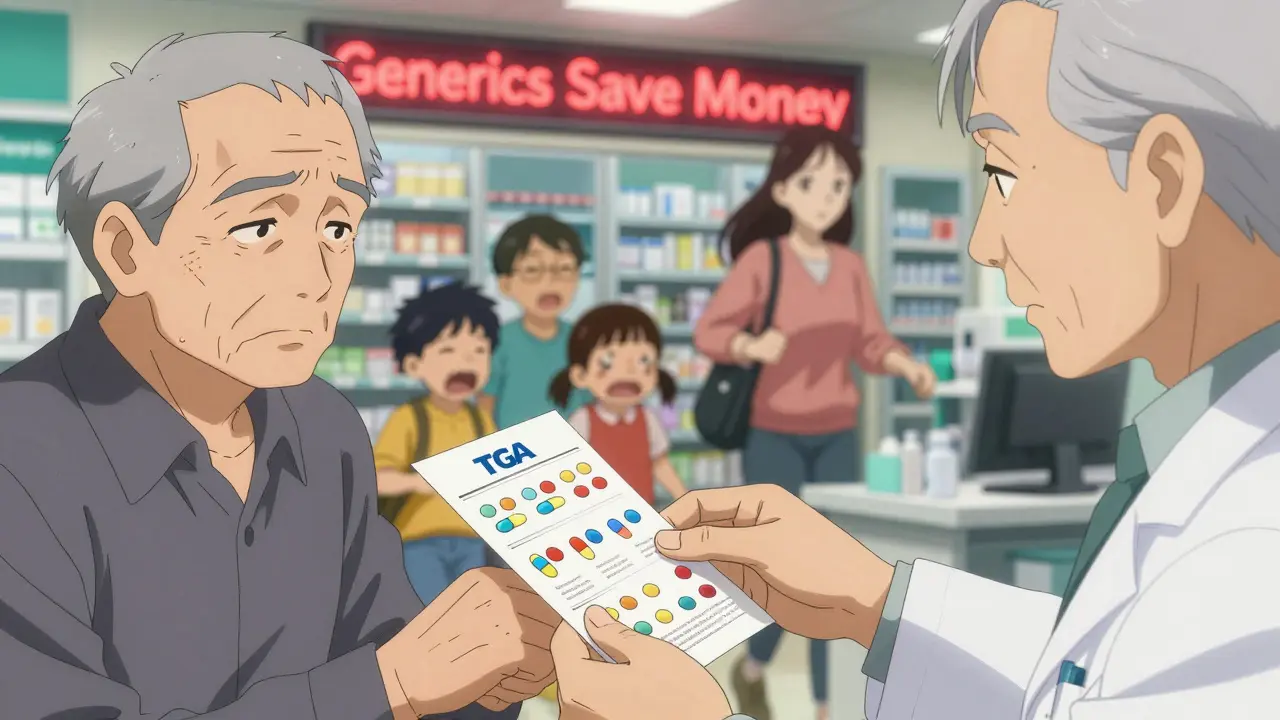
Patients Ask for Their Doctor - But the Doctor Didn’t Tell Them Anything
Here’s one of the most frustrating parts: half of all patients who refuse a generic say they want to talk to their doctor first. But here’s the catch: 64% of patients say their doctor never mentioned substitution at all. So the pharmacist becomes the default educator - even though they didn’t write the script. They’re expected to explain why a $5 generic is just as good as a $50 brand, when the doctor didn’t even bring it up. It’s a communication breakdown that puts pharmacists in the middle. They’re caught between a system that wants cost savings and patients who feel betrayed by the change. Some pharmacists have started writing short notes on scripts: "Patient was counseled on generic substitution and chose to proceed." Others keep printed handouts in the pharmacy - simple, clear, with pictures of pills and the TGA logo. One Melbourne pharmacy even uses a tablet app that shows a side-by-side comparison of brand and generic, with the absorption difference clearly marked. It’s not perfect. But it’s better than silence.What Works: How Smart Pharmacists Are Fixing the Problem
The best pharmacists aren’t waiting for policy changes. They’re changing how they talk. One trick? Start with empathy. Instead of saying, "This is a generic version," they say, "I see you’ve been taking Brand-X for years. I know that’s what you’re used to. Let me show you why this new version will work just as well - and how we know it’s safe." They use the 3.5% absorption number. Not to overwhelm, but to reassure. "The difference between the brand and the generic is less than what your body naturally absorbs from day to day." They show the TGA approval stamp. They point out that the same company that makes the brand often makes the generic too. They give patients a choice - not just legally, but emotionally. "You can take this one now, or I can call your doctor and hold the script. It’s your call." And they track outcomes. One pharmacy in Geelong started recording how many patients returned with complaints after switching. They found that those who got a 90-second chat were 70% less likely to come back upset.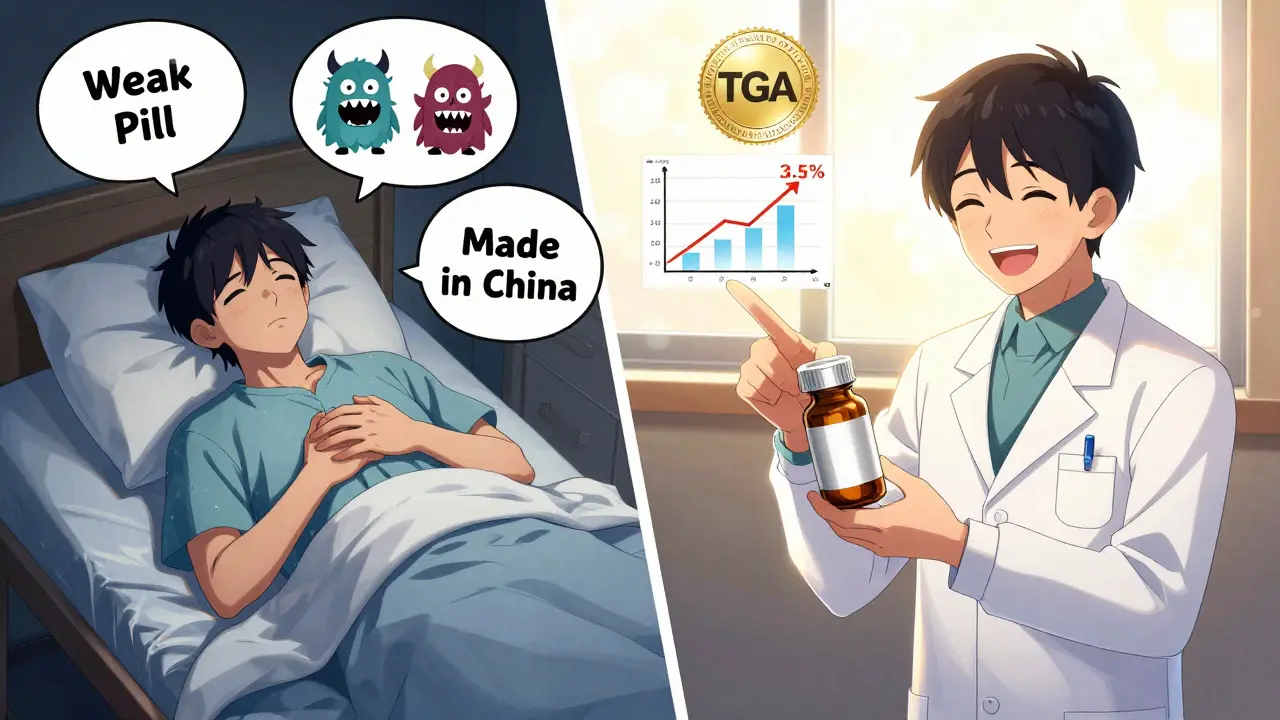
What Doesn’t Work: Assumptions and Silence
The worst thing a pharmacist can do is assume the patient knows what’s going on. Assuming they understand "bioequivalence"? No. They don’t. Assuming they know generics are cheaper? Sometimes they do - but they think cheaper means worse. Assuming the doctor explained it? Almost never. And assuming that because the law allows substitution, it’s automatically safe? That’s how mistakes happen. Pharmacists who skip the conversation - even for a simple antibiotic - end up with patients who don’t finish their course. Or worse, patients who blame the pharmacist when they feel unwell, even if the drug had nothing to do with it.Final Reality: It’s Not About the Pill. It’s About Trust.
Generic substitution isn’t broken because the science is flawed. It’s broken because trust was never built. Patients don’t distrust generics because they’re bad. They distrust them because they’ve been left in the dark. Doctors don’t talk about it. Insurance companies push it silently. Pharmacies rush through it. But the pharmacist? They’re the last person standing between the script and the patient. And they’re the only one who can turn a moment of fear into a moment of clarity. It’s not about convincing people to save money. It’s about helping them feel safe. That’s the real job.Are generic drugs really as effective as brand-name drugs?
Yes, for the vast majority of medications, generic drugs are just as effective as brand-name versions. Regulatory agencies like Australia’s TGA and the U.S. FDA require generics to contain the same active ingredient, strength, dosage form, and route of administration. They must also prove bioequivalence - meaning the body absorbs the drug within 80-125% of the brand. On average, the difference in absorption is just 3.5%. For conditions like high blood pressure, diabetes, or depression, this tiny variation has no clinical impact.
Why do some patients feel worse after switching to a generic?
Patients don’t usually feel worse because the generic is ineffective. More often, it’s psychological - the pill looks different, or they’ve heard myths about generics being "inferior." In rare cases, especially with narrow therapeutic index drugs like warfarin or anti-seizure medications, even small differences in absorption can affect stability. That’s why pharmacists carefully review these cases before switching. If a patient reports a change in how they feel, the pharmacist will check their condition, review labs, and may suggest switching back - not because the generic is unsafe, but because consistency matters for some conditions.
Can pharmacists refuse to substitute a brand-name drug?
Yes, pharmacists can refuse substitution under certain conditions. If the prescriber writes "Do Not Substitute" on the script, they must follow that. Pharmacists may also refuse if they believe substitution could harm the patient - for example, with NTI drugs if the patient has a history of instability after switching, or if the patient is elderly, has dementia, or is on multiple medications where confusion could lead to errors. In Australia, pharmacists have professional responsibility to prioritize patient safety over cost savings.
Why do generics look different from brand-name drugs?
Generics must contain the same active ingredient, but they can differ in color, shape, size, and inactive ingredients (like fillers or dyes) because those aren’t part of the therapeutic effect. Trademark laws prevent generics from copying the exact appearance of brand-name drugs. This is why patients often think they’re getting a different medicine - but it’s just a legal requirement, not a safety issue. Pharmacists should explain this upfront to avoid confusion.
What should I do if I don’t want to switch to a generic?
You have the right to refuse a generic substitution in Australia. Ask the pharmacist for the brand-name version - they can usually order it for you, though it may cost more. You can also ask your doctor to write "Do Not Substitute" on the prescription. If cost is a concern, talk to your pharmacist about patient assistance programs or alternative generics that might be cheaper. Never stop taking your medication just because you’re unsure - ask questions first.
Are biosimilars the same as generic drugs?
No. Biosimilars are not the same as traditional generics. Traditional generics are copies of simple chemical drugs, like aspirin or metformin. Biosimilars are copies of complex biologic drugs - like insulin, rheumatoid arthritis treatments, or cancer therapies - made from living cells. Because they’re more complex, biosimilars require more testing to prove similarity, and small differences can affect how they work. Pharmacists need special training to manage biosimilar switches, and patients need more detailed counseling.
Can generic substitution lead to medication errors?
Yes - but not because generics are unsafe. Errors happen when patients are confused by changes in pill appearance, packaging, or dosing instructions. This is especially risky for older adults, people with dementia, or those on multiple medications. Pharmacists reduce this risk by providing clear counseling, using visual aids, and checking for understanding. When patients are properly informed, the risk of error drops dramatically.



Thomas Anderson
December 15, 2025 AT 17:35Man, I used to think generics were sketchy too until my doc switched me to one for blood pressure. Saved me $80 a month and I feel the same. No weird side effects, no magic pills. Just cheaper science.
jeremy carroll
December 15, 2025 AT 21:36my grandma refused her generic for thyroid meds for 2 years straight. thought it was 'fake medicine' because it was white instead of green. finally got her to try it after i showed her the tga stamp. now she says 'well that was dumb' and buys the cheap one every time. trust is everything, not the pill.
Natalie Koeber
December 17, 2025 AT 18:17generics are a corporate scam. the same companies that make brand names own the generics. they just repackage the same factory output and call it 'cost-saving'. the tga? laughable. they get pressure from big pharma. you think your 'bioequivalent' pill is safe? ask yourself who funds the studies. the same labs that profit from your confusion.
Rulich Pretorius
December 19, 2025 AT 06:08There’s a deeper truth here: medicine is not just chemistry. It’s ritual. People don’t just take pills-they take comfort. The color, the shape, the name-it’s part of their healing narrative. When you disrupt that, even with perfect science, you disrupt the mind’s belief in recovery. The pharmacist’s real job isn’t dispensing-it’s rebuilding that narrative with care. That’s not policy. That’s humanity.
Dwayne hiers
December 20, 2025 AT 02:01NTI drugs are the critical edge case here. Warfarin INR fluctuations post-switch are well-documented in JAMA and Annals of Pharmacotherapy. Even within the 80-125% bioequivalence window, pharmacokinetic variability in CYP2C9 metabolizers can push patients into supratherapeutic ranges. That’s not myth-it’s pharmacogenomics. Pharmacies should be required to flag NTI switches with automated alerts and mandatory counseling. This isn’t about distrust-it’s about risk stratification.
Jonny Moran
December 20, 2025 AT 17:24I’m from a small town in Kentucky. Our pharmacy has this little board with pictures of pills-brand on one side, generic on the other. They write 'same medicine, different look' underneath. People stop and stare. Some laugh. Some cry. But they take it. It’s not about the science. It’s about seeing it. Sometimes, a picture is the only language that works.
Alexis Wright
December 22, 2025 AT 05:44Oh, so now pharmacists are therapists? Let me guess-the next step is mandatory group therapy for patients who don’t like the color of their pills. Meanwhile, the real problem is that doctors write scripts like they’re sending a grocery list. No context. No warning. No conversation. And now we blame the pharmacist for fixing a system designed by bureaucrats who think 'bioequivalence' is a customer service slogan. Wake up. This isn’t about trust. It’s about negligence.
Rich Robertson
December 24, 2025 AT 05:41My dad’s in his 70s, on 7 meds. Switched his levothyroxine to generic. He didn’t say a word. Three weeks later, he’s lethargic, gained 12 pounds, stopped cooking. We went back to brand. Bloodwork? Same TSH. But he felt different. And in medicine, feeling different sometimes *is* the difference. Not because the drug failed. Because the person needed consistency. The system doesn’t account for that.
Wade Mercer
December 25, 2025 AT 03:31If you’re going to force generics, at least make the brand-name drugs illegal. Don’t pretend you’re helping patients while quietly pushing them into uncertainty. This isn’t healthcare. It’s cost-shifting disguised as progress.
Daniel Thompson
December 25, 2025 AT 21:54As a pharmacist, I’ve seen patients refuse generics because they 'don’t trust Chinese manufacturing.' Meanwhile, 80% of brand-name pills are also made in China. I’ve had patients cry because their pill changed shape. I’ve had dementia patients mix up their meds because the generic looked like another drug. I’m not against generics. I’m against the lack of education. We’re not just pharmacists-we’re the last line of defense against medical chaos.
Daniel Wevik
December 26, 2025 AT 14:09Here’s what works: tell patients the truth. 'This pill has the same active ingredient as your brand. The difference in absorption? Less than your body naturally changes from morning to night. The TGA checked it. The same company that made your brand made this one. You’re not losing anything. You’re gaining $70 a month.' That’s it. No jargon. No pressure. Just facts, delivered calmly. It’s not rocket science. It’s respect.
Tim Bartik
December 26, 2025 AT 16:28AMERICA IS BEING POISONED BY CHEAP CHINA PILLS. BRAND NAMES ARE MADE IN THE USA. GENERICS? MADE IN A DINGY FACTORY WHERE THEY USE TALC FROM A VOLCANO. I’D RATHER PAY MORE AND KNOW MY MEDS WEREN’T MADE BY SOME GUY IN A BASEMENT WITH A 3D PRINTER. #AMERICAFIRST #STOPGENERICS
Sinéad Griffin
December 28, 2025 AT 13:42generics are fine 🙃 but why do they always look like sad, boring pills? 🤢 like, can’t they at least make them cute? i’d take a pink generic if it had a little smiley face on it 😊 maybe then my anxiety meds wouldn’t feel like a punishment
Edward Stevens
December 29, 2025 AT 00:29So let me get this straight: the system forces pharmacists to become unpaid psychiatrists, the doctors don’t explain anything, and then we’re surprised patients panic when their blue pill turns white? Wow. What a brilliant plan. I’m sure the insurance CEOs are proud.
Sarthak Jain
December 29, 2025 AT 08:01in india, we have this problem too. people think generic = bad. but i’ve seen my uncle take generic metformin for 8 years. same sugar levels. same energy. he saves enough to buy groceries. the real issue? no one teaches patients how to read the label. the pharmacist is the only one who speaks the language. we need more training, not more blame.