
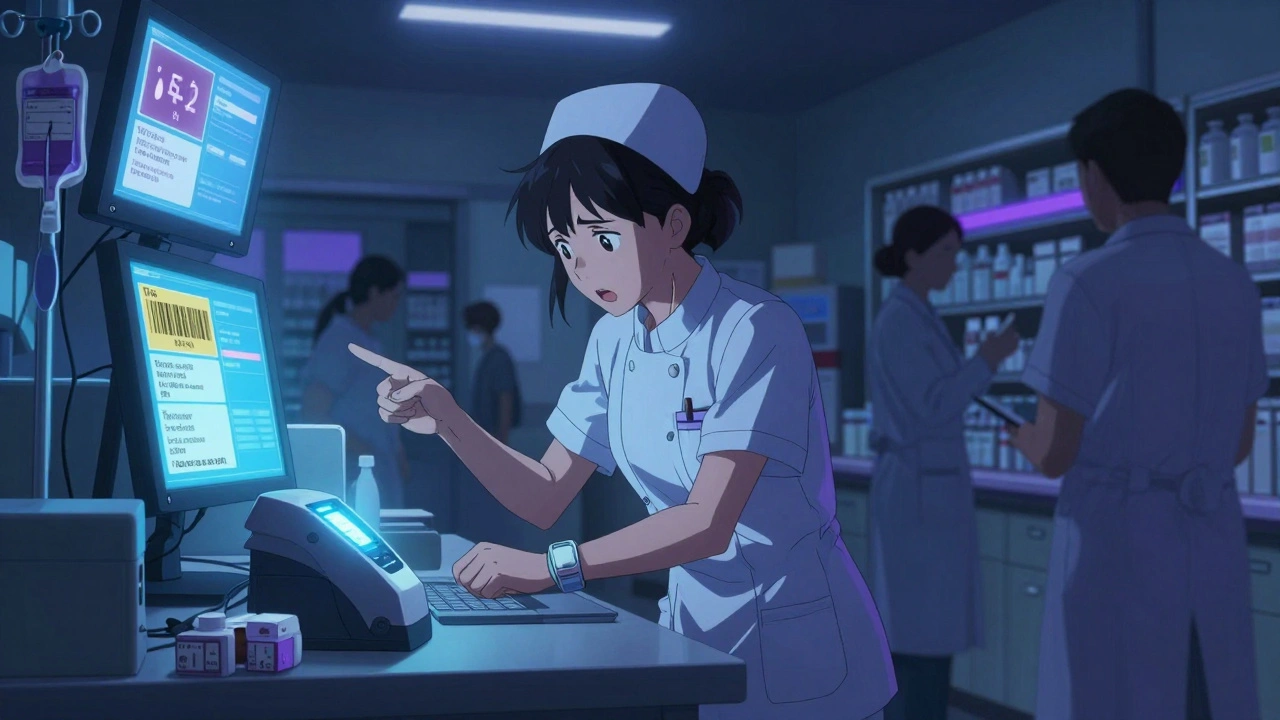
Every year, millions of people in the U.S. receive the wrong medication, wrong dose, or wrong instructions - and many of these mistakes happen right where you expect safety: at the hospital or your local pharmacy. It’s not a matter of if, but where and how these errors occur. Hospitals and retail pharmacies are both critical parts of the medication system, but they operate under wildly different conditions. And that changes everything about how mistakes happen, who catches them, and how bad they can get.
More Errors in Hospitals, But Fewer Reach Patients
Hospitals are busy. A single patient might get 10 or more medications a day, each one checked, prepared, and given by different staff. A 2006 study across 36 hospitals found that nearly 1 in 5 doses contained some kind of error. That’s 20%. It sounds terrifying. But here’s the twist: most of those errors never hurt anyone. Why? Because hospitals have layers of checks. A pharmacist dispenses the drug. A nurse verifies it against the patient’s chart. The nurse scans a barcode on the pill and the patient’s wristband. If something’s off - wrong drug, wrong time, wrong person - the system flags it. Even if the nurse misses it, the patient or family member might notice something’s wrong before the pill goes in their mouth. In contrast, retail pharmacies don’t have those layers. A pharmacist fills a prescription. A technician double-checks it. Then the patient walks out. That’s it. No nurse. No barcode scan. No follow-up. The patient becomes the last line of defense - and most people don’t know what they’re supposed to be taking. So while hospitals have more errors overall, retail pharmacies have fewer errors that slip through - but when they do, they’re more likely to reach the patient untouched.What Kind of Mistakes Happen Where?
In retail pharmacies, the most common mistakes are simple but deadly:- Wrong medication (giving metformin instead of insulin)
- Wrong dose (1 tablet twice a day instead of twice a week)
- Wrong instructions (‘take with food’ vs. ‘take on empty stomach’)
- Doctors write unclear orders (‘give 5 mg’ - but is that 5 mg of what? And when?)
- Pharmacists misread handwriting or abbreviations
- Nurses give the drug at the wrong time
- Patients get the wrong drug because two names sound alike (like hydralazine and hydroxyzine)
Why Do These Mistakes Happen?
In community pharmacies, the biggest culprit isn’t laziness - it’s pressure. Pharmacists are expected to fill 200-300 prescriptions a day. That’s one every 2-3 minutes. And they’re doing it while juggling insurance calls, answering questions, and managing automated dispensing machines that sometimes mislabel pills. A 2023 AHRQ report found that 80% of community pharmacy errors come from cognitive overload - mental fatigue, distractions, poor lighting, or confusing drug names. A pharmacist might see ‘Lisinopril’ and ‘Lisinopril-HCTZ’ on two similar-looking screens and grab the wrong one. Or they might miss a warning because they’re rushing to help the next customer. In hospitals, the problem is complexity. Patients have multiple conditions, multiple doctors, multiple medications. Communication breaks down. A cardiologist orders a blood thinner. A surgeon cancels the procedure. But the order never gets updated. The nurse gives the drug anyway. Or the electronic system auto-populates a previous dose, and no one notices it’s outdated. Staffing shortages make both worse. In community pharmacies, understaffing means fewer double-checks. In hospitals, it means nurses rushing between 6-8 patients, skipping scans, forgetting to verify.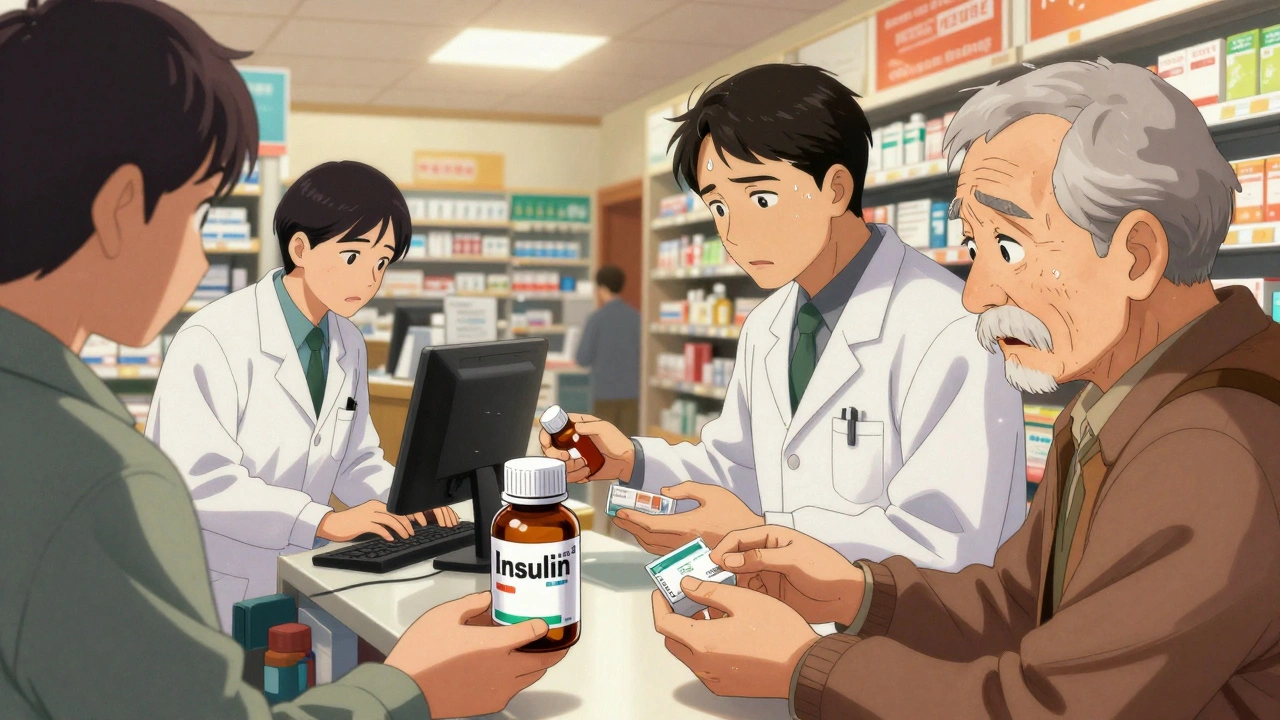
Who Catches the Mistakes?
This is the critical difference. In hospitals, errors are caught by other staff. A pharmacist catches a wrong dose before it leaves the pharmacy. A nurse catches a mismatched barcode. A patient might say, ‘I’ve never taken this blue pill before.’ The system is designed to catch mistakes before they hurt someone. In retail pharmacies, the patient is the final checkpoint - and most don’t know what to look for. A 2007 study found that for every 10,000 prescriptions filled, only 1 error was caught by the patient. The rest? They go home. The patient takes the wrong pill. They feel dizzy. They think it’s the flu. Two weeks later, they end up in the ER. By then, it’s too late to trace it back. And here’s the scary part: community pharmacies have historically had no formal way to report errors. Unlike hospitals, which log every mistake in a safety system, most pharmacies didn’t track near-misses or corrections. That’s changing - California now requires pharmacies to report errors to the state board. CVS and Walgreens have started using AI tools to flag suspicious prescriptions. But most small, independent pharmacies still don’t have the tech or resources to do the same.What’s Being Done to Fix This?
Hospitals are ahead in tech. Barcode scanning reduced medication errors by up to 86% in some systems. Electronic health records that connect directly to pharmacy systems cut errors by over half at places like Mayo Clinic. AI tools now predict which prescriptions are most likely to be wrong based on patient history and prescribing patterns. Retail pharmacies are catching up. CVS rolled out AI-powered verification in 2022 and saw a 37% drop in dispensing errors. The University of California San Francisco tested an AI system that flagged transcription errors before they reached the patient - and cut them by 63% in early trials. The CDC now recommends standardized error reporting across all pharmacy types so we can finally compare apples to apples. But technology alone won’t fix this. Culture matters. In hospitals, staff are trained to report errors without fear of punishment. In community pharmacies, pharmacists still worry about losing their license if they admit a mistake. That’s why so many errors go unreported. The National Coordinating Council for Medication Error Reporting and Prevention says the biggest step forward is creating a ‘no-blame’ culture - where staff feel safe saying, ‘I made a mistake,’ so we can fix the system, not the person.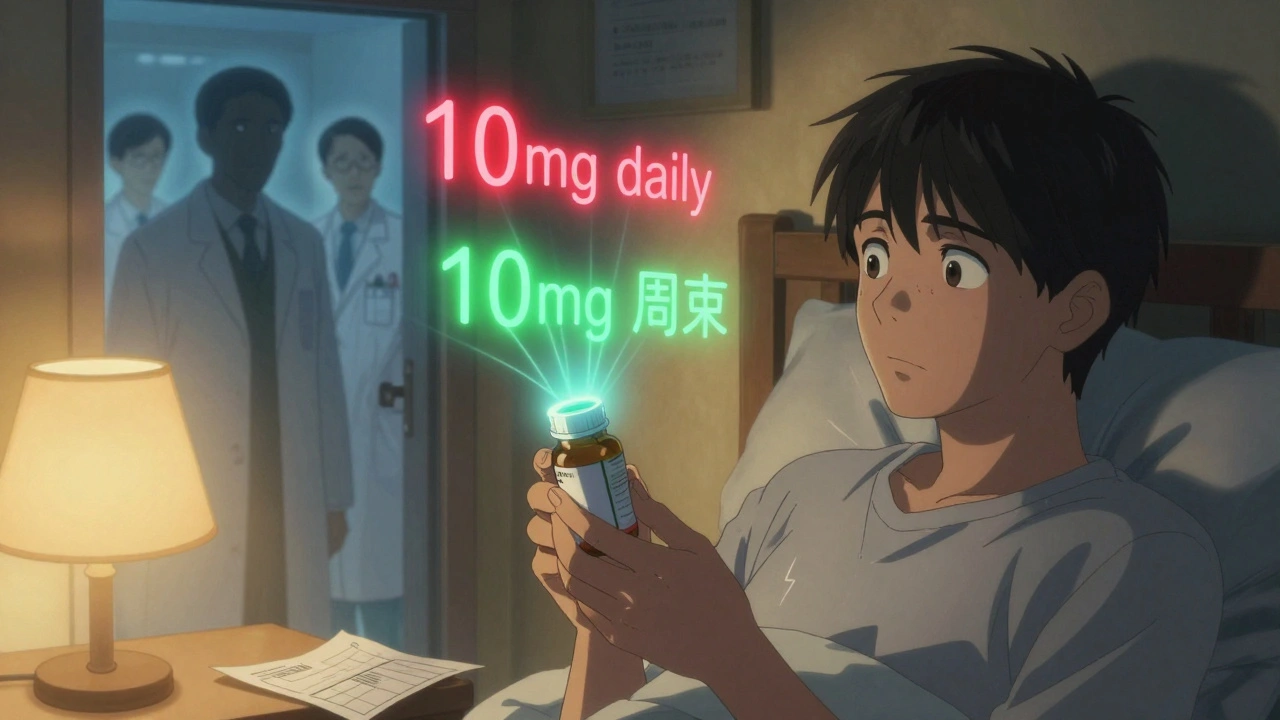
The Real Cost - Not Just Money, But Lives
Medication errors cost the U.S. economy over $177 billion a year. That includes hospital stays, emergency visits, lost wages, and long-term care. Hospitals alone account for $3.5 billion in extra medical costs annually. But money doesn’t tell the whole story. In 2023, a 72-year-old woman in Ohio took the wrong blood thinner because her pharmacy filled it with the wrong strength. She had a stroke. She’s now permanently disabled. That wasn’t a rare case. A 2018 study found that 1 in 10,000 community pharmacy errors led to hospitalization. For high-risk drugs like insulin, warfarin, or opioids, the risk is even higher. Dr. David Bates from Harvard put it simply: ‘Hospital errors are more frequent, but they’re caught. Community pharmacy errors are fewer - but they’re silent. And that’s what kills.’What You Can Do
You don’t have to wait for the system to fix itself. Here’s how to protect yourself:- Always ask: ‘Is this the same as last time?’ Compare the pill color, shape, and name.
- Read the label. Does the dose match what your doctor told you?
- If you’re given a new medication, ask: ‘What is this for? What side effects should I watch for?’
- Keep a written list of all your medications - and bring it to every appointment.
- If something feels off - dizziness, nausea, unusual fatigue - don’t ignore it. Call your pharmacist or doctor.
Are hospital medication errors more dangerous than retail pharmacy errors?
Hospitals have more errors - about 20% of doses contain mistakes - but they’re often caught before reaching the patient. Retail pharmacies have fewer errors (around 1.5%), but they’re more likely to reach the patient unchecked. When a hospital error does cause harm, it’s often more severe because patients are sicker. But a retail pharmacy error can be just as deadly, especially with drugs like insulin or blood thinners. The danger isn’t just in how often it happens - it’s in whether anyone catches it.
What’s the most common mistake in retail pharmacies?
The most common error is a transcription mistake - when the pharmacist misreads or miskeys the prescription instructions. For example, ‘1 tablet twice a week’ gets entered as ‘1 tablet twice a day.’ This happens because pharmacists are under time pressure, drug names look similar, and automated systems sometimes auto-fill the wrong dose. These errors are especially dangerous with medications like estradiol, warfarin, or insulin, where small changes in dose can cause serious harm.
Why don’t pharmacies catch more errors before they leave the store?
Most retail pharmacies don’t have the same safety layers as hospitals. There’s no nurse to double-check, no barcode scan, no electronic alert system in every store. Even when a second pharmacist checks the script, they’re often rushed. A typical pharmacy fills 250 prescriptions a day - that’s one every 2-3 minutes. Human error is inevitable under those conditions. Plus, many pharmacies still don’t have formal reporting systems, so near-misses go unrecorded and unlearned from.
Can technology reduce medication errors in pharmacies?
Yes - and it already is. CVS and Walgreens started using AI systems that flag unusual prescriptions, like a 90-year-old getting a high-dose opioid or someone on warfarin getting a new drug that interacts badly. These systems cut dispensing errors by 30-60% in pilot programs. Barcode scanning and electronic prescribing also help. But tech only works if it’s used consistently. Many small, independent pharmacies still rely on paper or basic software, and they can’t afford advanced tools. The real breakthrough will come when all pharmacies - big and small - use the same safety standards.
How can I protect myself from getting the wrong medication?
Always check the label before leaving the pharmacy. Does the drug name match your prescription? Is the dose what your doctor told you? Compare the pill to your last refill - color, shape, markings. Ask the pharmacist: ‘What is this for?’ and ‘What side effects should I watch for?’ Keep a written list of all your medications and bring it to every appointment. If you feel strange after taking a new pill - dizziness, nausea, unusual fatigue - don’t wait. Call your pharmacist or doctor. You’re the last line of defense. Your questions could save your life.

Alicia Marks
December 2, 2025 AT 09:16Always check your pills before leaving the pharmacy. A quick look at the label could save your life. 🙌
Steve World Shopping
December 2, 2025 AT 17:16The systemic failure here is not merely operational-it's epistemological. The pharmacovigilance infrastructure in retail settings is fundamentally underdetermined relative to the risk profile of chronic polypharmacy populations. Without standardized, real-time decision support interfaces, we're relying on human cognitive bandwidth that has been demonstrably overloaded since the early 2000s. This isn't negligence; it's a design flaw.
Jay Everett
December 3, 2025 AT 19:38Man, I used to work in a hospital pharmacy back in '18 and let me tell you-the barcode systems were a game changer. We went from 12 errors a week to like 1 or 2. But the real magic? When the nurses actually *used* them. Half the time they’d just scan the wristband and rush off like they were late for a meeting. Tech doesn’t fix culture. People do. And honestly? We need to stop treating pharmacists like human scanners. They’re clinicians. Give them time. Give them space. Give them coffee. ☕
मनोज कुमार
December 5, 2025 AT 15:33Pharmacies are understaffed hospitals dont have excuse. Errors happen. Get over it.
Arun kumar
December 5, 2025 AT 18:04you know what really gets me? when you take a med for years and then one day the pill looks different and you just assume its fine. i did that with my blood pressure med once. turned out it was a different generic. felt weird for a week but never thought to ask. we gotta stop being passive about our own health. its not laziness, its habit. and habits are hard to break.
Zed theMartian
December 6, 2025 AT 10:55Oh please. You think hospitals are safe? Please. I’ve seen a nurse give a patient insulin labeled ‘IV’-but it was a subcutaneous vial. And the system didn’t flag it because the barcode was smudged. The real tragedy? The hospital covered it up. They called it a ‘medication deviation.’ Not an error. Not a near-miss. A deviation. Like it was a weather pattern. This isn’t healthcare. It’s a bureaucratic horror show with a white coat.
Joel Deang
December 6, 2025 AT 23:35so i got my med filled at cvs last week and the pill was a diff color so i asked the tech and she said ‘oh yeah we switched generics’ and i was like ‘wait but my doc said no generics’ and she was like ‘uhhh i dunno’ and i had to call my dr. like??? why is this on me? i pay taxes. i want better. 🤦♂️
Paul Keller
December 8, 2025 AT 09:50While the structural disparities between hospital and retail pharmacy error mitigation protocols are empirically documented, the underlying sociotechnical challenge remains unaddressed: the normalization of deviance. The pressure to maximize throughput in community settings is not incidental-it is institutionalized through reimbursement models that incentivize volume over verification. Until we decouple pharmacy compensation from script volume and implement mandatory cognitive load audits-akin to aviation safety protocols-we are merely rearranging deck chairs on the Titanic. The solution is not more AI; it is a fundamental reengineering of incentive structures.
ATUL BHARDWAJ
December 10, 2025 AT 02:25Check your meds. Simple. No tech needed. Just pay attention.