
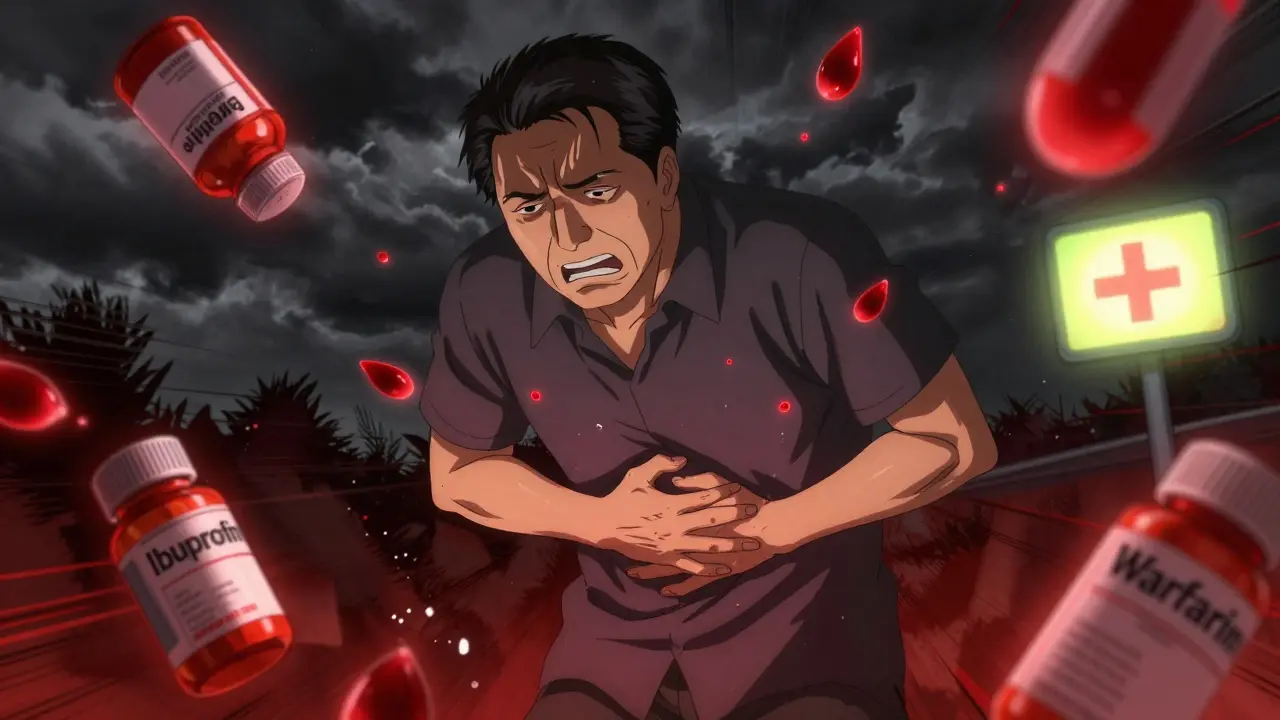
If you're taking a blood thinner - whether it's warfarin, apixaban, rivaroxaban, or any other anticoagulant - and you reach for an over-the-counter pain reliever like ibuprofen or naproxen, you're putting yourself at serious risk. This isn't a "maybe" or a "be careful." It's a well-documented, life-threatening combination that sends thousands to the hospital every year. And most people have no idea.
What Happens When Blood Thinners Meet NSAIDs
Blood thinners work by stopping your blood from clotting too easily. That’s crucial if you have atrial fibrillation, a history of blood clots, or a mechanical heart valve. NSAIDs - like ibuprofen, naproxen, and diclofenac - reduce pain and inflammation by blocking enzymes called COX-1 and COX-2. But here’s the problem: COX-1 is also needed to protect your stomach lining and help platelets stick together to stop bleeding. When NSAIDs block COX-1, they thin your blood in a different way than anticoagulants do. And when you combine both, your body loses two major defenses against bleeding.A massive 2024 study from Denmark tracked nearly 52,000 people on blood thinners for venous thromboembolism over a decade. The results were stark: taking NSAIDs more than doubled the risk of hospitalization due to bleeding. That’s not a small increase. That’s a dramatic, dangerous jump.
Not All NSAIDs Are Created Equal
If you think all painkillers are equally risky, you’re wrong. The data shows clear differences in danger levels:- Naproxen increases bleeding risk by 4.1 times
- Diclofenac raises it by 3.3 times
- Ibuprofen still pushes it up by 1.79 times
Why does naproxen rank highest? It’s the strongest at blocking COX-1, the enzyme that keeps your stomach lining intact and platelets working. Diclofenac is close behind. Ibuprofen is weaker on COX-1, so its risk is lower - but still dangerously high when paired with a blood thinner.
Even if you only take an NSAID once in a while - say, for a bad headache or sore knee - the risk spikes immediately. There’s no safe window. No "just this once" exception. The Danish study found bleeding risks rose even with short-term use.
Bleeding Isn’t Just Stomach Issues
Most people assume the danger is only gastrointestinal bleeding - black stools, vomiting blood, or stomach pain. But the reality is far worse.The same study showed:
- 2.24 times higher risk of gastrointestinal bleeding
- 3.22 times higher risk of bleeding in the brain (intracranial hemorrhage)
- 1.36 times higher risk of bleeding in the lungs
- 1.57 times higher risk of bleeding in the urinary tract
- Nearly three times higher risk of severe anemia from unnoticed bleeding
That means you could be fine one day, then wake up with a sudden, severe headache, dizziness, or dark urine - and it could be internal bleeding. No warning. No pain. Just a life-threatening emergency.
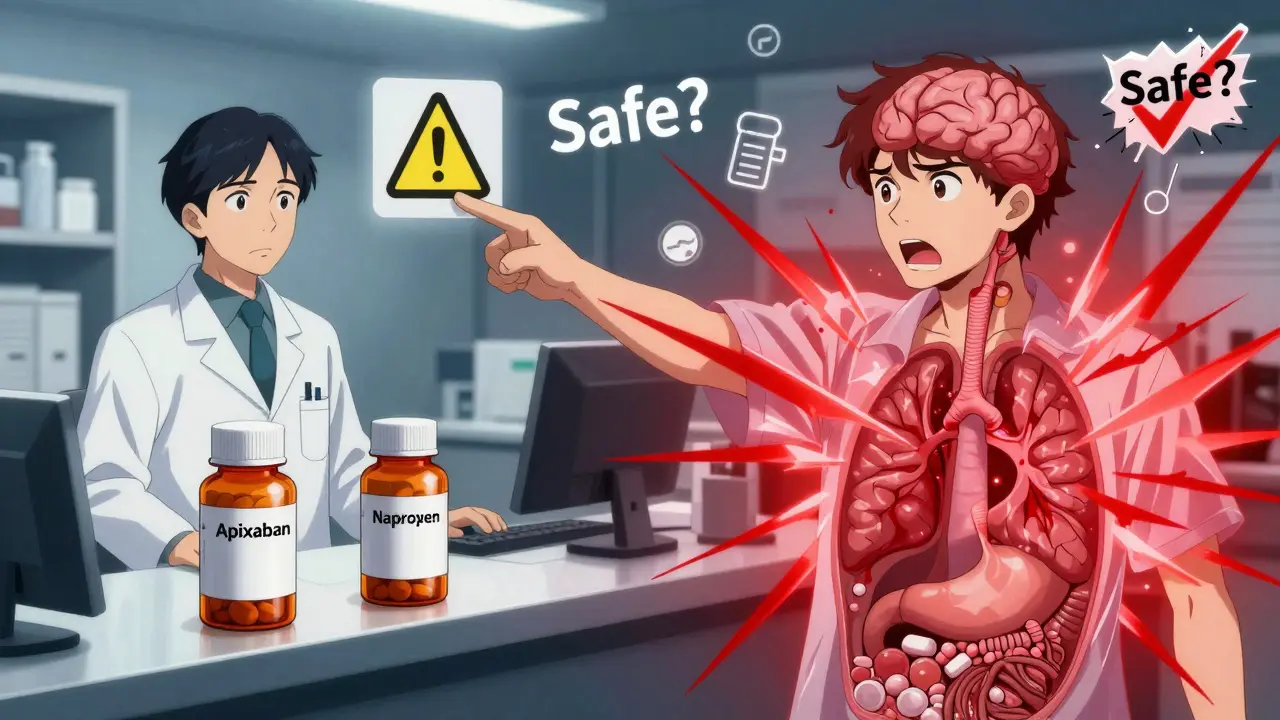
It Doesn’t Matter Which Blood Thinner You’re On
A lot of people think newer blood thinners - the DOACs like apixaban or rivaroxaban - are safer than warfarin. That’s true in many ways. But when it comes to NSAIDs? Not at all.The Danish study found no difference in bleeding risk between warfarin and DOACs when combined with NSAIDs. Whether you’re on a pill from the 1950s or a modern drug, mixing it with naproxen or ibuprofen still doubles or triples your bleeding risk. There’s no "safer" blood thinner in this scenario.
Why People Keep Doing It
You might be wondering: if it’s so dangerous, why does this keep happening?Because most people don’t think of ibuprofen or naproxen as "medications." They’re pills you buy at the grocery store. You don’t need a prescription. So you don’t tell your doctor you’re taking them. You don’t think they interact with your blood thinner.
But they do. And doctors can’t protect you if they don’t know you’re using them. A 2020 review from the Agency for Healthcare Research and Quality found that many patients never mention OTC drugs during appointments - even when asked directly.
And it’s not just older adults. People with arthritis, back pain, or sports injuries are often on blood thinners and reach for NSAIDs without thinking twice. The combination is common. And deadly.

What You Should Take Instead
There’s one clear, safe alternative: acetaminophen (Tylenol).Unlike NSAIDs, acetaminophen doesn’t affect platelets or the stomach lining. It doesn’t interfere with blood thinners. It’s not perfect - it doesn’t reduce inflammation - but for pain relief, it’s the gold standard when you’re on anticoagulants.
Other options include:
- Heat or cold packs for joint or muscle pain
- Physical therapy for chronic conditions like arthritis
- Topical creams with menthol or capsaicin
- Low-impact exercise to reduce stiffness and pain
If you absolutely must use an NSAID - say, for a sudden flare-up of gout - use the lowest dose for the shortest time possible. And ask your doctor about adding a proton pump inhibitor (like omeprazole) to protect your stomach. But remember: even with that protection, your risk of bleeding in your brain, lungs, or kidneys doesn’t go down.
What Doctors and Pharmacies Should Do
This isn’t just a patient problem. It’s a system failure.Pharmacists should flag NSAID prescriptions when someone is on a blood thinner. Electronic health records should pop up warnings. Clinicians need to ask: "Are you taking any pain relievers? Even the ones you buy without a prescription?"
Yet too often, these checks don’t happen. A 2024 American College of Cardiology statement called for "antithrombotic stewardship" - meaning hospitals and clinics need structured programs to catch these dangerous combinations before they cause harm.
Until that happens, you have to be your own advocate.
What to Do Right Now
If you’re on a blood thinner:- Check your medicine cabinet. Are there any NSAIDs? Naproxen? Ibuprofen? Diclofenac? Ditch them.
- Replace them with acetaminophen for pain relief.
- Next time you see your doctor or pharmacist, say: "I’m on a blood thinner. Are any of my medications - even OTC ones - unsafe to take with it?"
- Don’t assume "natural" or "herbal" pain relievers are safe. Some, like ginger or turmeric supplements, also thin the blood.
- If you’ve taken an NSAID in the past week, tell your doctor. Even one dose can raise your risk.
This isn’t about being overly cautious. It’s about survival. The data is clear. The risks are real. And the alternatives exist.
Can I take ibuprofen with warfarin if I only use it once in a while?
No. Even a single dose of ibuprofen increases bleeding risk by nearly 80% when taken with warfarin or other blood thinners. There’s no safe "occasional" use. The risk spikes immediately and can lead to internal bleeding without warning.
Is aspirin safer than other NSAIDs when on blood thinners?
No. Aspirin is itself an antiplatelet drug and works similarly to NSAIDs by blocking COX-1. Taking aspirin with a blood thinner doubles your bleeding risk - and it’s often worse because people take it daily for heart protection. Never combine aspirin with anticoagulants unless your doctor specifically ordered it.
What about Celebrex (celecoxib)? Is it safer because it’s a COX-2 inhibitor?
No. While Celebrex targets COX-2 more than COX-1, it still affects platelet function and increases bleeding risk when combined with blood thinners. Studies show no significant safety advantage over traditional NSAIDs in this context. The same warning applies.
Can I use topical NSAIDs like Voltaren gel instead?
Topical NSAIDs are absorbed in much smaller amounts, so they’re generally safer than pills. But they’re not risk-free. A small amount still enters your bloodstream, and if you’re on a strong blood thinner, it could still raise bleeding risk - especially if you apply large amounts or use them on broken skin. Talk to your doctor before using them.
What should I do if I accidentally took an NSAID while on a blood thinner?
Stop taking the NSAID immediately. Watch for signs of bleeding: unusual bruising, dark or tarry stools, pink or red urine, severe headaches, dizziness, or shortness of breath. If any of these occur, go to the emergency room. Even if you feel fine, tell your doctor about the exposure - they may want to check your blood levels or monitor you more closely.
Are there any supplements I should avoid while on blood thinners?
Yes. Many supplements act like blood thinners. Avoid garlic, ginger, ginkgo biloba, fish oil (in high doses), vitamin E, and turmeric unless your doctor approves them. These can add to the bleeding risk, especially when combined with NSAIDs or anticoagulants. Always disclose all supplements during medication reviews.
Don’t wait for a warning sign. If you’re on a blood thinner, treat NSAIDs like a live wire - avoid them completely. Your life depends on it.

Dan Mack
January 15, 2026 AT 05:57They're hiding the truth again. NSAIDs are just the tip of the iceberg. Big Pharma knows this kills people but they keep pushing it because they make billions. Your doctor? Paid off. The FDA? Bought and paid for. You think acetaminophen is safe? It causes liver failure in 100k people a year. They want you weak. Dependent. Controlled.
Gloria Montero Puertas
January 16, 2026 AT 14:26Oh, how utterly, catastrophically irresponsible-this is precisely why modern medicine is in such a shambles. The fact that laypeople treat pharmaceuticals like candy, as though ibuprofen were a vitamin, reveals a terrifying erosion of medical literacy. And let’s not even begin to discuss the abysmal lack of patient education. The Danish study? Brilliant. But where were the public health campaigns? The billboards? The mandatory pharmacist counseling? This is negligence dressed as convenience.
Sohan Jindal
January 16, 2026 AT 20:02They want you to take Tylenol because it's cheaper for them. Tylenol is poison. It kills your liver. They don't want you healthy-they want you on pills forever. NSAIDs are natural compared to what they're really feeding you. And don't get me started on how the government lets them sell these drugs like candy. Wake up people.
Frank Geurts
January 17, 2026 AT 08:39It is with profound respect for the rigor of the Danish cohort study that I feel compelled to underscore the systemic imperative for pharmacovigilance in primary care settings. The confluence of anticoagulant therapy and non-selective COX inhibition represents a clinically significant, preventable adverse event profile of alarming magnitude. It is incumbent upon healthcare institutions to implement real-time, algorithm-driven alerts within electronic health records-not merely as a suggestion, but as a non-negotiable standard of care.
Arjun Seth
January 19, 2026 AT 03:08People in America think medicine is a shopping mall. You walk in, grab ibuprofen like it's candy, and never think twice. In India, we know pain. We know medicine. We know your body is not a toy. You take blood thinners? You respect them. You don't mix them with random pills from the shelf. This is why your hospitals are full. You don't listen. You just buy.
Mike Berrange
January 20, 2026 AT 19:22Actually, the risk increase for intracranial hemorrhage is 3.22x, not 3x as implied. Also, the study adjusted for age, comorbidities, and concurrent antithrombotic use-important context omitted here. And while acetaminophen is safer, it’s not risk-free: hepatotoxicity is dose-dependent, and chronic use still correlates with renal impairment in anticoagulated patients. Precision matters.
Amy Vickberg
January 21, 2026 AT 02:46I’m so glad someone finally put this out there. I had a friend who ended up in the ER after taking ibuprofen for her knee pain-she was on rivaroxaban and didn’t even think it was a big deal. Thank you for the clear alternatives too. Heat packs and PT changed my life. We can manage pain without risking our lives.
Nishant Garg
January 21, 2026 AT 15:21In my village in Uttar Pradesh, we use turmeric paste, massage with warm mustard oil, and rest. No pills. No prescriptions. But I understand-modern life is fast, pain is urgent, and people want quick fixes. Still, the science here is undeniable. The body isn’t a machine to be patched with chemicals. It’s a symphony. Disrupt one note, and the whole piece collapses. Acetaminophen is the lesser evil, yes-but the real cure is listening to your body before it screams.
Amy Ehinger
January 23, 2026 AT 06:26I used to take naproxen for my arthritis like it was nothing. Then my mom had a GI bleed after being on warfarin for years. She didn’t even know she was taking something dangerous. I threw out every NSAID in my house. Now I use heat wraps, walk every day, and take Tylenol if I really need it. It’s not perfect, but I’m still here. And I’m so much more aware now. Please, if you’re on a blood thinner-just check your cabinet. You might be surprised.
RUTH DE OLIVEIRA ALVES
January 24, 2026 AT 07:00It is imperative that clinicians adopt a structured approach to anticoagulant stewardship, including mandatory patient counseling at the time of prescription initiation and periodic re-evaluation of concomitant medications. The absence of standardized protocols across primary care and pharmacy systems constitutes a critical gap in patient safety. Furthermore, patient education materials must be linguistically and culturally accessible, and distributed through multiple channels-including digital platforms, printed handouts, and pharmacist-led briefings-to mitigate the pervasive misunderstanding of over-the-counter drug interactions.