
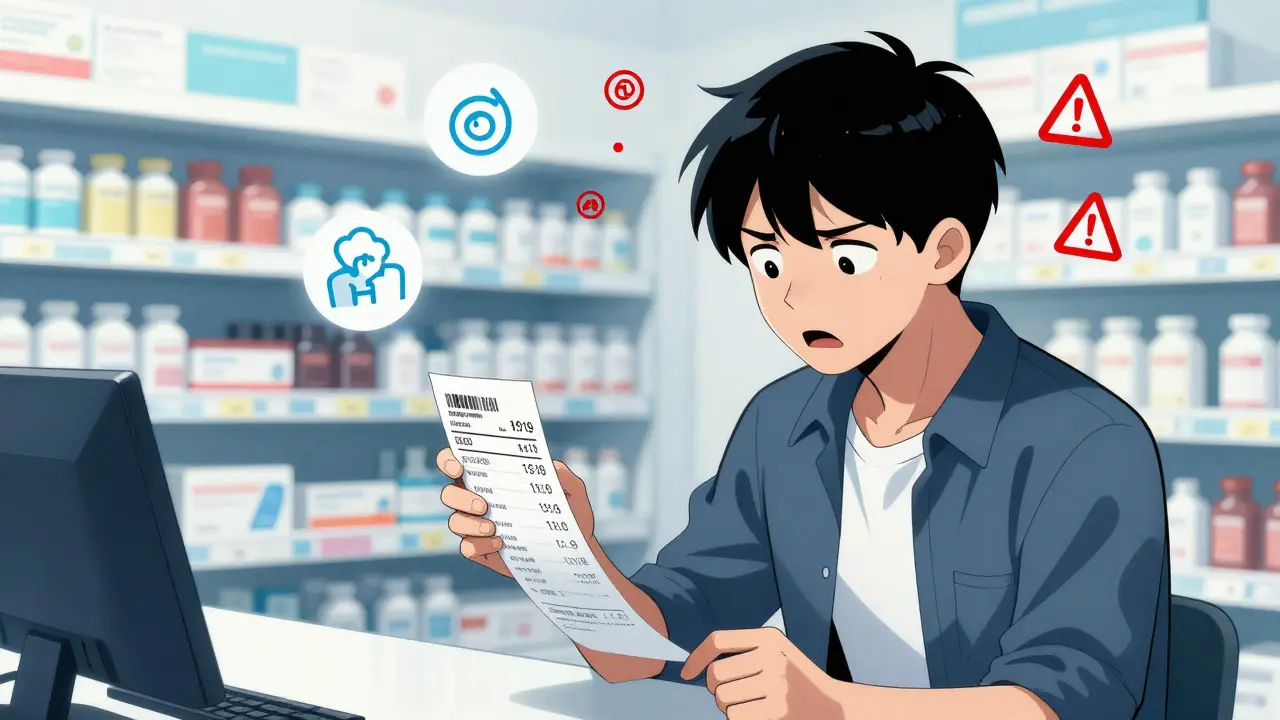
You think you’re saving money by switching to a cheaper health plan. Then you go to the pharmacy, hand over your card for that same generic blood pressure pill, and the cashier tells you it’s $45 instead of $10. It happens more often than you’d like to admit. The problem isn’t the drug; it’s the fine print in your new insurance policy.
When you switch health plans, you aren’t just changing a logo on your card. You are entering a completely new financial contract regarding your medications. Generic drugs-those bioequivalent copies of brand-name medicines-are supposed to be the cheapest option. But 'cheap' is relative when insurance companies use complex tiered systems to determine what you pay. Understanding how these tiers work, especially during open enrollment or mid-year life changes, is the single most effective way to protect your wallet from surprise medical bills.
Why does my generic drug cost more with a new plan?
Your new plan may place your specific generic medication in a higher cost-sharing tier (like Tier 2) rather than the preferred Tier 1. This can happen due to manufacturer differences, formulary updates, or if the plan uses an integrated deductible that hasn't been met yet.
The Hidden Trap of Integrated Deductibles
Here is the first thing you need to check: does your new plan have an integrated deductible? In many standard health plans, your prescription drug coverage doesn’t kick in until you’ve paid thousands of dollars out of pocket for doctor visits and lab tests. This is called an integrated deductible. If you switch to a High-Deductible Health Plan (HDHP) without realizing this, you might find yourself paying full retail price for every generic refill until you hit that threshold.
However, there is a major exception that saves millions of people money. Under the Affordable Care Act (ACA), marketplace plans offer a specific design called the Silver Standardized Plan Design (SPD). These plans waive the annual deductible for Tier 1 generic drugs. That means you get a fixed copay-often around $20-for your generics right from day one, regardless of whether you’ve seen a doctor or not. According to data from the Kaiser Family Foundation (KFF), this feature alone can save low-income beneficiaries up to $1,200 annually compared to non-standardized plans where the deductible applies to everything.
If you are considering a private employer-sponsored plan or a non-standardized individual market plan, look closely at the summary of benefits. Does it say 'Prescriptions subject to annual deductible'? If yes, calculate how much you spend on meds yearly. If that amount is less than the deductible, you are essentially self-insuring for the whole year. That is rarely a good deal for anyone taking maintenance medications.
Decoding the Formulary Tiers
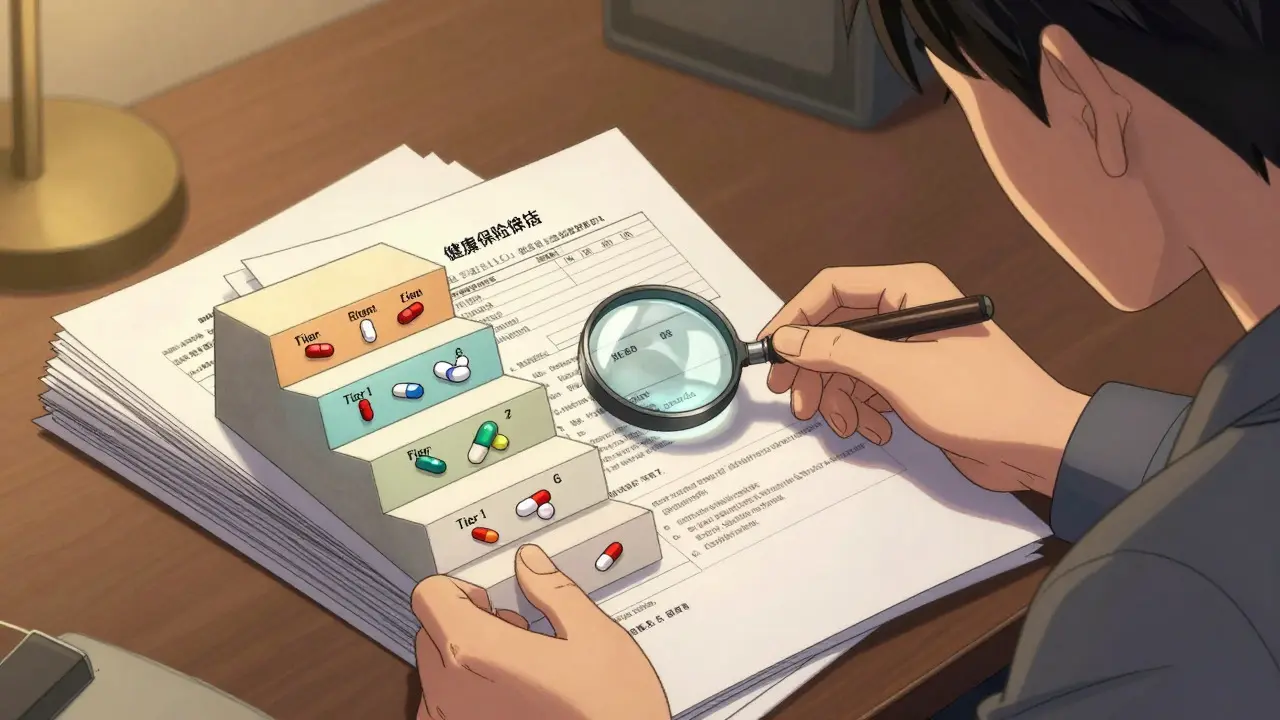
Insurance companies organize their covered drugs into lists called formularies. These lists are divided into tiers, usually numbered 1 through 5. Your out-of-pocket cost depends entirely on which tier your drug falls into. When switching plans, you must assume that your current drug will move to a different tier unless you verify otherwise.
| Tier | Description | Typical Copay/Cost |
|---|---|---|
| Tier 1 | Preferred Generics | $3 - $20 (Fixed Copay) |
| Tier 2 | Non-Preferred Generics | $20 - $40 (Fixed Copay) |
| Tier 3 | Brand Name Drugs | $50 - $100+ (Copay or Coinsurance) |
| Tier 4/5 | Specialty Drugs | 15% - 30% Coinsurance |
Most people assume all generics are Tier 1. They are not. Some insurers split generics into 'preferred' and 'non-preferred' categories based on which manufacturer they have negotiated better rates with. For example, if you take generic metformin made by Manufacturer A, it might be Tier 1 under your old plan. Under your new plan, Manufacturer A might be Tier 2, while Manufacturer B is Tier 1. The active ingredient is identical, but your bill doubles because of a corporate negotiation behind the scenes.
This distinction is critical. A study by the American Pharmacists Association found that 68% of consumers switching plans fail to verify if their specific generic formulation remains in the new plan's lowest tier. This oversight triggers unexpected cost escalations. Always check the formulary PDF for your exact drug name AND manufacturer if possible, or ask your pharmacist if the new plan prefers a different generic supplier.
Medicare Part D vs. Marketplace Plans
If you are navigating Medicare, the rules change slightly. As of 2023, there were over 50 million Medicare beneficiaries enrolled in Part D prescription drug plans. Most standalone Part D plans and Medicare Advantage plans with drug coverage (MA-PDs) use tiered structures similar to private insurance, but with federal caps on costs.
In 2023, the base deductible for Medicare Part D was $505. However, many plans offer $0 deductibles for Tier 1 generics. This is a key selling point. If you only take generics, look for a plan with a $0 generic deductible. Data from Medicare’s Plan Finder shows that MA-PDs often result in 18% lower average out-of-pocket spending for generic medications compared to standalone Part D plans. Why? Because MA-PDs often bundle medical and drug coverage, allowing for more aggressive network negotiations and lower copays for routine care.
Keep an eye on future changes too. The Inflation Reduction Act introduced significant shifts, including a $2,000 out-of-pocket maximum for Medicare Part D starting in 2025. While this helps those with expensive specialty drugs, it doesn't change the daily math for generic users. You still need to compare the monthly premium against the potential copay savings. A plan with a $10 higher premium might save you $100 a month in drug costs if it offers $3 generic copays instead of $15.
Geographic Variations and State Mandates
Where you live matters immensely. Insurance regulations vary by state, creating patchwork rules that affect your bottom line. For instance, New York has mandates that require $0 copays for certain essential generics and waives deductibles for them. In contrast, California has established separate outpatient drug deductibles (around $85) with coinsurance structures that can add complexity to your billing.
If you are moving states or switching to a national insurer, don’t assume your local protections travel with you. A plan that works perfectly in New York might leave you exposed in Texas. Check your state’s Department of Insurance website for any mandated benefits regarding generic drug coverage. Some states cap insulin costs at $35 or even $0, which is a massive factor if diabetes management is part of your healthcare needs.

The Four-Step Verification Process
To avoid sticker shock, follow this systematic verification process before you finalize your new plan. The Medicare Rights Center recommends this approach, and it applies to all types of health insurance.
- Download the Full Formulary: Don’t rely on the marketing brochure. Go to the insurer’s website and download the complete PDF formulary. Search for your drug by generic name.
- Check the Tier and Restrictions: Note the tier number. Look for symbols indicating restrictions, such as 'PA' (Prior Authorization) or 'Step Therapy.' Step therapy means you must try a cheaper alternative first before the plan covers your preferred drug.
- Verify Pharmacy Networks: Your copay assumes you use an in-network pharmacy. Using an out-of-network location can increase your generic costs by 300-400%. Confirm your preferred local pharmacy is in the new plan’s network.
- Calculate Total Annual Cost: Add up your estimated monthly premiums plus your expected annual drug costs (deductible + copays). Compare this total to your current plan. Often, a slightly higher premium pays for itself in lower drug costs.
Tools like Healthcare.gov’s plan selector or Medicare.gov’s Plan Finder allow you to input your specific medications. These tools estimate your costs based on the plan’s historical data. Users who utilize these tier-specific calculators see a 37% reduction in prescription-related complaints, according to CMS data. It takes about 20 minutes to do this correctly, but it can save you hundreds of dollars.
Common Pitfalls to Avoid
Even careful shoppers make mistakes. Here are the most common errors I see people make when switching plans:
- Ignoring Strength Differences: A plan might cover 500mg of a drug as Tier 1 but list 1000mg as Tier 2. Make sure you check the exact dosage you take.
- Assuming Mail-Order Savings Apply Everywhere: Many plans offer a discount for 90-day mail-order supplies of generics. However, some newer plans restrict mail-order to brand names only, forcing you to pay retail prices for monthly refills. Check the mail-order policy explicitly.
- Overlooking Specialty Generics: Some 'generics' are actually complex specialty drugs (like injectables). These often fall into Tier 4 or 5 with percentage-based coinsurance rather than flat copays. Ensure your high-cost generics are truly classified as standard Tier 1 generics.
Switching health plans is a balancing act. You want comprehensive coverage, but you also want predictability. By focusing heavily on generic drug coverage, understanding the difference between integrated and waived deductibles, and verifying your specific medications against the new formulary, you take control of your healthcare costs. Don’t let the jargon confuse you. Read the formulary, call the pharmacy, and do the math. Your future self will thank you when the next bill arrives.
What is a Tier 1 generic drug?
A Tier 1 generic drug is a preferred generic medication on an insurance formulary. These drugs have the lowest cost-sharing requirements, typically ranging from $3 to $20 per prescription. They are considered the most cost-effective option for both insurers and patients.
Does Medicare cover generic drugs with a deductible?
It depends on the specific Medicare Part D or Medicare Advantage plan. Many plans have a $0 deductible for Tier 1 generic drugs, meaning you pay a fixed copay immediately. However, some plans may apply the annual Part D deductible (e.g., $505 in 2023) before covering any drugs. Always check the plan details.
How can I find out if my generic drug is covered by a new plan?
You should search the plan's online formulary using the generic name of your drug. You can also use tools like Healthcare.gov or Medicare Plan Finder to input your medications. Additionally, calling your pharmacy and asking them to check the coverage for your specific plan ID is a reliable method.
What is the difference between a preferred and non-preferred generic?
Both are generic versions of the same drug with the same active ingredients. However, insurers negotiate different prices with different manufacturers. Preferred generics (Tier 1) have lower copays, while non-preferred generics (Tier 2) have higher copays because the insurer paid less to the manufacturer for the preferred version.
Can my generic drug move to a higher tier after I enroll?
Yes, formularies can change throughout the year. Insurers are required to provide notice (usually 30 days) before making significant changes that negatively impact your coverage. If your drug moves to a higher tier, you may request an exception or appeal the decision.