
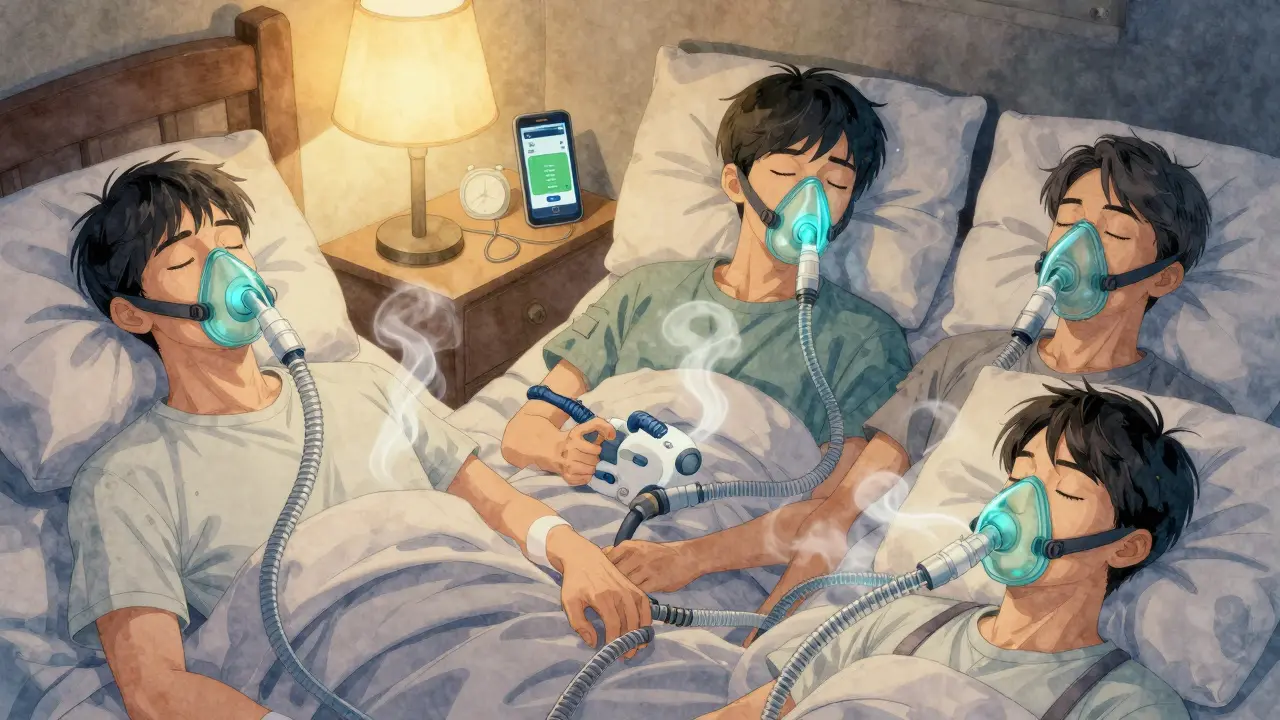
Getting a good night’s sleep shouldn’t feel like a battle. Yet for millions with obstructive sleep apnea, breathing stops and starts all night long-leaving them exhausted, foggy-headed, and at higher risk for heart problems. CPAP machines are the most effective non-surgical solution, but they only work if you actually use them. The problem isn’t the machine-it’s the fit, the comfort, and the habit. Many people quit within the first few weeks, not because it doesn’t work, but because they never got the setup right.
What Kind of CPAP Machine Do You Really Need?
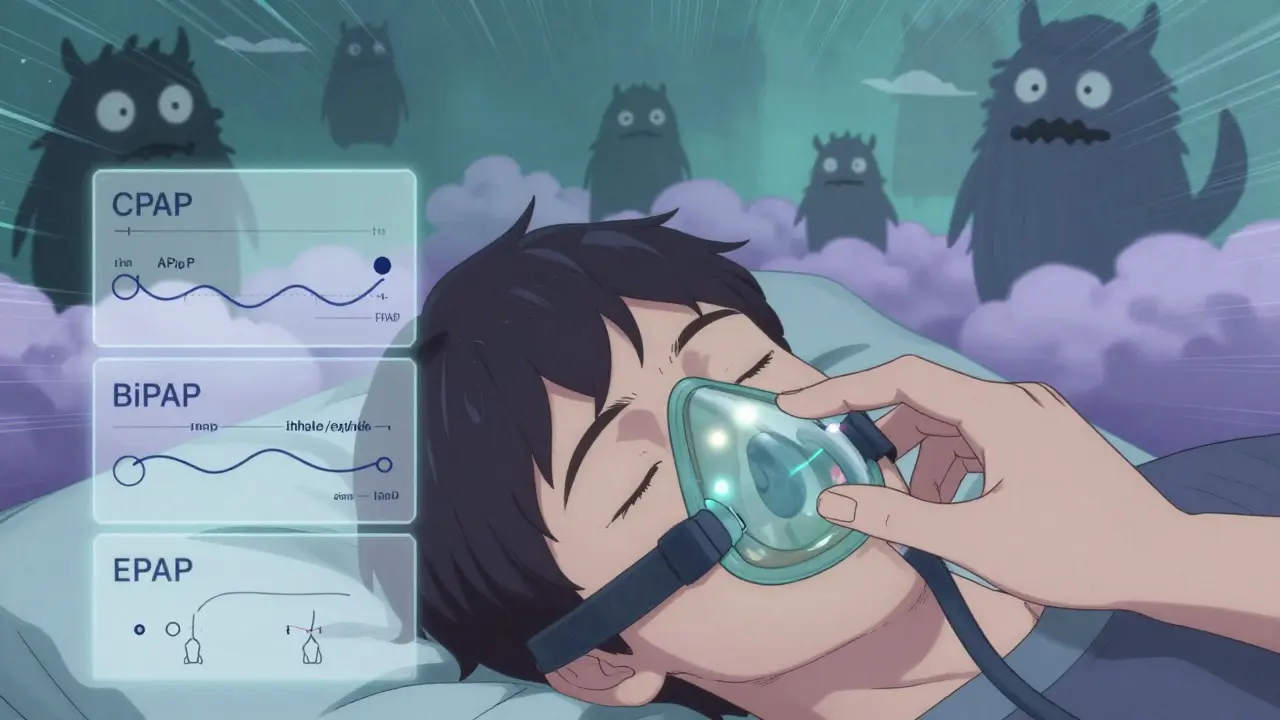
Not all CPAP machines are the same. There are four main types, and choosing the wrong one can make your nights worse instead of better.Traditional CPAP delivers one fixed pressure all night. It’s the most affordable option, usually between $500 and $1,000. If your breathing pattern is stable and your doctor has already determined your ideal pressure (usually between 6 and 12 cm H₂O), this works fine. Popular models like the ResMed AirSense 10 and Philips DreamStation fall into this category. But if you toss and turn, wake up congested, or your pressure needs change during the night, this machine won’t adapt-and you’ll feel it.
APAP (Auto-Adjusting CPAP) is becoming the new standard. Instead of one fixed pressure, it constantly monitors your breathing and adjusts pressure in real time. If you snore or have a mild blockage, it increases pressure. If you’re breathing freely, it drops down. This means less discomfort and fewer nighttime awakenings. A 2021 study in Sleep Medicine Reviews found APAP users stick with therapy 15% more often than those on fixed-pressure CPAP. Models like the ResMed AirSense 11 AutoSet cost $1,700-$3,000, but many insurance plans cover them because they improve outcomes.
BiPAP gives you two different pressures: higher when you inhale, lower when you exhale. This is a game-changer if you need high pressure (over 15 cm H₂O) or have other lung conditions like COPD. It feels easier to breathe out, which reduces the feeling of being suffocated. But it’s more expensive-$600 to $1,600-and requires a separate titration study, adding to the cost. Cleveland Clinic reports 25% higher comfort ratings among BiPAP users who struggled with CPAP.
EPAP devices (like Provent or Theravent) are small, disposable valves that stick over your nostrils. They cost $50-$150 a month and work by creating resistance during exhalation to keep your airway open. They’re only effective for mild sleep apnea (AHI under 15). A 2020 Chest Journal study showed they work for about 45% of users-compared to 85% for CPAP in moderate to severe cases. They’re worth trying if you hate masks, but don’t expect miracles if your apnea is serious.
Travel CPAPs like the ResMed AirMini are tiny-smaller than a coffee mug-and weigh less than a pound. Perfect for trips, but they lack built-in humidification. You’ll need to buy a separate $80 humidifier if you’re prone to dry mouth or nosebleeds. Noise levels are higher too (52 dBA vs. 30 dBA on standard machines), which can bother light sleepers.
Mask Fit: The #1 Reason People Quit
The machine doesn’t matter if the mask leaks or digs into your face. Studies show 20-30% of people stop CPAP therapy because of mask discomfort-not pressure issues. There are four main mask types, and your choice depends on your face shape, sleep position, and breathing habits.Nasal pillows are the smallest option. They seal just inside your nostrils. Great for side sleepers and people who feel claustrophobic. They’re less likely to cause skin irritation. Users like u/NasalPillowFan on Reddit reported cutting their leak rate from 15 L/min to 3 L/min after switching. But if you breathe through your mouth, this won’t work.
Nasal masks cover your nose. They’re the most popular-used by 45% of CPAP users. Good balance of comfort and seal. Ideal if you’re a nose breather and don’t mind a bit of bulk on your face. They’re easier to adjust than full-face masks and less likely to cause red marks.
Full-face masks cover both nose and mouth. Necessary if you breathe through your mouth while sleeping. About 18% of users need these. But they’re bulkier, harder to seal, and cause 35% more skin irritation than nasal pillows, according to GoodRx’s 2023 survey. If you’re considering this, make sure your doctor confirms you’re a mouth breather-some people think they are, but aren’t.
Hybrid/oral masks are rare. Used by only 5% of users, mostly those with severe nasal congestion. They’re tricky to fit and often require custom fitting.
Proper fitting isn’t about guesswork. It’s about measuring your nasal bridge width, cheekbone structure, and facial contours. Most clinics offer fitting sessions, but if you’re buying online, look for brands with a 60-night trial-like CPAP.com’s guarantee. A bad seal causes 60% of leaks. Acceptable leak rates are under 24 L/min. If your machine shows higher, adjust the straps. Tighter isn’t better-just snug enough to prevent air from escaping.
Why You’re Not Using Your CPAP (And How to Fix It)
Even with the right machine and mask, adherence is a problem. Only 46% of users get the recommended 4+ hours per night, 70% of nights. The rest quit-often within 3 months.Here’s what actually works to build the habit:
- Start with daytime practice. Wear the mask while watching TV or reading. Do 5-10 minutes, 3 times a day. This trains your brain to accept the sensation without the pressure of sleeping. Most people who do this report less anxiety at night.
- Use the ramp feature. This slowly increases pressure over 5-45 minutes. 75% of users turn it on. If you’re struggling to fall asleep, set it to 20-30 minutes. You’ll drift off before the pressure hits full strength.
- Turn on heated humidification. Dry nose, sore throat, and congestion are the #1 complaints. Humidifiers set between 86°F and 95°F reduce these issues by 50%. If your machine doesn’t have one, get one. It’s not optional-it’s essential.
- Use heated tubing. Cold air in the tube can cause condensation (rainout), which wakes you up. Heated tubing prevents this and increases adherence by 26%, according to ResMed’s 2022 data.
- Track your data. Most machines now record usage, AHI, and leak rates. Review it weekly. If your AHI is above 5, talk to your doctor. If your leak rate is high, recheck your mask fit. Seeing progress motivates you.
Apps like ResMed’s myAir offer daily coaching and feedback. Users who use it see 27% higher adherence. That’s not magic-it’s accountability.
What to Do If You’re Still Struggling
If you’ve tried everything and still hate your CPAP, don’t give up-just switch tactics.Try a different mask type. Many people switch from full-face to nasal pillows and suddenly love therapy. Use a CPAP pillow with cutouts-it reduces pressure on the mask and cuts leaks by 40%, according to Reddit user u/MaskMaster69.
If pressure feels too high, ask your doctor about APAP or BiPAP. Many people assume they need high pressure, but APAP often finds the right level automatically. One user on r/CPAP reduced their AHI from 8.2 to 2.1 just by switching from CPAP to APAP.
If you have mouth breathing, try a chin strap. It’s cheaper than a full-face mask and often solves the problem. If you’re still leaking, check for facial hair. Beards can break the seal. Trim or shave around the mask area.
And if you’re still not sleeping well after 2-4 weeks, go back to your sleep clinic. You might need a new titration study. Your needs change over time.
The Bigger Picture: Why This Matters
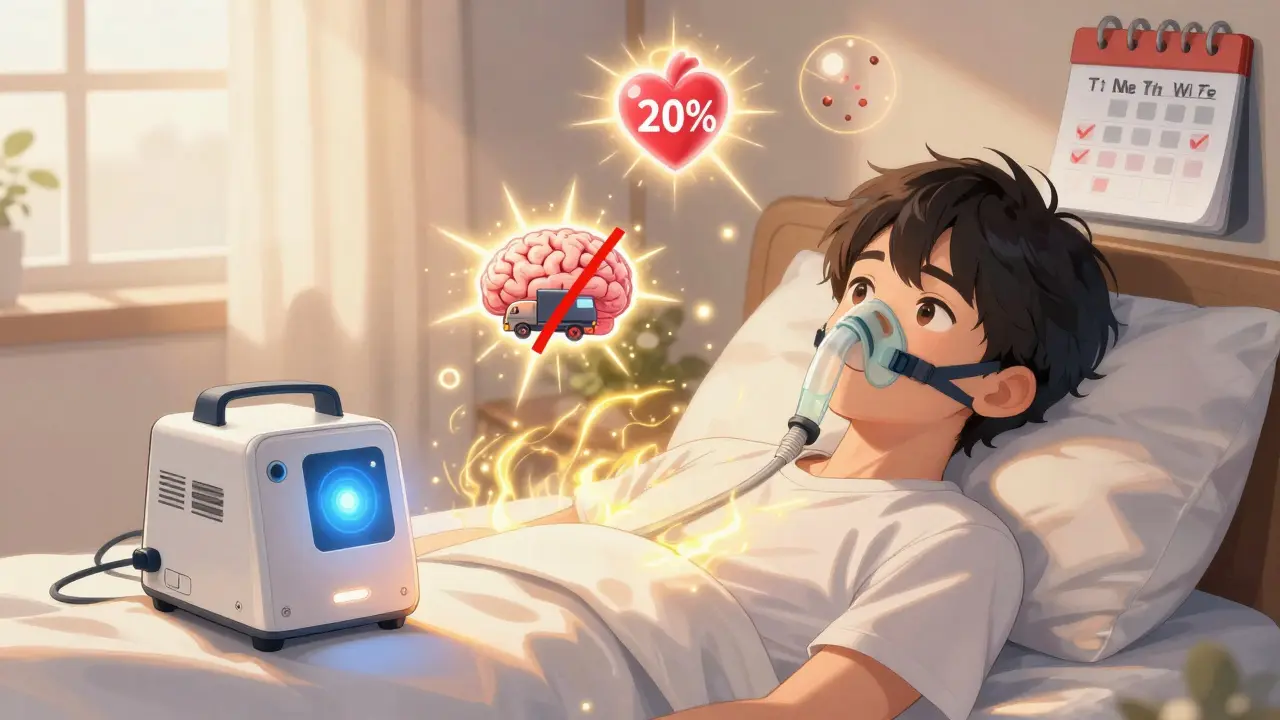
CPAP isn’t just about better sleep. Consistent use cuts your risk of heart attack and stroke by 20-30%, according to the Journal of Clinical Sleep Medicine. It improves focus, mood, and energy. Truck drivers using CPAP have 32% fewer accidents. People with untreated sleep apnea are 2-4 times more likely to develop high blood pressure.Insurance usually covers 80% of the cost after deductible. Medicare and private plans require you to use it 4+ hours a night, 70% of nights to keep coverage. Starting in 2024, all new machines must track usage and send data to insurers automatically.
The market is changing fast. Newer machines like the Philips DreamStation 3 run at 25 dBA-quieter than a whisper. ResMed’s AirSense 11 uses AI to predict breathing problems before they happen, reducing AHI by 22%. These aren’t luxury upgrades-they’re making therapy easier than ever.
CPAP therapy isn’t perfect. But it’s the most effective tool we have. The goal isn’t to wear it perfectly every night. It’s to wear it enough to feel the difference. One night a week is better than none. Two hours is better than zero. Progress, not perfection, is what saves lives.
Can I use a CPAP machine without a prescription?
No. In the United States, all CPAP machines require a prescription. This is because pressure settings must be tailored to your specific sleep apnea severity, determined by a sleep study. Buying a machine without one risks using the wrong pressure-too low and it won’t work, too high and it can cause discomfort or even harm. Insurance also won’t cover it without a prescription.
How long does it take to get used to a CPAP machine?
Most people need 2-4 weeks to adjust. Some adapt in days; others take months. The key is consistency. Don’t skip nights. Use the ramp feature, wear the mask during the day for short periods, and don’t give up after one bad night. Many users say the third week is when things finally click.
Do I need a humidifier with my CPAP?
Yes, if you have dry mouth, nasal congestion, or nosebleeds-most people do. Heated humidification reduces these issues by 50%. Even if you don’t notice dryness now, it can develop over time. Most modern machines come with built-in humidifiers. If yours doesn’t, add one. It’s one of the easiest upgrades to improve comfort.
Can CPAP machines cure sleep apnea?
No. CPAP doesn’t cure sleep apnea-it controls it. When you stop using it, symptoms return. But with consistent use, your body can improve. Some people lose weight, reduce alcohol, or change sleep positions enough to reduce apnea severity. A few even get off CPAP entirely, but that’s rare. Think of it like glasses for your airway-you need it to function normally.
What should I do if my CPAP mask hurts my face?
First, check the fit. Over-tightening causes pressure sores. Loosen the straps slightly and reposition the mask. Try a different mask type-nasal pillows often cause less skin irritation than full-face masks. Use a mask liner or silicone cushion pad to reduce friction. If red marks last more than 30 minutes after removal, talk to your provider. You may need a different size or style.
Are travel CPAP machines as effective as regular ones?
Yes, if you use them correctly. Machines like the ResMed AirMini deliver the same pressure and therapy as standard models. But they lack built-in humidification and are louder. If you’re prone to dryness, carry a portable humidifier. If noise bothers you, use earplugs. They’re not ideal for long-term nightly use, but perfect for travel when you need consistency.
How do I know if my CPAP is working?
Check your machine’s data. Your AHI (apnea-hypopnea index) should be below 5. Your leak rate should be under 24 L/min. You should be using it 4+ hours a night, 5+ nights a week. Beyond numbers, you’ll notice real changes: less morning headaches, more energy, better focus, and fewer nighttime trips to the bathroom. If you’re not seeing these, your pressure may need adjustment.
Can I use a CPAP machine if I have a cold?
Yes, but you might need to adjust. If your nose is blocked, switch to a full-face mask or use a saline spray before bed. Keep your humidifier on and clean your tubing daily. If you can’t breathe through your nose at all, don’t force it-take a break for a night or two. Resume as soon as you can. Missing a few nights won’t undo progress.

Alvin Bregman
January 15, 2026 AT 08:51Dylan Livingston
January 16, 2026 AT 19:40Sarah -Jane Vincent
January 18, 2026 AT 03:39Vicky Zhang
January 18, 2026 AT 20:01Allison Deming
January 20, 2026 AT 07:34Susie Deer
January 20, 2026 AT 14:41TooAfraid ToSay
January 21, 2026 AT 08:55Andrew Freeman
January 22, 2026 AT 15:47says haze
January 24, 2026 AT 05:21Anna Hunger
January 25, 2026 AT 16:18