
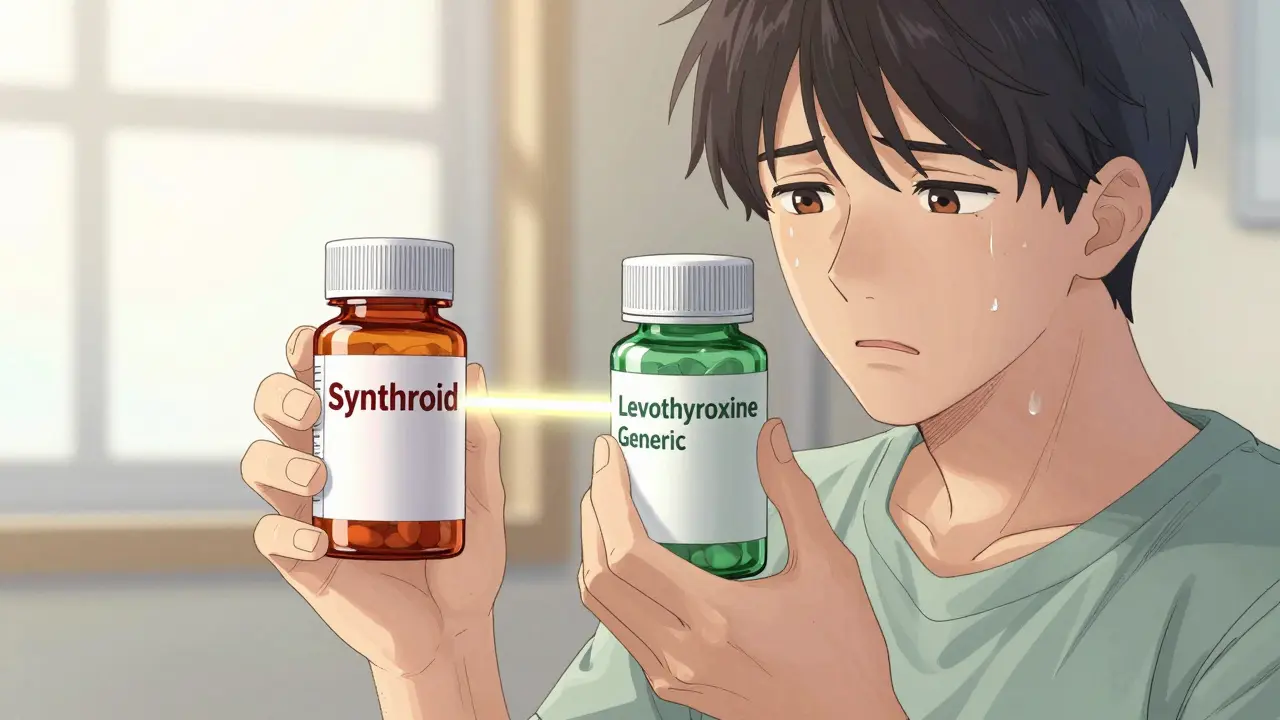
When your doctor prescribes a medication, you might assume that a generic version is just as good as the brand-name one. For most drugs, that’s true. But for NTI drugs-Narrow Therapeutic Index drugs-the story gets complicated. These aren’t your everyday pills. A tiny change in how your body absorbs them can mean the difference between healing and harm. So when your pharmacy hands you a cheaper generic, should you take it? Or should you stick with the brand?
What Makes NTI Drugs Different?
NTI drugs have a razor-thin line between working and causing damage. Too little, and the treatment fails. Too much, and you risk serious side effects or toxicity. The FDA defines them as medications where small changes in blood concentration can lead to serious therapeutic failures or adverse reactions. Think of it like walking a tightrope-no room for wobbling.
Common NTI drugs include:
- Levothyroxine (for hypothyroidism)
- Warfarin (a blood thinner)
- Tacrolimus (used after organ transplants)
- Phenytoin and other antiepileptic drugs
These aren’t rare. Millions of people rely on them. Levothyroxine alone is prescribed to over 20 million Americans. And while brand-name versions like Synthroid can cost $30-$60 a month, generics often run $4-$15. That’s a huge savings. But is it safe?
The FDA’s Stance: Generic NTI Drugs Must Meet Strict Standards
The FDA doesn’t treat all generics the same. For regular drugs, bioequivalence means the generic must deliver 80-125% of the active ingredient compared to the brand. For NTI drugs, the rules tightened in 2014. Now, the acceptable range can be as narrow as 90-111%. Why? Because even a 10% variation could tip the balance for someone on warfarin or tacrolimus.
The FDA requires generics to prove they match the brand’s absorption rate (AUC) and peak concentration (Cmax) within this tighter window. They also test for consistency across batches. Every generic labeled "AB" in the FDA’s Orange Book has passed these tests. That means, on paper, they’re considered interchangeable.
But here’s the catch: the FDA doesn’t publish a public list of NTI drugs. Experts estimate 15-20 fall into this category. Pharmacists and doctors rely on internal databases and clinical experience to know which ones to treat with extra caution.
Real-World Evidence: Do Generics Work?
A 2022 FDA-funded study tracked nearly 18,000 patients on levothyroxine over nine years. The results? No meaningful difference in thyroid hormone levels between brand and generic users. Similar studies on hypertension and diabetes drugs showed no drop in effectiveness with generics.
But not all NTI drugs behave the same. Tacrolimus is a different story. Studies show that switching between generic manufacturers-even ones approved by the FDA-can cause unpredictable spikes or drops in blood levels. Transplant patients who switch generics may need weekly blood tests for weeks afterward. One 2022 case study found a patient’s tacrolimus level dropped 35% after a generic switch, nearly triggering organ rejection.
Antiepileptic drugs like phenytoin and carbamazepine are another gray area. Bioequivalence studies say they’re interchangeable. But patient reports tell another story. The Epilepsy Foundation’s 2022 survey found 42% of respondents had a seizure after switching to a generic. While self-reported, these aren’t isolated anecdotes. Clinicians see it too.
Warfarin users often report no issues. But INR levels-the measure of blood thinning-can fluctuate after a switch. One study found 22% of warfarin patients needed dose adjustments within a month of switching. That’s not a failure of the generic. It’s a reminder that even small changes require monitoring.

What Do Pharmacists and Doctors Think?
A 2022 survey of 710 pharmacists found 87% believe generic NTI drugs are as effective as brand-name, and 94% consider them safe. Most said they routinely substitute generics unless told otherwise.
But experts don’t all agree. Dr. Robert Bies, a pharmacy professor, warned that the standard 80-125% bioequivalence range may be too loose for some NTI drugs. He pointed out that switching between different generic versions-say, from one manufacturer to another-can cause "large plasma concentration fluctuations" that lead to therapeutic failure.
The American Academy of Neurology has long recommended that doctors be able to write "dispense as written" on antiepileptic prescriptions. Some states, like California and New York, have laws that require patient consent or physician approval before substituting NTI drugs. Twenty-eight states have some form of restriction. In others, substitution is automatic unless the doctor blocks it.
What Should You Do?
Here’s the bottom line: don’t assume. Don’t assume generics are unsafe. Don’t assume they’re always safe. The answer depends on your drug, your condition, and your body.
If you’re starting treatment, generics are usually the best first choice. The cost savings are real, and evidence supports their use for most patients. But if you’ve been stable on a brand-name drug for months or years, switching might not be worth the risk.
Always talk to your doctor before switching. Ask:
- Is this an NTI drug?
- Have I been stable on my current version?
- Will I need extra monitoring after a switch?
- Does my insurance require prior authorization for the brand?
Pharmacists can also help. If you’re switched without your knowledge, ask if the new generic is from the same manufacturer as before. A change in manufacturer-even within the same generic brand-can matter.

Insurance and Costs: The Hidden Pressure
Insurance companies are pushing generics hard. Blue Cross Blue Shield of Kansas, for example, makes patients pay the full price difference between brand and generic for NTI drugs. That means if Synthroid costs $50 and the generic is $10, you’ll pay $40 extra out of pocket unless you appeal.
Many insurers now require prior authorization before covering brand-name NTI drugs. That means your doctor has to prove you tried generics first-and failed.
But here’s what insurers don’t always account for: the hidden costs of a bad switch. Emergency visits, hospitalizations, or additional lab tests after a therapeutic failure can cost far more than the drug difference.
The Future: Personalized Decisions, Not One-Size-Fits-All
The FDA is launching a new NTI Drug Registry to track real-world outcomes after substitutions. The Agency for Healthcare Research and Quality is funding a $2.4 million study tracking 50,000 patients over two years. By 2025, we may have clearer answers.
One thing’s certain: blanket rules won’t cut it anymore. A 65-year-old on stable warfarin might do fine with a generic. A 28-year-old with epilepsy who just had a breakthrough seizure? Not worth the gamble.
What matters most isn’t the label on the bottle-it’s whether your body responds consistently. If you’re stable, stay put. If you’re switching, monitor closely. And never make the change without talking to your care team.
Are all generic NTI drugs the same?
No. Even if two generics are both FDA-approved "AB" rated, they can come from different manufacturers. Each manufacturer uses slightly different inactive ingredients, manufacturing processes, or tablet coatings. These differences can affect how the drug is absorbed. For NTI drugs like tacrolimus or phenytoin, switching between manufacturers-even within generics-can require extra monitoring.
Can I switch from brand to generic without telling my doctor?
Technically, pharmacists can substitute unless your doctor wrote "dispense as written" or your state has a non-substitution law. But you should always tell your doctor. Even if the generic is approved, your body may react differently. For drugs like levothyroxine or warfarin, a change can mean needing a blood test within 4-6 weeks to make sure you’re still in the safe range.
Why do some states block automatic substitution for NTI drugs?
Because real-world data shows some patients experience instability after switching. States like California, New York, and Illinois require pharmacist-physician communication or patient consent before substituting NTI drugs. These laws exist because the consequences of a failed substitution-like organ rejection or seizures-are too serious to leave to chance.
Is it safe to switch between different generic brands of the same NTI drug?
It’s not recommended without medical supervision. Each generic manufacturer’s version may have slight differences in how the drug is released. For example, switching from one generic levothyroxine to another might not affect most people-but for someone with thyroid disease, even a 5% change in absorption can throw off hormone levels. The safest approach is to stick with one manufacturer once you’ve found what works.
What should I do if I think my generic NTI drug isn’t working?
Don’t ignore it. Contact your doctor immediately. For drugs like warfarin, check your INR. For levothyroxine, ask for a TSH test. For antiepileptics, note any increase in seizures or side effects. Keep the pill bottle-even if it’s empty-so your doctor can see the manufacturer and lot number. Many adverse events are linked to a change in manufacturer, not the generic label itself.




Casey Tenney
March 20, 2026 AT 03:21Generic NTI drugs are a scam. People die because pharmacies cut corners. You think $4 is a deal? It's a death sentence waiting to happen. My uncle took a generic warfarin and ended up in the ICU. Don't be a lab rat.
Sandy Wells
March 21, 2026 AT 18:40People just dont understand how complex pharmacokinetics is
Bryan Woody
March 21, 2026 AT 18:56Oh wow the FDA has a 90-111% window for NTI drugs how revolutionary
Meanwhile pharmacists are still swapping out tacrolimus like it's a bag of chips
And doctors? They're too busy chasing insurance reimbursements to care
Let me guess next you'll tell me the FDA also regulates the color of pill coatings
And that the inactive ingredients in generics dont interact with your gut biome like a chemical cocktail party
My cousin switched from Synthroid to a generic and her TSH went from 2.1 to 7.8 in three weeks
She didn't even notice until she started forgetting her own birthday
So yes the science says its fine
But your body doesn't read FDA guidelines it just screams when it's dying
And no one in corporate pharmacy is going to lose sleep over your seizure
So go ahead switch
Just don't come crying when your transplant starts rejecting itself
And yes I'm a pharmacist
And yes I've seen it all
Chris Dwyer
March 23, 2026 AT 14:15Hey everyone just want to say this is such an important conversation
Most of us are just trying to survive and afford our meds
But if you've been stable on brand for years
Don't risk it
And if you're switching
Get your labs done
Track your symptoms
And talk to your doc
It's not about fear
It's about being smart
You're not alone in this
And your health is worth the extra step
Timothy Olcott
March 25, 2026 AT 01:37USA FOR LIFE 🇺🇸
Brand name = american pride
Generic = china trash
Why do we let foreign labs make our life saving pills???
My grandpa died because his generic levothyroxine was made in a basement in Shenzhen
BUY AMERICAN
Desiree LaPointe
March 26, 2026 AT 06:51How quaint that you think the FDA actually knows what it's doing
It's like trusting a toddler to calibrate a nuclear reactor
And yet here we are
Letting pharmacists swap out our life-sustaining chemicals like they're trading baseball cards
Meanwhile the real scandal is that no one is holding the manufacturers accountable for batch-to-batch variance
Or that insurance companies treat your thyroid like a line item
Oh and the Epilepsy Foundation survey? Of course 42% had seizures
They're not studying the right people
They're studying the ones who didn't bother to read the tiny print
Which is everyone
Jackie Tucker
March 28, 2026 AT 01:33The entire NTI drug debate is a mirror held up to our collective delusion
We want the comfort of science
But we refuse to accept the chaos of biology
Our bodies are not lab rats in a controlled environment
They are ecosystems
Shaken by invisible currents
A 5% shift in absorption
Is not a statistical outlier
It is a tectonic plate shifting under your skin
And yet we outsource our survival to formularies and cost-per-milligram metrics
How tragic
How profoundly human
trudale hampton
March 29, 2026 AT 10:53Just wanted to say I switched from Synthroid to generic last year
Had my TSH checked at 6 weeks
Perfect numbers
Save $40/month
And I'm still alive
Maybe it's not so scary
Just monitor
And listen to your body
Shaun Wakashige
March 29, 2026 AT 16:10lol generics
my mom switched and now she's a zombie
no joke
Paul Cuccurullo
March 30, 2026 AT 06:02It is imperative that we recognize the gravity of therapeutic substitution in NTI medications
While cost containment is a societal imperative
It must not supersede the sanctity of patient safety
Physicians and pharmacists must act as vigilant guardians
And patients must be empowered with knowledge
This is not merely a pharmacological issue
It is a moral one
Natali Shevchenko
April 1, 2026 AT 01:37There's a deeper question here than just bioequivalence
It's about trust
Who do we trust? The FDA? The pharmacist? The insurance company? Or our own bodies?
NTI drugs force us to confront the illusion of control
We think we can quantify everything
But a human being isn't a data point
It's a story
And sometimes
That story doesn't fit neatly into a 90-111% window
Maybe the real solution isn't stricter guidelines
But more listening
And less automation
Johny Prayogi
April 1, 2026 AT 17:51Y'all are overthinking this
Just ask your doc
Get your labs done
Stick with one manufacturer if it works
And if you're saving $40 a month
That's $480 a year
That's a vacation
Or groceries
Or gas
So yes
Switch
But don't be lazy
Stay on top of it
And if something feels off
Speak up