Imagine a patient comes to you complaining that their new generic blood pressure medication isn't working like the brand-name version did. They feel dizzy, their readings are unstable, and they're worried. As a pharmacist, you know generics are supposed to be bioequivalent. But what if this one isn't? This scenario highlights a critical gap in our healthcare system: the responsibility-and the reality-of reporting generic drug problems.
You stand at the front lines of medication safety. You dispense roughly 75% of all prescriptions, which are mostly generics. Yet, despite being the professional most likely to see these issues firsthand, pharmacists contribute less than 3% of all adverse event reports to the U.S. Food and Drug Administration (FDA). Why is there such a massive disconnect between your professional obligation and actual reporting rates? Let's break down the legal landscape, the practical hurdles, and exactly how you can fulfill your role in keeping patients safe.
The Legal Landscape: Voluntary vs. Mandatory
First, let's clear up a common misconception. Under federal law, specifically the Federal Food, Drug, and Cosmetic Act and the 2013 FDA Safety and Innovation Act, there is no mandatory legal requirement for individual healthcare professionals to report adverse drug events (ADEs) to the FDA. The system relies on voluntary reporting through the MedWatch program.
However, "voluntary" doesn't mean "optional" in terms of professional standards. The American Society of Health-System Pharmacists (ASHP) Guidelines, updated in April 2022, explicitly state that medication safety monitoring and adverse event reporting are fundamental professional responsibilities. Furthermore, while federal mandates are loose, state regulations vary significantly. For instance, the California State Board of Pharmacy requires pharmacists to maintain a system for identifying and reporting adverse reactions. Currently, only four states-California, Illinois, Massachusetts, and New York-have established mandatory reporting requirements for serious adverse events, but 28 states have incorporated specific expectations into their board regulations.
This creates a complex environment where you must navigate both federal encouragement and varying state-level strictness. The bottom line? Even if your state doesn't force you to report, your professional license and ethical duty to patient safety demand it.
Understanding Therapeutic Inequivalence
One of the most challenging areas for pharmacists is identifying therapeutic inequivalence. This occurs when a generic product fails to demonstrate bioequivalence in clinical practice, even though it met regulatory standards during approval. The FDA defines this as a situation where a patient experiences a clinical response different from that expected with a generic substitution.
Why does this happen? Sometimes it's due to manufacturing variances, excipient differences (inactive ingredients), or packaging issues. The FDA's Office of Generic Drugs actively investigates these claims. In fact, their 2022 Annual Report noted that they received 1,842 reports specifically mentioning therapeutic inequivalence concerns, with 21% originating from pharmacists. Your observations here are invaluable because they represent real-world evidence that may not have been detected during the initial Abbreviated New Drug Application (ANDA) review process.
If you suspect therapeutic inequivalence, don't dismiss it as patient anxiety. Document the specific symptoms, compare them to the previous brand or generic experience, and report it. The FDA has even created a specific "generic drug concern" category in their online portal to help categorize these issues correctly.
The Attribution Challenge: Brand vs. Generic
A major hurdle in reporting generic drug problems is determining who to blame. Under the 1984 Hatch-Waxman Amendments, generic manufacturers must keep their labeling identical to the reference listed drug (the brand name). This means generic companies cannot independently update safety information or warnings without FDA approval.
This legal framework was reinforced by the Supreme Court's 2011 decision in PLIVA v. Mensing, which ruled that generic manufacturers cannot be held liable in state courts for failure to warn due to federal preemption. Consequently, brand manufacturers often receive and report adverse events for products actually dispensed as generics. This creates data attribution problems that complicate safety signal detection.
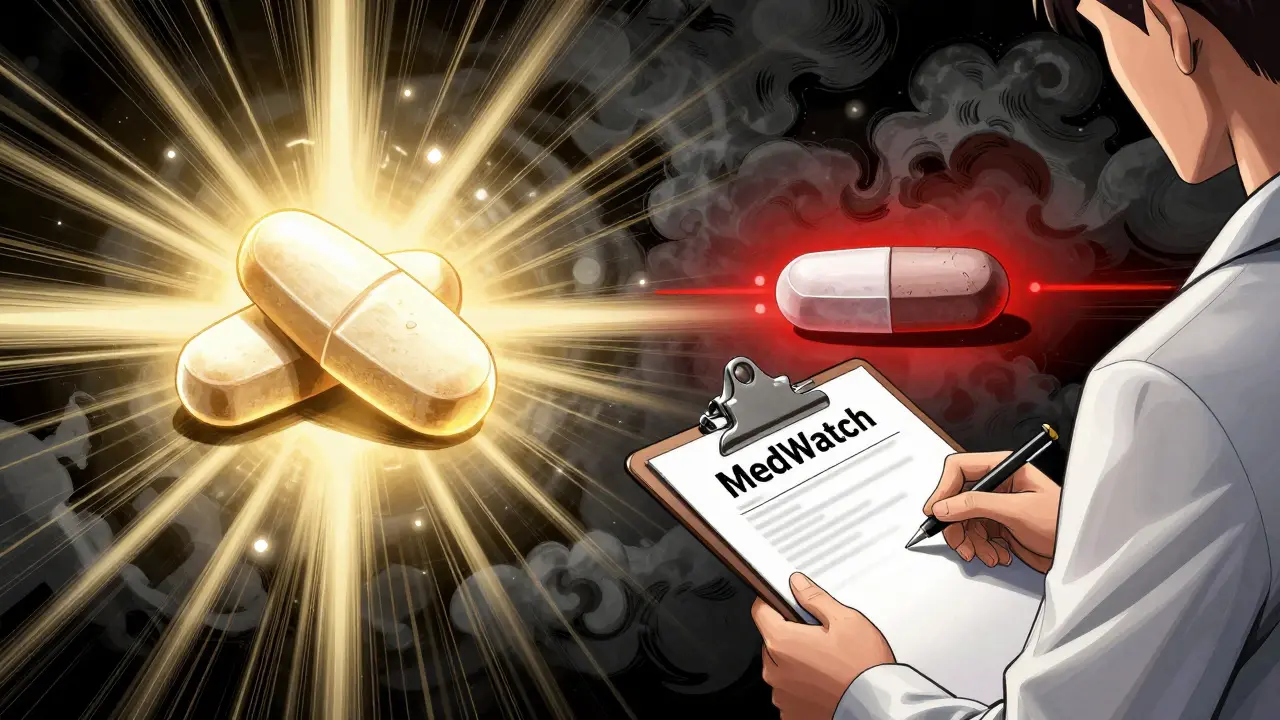
As a pharmacist, you need to be precise. When filling out the MedWatch Form 3500, ensure you include the National Drug Code (NDC), manufacturer name, and lot number. These details are crucial for the FDA to trace the issue back to the specific generic manufacturer rather than the brand holder. Without this specificity, the report may get lost in the noise or attributed to the wrong entity.
| Aspect | Serious Adverse Events | Non-Serious / Unexpected Events |
|---|---|---|
| Definition | Fatal, life-threatening, hospitalization, disability, congenital anomaly | Mild side effects, unexpected reactions not listed in labeling |
| Reporting Timeline | Within 15 calendar days of initial receipt | No strict deadline, but prompt submission encouraged |
| Causality Requirement | Reasonable suspicion of causality | Report even if causality is uncertain |
| Primary Goal | Immediate safety intervention | Uncover previously unidentified drug effects |
Barriers to Reporting and How to Overcome Them
We know pharmacists underreport. A 2022 study in the Journal of the American Pharmacists Association (JAPhA) found that only 2.3% of all ADE reports came from pharmacists. Why? Time, uncertainty, and complexity. A 2023 Pharmacy Times survey revealed that 68.4% of community pharmacists cited lack of time as the primary barrier, followed by uncertainty about whether an event meets reporting criteria (52.1%).
To overcome these barriers, integrate reporting into your workflow. Use checklists for common generic substitutions known to cause issues. Leverage technology; many pharmacy management systems now allow you to flag potential interactions or inequivalences directly. Remember, you don't need to be certain that the drug caused the event. The FDA explicitly states that reports should be submitted even where the healthcare provider is not certain of causality. Your job is to report the suspicion; the FDA's job is to investigate the pattern.
Additionally, take advantage of training resources. The FDA's MedWatch Training Portal offers modules specifically for healthcare professionals. Module 4 addresses generic drug reporting considerations and can clarify the ambiguity around what constitutes a reportable event.

The Impact of Pharmacist Reports
Your reports matter more than you might think. An analysis of the FDA's Adverse Event Reporting System (FAERS) database, published in JAMA Internal Medicine in March 2023, identified 478 unique generic drug products with potential safety signals requiring further investigation. Remarkably, 63% of these were initially identified through reports submitted by pharmacists who noticed patterns across multiple patients.
The FDA's Office of Generic Drugs has even established a Therapeutic Equivalence Working Group since 2019 to analyze these reports. In 2022 alone, 147 generic drug products underwent additional review based on pharmacist reports, resulting in 12 product-specific communications to healthcare providers. This shows that your vigilance directly leads to actionable safety interventions.
By reporting, you contribute to the collective intelligence of the healthcare system. You help identify manufacturing defects, labeling errors, and true therapeutic failures. You protect future patients from experiencing the same issues your current patient faced.
Steps to Effective Reporting
To make reporting easier and more effective, follow these steps:
- Identify the Patient and Reporter: Ensure you have identifiable patient information (or a pseudonym if privacy is a concern, though direct contact is preferred for follow-up) and your own contact details.
- Detail the Suspect Drug: Include the NDC, manufacturer name, lot number, and strength. Do not just list the generic name.
- Describe the Adverse Event: Be specific. Instead of saying "patient felt bad," describe the symptoms, onset time, severity, and outcome. Was it a rash? Dizziness? Treatment failure?
- Indicate Causality Suspicion: Note whether you believe the drug caused the event, even if you're unsure. The FDA values reasonable suspicion.
- Submit via MedWatch: Use the online portal for speed and accuracy. Select the appropriate category, such as "generic drug concern" if applicable.
- Document Internally: Keep a record in the patient's profile and your internal quality assurance logs. This helps track trends over time.
Remember, reporting is not just a bureaucratic task. It's a core component of pharmaceutical care. By taking the time to report generic drug problems, you uphold the highest standards of professionalism and directly contribute to public health safety.
Is it legally required for pharmacists to report adverse drug events to the FDA?
At the federal level, no. The FDA encourages voluntary reporting through MedWatch, but there is no federal law mandating individual healthcare professionals to report. However, some states, like California and New York, have stricter regulations that may require reporting of serious adverse events. Always check your state board of pharmacy guidelines.
What is therapeutic inequivalence in generic drugs?
Therapeutic inequivalence occurs when a generic medication fails to produce the same clinical effect as the brand-name reference drug, despite meeting bioequivalence standards during approval. This can result from differences in inactive ingredients, manufacturing processes, or packaging. Pharmacists play a key role in identifying these real-world discrepancies.
How do I determine if an adverse event is serious enough to report?
A serious adverse event is defined as one that is fatal, life-threatening, results in hospitalization or prolongation of existing hospitalization, causes persistent or significant disability/incapacity, or results in a congenital anomaly/birth defect. If you are unsure, it is always better to report. The FDA also encourages reporting non-serious but unexpected events to uncover new safety signals.
Why is it difficult to attribute adverse events to generic manufacturers?
Due to the Hatch-Waxman Amendments and the PLIVA v. Mensing Supreme Court decision, generic manufacturers must use labeling identical to the brand-name drug and cannot independently update warnings. This often leads to brand manufacturers receiving and reporting adverse events for generic equivalents, complicating data attribution. Including specific NDC and lot numbers in your report helps clarify the source.
What information must be included in a MedWatch report?
A valid MedWatch report requires four key elements: an identifiable patient, a suspect drug (including NDC, manufacturer, and lot number), an adverse event description, and an identifiable reporter. Vague reports stating only that "a patient experienced an injury" are not useful for investigation.
Do I need to be certain that the drug caused the adverse event before reporting?
No. The FDA explicitly states that reports should be submitted even if you are not certain the product caused the event. Reasonable suspicion is sufficient. Your role is to report the observation; the FDA's role is to analyze patterns and determine causality across thousands of reports.
How can pharmacists improve their reporting rates?
Pharmacists can improve reporting by integrating it into daily workflows, using checklists for high-risk generics, leveraging pharmacy software flags, and utilizing FDA training modules. Recognizing that reporting is a fundamental professional responsibility, not just an administrative task, also helps shift mindset and prioritize safety monitoring.