
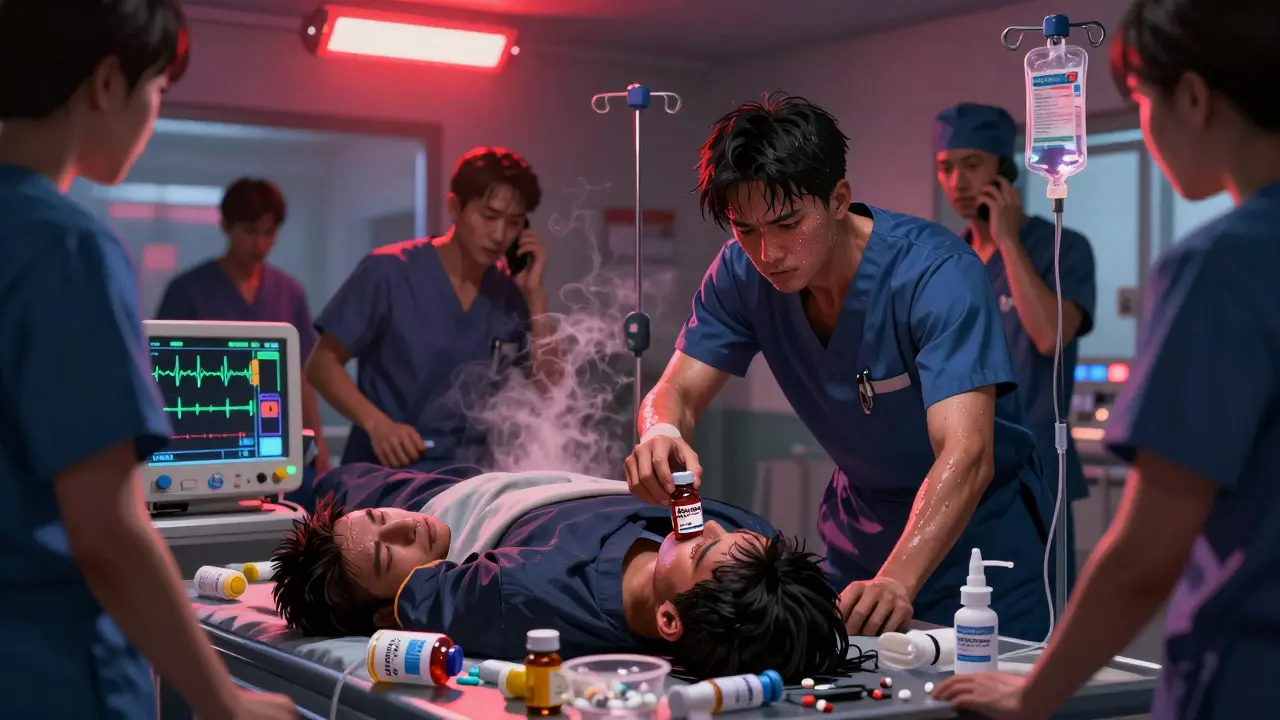
When someone takes too many drugs at once-whether by accident, mistake, or intent-it’s not just a bad day. It’s a medical emergency that can kill in minutes. Multiple drug overdose, where two or more substances interact dangerously, is one of the most complex and deadly scenarios emergency teams face. In 2019, opioids alone caused 120,000 deaths worldwide. Add acetaminophen, benzodiazepines, or fentanyl into the mix, and the risk multiplies. The real danger isn’t just the drugs themselves-it’s how they clash inside the body.
Why Multiple Drug Overdoses Are So Dangerous
A single overdose is hard enough. But when you mix opioids with acetaminophen, or benzodiazepines with alcohol, the effects aren’t just added-they’re multiplied. Opioids slow breathing. Acetaminophen destroys the liver. Benzodiazepines deepen sedation. Together, they create a perfect storm. One drug might mask the symptoms of another. Someone might seem to wake up after naloxone, but if they took acetaminophen too, their liver could still be failing hours later. The most common combinations? Prescription painkillers like Vicodin or Percocet, which mix opioids with acetaminophen. Or people using heroin or fentanyl along with sleeping pills. In Australia, these combinations are rising in emergency rooms. The problem? Many patients don’t even know what they took. Pills look alike. Labels get lost. People mix meds to cope with pain, anxiety, or insomnia-and don’t realize they’re stacking toxins.What First Responders Must Do
If you suspect a multiple drug overdose, time is everything. The SAMHSA Five Essential Steps are your lifeline:- Assess the situation. Is the person responsive? Are they breathing? Look for needle marks, empty pill bottles, or smell of alcohol.
- Call emergency services. Don’t wait. Even if they seem okay, internal damage can be silent.
- Administer naloxone. If opioids are involved-even if you’re not sure-give naloxone. One dose, then wait 2-3 minutes. If no response, give another. Fentanyl is so strong that two or three doses may be needed.
- Support breathing. Naloxone doesn’t fix breathing. Rescue breathing can keep someone alive until help arrives. Tilt the head back, pinch the nose, give one breath every 5 seconds.
- Monitor closely. Naloxone wears off in 30-90 minutes. Opioids like fentanyl or methadone can last hours longer. The person can stop breathing again. Stay with them.
Acetaminophen Overdose: The Silent Killer
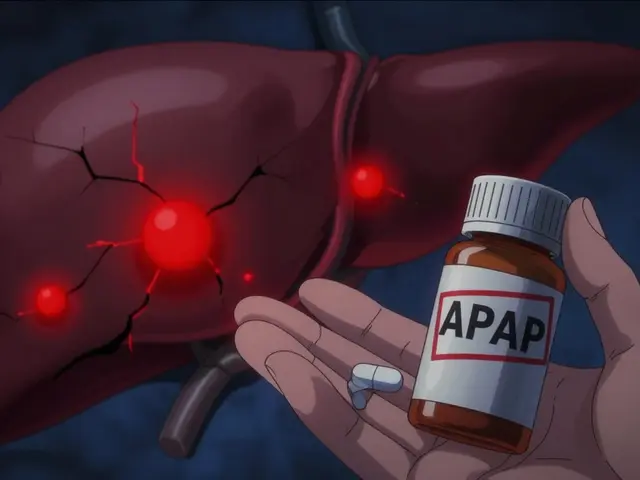
Acetaminophen (paracetamol) is in more than 600 medications-from painkillers to cold meds. Taking too much doesn’t cause vomiting or passing out right away. It quietly kills your liver. By the time symptoms show-nausea, yellow skin, confusion-it’s often too late. The Rumack-Matthew nomogram is the tool doctors use to decide if someone needs treatment. It’s not about how many pills they took-it’s about blood levels and timing. If someone took acetaminophen within the last 4 hours, activated charcoal can help pull the drug from the gut. After that, the only antidote is acetylcysteine. Here’s what matters: if the person weighs over 100 kg, hospitals cap the acetylcysteine dose at 100 kg. Giving more doesn’t help-and can cause side effects. For repeated overdoses (taking a little extra every day for weeks), doctors check liver enzymes. If AST or ALT levels are high, or acetaminophen blood levels exceed 20 μg/mL, start acetylcysteine immediately-even if the person feels fine.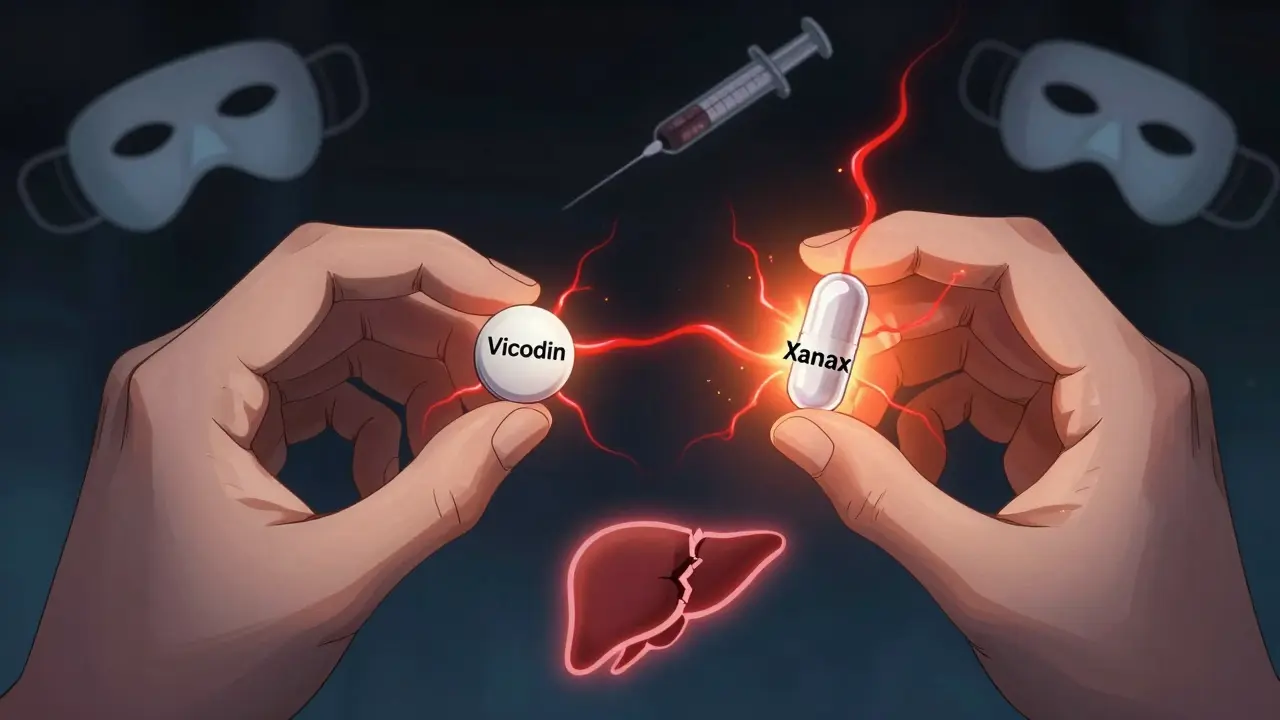
When Drugs Conflict: Naloxone vs. Acetylcysteine
The biggest challenge in multiple drug overdoses? Treating two life-threatening problems at once. You give naloxone to reverse opioids. You give acetylcysteine to protect the liver. But they don’t work the same way, and timing matters. Naloxone works fast-but fades fast. Acetylcysteine takes hours to build up in the system. So a person might wake up after naloxone, seem fine, and then collapse 6 hours later from liver failure. That’s why hospitals keep patients under observation for at least 12-24 hours after a mixed overdose. Blood tests every few hours. Liver enzymes tracked. Oxygen levels watched. For patients on hemodialysis-those with acetaminophen levels above 900 μg/mL and signs of acidosis or confusion-acetylcysteine must be given at 12.5 mg/kg per hour during dialysis. This isn’t optional. Without it, the liver can’t recover.Benzodiazepines: The Hidden Risk
Benzodiazepines like Xanax or Valium are often taken with opioids to boost the high. But reversing them is tricky. Flumazenil can reverse their effects-but it’s dangerous. If someone is physically dependent on benzodiazepines, giving flumazenil can trigger violent seizures. That’s why doctors avoid it unless the overdose is pure and the patient has no history of long-term use. In mixed overdoses, the safer path is supportive care: breathing support, monitoring, and waiting. The body will clear the drug eventually. Forcing reversal isn’t worth the risk.Tramadol and Other Gray-Area Drugs
Tramadol is classified as a non-opioid painkiller-but it acts on opioid receptors. Overdosing on tramadol causes respiratory depression just like heroin. And naloxone works on it. But here’s the catch: tramadol lasts 5-6 hours. One dose of naloxone won’t cut it. Many patients need continuous IV drips or repeated doses every 30-60 minutes until the drug clears. Other drugs like methadone or buprenorphine also linger. Methadone can stay in the system for days. That’s why patients who overdose on these drugs need to be monitored for at least 24 hours-even if they seem fine after naloxone.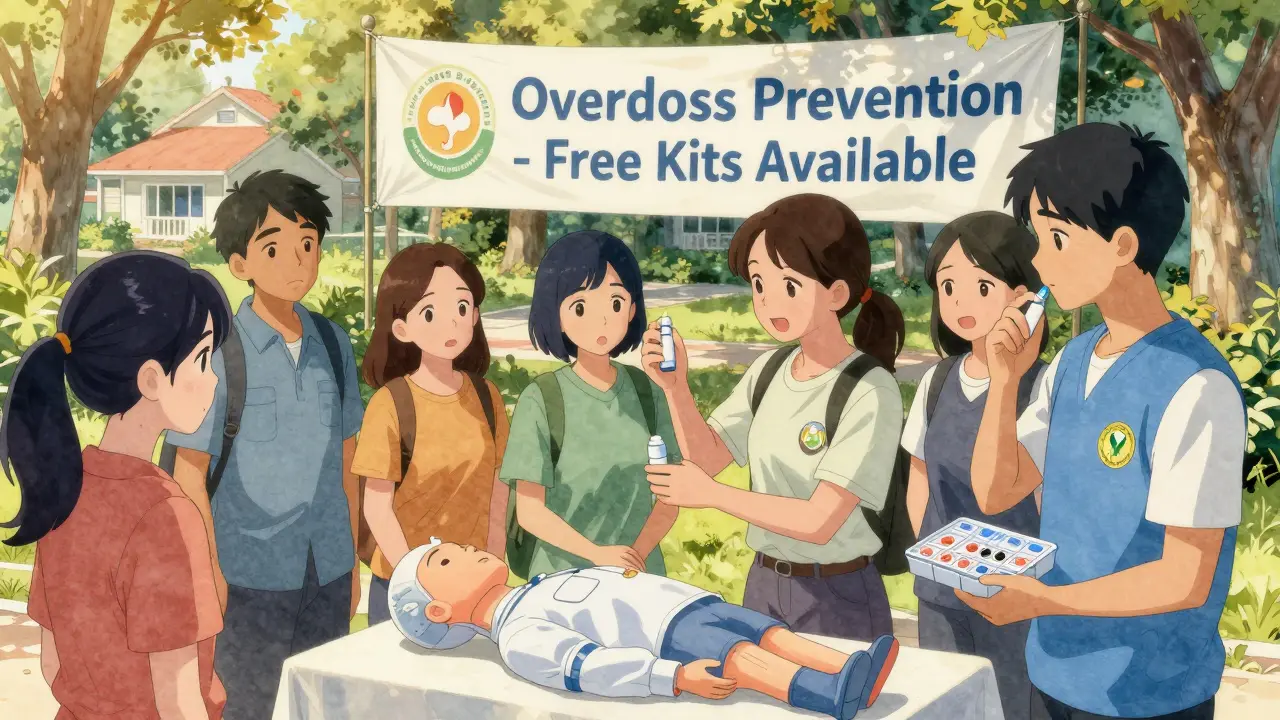
What Happens After the Emergency?
Saving someone’s life is just the first step. The real work begins after they wake up. Most people who survive a multiple drug overdose have an underlying substance use disorder. The World Health Organization says those recently released from prison are at highest risk-up to 100 times more likely to die in the first four weeks after release. That’s why programs that combine naloxone distribution with access to methadone or buprenorphine treatment are saving lives. Post-overdose care should include:- A full medical check-up for liver, kidney, and brain damage
- Psychological screening for depression, trauma, or addiction
- Connection to counseling or support groups
- Education on safe medication use and avoiding future risks
What You Can Do
If you take multiple medications:- Keep a list of everything you take-name, dose, reason.
- Check for acetaminophen in cold and pain meds. Don’t double up.
- Never mix alcohol with sedatives or painkillers.
- Store pills safely. Out of reach of kids. Out of sight of others.
- Keep naloxone on hand. It’s free in many pharmacies and community centers.
- Learn how to use it. It’s simple. No medical degree needed.
- Don’t leave someone alone after giving naloxone. Watch them until EMS arrives.
- Encourage them to talk to a doctor. Recovery starts with one conversation.
What’s Changing in 2026
The 2023 JAMA Network Open guidelines updated how we define “high-risk” acetaminophen ingestion. The old 4-hour window for activated charcoal still holds-but now, the nomogram line is clearer, and dosing rules are stricter. Naloxone access is expanding. In Australia, pharmacies now stock it without a prescription in most states. Community training programs are growing, especially in areas with high opioid use. The future isn’t just better drugs-it’s better systems. Programs that connect overdose survivors to housing, therapy, and job support are cutting repeat overdoses by 40%. That’s the real win.Can you overdose on over-the-counter meds like paracetamol?
Yes. Acetaminophen (paracetamol) is in many cold, flu, and pain medicines. Taking more than 4,000 mg in 24 hours can cause serious liver damage-even if you don’t feel sick right away. Some people take extra pills for pain and don’t realize they’re doubling up. It’s the most common cause of acute liver failure in Australia and the US.
Does naloxone work on fentanyl overdoses?
Yes, but it often takes more than one dose. Fentanyl is 50-100 times stronger than heroin. One vial of naloxone might not be enough. If someone doesn’t respond after the first dose, give a second-and keep giving more every 2-3 minutes until they breathe on their own. Rescue breathing is critical while waiting.
What if I give naloxone and the person doesn’t need it?
Naloxone is safe for people who haven’t taken opioids. It won’t harm them. It won’t make them sick. If they’re not overdosing on opioids, naloxone does nothing. Better to give it and be safe than wait and lose time.
Can activated charcoal help with all types of overdoses?
No. Activated charcoal only works if given within 4 hours of ingestion and only for certain drugs-like acetaminophen, aspirin, or some antidepressants. It doesn’t work for alcohol, opioids, benzodiazepines, or methamphetamine. It’s not a universal cure. Only trained medical staff should decide if it’s appropriate.
How long should someone be monitored after a mixed overdose?
At least 12-24 hours. Naloxone wears off quickly, but opioids like methadone or fentanyl can stay in the system for days. Acetaminophen toxicity can take 24-72 hours to show up. Blood tests, liver enzymes, and breathing checks must be done regularly. Leaving too early can be fatal.
Is it safe to use naloxone at home?
Yes. Naloxone nasal sprays are easy to use-no needles needed. Training takes less than 10 minutes. Many pharmacies in Australia give it for free. Keep it with your first aid kit. If you know someone who uses opioids, have it ready. It could save their life.

Pooja Kumari
January 10, 2026 AT 12:05Okay, I just read this whole thing and I’m honestly shook. Like, I had no idea that mixing a couple of over-the-counter pills could silently murder your liver. My aunt took Tylenol for her back pain and some sleep aid because she couldn’t sleep, and she ended up in the ICU for three weeks. No one told her the cold medicine had acetaminophen too. She’s fine now, but her liver’s scarred for life. And naloxone? I thought it was just for heroin. Turns out it’s for anything with opioids-even tramadol, which my cousin swears is ‘not addictive.’ Spoiler: it is. I’m keeping a Narcan kit in my purse now. No more pretending this isn’t a real problem.
Also, why do we act like overdose is a moral failure? People are just trying to cope. Pain, anxiety, insomnia, trauma-it’s not a choice. The system fails them at every turn. Prescription pads, pharmacy labels, lack of education, stigma-it’s all stacked against them. We need more community outreach, not just emergency fixes. And yes, I’m talking to my local pharmacy about free naloxone training next week. Someone’s gotta start.
Also, the part about monitoring for 24 hours? That’s insane we don’t do it universally. I work in healthcare and I’ve seen people discharged after 4 hours because ‘they’re awake.’ Wake up doesn’t mean alive. We need mandatory observation protocols. Like, legally required. This isn’t optional. Lives are on the line.
And don’t even get me started on how fentanyl is in everything now. My cousin’s friend died from a pill that looked like a regular oxycodone. Only it was laced. No warning. No label. Just a little white circle. That’s terrorism disguised as medicine. We need better drug testing strips in pharmacies. Like, mandatory. Not just for addicts-for everyone. Because anyone can get fooled.
I’m not even mad anymore. I’m just determined. This isn’t about blame. It’s about survival. And we’re all one bad mix away from tragedy. Let’s stop pretending we’re not all one pharmacy mistake from losing someone we love.
Also, I just donated to that Melbourne program that connects overdose survivors to housing and therapy. If you’re reading this and you’ve got $10, do the same. Real change starts with action, not just sympathy.
And yes, I’m telling my mom to stop taking her ‘just one more’ painkiller with her sleeping pill. Again. Because she will. And someone has to say it.
And if you’re reading this and you’re thinking ‘this doesn’t affect me’-you’re wrong. It already did. You just didn’t know it yet.
Alicia Hasö
January 10, 2026 AT 21:36This is one of the most vital, clear-headed pieces I’ve read in years. Thank you for writing this with such precision and heart. Emergency responders, nurses, pharmacists, and family members all need to read this. It’s not just medical knowledge-it’s lifesaving literacy.
Let’s normalize carrying naloxone like we do epinephrine pens. Let’s make it as common as fire extinguishers. And let’s stop treating overdose as a crime-it’s a public health emergency. The data doesn’t lie: access to harm reduction tools cuts mortality by over 60%. That’s not a statistic. That’s someone’s mother. Someone’s brother. Someone’s best friend.
I’ve trained over 200 community members in naloxone use across three states. Every single time, someone says, ‘I didn’t think I’d ever need this.’ And then they use it. And they save a life. And they become an advocate. That’s the ripple effect.
If you’re reading this and you’re not sure where to start-go to your local pharmacy. Ask for naloxone. Ask for training. Take it home. Keep it in your glove compartment, your backpack, your desk drawer. You don’t need to be a hero. You just need to be ready.
This isn’t politics. This isn’t ideology. This is human decency. And we owe it to each other to act.
Ashley Kronenwetter
January 11, 2026 AT 02:28While the article is comprehensive and well-researched, I must emphasize the ethical imperative to avoid conflating medical necessity with recreational misuse. The majority of acetaminophen-related liver failures occur in individuals with pre-existing conditions or chronic alcohol use-not in those taking medications as prescribed. Policy responses should focus on targeted education and provider accountability, not blanket public distribution of reversal agents, which may inadvertently normalize risky behavior. Harm reduction must not eclipse responsibility.
Aron Veldhuizen
January 11, 2026 AT 05:52Let’s be brutally honest: this whole narrative is a distraction. You’re treating symptoms while ignoring the root cause-weak willpower in a culture of victimhood. Naloxone isn’t a solution; it’s an enabler. People don’t overdose because the system failed them-they overdosed because they chose to ignore the warnings. Why do we keep rewarding poor decisions with free medicine and free rehab? If you can’t control your impulses, maybe you shouldn’t be allowed to buy painkillers at all.
And let’s talk about this ‘acetylcysteine’ nonsense. You’re telling me we’re giving people intravenous antidotes because they took too many Tylenol? That’s not a medical emergency-it’s a behavioral failure. We’ve turned healthcare into a babysitting service. If you’re dumb enough to mix drugs, you deserve the consequences. Not a 24-hour hospital stay on the taxpayer’s dime.
And the part about ‘post-overdose counseling’? Please. People don’t need therapy-they need discipline. If you’re going to self-medicate like a toddler, don’t be surprised when your liver gives up. Stop coddling. Start holding people accountable.
Also, why is it that every time someone dies from drugs, we blame the pharmaceutical industry? Where’s the outrage when someone takes 15 Advil because their headache won’t go away? We’re not talking about ‘toxins’-we’re talking about adults who refuse to think before they act. Fix the person, not the pill.
Jeffrey Hu
January 11, 2026 AT 21:35Actually, the SAMHSA guidelines are outdated. The 2023 JAMA update clarified that the Rumack-Matthew nomogram now uses a lower threshold for acetylcysteine initiation in patients with chronic ingestion-10 μg/mL instead of 150 μg/mL for single ingestions. And you’re wrong about the 100 kg cap on acetylcysteine dosing. That’s a myth. The official protocol is weight-based up to 150 kg, with no cap. I’ve seen it in the FDA’s 2024 guidance memo. Also, flumazenil isn’t ‘dangerous’-it’s contraindicated in mixed overdoses with seizure risk, not because it’s inherently unsafe. And tramadol? It’s a serotonin-norepinephrine reuptake inhibitor too, so serotonin syndrome is a real risk alongside respiratory depression. You didn’t mention that. Big oversight.
Also, naloxone doesn’t work on methadone as well as you think-it has a longer half-life, so you need multiple doses, but you also need to monitor for prolonged QT syndrome. And fentanyl analogs? Carfentanil requires up to 10 mg of naloxone total. That’s not ‘two or three doses’-that’s 10 vials. And you need to administer it intramuscularly if IV isn’t available. The nasal spray isn’t always enough.
And the ‘12-24 hour observation’ rule? That’s for moderate cases. Severe cases with co-ingestants like buprenorphine or alcohol? 72 hours minimum. Blood levels every 4 hours. Liver enzymes, INR, creatinine, lactate. If you’re not doing that, you’re not doing your job. This article reads like a blog post. Not a clinical guide.
Drew Pearlman
January 12, 2026 AT 16:09I just want to say-this is the kind of information that gives me hope. I used to think I was alone in worrying about my brother’s medication use. But reading this? It’s like someone finally put words to what I’ve been terrified of for years.
I kept a bottle of naloxone in his drawer for months before he ever needed it. He didn’t want to talk about it. But one night, I found him unresponsive. I gave the spray. Waited. Nothing. Gave another. And then-he gasped. Just like that. He looked at me like he’d been pulled out of a dream. He didn’t say thank you. He didn’t cry. He just sat there. But the next day, he called his doctor. And now he’s in therapy.
I’m not saying this to feel proud. I’m saying it because I want others to know: you don’t need to be a hero. You just need to be there. And sometimes, that’s enough.
Keep sharing this. Keep pushing for access. Keep reminding people that recovery isn’t about perfection-it’s about showing up. Even when it’s hard. Even when it’s messy. Even when you’re scared.
And if you’re reading this and you’re thinking, ‘I’m not ready’-you’re already ready. You’re here. That’s the first step.
Chris Kauwe
January 13, 2026 AT 09:39This is what happens when you let bureaucrats and social workers dictate medical policy. Naloxone distribution? A taxpayer-funded subsidy for drug dependency. The fact that pharmacies give it out like candy is a national disgrace. We’re not saving lives-we’re enabling a cultural collapse. This isn’t harm reduction-it’s surrender.
And let’s talk about the ‘invisible’ acetaminophen in cold meds. That’s not a failure of the system-it’s a failure of personal responsibility. If you can’t read a label, why are you allowed to walk around unsupervised? We don’t give insulin to diabetics who refuse to monitor their sugar. Why give naloxone to people who refuse to monitor their pills?
The real crisis isn’t overdose-it’s the erosion of accountability. We’ve turned medicine into a free-for-all, then acted shocked when people abuse it. The answer isn’t more drugs. The answer is more discipline. More education. More consequences.
And don’t even get me started on ‘post-overdose housing programs.’ That’s not recovery. That’s welfare with a badge. We’re creating a permanent underclass of people who believe they deserve a safety net because they chose to self-destruct.
Maybe instead of giving out Narcan, we should be giving out jail time. At least then people would learn.
RAJAT KD
January 13, 2026 AT 14:25Acetaminophen overdose is silent because symptoms take 24-72 hours. But liver enzymes rise within 6-12 hours. If you’re in a hospital with access to AST/ALT tests, don’t wait for jaundice. Start acetylcysteine immediately if levels exceed 20 μg/mL or AST >1000. Don’t wait for the nomogram. Time is liver.
Naloxone works on tramadol. But you need repeated doses. Every 45 minutes. Not every 2 hours. Fentanyl is worse. And if they’re on buprenorphine? Don’t give naloxone unless they’re apneic. It can trigger withdrawal seizures.
Don’t trust labels. Check every pill. Use drug checking apps. Know what’s in your meds.
This isn’t theory. I’ve seen it. I’ve done it. Do it right.