
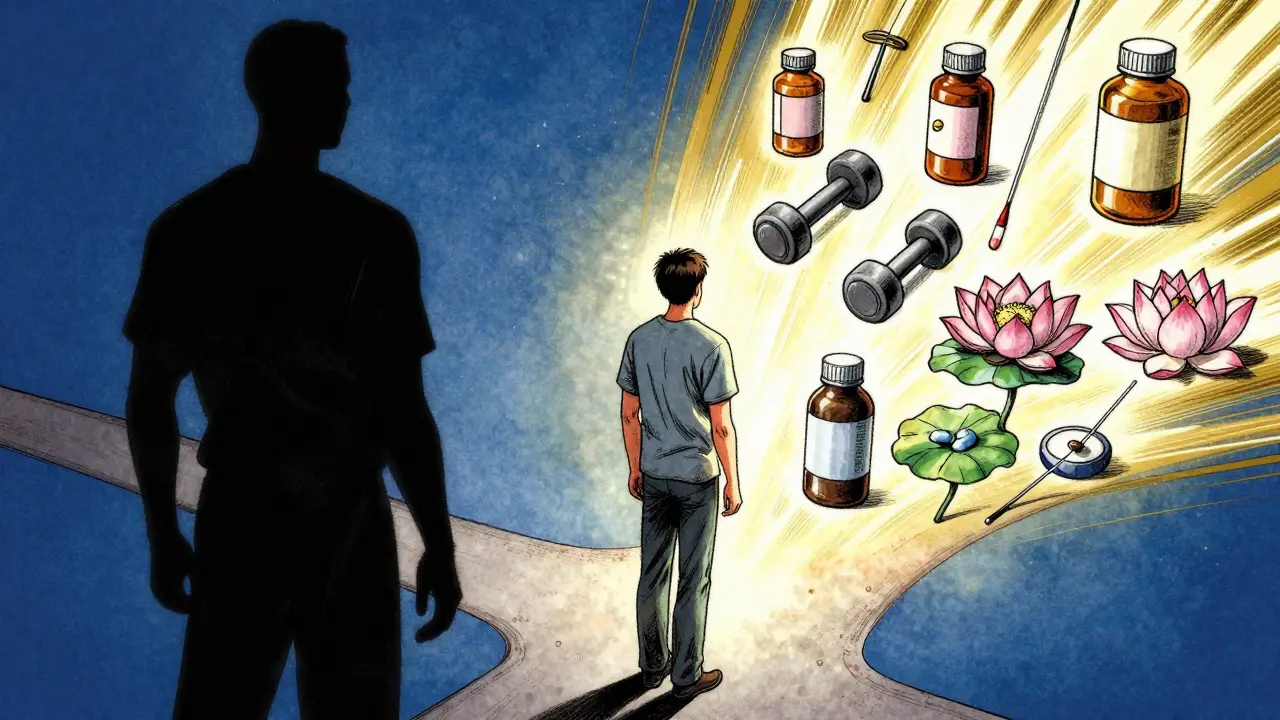
Living with chronic pain changes everything, from your daily routine to your sleep quality. For years, the standard solution often involved strong opioids, but we know now that those come with serious risks like addiction and respiratory issues. Fortunately, the landscape has shifted dramatically. As of early 2026, the focus has moved decisively toward Multimodal Pain Management, which is a comprehensive strategy that combines different types of therapies to target pain through multiple pathways simultaneously. Instead of relying on a single powerful pill, this approach layers treatments to maximize relief while minimizing side effects.
The urgency behind this shift is real. Even with better awareness, opioids are still prescribed to roughly one in five U.S. adults living with chronic pain. That statistic drives home why finding alternatives isn't just a nice-to-have option anymore; it is a medical necessity. We are seeing a convergence of new drug approvals and updated clinical guidelines that make it easier than ever to treat pain safely.
What Exactly Is Multimodal Pain Management?
When you hear "multimodal," think of a Swiss Army knife rather than a single screwdriver. In a traditional setting, a doctor might prescribe one heavy medication to handle the whole problem. With multimodal management, we use a combination of tools. This usually means mixing non-opioid medicines with non-drug therapies.
CDC Clinical Practice Guidelines define recommendations issued by the Centers for Disease Control and Prevention regarding the prescribing of opioids for pain management. Their 2022 guideline made a crucial point: for subacute or chronic pain, non-pharmacologic therapy and nonopioid pharmacologic therapy should be the first choice. This official stance gives us the confidence to explore other options first. It acknowledges that many people find significant relief without touching opioids at all.
The goal here is function, not just numbness. By targeting inflammation, nerve signals, and even the brain's perception of pain separately, we can get better results with fewer downsides. For instance, you might take an anti-inflammatory pill for swelling while doing specific exercises to strengthen the muscles around the painful joint.
Pharmacological Options Beyond Opioids
If you want to avoid opioids, you aren't stuck with nothing. There are several established and emerging drug classes. Most people know the basics, but understanding exactly when to use them makes the difference between success and failure.
Established Medication Classes
- NSAIDs: Nonsteroidal anti-inflammatory drugs like ibuprofen are the workhorses of pain relief. They reduce inflammation directly. A typical dose might be 400 to 800 milligrams every six to eight hours for acute pain. For long-term issues, topical versions like diclofenac gel applied four times daily can spare your stomach from irritation.
- Acetaminophen: While sometimes debated, acetaminophen remains a cornerstone for general pain, usually taken at doses up to 4,000 mg daily, though lower limits apply if you drink alcohol regularly or have liver issues.
- Tricyclic Antidepressants: These sound unrelated to pain, but medicines like amitriptyline (taken nightly at 10 to 100 mg) work on nerve signals. They are particularly effective for chronic conditions where the nervous system itself is hypersensitive.
- Triptans: If your pain is migraine-related, these specialized agents act fast, often resolving the headache within two hours.
We have to be honest about the trade-offs here. Long-term NSAID use carries a risk of gastrointestinal bleeding, occurring in about 1 to 2 percent of users annually. Acetaminophen becomes dangerous if pushed past its limit due to potential liver damage. That is why rotating these medications with non-drug methods is so vital.
Breakthrough Developments in 2023-2026
Innovation hasn't stalled. One major milestone occurred when the FDA (Food and Drug Administration) approved a completely new class of pain reliever called suzetrigine, sold as Journavx, back in August 2023. This was the first new class of non-opioid analgesics for acute pain in a quarter-century.
Journavx works differently than older drugs. It targets specific sodium channels (NaV1.8) that carry pain signals. Clinical trials showed it could match the effectiveness of opioids for moderate to severe pain but without the scary risks like respiratory depression or addiction. For someone facing a dental procedure or minor surgery, this offers hope for getting through recovery without feeling groggy or dependent.
There is also exciting research coming out of academic institutions. Researchers at Duke University are working on an ENT1 inhibitor compound. Unlike opioids, where tolerance builds quickly requiring higher doses, their studies suggest this approach accumulates in action over time, providing enhanced efficacy the more it is used. Human trials are moving forward, offering a promising horizon for the late 2020s.
| Strategy | Primary Benefit | Potential Risk | Ideal Candidate |
|---|---|---|---|
| Opioids | Strong immediate pain relief | Addiction (0.7% annual incidence), constipation, respiratory depression | Severe trauma, post-surgical breakthrough |
| NSAIDs | Reduces inflammation, good for joints | GI bleeding (1-2%), kidney strain | Arthritis, muscle strains, headaches |
| Suzetrigine | New mechanism, high efficacy | Cost availability, limited long-term data | Acute pain requiring potent relief without opioids |
| Physical Therapy | Restores function, strengthens muscles | Initial soreness, time commitment | Chronic low back pain, osteoarthritis |
| Cognitive Behavioral Therapy | Changes brain response to pain | Requires mental effort, 8-12 weeks duration | Chronic pain with anxiety/stress components |

Non-Drug Strategies That Work
Medication is only half the story. The most effective plans rely heavily on therapies that don't involve swallowing anything. Studies show that combining these with meds lowers the total drug load needed.
Movement-Based Therapies
Exercise sounds counterintuitive when you hurt, but staying still makes stiffness worse. Structured programs are proven to help. You don't need an expensive gym membership either. Research indicates that low-cost group aerobics costing just $10 to $20 per session can reduce low back pain just as effectively as individual physical therapy, which can run $100 to $150 a visit.
Here are specific protocols that have shown results:
- Aerobic Exercise: Aim for 30 to 45 minutes, three to five days a week. This increases blood flow and releases natural endorphins.
- Resistance Training: Target major muscle groups with weights set at 60-80% of your maximum strength, doing two to three sets of 8 to 12 repetitions.
- Aquatic Therapy: Exercising in water heated to 32-35°C reduces stress on joints, making movement easier for those with arthritis.
Mental Health and Pain Perception
Your brain interprets pain signals. If you are stressed or anxious, your sensitivity goes up. Cognitive Behavioral Therapy (CBT) addresses this by teaching you how to manage your reaction to pain. A standard course involves 8 to 12 weekly sessions lasting 50 to 60 minutes each. While it takes time, the effect is lasting because you change how your neural circuits process pain signals.
Other methods include acupuncture, typically delivered over 4 to 8 weeks with needles retained for 20 to 30 minutes per session. Surprisingly, the adverse event rate is incredibly low-only 0.14 per 10,000 treatments according to CDC reviews. This makes it a very safe adjunct for people trying to cut down on pills.
Building Your Own Plan
Don't try to do everything at once. Start with the foundation. Assess whether your pain is inflammatory (likely to respond to NSAIDs) or neuropathic (might respond to antidepressants or gabapentin-like drugs). Then layer in one physical activity. If you have persistent low back pain, aim for 30 minutes of walking plus one session of resistance training per week before increasing frequency.
Keep a log. Write down what you take, when you take it, and how you feel two hours later. Adherence is the biggest hurdle; research suggests only 40 to 60% of patients stick to structured exercise programs for chronic pain. Accountability helps. Joining a group class or hiring a coach can boost consistency significantly.
Remember the goal is function. If you are less mobile, pain usually lingers longer. Even if the pain score doesn't drop immediately, if your range of motion improves, the trajectory is positive. Always consult with a medical provider before starting new regimens, especially involving supplements or new drugs like the recently approved suzetrigine.
Can I stop my opioid medication suddenly?
No, stopping opioids abruptly can cause severe withdrawal symptoms. Under the supervision of a physician, tapering down gradually is essential while introducing alternative non-opioid therapies to bridge the gap.
Are NSAIDs safe for long-term use?
They carry risks. Long-term use increases the chance of gastrointestinal bleeding (roughly 1-2% annually) and kidney strain. Topical versions are safer for localized joint pain, while oral versions should be monitored by a doctor.
How long does CBT take to show results?
Typically, a full program lasts 8 to 12 weeks. Patients often notice shifts in their emotional response to pain within the first few sessions, but the structural benefits on pain processing take the full course.
Is suzetrigine available everywhere yet?
Availability varies by region and insurance coverage. Approved by the FDA in August 2023, it is becoming more accessible in 2026, though cost and local formulary restrictions may affect access in certain areas.
Does exercise really help chronic pain?
Yes. Research shows exercise programs can reduce pain by 30-50% in 60-70% of patients with chronic low back pain. Strength and movement reduce the mechanical stress on injured tissues over time.


Kendell Callaway Mooney
March 31, 2026 AT 08:45This medication access update for suzetrigine is really good news for patients waiting for options.
Amber Armstrong
April 1, 2026 AT 14:50I wish more people understood how hard it is to just sit through physical therapy when every movement hurts so much but trying to stay positive helps a lot with recovery progress.
Living day to day without relying on strong drugs gives you a better sense of control over your own body again and that feeling of safety is hard to describe until you have it.
We have to remember that healing isn't linear and having patience with ourselves during these tough weeks matters more than rushing the process.
It brings me comfort to know that experts are finally validating the things patients have been saying about needing more comprehensive care plans.
Adryan Brown
April 3, 2026 AT 02:41It is great to see the focus shifting away from just numbing symptoms and towards a holistic view of health.
We used to think taking a pill was enough to fix everything but the reality is much more complex than simple chemistry.
Now we understand that the brain plays a huge role in how we perceive and process pain signals daily.
Combining physical movement with mental strategies seems much safer and sustainable for the long term future.
The risk of addiction is simply too high for a lot of us to gamble with our lives over anymore.
People who try these methods often find their quality of life improves gradually over time.
Walking alone helps strengthen the muscles supporting your joints significantly without chemical interference.
Stronger muscles mean less mechanical strain on the tissues that trigger constant pain signals.
Mental health support also reduces the background anxiety that amplifies the sensation of discomfort.
You do not have to suffer in silence while you wait for medical relief to kick in.
Many doctors are finally listening to what patients actually want instead of forcing treatments.
Guidelines from the CDC support using non-opioids first now clearly and explicitly in writing.
It takes dedicated effort to build up a new routine for yourself initially in the morning.
Consistency is definitely the key to getting those lasting changes in function back permanently.
We need to be patient with ourselves while our bodies heal properly at their own pace.
This shift towards multimodal care feels like genuine hope for many struggling families.
Victor Ortiz
April 3, 2026 AT 18:50You seem to overlook the financial barrier for most working class people accessing these expensive therapies and new drugs.
Insurance companies deny coverage for cognitive behavioral therapy almost all the time now.
Hiring a personal trainer for strength training requires disposable income nobody talks about publicly.
Your idealism ignores the harsh economic reality facing ordinary citizens dealing with chronic illness budgets.
Christopher Curcio
April 5, 2026 AT 01:22Biopsychosocial models integrate nociceptive and psychogenic pathways effectively reducing hyperalgesia without inducing central nervous system toxicity.
Clinical data indicates cost-benefit ratios favoring non-pharmacologic interventions improve functional status metrics significantly over twelve months.
The neuroinflammatory component suggests topical NSAIDs spare systemic exposure while maintaining local efficacy profiles.
We must distinguish between acute procedural pain management and chronic neuropathic mechanisms requiring different pharmacological targets.
dPhanen DhrubRaaj
April 6, 2026 AT 00:28in india we still rely heavily on traditional remedies sometimes before pills acupuncture works well low cost though
Vikash Ranjan
April 6, 2026 AT 16:26Traditional remedies lack rigorous clinical trials and standardized dosing protocols required for safety validation compared to FDA approved agents like suzetrigine.
Relying on unverified herbal concoctions puts patients at risk of unknown hepatotoxicity and interactions with prescribed medications.
We need evidence based medicine not anecdotes passed down through generations without statistical analysis of outcomes.
Angel Ahumada
April 7, 2026 AT 00:04The philosophical implication is that modern medicine tries to quantify suffering which is inherently subjective and cannot be measured by dosage charts alone
pain exists beyond the somatic experience into the existential realm of being and suffering that pharmaceuticals cannot address directly
RONALD FOWLER
April 7, 2026 AT 09:34I appreciate the detailed breakdown of treatment options here it offers a clear path forward for managing pain responsibly