
Levothyroxine & PPI Interaction Checker
Select your options and press Check My Risk to see your estimated absorption risk and recommended strategy.
Levothyroxine dissolves best in a strongly acidic stomach. PPIs raise the pH, hindering dissolution.
- Typical dose adjustment: 12.5–25 mcg/day
- Retest TSH at 6–8 weeks
- ~43% stabilize within 12 weeks
Imagine taking your thyroid medication every morning for years, feeling stable, only to start a new acid reflux treatment and suddenly feel tired again. This is a common scenario for millions of people. Levothyroxine is the standard synthetic form of thyroxine (T4) used to treat hypothyroidism. It works by replacing the hormone your body isn't making enough of. However, its effectiveness depends heavily on how well it dissolves in your stomach. That's where Proton Pump Inhibitors, often called PPIs, come into play. These powerful acid reducers can quietly change the environment levothyroxine needs to work properly.
Why Stomach Acid Matters for Thyroid Meds
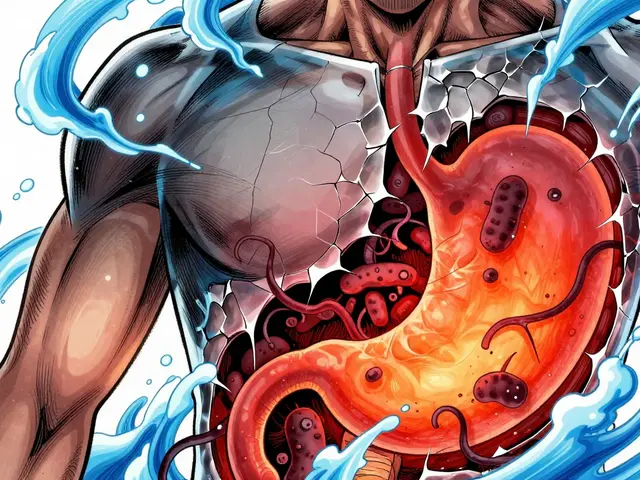
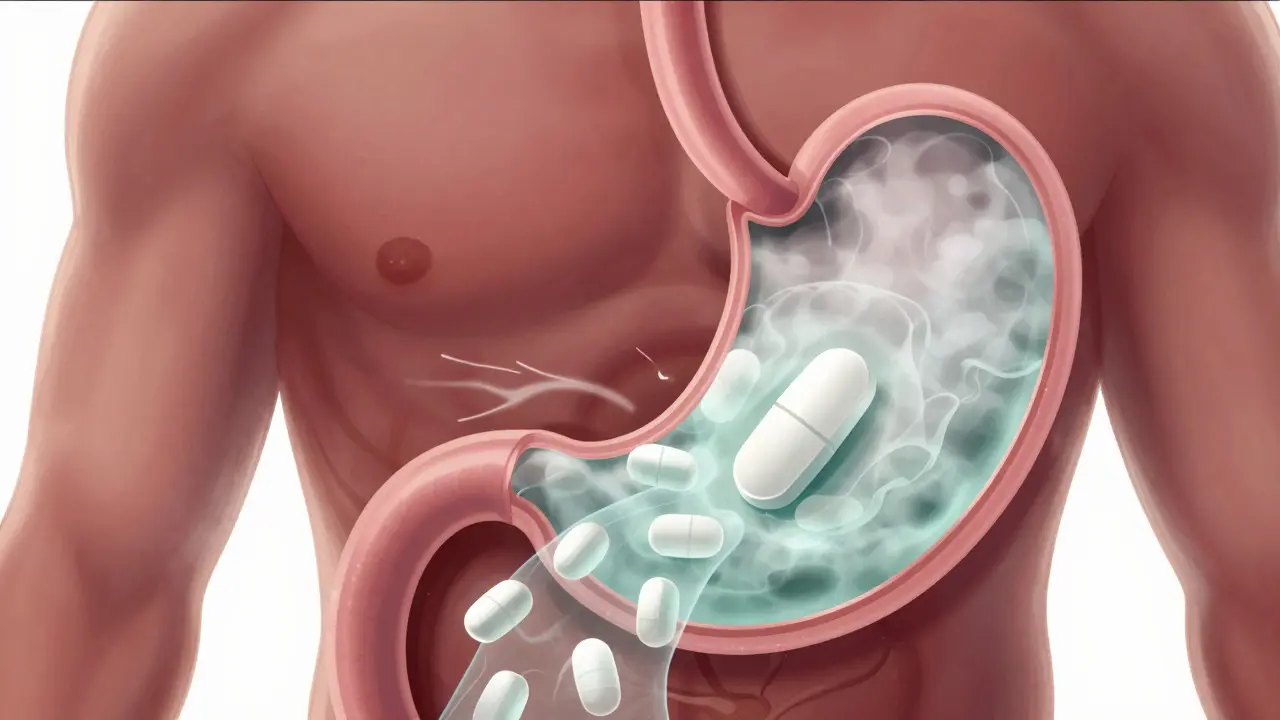
To understand the problem, you need to look at what happens inside your stomach. Levothyroxine tablets are designed to dissolve quickly in an acidic environment. Ideally, your stomach pH should be between 1 and 2 for optimal absorption. When you take a PPI like omeprazole or pantoprazole, these drugs block the H+/K+ ATPase enzyme system in your gastric parietal cells. This action significantly reduces acid production, raising the stomach pH to a more neutral range, often between 4 and 6.
This shift in pH doesn't just make your stomach feel better; it physically hinders the levothyroxine tablet from breaking down correctly. If the pill doesn't dissolve, it passes through your digestive tract without being fully absorbed. The result? Your blood levels of T4 drop, and your body responds by producing more Thyroid-Stimulating Hormone (TSH). For many patients, this manifests as a return of symptoms like fatigue, weight gain, or brain fog, even though they haven't missed a dose.
The Evidence: What Studies Show
You might wonder if this is just a theoretical risk or a real clinical issue. The data is clear. A systematic review published in the Journal of General Internal Medicine in 2021 analyzed seven studies involving thousands of patients. The finding was consistent: concomitant use of levothyroxine and PPIs led to statistically significant elevations in TSH levels. This indicates that absorption was indeed reduced.
A more recent prospective cross-over study in 2023 added another layer of complexity. Researchers found that even short-term use of 40mg daily pantoprazole for just six weeks caused significant TSH elevation in previously stable patients. Interestingly, the timing of the dose didn't matter much in this specific study. Whether patients took their PPI in the morning with their thyroid med or in the evening before dinner, the effect on TSH remained similar. This suggests that the prolonged suppression of acid by PPIs lasts long enough to interfere with absorption regardless of when you swallow the pill.
| Medication Class | Common Examples | Mechanism | Impact on Levothyroxine | Typical Dose Adjustment Needed |
|---|---|---|---|---|
| Proton Pump Inhibitors (PPIs) | Omeprazole, Pantoprazole, Esomeprazole | Blocks H+/K+ ATPase enzyme | High risk of reduced absorption; raises TSH | Often requires 12.5-25 mcg increase |
| H2 Receptor Antagonists | Famotidine, Cimetidine | Blocks histamine receptors | Low to no significant impact on TSH | Usually none required |
| Liquid Levothyroxine | Tirosint-SOL | Solution formulation | Bypasses need for acidic dissolution | May stabilize TSH without dose change |
How Many People Are Affected?
This isn't a niche issue. According to IQVIA data from 2022, approximately 15 million Americans take levothyroxine chronically. Of those, about 18% also use PPIs regularly. That means nearly 2.7 million patients are navigating this specific drug interaction. Clinical guidelines from the American Thyroid Association suggest that roughly 15-20% of hypothyroid patients on PPIs will need their levothyroxine dose adjusted. The average adjustment is usually between 12.5 and 25 micrograms per day, but it varies based on individual metabolism and the specific PPI used.
If you've been on a PPI for less than four weeks, the risk of a clinically significant change is lower. However, if you're using them long-term-more than three months-you are in the higher-risk group. Expert consensus recommends monitoring TSH levels every 6 to 8 weeks during this period to catch any shifts early.
Practical Strategies to Manage the Interaction
So, what do you actually do if you need both medications? There are a few proven strategies, ranging from simple monitoring to switching formulations.
- Monitor Your TSH Levels: Don't wait for symptoms. Get a baseline TSH test before starting a PPI. Then, retest at 6-8 weeks. If your TSH rises, your doctor may increase your levothyroxine dose slightly. About 43% of patients stabilize within 12 weeks of adjustment according to Cleveland Clinic data.
- Consider Switching to an H2 Blocker: If your acid reflux is mild to moderate, an H2 receptor antagonist like famotidine (Pepcid) might be sufficient. A 2018 study in Pharmacotherapy showed that famotidine does not significantly alter TSH levels when used with levothyroxine. While less potent than PPIs for severe cases, they are a safer bet for thyroid stability.
- Switch to Liquid Levothyroxine: Formulations like Tirosint-SOL contain glycerin and do not require an acidic environment to absorb. A 2019 study in the Journal of Clinical Endocrinology & Metabolism confirmed that liquid levothyroxine maintains stable T4 levels even when taken with PPIs. The downside? Cost. Generic tablets cost around $15-$25 per month, while liquid formulations can run up to $350 monthly, depending on insurance coverage.
- Timing Separation (With Caution): Some doctors recommend waiting at least 4 hours between taking levothyroxine and your PPI. However, newer evidence suggests this may not be fully effective because PPIs suppress acid for up to 72 hours. Think of this as a backup strategy, not a primary solution.
What Patients Are Experiencing
Real-world experiences often mirror clinical data. An analysis of over 147 posts on the r/Hashimotos subreddit in late 2023 revealed that 68% of patients reported needing higher doses of levothyroxine after starting long-term PPI therapy. Common complaints included fatigue (reported by 72% of affected users) and unexplained weight gain (58%). On the positive side, 23% of users who switched to liquid levothyroxine reported feeling stable again without further dose hikes, while 17% found relief by switching to famotidine.
These anecdotes highlight a key point: communication with your healthcare provider is crucial. If you notice your old symptoms creeping back after starting a new heartburn medication, mention it explicitly. Doctors don't always automatically link the two unless prompted.

Future Developments and Guidelines
The medical community is paying closer attention to this interaction. The FDA released draft guidance in 2023 specifically addressing drug interaction labeling for thyroid medications, with PPIs prominently featured. Additionally, phase 3 trials are currently investigating enteric-coated levothyroxine formulations designed to bypass the stomach entirely, potentially solving the acidity issue at the manufacturing level.
Market trends also reflect this growing awareness. Grand View Research forecasts a 9.2% compound annual growth for liquid levothyroxine products through 2028, driven largely by concerns over PPI interactions. As the patent for Tirosint-SOL expires in 2025, we may see more affordable generic liquid options, though formulation challenges remain for manufacturers trying to replicate the exact stability of the original product.
Frequently Asked Questions
Do I need to stop my PPI if I take levothyroxine?
Not necessarily. If you have a strong medical indication for a PPI, such as Barrett's esophagus or severe GERD, stopping it might cause other health issues. Instead, focus on monitoring your TSH levels closely and adjusting your levothyroxine dose if needed. Discuss alternatives like H2 blockers with your doctor if your condition allows.
How long does it take for TSH levels to rise after starting a PPI?
Changes can begin within a few weeks. Most clinical protocols recommend checking TSH at 6 to 8 weeks after starting a PPI. Some patients may not show significant changes until 3 months of continuous use. Regular testing is the best way to catch the shift early.
Is liquid levothyroxine worth the extra cost?
For many patients on long-term PPIs, yes. If you find yourself constantly adjusting your tablet dose or struggling with fluctuating energy levels, the stability offered by liquid levothyroxine can be worth the investment. Check with your insurance provider, as some plans now cover these formulations for documented drug interactions.
Can I take my PPI at night to avoid the interaction?
It helps slightly, but it's not a guaranteed fix. Because PPIs suppress acid for up to 72 hours, taking them at night still affects the stomach environment during the next morning when you take your levothyroxine. Timing separation is a secondary strategy; monitoring TSH is the primary one.
Which PPI has the least impact on levothyroxine?
There isn't a definitive "safest" PPI, as all classes work similarly by suppressing acid. However, some studies suggest that shorter-acting PPIs or lower doses may have a slightly smaller impact. Ultimately, the individual response varies, so empirical monitoring of TSH is more reliable than choosing a specific brand.