
That gnawing pain in your upper abdomen isn't just 'bad indigestion.' It might be gastritis, a condition where the protective mucus layer of your stomach becomes inflamed or eroded. When this barrier breaks down, stomach acid starts digesting the stomach wall itself. For millions of people, this leads to chronic discomfort, nausea, and in severe cases, bleeding ulcers. The good news? We finally understand what causes most of it, and we have effective ways to fix it.
The biggest game-changer in treating this condition came in 1982, when Australian doctors Barry Marshall and Robin Warren discovered that a bacteria called Helicobacter pylori (or H. pylori) was responsible for most stomach ulcers and chronic inflammation. Before this discovery, doctors blamed stress and spicy food. Now, we know that while those factors play a role, bacterial infection is the primary driver for about 70-90% of gastric ulcer cases. Understanding this distinction changes everything about how you treat the problem.
Is Your Stomach Sending You Warning Signs?
Gastritis doesn't always announce itself loudly. In fact, up to 50% of people with chronic gastritis have no symptoms at all until they develop complications like an ulcer. But when symptoms do appear, they are distinct enough to recognize if you know what to look for.
The most common complaint is a burning or gnawing ache in the upper middle part of your belly, known as the epigastrium. This pain often gets worse when your stomach is empty and may temporarily improve after eating or taking antacids. Other frequent signs include:
- Persistent nausea or occasional vomiting
- A feeling of fullness after only a few bites of food
- Bloating and excessive burping
- Loss of appetite
You need to seek immediate medical attention if you notice any signs of internal bleeding. These red flags include black, tarry stools (medically known as melena) or vomit that looks like coffee grounds. These symptoms indicate that the inflammation has eroded blood vessels in the stomach lining, which can become life-threatening quickly.
What Is Actually Causing the Damage?
To treat gastritis effectively, you have to identify the specific trigger. Not all stomach inflammation is created equal. Doctors generally categorize gastritis into two main types: erosive and nonerosive.
Erosive gastritis involves visible sores or breaks in the stomach lining. This type is often acute and caused by external irritants. The biggest culprits here are nonsteroidal anti-inflammatory drugs (NSAIDs) like ibuprofen, aspirin, and naproxen. Long-term use of these painkillers strips away the stomach's protective mucus. Alcohol abuse and severe physiological stress (such as from major surgery or burns) also fall into this category.
Nonerosive gastritis is more subtle. The stomach lining looks normal to the naked eye during an endoscopy, but cellular changes are happening underneath. This is where H. pylori infection dominates. This spiral-shaped bacterium burrows into the mucus layer and releases toxins that cause chronic inflammation. Over time, this can lead to atrophic gastritis, where the stomach loses its acid-producing cells, increasing the risk of vitamin B12 deficiency and certain types of stomach cancer.
Less commonly, autoimmune gastritis occurs when your own immune system attacks the stomach cells. This accounts for about 0.1% of the general population but is more common in people who already have other autoimmune conditions like thyroid disease or type 1 diabetes.
How Doctors Diagnose the Root Cause
Self-diagnosing gastritis is risky because the symptoms overlap with GERD, gallbladder issues, and even heart problems. A proper diagnosis usually involves a combination of tests to pinpoint the cause.
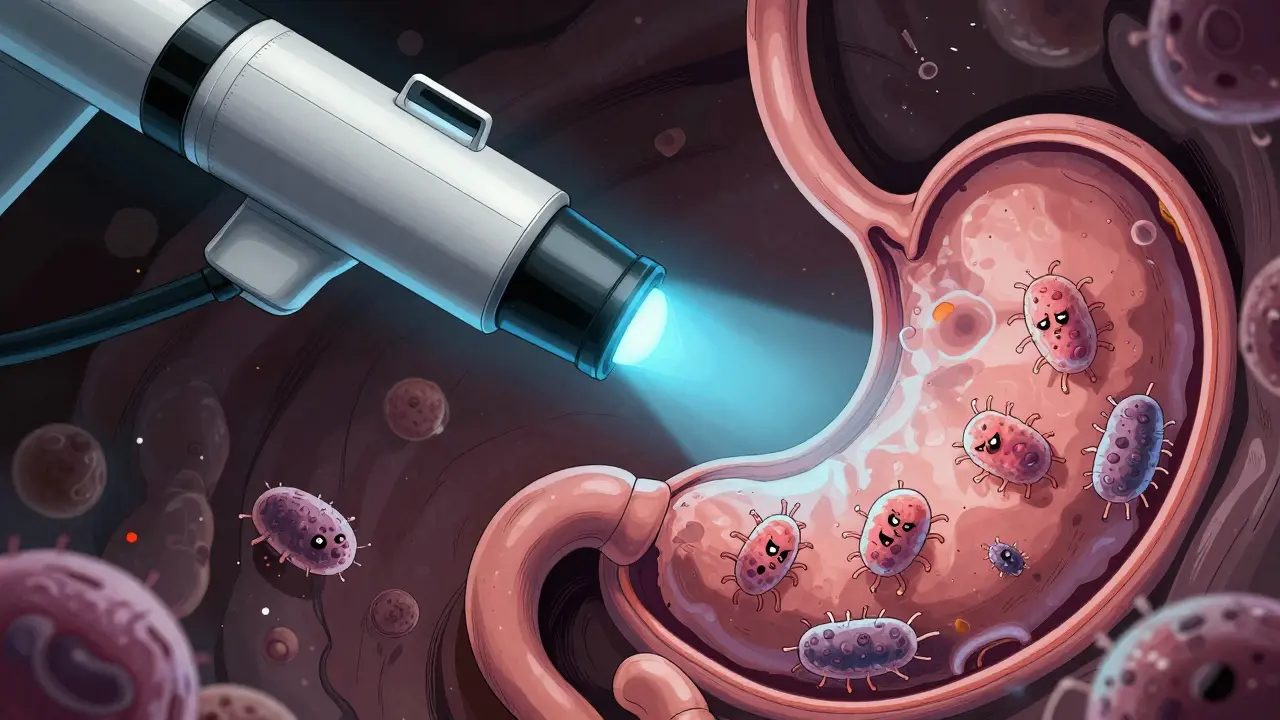
The gold standard for diagnosis is an upper endoscopy. During this procedure, a doctor inserts a thin, flexible tube with a camera down your throat to view the esophagus, stomach, and duodenum. They can take small tissue samples (biopsies) to check for H. pylori bacteria or signs of autoimmune damage. While invasive, this method provides the most accurate picture of what’s happening inside.
If an endoscopy isn't immediately necessary, doctors may start with less invasive options:
- Urea Breath Test: You drink a solution containing urea labeled with a special carbon atom. If H. pylori is present, it breaks down the urea, and you exhale the labeled carbon. This test has a sensitivity of about 95%.
- Stool Antigen Test: A simple lab analysis of a stool sample to detect proteins produced by the bacteria.
- Blood Tests: These check for antibodies against H. pylori, though they can’t distinguish between current past infections, making them less useful for confirming active treatment success.
Treating H. pylori: The Eradication Protocol
If your tests confirm an H. pylori infection, the goal is complete eradication. Leaving it untreated increases your risk of developing peptic ulcers and gastric cancer. The standard approach is a combination therapy that attacks the bacteria from multiple angles while reducing stomach acid to allow healing.
| Treatment Type | Components | Duration | Success Rate |
|---|---|---|---|
| Triple Therapy | Proton Pump Inhibitor (PPI) + Clarithromycin + Amoxicillin | 10-14 days | 70-90% (varies by region) |
| Bismuth Quadruple Therapy | PPI + Bismuth Subsalicylate + Tetracycline + Metronidazole | 10-14 days | 85-92% |
| Vonoprazan-Based Therapy | Vonoprazan (P-CAB) + Amoxicillin + Clarithromycin | 10-14 days | ~90% |
The choice of regimen depends heavily on local antibiotic resistance patterns. In areas where clarithromycin resistance is high (over 15%), doctors increasingly prefer bismuth quadruple therapy or newer potassium-competitive acid blockers (P-CABs) like vonoprazan. Vonoprazan, approved by the FDA in 2022, offers stronger and longer-lasting acid suppression than traditional PPIs, creating a better environment for antibiotics to kill the bacteria.
Adherence is critical. Missing doses is the number one reason for treatment failure. If the first round doesn't work, the bacteria may survive and become resistant to the antibiotics used, making subsequent treatments harder. Always complete the full course, even if you feel better after a few days.
Managing NSAID and Lifestyle-Induced Gastritis
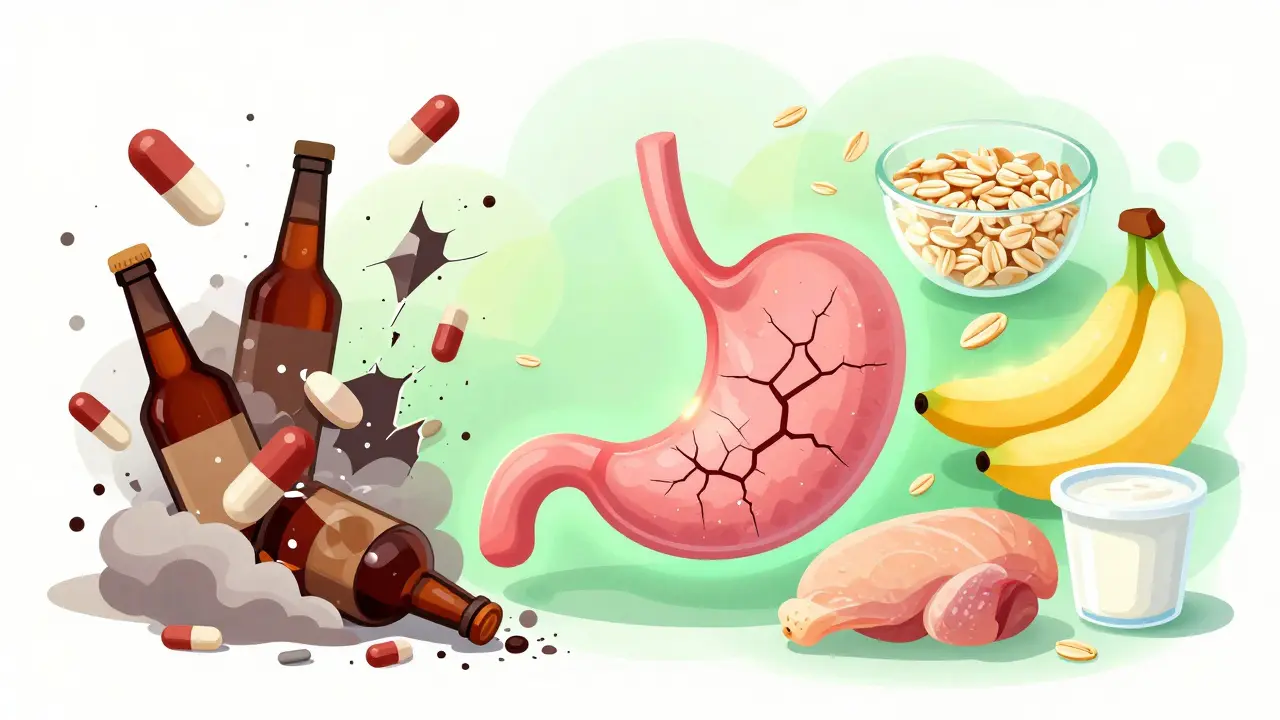
If H. pylori isn't the culprit, your gastritis might be driven by lifestyle factors or medications. The first step is removing the irritant. If you rely on NSAIDs for chronic pain, talk to your doctor about switching to acetaminophen, which is gentler on the stomach, or using the lowest effective dose of NSAIDs alongside a protective medication.
Dietary changes can provide significant relief, although they won't cure bacterial gastritis on their own. Focus on foods that are easy to digest and low in acidity:
- Fiber-rich foods: Oats, bananas, and cooked vegetables help buffer stomach acid.
- Lean proteins: Chicken, fish, and tofu are easier to digest than fatty meats.
- Probiotics: Yogurt with live cultures or kefir may help restore healthy gut flora, especially after antibiotic treatment.
Conversely, avoid triggers that relax the lower esophageal sphincter or increase acid production. Common offenders include alcohol, caffeine, spicy foods, citrus fruits, and tomato-based sauces. Smoking cessation is also vital; smoking reduces blood flow to the stomach lining and impairs healing by up to 35%.
Preventing Complications and Recurrence
Untreated gastritis can lead to serious complications. Chronic inflammation can cause the stomach lining to thin out (atrophy) or change cell type (metaplasia), both of which are precancerous conditions. Additionally, persistent erosion can lead to peptic ulcers, which may perforate the stomach wall or cause severe bleeding.
To prevent recurrence, follow-up testing is essential. About four weeks after finishing H. pylori treatment, you should undergo a urea breath test or stool antigen test to confirm the bacteria is gone. Do not take proton pump inhibitors for at least two weeks before this test, as they can cause false-negative results.
If you have autoimmune gastritis, regular monitoring of vitamin B12 levels is crucial. Since the stomach produces intrinsic factor-a protein needed to absorb B12-damage to these cells can lead to pernicious anemia, requiring lifelong B12 injections or high-dose supplements.
Can I cure gastritis naturally without medication?
If your gastritis is caused by H. pylori, natural remedies alone cannot cure it. Antibiotics are required to eradicate the bacteria. However, lifestyle changes like quitting smoking, reducing alcohol, and eating a bland diet can significantly reduce symptoms and support healing alongside medical treatment. For NSAID-induced gastritis, stopping the medication and using dietary adjustments may be sufficient.
How long does it take for gastritis to heal?
Acute gastritis often improves within a few days to a week once the irritant is removed. Chronic gastritis takes longer. After successful H. pylori eradication, symptom relief can occur within 2-4 weeks, but full healing of the stomach lining may take several months. Autoimmune gastritis requires lifelong management.
Is H. pylori contagious?
Yes, H. pylori can spread through direct contact with saliva, vomit, or fecal matter. It often spreads within families, especially from parent to child. Practicing good hygiene, such as washing hands thoroughly after using the bathroom and before eating, helps reduce the risk of transmission.
What foods should I avoid if I have gastritis?
Avoid foods that irritate the stomach lining or increase acid production. This includes spicy foods, acidic fruits like oranges and lemons, tomato-based products, chocolate, mint, caffeine, alcohol, and fatty or fried foods. Everyone is different, so keep a food diary to identify your specific triggers.
Does stress cause gastritis?
Stress does not directly cause H. pylori infection or autoimmune gastritis. However, severe physiological stress (like from trauma or surgery) can cause acute erosive gastritis. Emotional stress can worsen existing symptoms by increasing acid production and making the stomach more sensitive to pain, but it is rarely the sole cause of the condition.