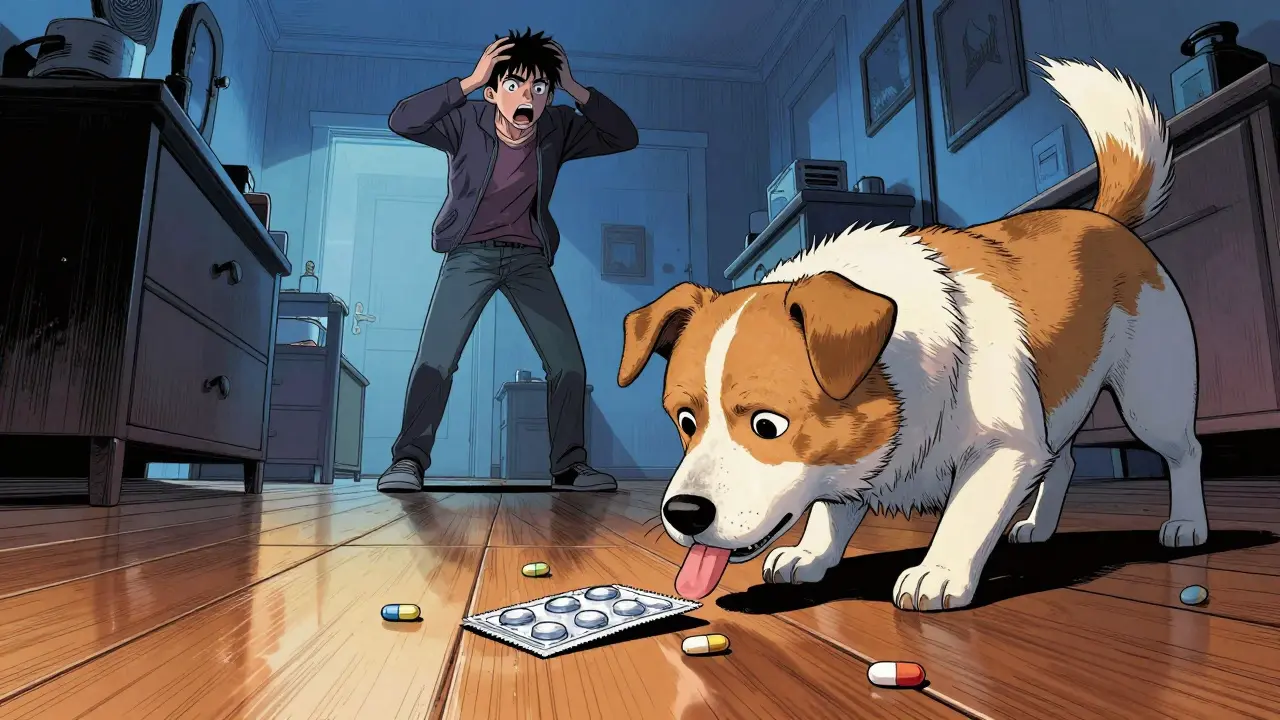
It happens in a blink. You turn your back for two seconds to grab the mail, and when you look down, your dog is licking an empty blister pack off the floor. Or maybe your cat knocked a bottle of pills onto the carpet while you were making coffee. Panic sets in immediately. Is it toxic? How much did they eat? And most importantly, what are the signs that this is a life-threatening emergency?
You are not alone. According to the Pet Poison Helpline, human medications account for nearly 28% of all pet poisonings reported annually. That’s over 150,000 cases every year in the United States alone. The good news? Time is on your side if you act fast. Studies show that 93% of successful outcomes occur when treatment begins within two hours of ingestion. Knowing exactly what to look for can mean the difference between a scary vet visit and a tragedy.
The First Five Minutes: What to Check Immediately
When you suspect your pet has ingested human medication, don’t wait for symptoms to appear. Some drugs take hours to cause visible damage, but the clock starts ticking the moment the pill enters their system. Here is a rapid assessment protocol used by veterinary toxicologists:
- Look for evidence. Check the area where the medication was stored. Are there crushed pills, chewed packaging, or spilled powder? In 63% of witnessed cases, physical evidence is present right away.
- Check their temperature. Use a digital rectal thermometer. A normal dog or cat temperature is around 101-102.5°F. If it reads above 103.5°F, this indicates hyperthermia, often caused by stimulants or antidepressants.
- Examine their eyes. Look at the pupils. Dilated pupils (large black circles) in 88% of ADD/ADHD medication cases signal central nervous system stimulation.
- Inspect mucous membranes. Lift their lip and check the gums. They should be pink. Brown or chocolate-colored gums indicate methemoglobinemia, a critical sign of acetaminophen toxicity, especially in cats.
- Note the time. Write down exactly when you think the ingestion happened. This helps vets determine the best antidote or decontamination method.
If you see any of these red flags, call your veterinarian or an animal poison control center immediately. Do not induce vomiting unless instructed by a professional, as some substances can cause more damage coming back up than going down.
Antidepressants: The Silent Agitators
Many people keep antidepressants like Prozac (fluoxetine), Lexapro (escitalopram), or Effexor (venlafaxine) in easy-to-reach places. These drugs are particularly dangerous because they affect serotonin levels in the brain, leading to a condition called serotonin syndrome.
Symptoms usually appear within minutes to 12 hours after ingestion. Watch for:
- Vocalization: Your pet may whine, howl, or meow excessively without an obvious trigger.
- Tremors and Shaking: Muscle tremors are common, occurring in 78% of untreated cases.
- Disorientation: They might bump into walls, walk in circles, or seem confused.
- Fever: Body temperatures can spike to 103-106°F.
Cats are uniquely vulnerable to SNRIs like Effexor. Just one 37.5mg extended-release capsule can be life-threatening for a small cat. In fact, 63% of feline cases involve cats consuming entire bottles because the medication often has a sweet coating. If your cat acts "zombie-like" or unusually agitated after accessing your medicine cabinet, seek help immediately.
ADD/ADHD Medications: Rapid-Onset Emergencies
Stimulant medications such as Adderall (amphetamine salts) and Concerta (methylphenidate) act incredibly fast. Symptoms can begin within 15 to 60 minutes. This is why these overdoses are so dangerous-the window for intervention is short.
Your pet will likely exhibit extreme stimulation. Their heart rate can exceed 220 beats per minute (normal is 60-140 bpm), and body temperature can soar to 107°F. You’ll notice severe tremors, pacing, and fixed-dilated pupils. Owners often mistake this initial agitation for anxiety or excitement, but it is actually a medical crisis. Without treatment, these symptoms can progress to seizures and cardiac arrest.

NSAIDs: The Slow Burners
Nonsteroidal anti-inflammatory drugs (NSAIDs) like ibuprofen (Advil, Motrin) and naproxen (Aleve) are among the most common household poisons. Unlike stimulants, NSAID toxicity doesn’t always scream for attention immediately. Symptoms typically develop 1 to 6 hours after ingestion.
The classic triad of NSAID poisoning includes:
- Vomiting: Present in 92% of cases. It may contain blood.
- Gastrointestinal Ulcers: Leading to melena (black, tarry stools) in 68% of cases.
- Kidney Damage: Acute kidney injury can develop within 24-72 hours. Blood urea nitrogen (BUN) levels can skyrocket from a normal 10-25 mg/dL to over 120 mg/dL.
Dogs can tolerate small amounts of ibuprofen, but cats are extremely sensitive. Toxicity in cats can occur at doses as low as 5mg/kg. Never give human pain relievers to your pet without explicit veterinary guidance.
Acetaminophen: Deadly for Cats
Acetaminophen (Tylenol) is safe for humans in recommended doses, but it is highly toxic to pets, especially cats. Cats lack the enzyme glucuronyl transferase, which means they cannot metabolize acetaminophen effectively. Even a single 325mg tablet can be fatal to a cat.
In cats, symptoms appear within 1 to 4 hours. Look for:
- Brown-tinted mucous membranes: Gums, lips, and tongue turn brown or gray due to methemoglobinemia.
- Cyanosis: Blue tint to the skin or ears.
- Swelling: Particularly around the face and paws.
- Lethargy and weakness.
In dogs, acetaminophen primarily causes liver necrosis. Symptoms like vomiting, loss of appetite, and jaundice (yellowing of the eyes and gums) may take 24 to 72 hours to appear. By the time you notice them, significant liver damage may have already occurred.
Benzodiazepines: The Paradoxical Reaction
Drugs like Xanax (alprazolam) and Ambien (zolpidem) are sedatives for humans, but they often cause the opposite effect in pets. In 52% of canine cases, benzodiazepines lead to paradoxical agitation rather than sedation. Your dog may become hyperactive, aggressive, or disoriented.
Cats face a different risk. Benzodiazepines can cause hepatic failure in 37% of feline cases, with liver enzyme levels (ALT) exceeding 1,200 U/L (normal range is 10-100 U/L). If your pet seems unusually restless or confused after exposure to these meds, do not assume they are just "having a weird day."
| Medication Class | Onset Time | Key Symptoms | Highest Risk Species |
|---|---|---|---|
| SSRIs/SNRIs (e.g., Prozac, Effexor) | Minutes to 12 hours | Tremors, vocalization, fever, disorientation | Cats (SNRIs), Dogs (SSRIs) |
| ADD/ADHD Stimulants (e.g., Adderall) | 15-60 minutes | Rapid heart rate, high fever, dilated pupils, tremors | Dogs |
| NSAIDs (e.g., Ibuprofen) | 1-6 hours | Vomiting, black tarry stools, lethargy | Cats (extremely sensitive) |
| Acetaminophen (Tylenol) | 1-4 hours (cats), 24-72 hours (dogs) | Brown gums (cats), liver failure (dogs) | Cats |
| Benzodiazepines (e.g., Xanax) | 30-60 minutes | Agitation (dogs), liver failure (cats) | Cats |
What to Do Next: Immediate Action Steps
If you recognize these symptoms, stop reading and act. Here is your checklist:
- Call Poison Control. In the US, the Pet Poison Helpline (1-800-213-6680) and ASPCA Animal Poison Control Center (1-888-426-4435) are available 24/7. Note that consultation fees may apply, but they provide expert guidance on whether to induce vomiting or go straight to the ER.
- Bring the Bottle. Take the medication container to the vet. This helps them identify the exact drug, dosage, and formulation (extended-release vs. immediate-release matters greatly).
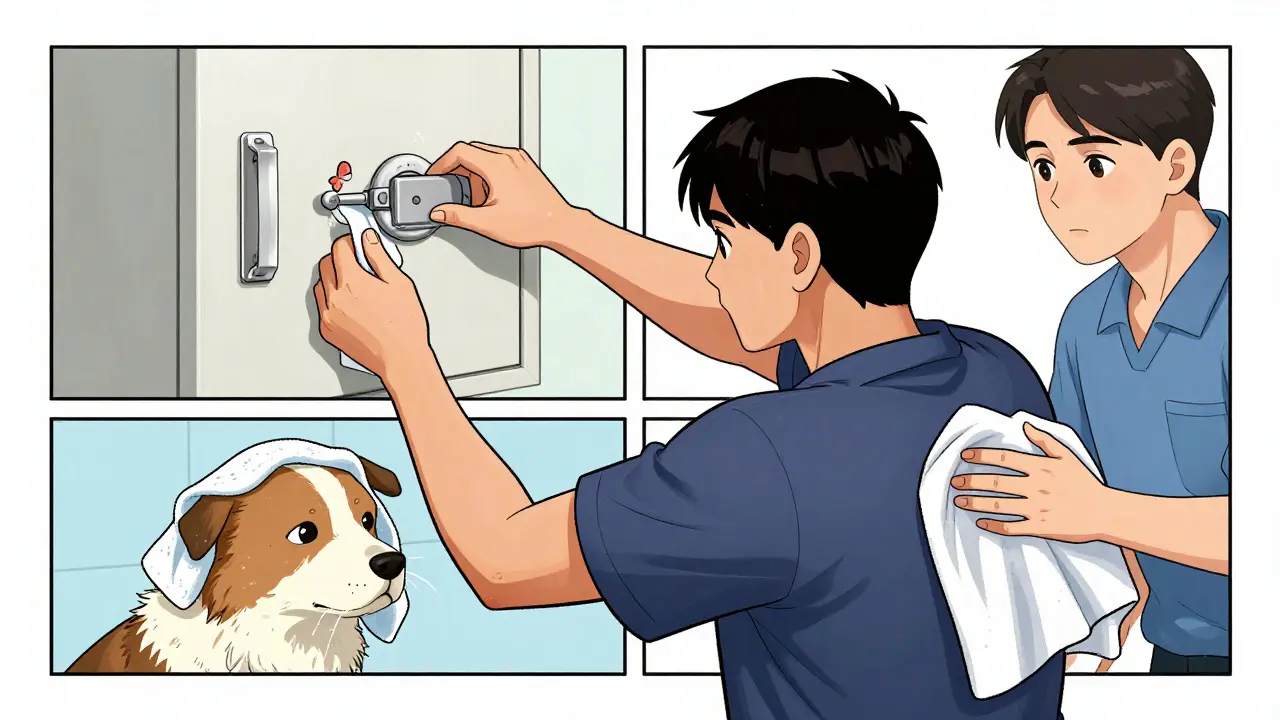
- Monitor Vital Signs. Keep your pet calm and cool. If they are overheating, use wet towels and fans, but avoid ice baths which can shock the system.
- Do Not Wait. Even if your pet seems fine, internal damage can be progressing. Early intervention reduces mortality rates from 28% to 4%.
Prevention: Securing Your Home
Recognition is vital, but prevention is better. With 85% of cases involving dogs and 15% involving cats, securing your medication storage is crucial. Use child-proof locks on cabinets, store medications in drawers rather than open shelves, and never leave pills unattended on tables or nightstands. Consider using bitterant sprays on packaging, though note that these are deterrents, not guarantees. Regularly check your medicine cabinet for expired or unused medications and dispose of them properly through pharmacy take-back programs.
How long does it take for symptoms to appear after a pet eats human medication?
Symptom onset varies by medication type. Stimulants like Adderall can cause symptoms within 15-60 minutes. Antidepressants may take minutes to 12 hours. NSAIDs like ibuprofen typically show symptoms in 1-6 hours, while acetaminophen toxicity in dogs can take 24-72 hours to manifest as liver damage. Always assume ingestion is serious even if no symptoms are immediately visible.
Can I induce vomiting if my pet ate a pill?
Do not induce vomiting unless explicitly instructed by a veterinarian or poison control specialist. Some substances, like corrosive cleaners or certain medications, can cause more damage coming back up than going down. Additionally, if your pet is showing neurological symptoms like tremors or seizures, inducing vomiting poses a choking risk.
Why are cats more sensitive to acetaminophen than dogs?
Cats lack the liver enzyme glucuronyl transferase, which is necessary to safely metabolize acetaminophen. This leads to a buildup of toxic byproducts that cause methemoglobinemia, reducing the blood's ability to carry oxygen. As little as 10mg/kg can be fatal to a cat, whereas dogs can tolerate higher doses before experiencing liver necrosis.
What are the signs of serotonin syndrome in pets?
Serotonin syndrome, often caused by SSRIs or SNRIs, presents with tremors, muscle rigidity, hyperthermia (fever), agitation, vocalization, and disorientation. In severe cases, it can lead to seizures. If your pet exhibits these symptoms after potential exposure to antidepressants, seek emergency veterinary care immediately.
Is it safe to give my pet half a baby aspirin for pain?
Never administer human medications to pets without veterinary approval. While veterinarians sometimes prescribe specific formulations of aspirin, dosing is precise and depends on the pet's weight, health status, and other medications. Human aspirin contains additives that can be harmful, and incorrect dosing can lead to gastric ulcers or bleeding disorders.