
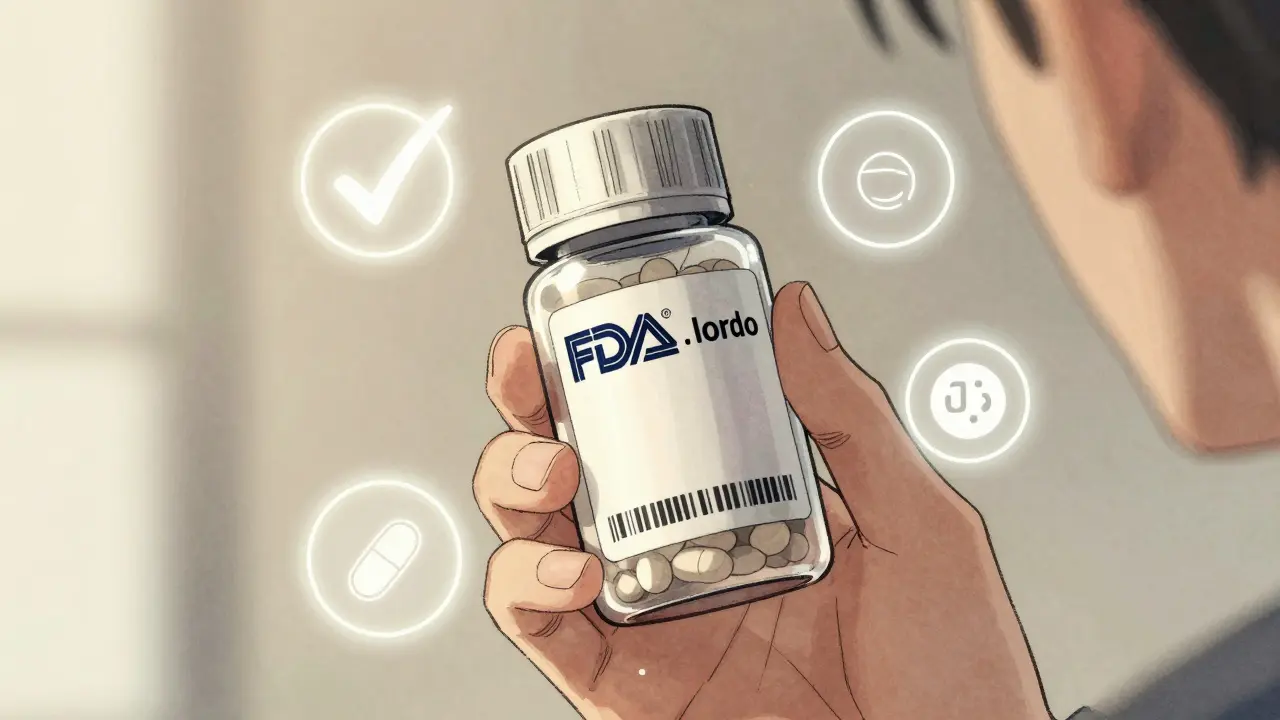
Every year, millions of people save hundreds of dollars by switching to generic drugs. But not every pill labeled "generic" is safe. Some look almost identical to the real thing - but contain the wrong ingredients, no active drug at all, or dangerous contaminants. If you’ve ever wondered whether the medication you’re holding is truly what it claims to be, you’re not alone. Here’s how to tell the difference between a legitimate generic drug and a fake - without needing a pharmacy degree.
What Makes a Generic Drug Legitimate?
A legitimate generic drug has the same active ingredient, strength, dosage form, and route of administration as the brand-name version. It must also meet strict bioequivalence standards: it must be absorbed into your bloodstream at the same rate and to the same extent as the original. The FDA requires this range to be within 80% to 125% of the brand-name drug’s performance. In real terms, that means your blood levels of the drug will be nearly identical - whether you take the brand or the generic. The FDA approves these drugs through a process called the Abbreviated New Drug Application (ANDA). This doesn’t mean they’re "lesser." It means they don’t need to repeat expensive clinical trials because the safety and effectiveness of the active ingredient are already proven. In 2022, 90% of all prescriptions filled in the U.S. were for generics - and they cost only about 23% of what brand-name drugs do. That’s over $373 billion saved in one year.What to Look for on the Packaging
Legitimate generic drugs come in properly labeled containers. Check for these five details:- Manufacturer’s name - Not just "Generic" or "Pharmaceuticals Inc." Look for a real company like Teva, Sandoz, Mylan (now Viatris), or Apotex.
- Drug name and strength - Should match your prescription exactly. For example, "Lisinopril 10 mg" - not "Lisinopril 10" or "Lisinopril 10MG" with inconsistent capitalization.
- Lot number and expiration date - Every legitimate package has both. If it’s missing, walk away.
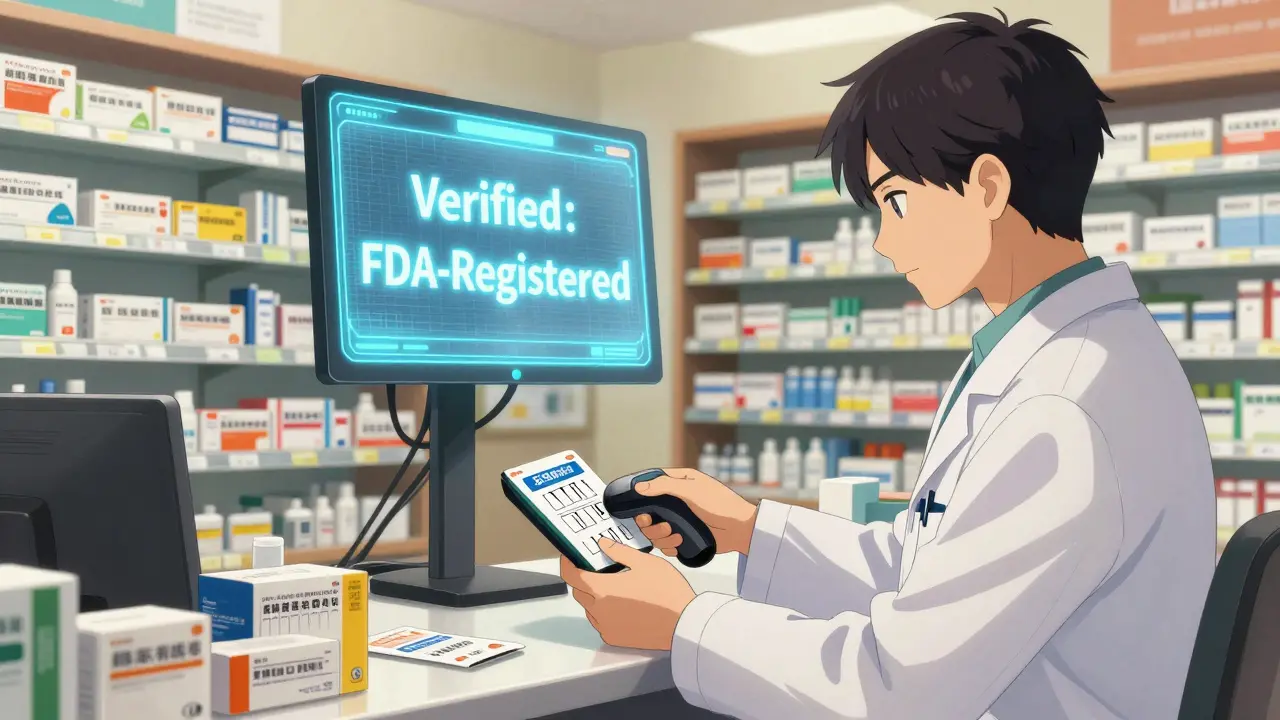
- Barcodes and serial numbers - Since 2023, all prescription drugs in the U.S. must have a unique serial number under the Drug Supply Chain Security Act. Many now include 2D data matrix codes you can scan with your phone using apps like MediSafe.
- Proper container - Legitimate generics come in sealed, tamper-evident bottles or blister packs. If it’s in a plastic bag, a random box, or a container with no labeling, it’s not legal.
Check the Pill Itself
Generic pills can look different from the brand-name version - that’s normal. But they should still look professional. Here’s what to watch for:- Consistent color and shape - All pills in the bottle should match. No variations in shade or size.
- Clear imprinting - Every tablet or capsule should have a letter, number, or logo stamped on it. If the imprint is faded, blurry, or missing, it’s a red flag.
- No cracks, chips, or crumbling - Legitimate pills are hard and uniform. If the tablet breaks easily or has powder sticking out, it’s likely poorly made or old.
- No unusual odor or taste - If your new generic pill smells like chemicals or tastes bitter in a way your previous refill didn’t, stop taking it.
- Uniform scoring - If the pill is scored (has a line for splitting), the score should be clean and even. Crooked or uneven scoring is common in counterfeits.
Remember: A generic can be a different color than the brand. That’s because trademark laws prevent generics from looking exactly like the original. But the active ingredient? That’s the same.
Where You Buy Matters More Than You Think
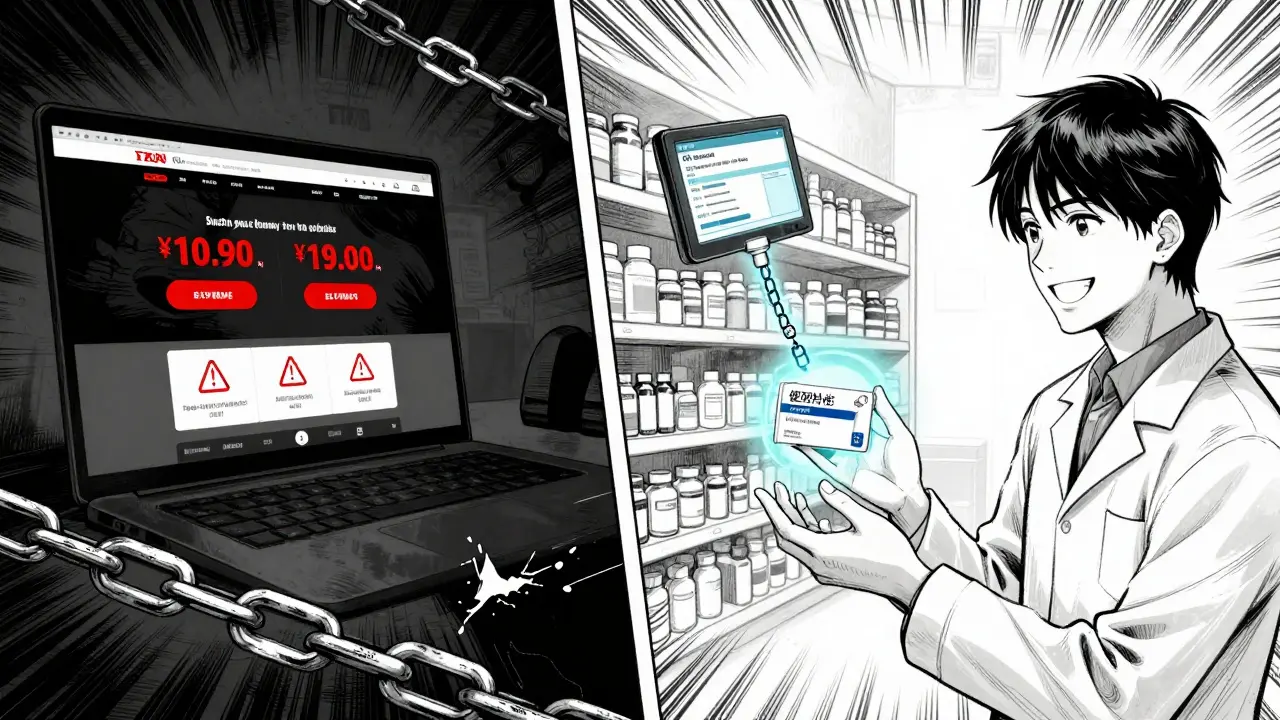
The biggest risk isn’t the pharmacy down the street - it’s online. The National Association of Boards of Pharmacy (NABP) found that 96% of websites selling drugs without a prescription are illegal. These sites often sell counterfeit versions of popular medications like statins, blood pressure pills, or erectile dysfunction drugs. Here’s how to stay safe:- Only buy from pharmacies with a .pharmacy domain. You can verify this at NABP.net. Legitimate U.S. pharmacies display this seal.
- Never buy from websites that don’t require a prescription. Legitimate pharmacies always ask for one.
- Stick to local, licensed pharmacies. Pharmacists there are trained to spot fakes and can check manufacturer databases.
- Be wary of "international" pharmacies offering prices that seem too good to be true. They often import drugs illegally - and those drugs aren’t regulated.
In 2022, the FDA received over 1,200 reports of counterfeit drugs. Nearly half involved cardiovascular medications. People reported sudden loss of effect after months of steady use - a classic sign the active ingredient was missing or degraded.
How to Verify Your Drug in Minutes
You don’t need special tools. Just follow this simple 5-step check every time you pick up a new generic prescription:- Confirm the pharmacy - Visit NABP’s website and search for the pharmacy’s name. If it’s not on the .pharmacy list, don’t buy from them.
- Check the prescription - Did the pharmacist ask for your prescription? If not, that’s a major red flag.
- Inspect the pill - Compare it to your last refill. Same color? Same imprint? Same texture? If not, ask why.
- Verify the lot number - Go to the FDA’s Drug Recall Database and enter the lot number. If there’s a recall, you’ll see it instantly.
- Report anything odd - If something feels wrong, report it to the FDA’s MedWatch program. It takes less than 10 minutes. Your report could save someone’s life.
Pharmacists at verified pharmacies spend 2-3 minutes per prescription verifying this information. You can do the same in under 5 minutes.
Real Stories: What Happens When People Get Fakes
One man in Florida bought "generic Viagra" from an online site offering 80% off. He took it for three months - until he started having chest pain. His doctor found no active ingredient in the pills. He was lucky. Others have ended up in the ER with kidney failure from counterfeit diabetes meds containing toxic substances. On Reddit’s r/pharmacy community, 89% of users who bought FDA-approved generics from licensed pharmacies reported no issues. Many said they couldn’t tell the difference from brand-name drugs. But those who bought from unverified sites? Over 68% reported problems - from no effect to severe side effects.What’s Changing in 2026
The system is getting smarter. Since 2023, every prescription drug in the U.S. carries a unique digital code. Pharmacies can now scan it to verify its origin in seconds. By 2025, AI tools will be able to analyze a photo of a pill and tell you with 99% accuracy whether it’s real - based on shape, color, imprint, and texture. But technology alone won’t fix this. The biggest protection is still you - knowing what to look for and where to buy.What to Do If You Suspect a Fake
Don’t throw it away. Don’t take it. Don’t give it to someone else.- Take a photo of the packaging and pill.
- Call your pharmacy and ask them to check the lot number.
- Report it to the FDA through MedWatch: fda.gov/medwatch.
- Ask your pharmacist for a replacement from a verified source.
Every report matters. In 2022, FDA investigations triggered by consumer reports led to the shutdown of 11,000+ illegal online pharmacies.
Are generic drugs as effective as brand-name drugs?
Yes. Legitimate generic drugs must prove they work the same way in your body as the brand-name version. The FDA requires them to meet strict bioequivalence standards - meaning the amount of active ingredient absorbed into your bloodstream is within 80-125% of the original. Studies show 98.7% of approved generics meet this standard. Millions of people use them safely every day.
Why do generic pills look different from brand-name ones?
By law, generic manufacturers can’t copy the exact appearance of brand-name drugs due to trademark rules. So they change the color, shape, or markings - but the active ingredient stays the same. A blue pill from the brand might become a white oval for the generic. That doesn’t mean it’s fake. Just different.
Can I trust generics from big pharmacies like CVS or Walgreens?
Yes. CVS, Walgreens, Rite Aid, and other major U.S. pharmacies source their drugs through FDA-registered distributors. Their supply chain is tracked, inspected, and audited. The risk of counterfeit drugs coming through these channels is extremely low - less than 0.1%. Always check the packaging and pill appearance, but you can trust these sources.
Is it safe to buy generic drugs online?
Only if the website has a .pharmacy domain and requires a valid prescription. Over 96% of online pharmacies selling drugs without a prescription are illegal. Sites offering "discounted" or "international" generics are often fronts for counterfeiters. The FDA warns that buying from unverified sites is the leading cause of counterfeit drug exposure in the U.S.
What should I do if my generic drug doesn’t seem to work anymore?
Stop taking it immediately. Compare the new pills to your previous refill - check color, imprint, size, and texture. If anything looks off, call your pharmacy and ask them to verify the lot number. Report it to the FDA’s MedWatch program. It could be a batch issue, or worse - a counterfeit. Don’t assume it’s just "your body adjusting."
Are there any generic drugs that are more likely to be counterfeited?
Yes. High-demand, high-margin drugs are the most common targets. In 2022, the FDA reported that 41% of counterfeit drug cases involved cardiovascular medications (like blood pressure pills), 29% involved erectile dysfunction drugs (like Viagra or Cialis), and 18% involved diabetes or pain medications. These are often bought online without prescriptions - making them easy targets for fake manufacturers.
Jess Bevis
January 28, 2026 AT 07:10Just checked my lisinopril bottle. Imprint A12, lot #G789, expiration 2025. All good. Don't overthink it.
Howard Esakov
January 28, 2026 AT 10:34Wow. Someone actually wrote a comprehensive guide without using the word 'literally' once. 🤯 You clearly didn't major in Marketing, which is why this is actually useful. Most people think 'generic' means 'I got it off a guy in a van.' Spoiler: you didn't. Good job.
Kathy Scaman
January 28, 2026 AT 11:30I used to panic every time my generic pills looked different. Now I just scan the barcode with MediSafe, check the lot number on the FDA site, and breathe. It’s wild how much easier it is now. I even showed my grandma how to do it - she’s 78 and now she’s the one reminding me to check the imprint. 😄
Lance Long
January 28, 2026 AT 19:12Let me tell you - I used to be terrified of generics. After my dad had a bad reaction to a fake blood pressure med he bought off a 'discount pharmacy' site, I went down a rabbit hole. And guess what? The FDA’s database saved his life. I now verify every single refill. It takes five minutes. Five minutes. That’s less time than it takes to scroll through TikTok. If you’re not doing this, you’re gambling with your health. And I’m not being dramatic - I’m being a friend who’s been there.
fiona vaz
January 29, 2026 AT 15:40One thing people forget: the FDA requires generic manufacturers to report any batch inconsistencies. If your pill looks off, it’s not just paranoia - it’s a data point. Reporting it helps protect others. You’re not being annoying. You’re being essential.
Sue Latham
January 31, 2026 AT 05:41Ugh. I just got a new batch of metformin and it’s a different shade of white? Really? 😒 I mean, I know it’s legal, but come on. If I’m paying $4, I at least want the pill to look like it belongs in a pharmacy and not a 2003 anime DVD case. Also, why does the imprint look like it was stamped by a toddler with a crayon?
John Rose
January 31, 2026 AT 18:49Interesting that the FDA’s bioequivalence range is 80–125%. That’s a 45% window - statistically significant. Yet, in practice, the variation rarely exceeds 5%. The system works because it’s grounded in real pharmacokinetic data, not marketing. The real threat isn’t the generics - it’s the unregulated supply chains. That’s where the risk lives.
Lexi Karuzis
February 1, 2026 AT 01:59