
Prescription drug prices have skyrocketed in recent years. Between 2014 and 2022, costs jumped by over 55%. For millions of Americans, this means a painful choice: pay the bill or skip the dose. If you are facing this dilemma, you are not alone. There is a safety net designed specifically for this situation. Patient advocacy foundations are nonprofit organizations that provide direct financial assistance to patients who cannot afford their medications. These organizations do not just offer advice; they hand out cash grants. The most prominent player in this space is the Patient Advocate Foundation (PAF), which has been operating since 1996 to connect patients with financial resources. Unlike insurance companies or government programs, these foundations often step in where coverage gaps exist. This guide explains exactly how to navigate these programs, what documents you need, and how to maximize your chances of getting approved for a medication grant.
Understanding the Types of Assistance Available
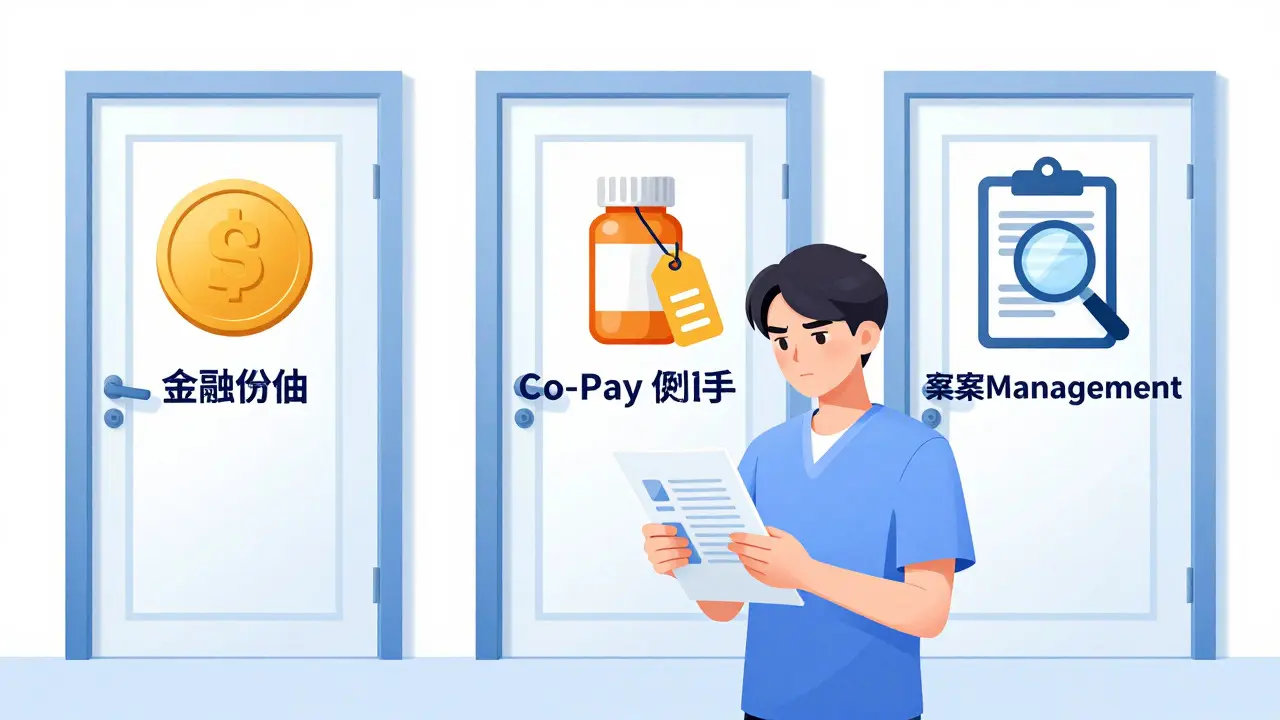
Before you start filling out forms, it is crucial to understand that "patient advocacy" covers different types of help. Not all funds work the same way. You need to pick the right bucket for your specific situation. Generally, there are three main avenues for financial aid through these foundations.
- Financial Aid Funds: These provide small, direct cash grants to patients meeting strict medical and financial criteria. They are often first-come, first-served.
- Co-Pay Relief Programs: These are for insured patients who have high deductibles or co-pays. The money goes toward out-of-pocket medication costs.
- Case Management Services: While not a direct grant, these services help you navigate insurance appeals and find other resources, which can indirectly save thousands.
The distinction matters because applying for Co-Pay Relief when you are uninsured will result in an immediate rejection. Similarly, applying for a general Financial Aid Fund when you qualify for a condition-specific fund might mean missing out on better-targeted support.
Eligibility Requirements for PAF Grants
The Patient Advocate Foundation sets clear bars for entry. Their goal is to ensure no patient goes without life-changing medications due to cost, but they must verify need. Here is what you generally need to meet to qualify for their Financial Aid Funds.
- Confirmed Diagnosis: You must have a serious health condition confirmed by a physician. Vague symptoms or pending tests usually do not count.
- Active Treatment Status: You must be currently in active treatment, starting treatment within the next 60 days, or have finished treatment within the last six months.
- Residency: You must be a U.S. citizen or permanent resident receiving treatment in the United States or its territories.
- Income Guidelines: Specific funds have income caps. For example, the Sepsis/ARDS/TSS fund requires you to meet specific income thresholds relative to the Federal Poverty Level.
If you fall outside these windows, you might still qualify for other nonprofits. However, PAF remains one of the largest aggregators of donor-funded assistance. Note that some funds, like the Caregiver Support fund supported by the American Cancer Society, have separate eligibility rules focused on caregiver burnout rather than direct medical bills.
Step-by-Step Application Process
Applying for a medication grant is not as simple as clicking a button. It requires preparation. Rushing into the application without documents is the number one reason for delays or rejections. Follow this workflow to streamline your submission.
1. Gather Your Documentation
You will need proof of everything. Have these ready before you log in:
- Tax Documents: Recent tax returns or W-2s to prove income.
- Proof of Residence: A utility bill or lease agreement showing your U.S. address.
- Physician Attestation: A form filled out by your doctor confirming your diagnosis and treatment plan. Call your clinic early to schedule this.
- Insurance Information: Even if you are underinsured, you need your policy details. If uninsured, you need a statement of non-coverage.
2. Choose the Right Fund
Visit the PAF website and review the list of available funds. Some are general, while others are disease-specific. For instance, if you have Thyroid Eye Disease, look for that specific fund rather than the general pool. Condition-specific funds often have less competition and higher approval rates for relevant cases.
3. Submit Online or by Phone
You can apply online at www.patientadvocate.org or call their dedicated lines. Using the phone can be helpful if your case is complex. Keep these numbers handy:
- General/Other Funds: 844-974-0257
- Sepsis Fund: 855-824-7941
- Caregiver Support: 844-462-8072
4. Wait for Approval
Once approved, checks are often mailed directly to the provider or caregiver, depending on the fund’s rules. Do not assume the money hits your bank account instantly. Plan your pharmacy payments accordingly.
Timing Is Everything: The First-Come, First-Served Rule
This is the most critical strategic insight for applicants. PAF’s Financial Aid Funds operate on a first-come, first-served basis. Money is dispersed until the fund is depleted. Once empty, the portal closes. No new applications are accepted until the fund reopens.
When does it reopen? Typically, funds replenish and reopen on the first business day of the following month. This creates a predictable cycle. If you wait until mid-month to apply, you risk finding the fund fully allocated. Your best strategy is to submit your application within the first few days of the month. Set a calendar reminder for the 1st of every month to check status and submit if needed.
Comparing PAF to Other Assistance Options
Is PAF your only option? No. Understanding the landscape helps you cast a wider net. Here is how PAF compares to other common sources of medication aid.
| Program Type | Best For | Funding Source | Key Limitation |
|---|---|---|---|
| Patient Advocate Foundation (PAF) | Insured & Uninsured patients with serious conditions | Donors & Nonprofit grants | Funds deplete quickly; first-come, first-served |
| Pharmaceutical Assistance Programs (PAPs) | Uninsured patients needing specific brand-name drugs | Drug Manufacturers | Only covers that company's drugs; strict income limits |
| State Medicaid Programs | Low-income individuals and families | Government Tax Revenue | Long application process; strict asset tests |
| GoodRx/Coupon Apps | Anyone with a prescription looking for immediate discounts | Pharmacy Benefit Managers | Discounts, not grants; may not count toward insurance deductible |
PAF stands out because it is not tied to a single drug manufacturer. If you take multiple medications from different companies, a Pharmaceutical PAP might only cover one, leaving you stranded for the others. PAF provides cash that you can use flexibly across providers. However, if you are uninsured and need only one specific expensive drug, a manufacturer PAP might be more reliable since it doesn't run out monthly.

Common Pitfalls to Avoid
Even qualified patients get rejected. Usually, it is due to administrative errors. Avoid these mistakes:
- Missing the Window: Applying after the fund is closed. Always check the status page before starting.
- Incomplete Physician Forms: Doctors are busy. If the form is unsigned or lacks the specific ICD-10 code for your diagnosis, it gets flagged. Send them the form via patient portal or fax with a polite note emphasizing urgency.
- Ignoring Income Updates: If your financial situation changes significantly between applications, update your records. Outdated tax returns can cause discrepancies.
- Assuming One Application Covers All Bills: Grants are often small and targeted. Use PAF for the gap, and layer it with GoodRx coupons or hospital charity care for remaining costs.
What Happens After Approval?
Once you receive notice of approval, act fast. The grant is valid for a specific period. If the check is mailed to your caregiver or provider, confirm receipt immediately. Some funds require you to submit proof of payment to the pharmacy before the money is released. Others send the check directly to you. Read the award letter carefully. If you don’t hear back within two weeks of approval, call the specific fund line listed earlier. Silence is rare, but bureaucracy happens.
How much money can I get from a PAF medication grant?
The amount varies by fund. PAF describes these as "small grants." They are intended to cover immediate out-of-pocket costs like co-pays or short-term medication gaps, not lifelong treatment. Check the specific fund page for maximum award amounts, which can range from a few hundred to several thousand dollars depending on donor contributions.
Can I apply if I have Medicare or Medicaid?
Yes, but it depends on the specific fund. The Co-Pay Relief Program specifically helps insured patients, including those with Medicare Part D, who face high out-of-pocket costs. However, some general Financial Aid Funds may prioritize uninsured or underinsured patients. Always read the eligibility criteria for the specific fund you are targeting.
What if the fund is full when I apply?
If the fund is fully allocated, PAF cannot process your application until it reopens. Most funds reopen on the first business day of the following month. Set a reminder for the 1st of the month to resubmit. In the meantime, explore alternative options like pharmaceutical company PAPs or local hospital charity care programs.
Do I need to repay the grant?
No, PAF grants are gifts, not loans. As long as you met the eligibility requirements and used the funds for the intended medical expenses, you do not owe the money back. This distinguishes them from medical credit cards or personal loans that accrue interest.
How long does the approval process take?
Processing times vary based on volume and completeness of your application. Typically, once all documents (including physician forms) are received, decisions can take a few weeks. During peak times or if funds are low, reviews may be slower. Apply as early as possible in the month to avoid backlog.