
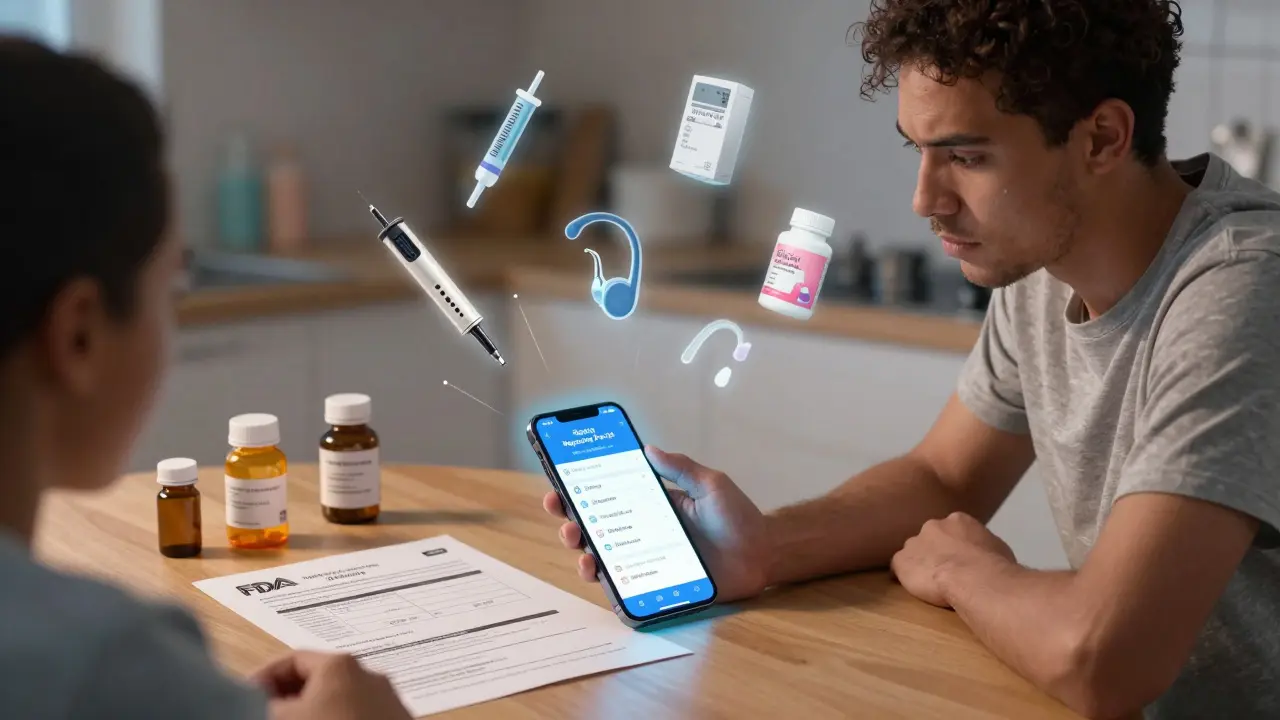
Have you or someone you care for had a bad reaction to a medication, a medical device that failed, or a supplement that didn’t work as expected? You’re not alone. Every year, tens of thousands of patients in the U.S. experience problems with FDA-regulated products - drugs, vaccines, insulin pumps, hearing aids, even baby formula. But here’s the thing: most of these issues never make it to the FDA’s radar. Why? Because the system for reporting them isn’t obvious, and it’s often hard to use. If you’ve ever tried to file a report and hit a dead end, this is for you.
What exactly can you report to the FDA?
You don’t need to be a doctor or a pharmacist to report. The FDA wants to hear from you - the person who actually used the product. You can file a report if you’ve experienced:
- A serious side effect - like a hospital visit, life-threatening reaction, or permanent injury
- A product that didn’t work - such as a blood pressure pill that suddenly stopped lowering your numbers
- A faulty device - like an inhaler that won’t spray, a glucose monitor giving wrong readings, or a pacemaker that malfunctioned
- A product with quality issues - expired medicine, broken packaging, pills that look different than usual
- An error in how you used the product - if you followed instructions exactly but something still went wrong
It doesn’t matter if you’re not sure it was the product’s fault. The FDA’s job is to look for patterns. One report might not change anything. But 50 similar reports? That’s how they find out something dangerous is slipping through the cracks.
How does patient reporting actually help?
Clinical trials test drugs and devices on a few thousand people. That’s not enough to catch rare side effects. A problem that affects 1 in 10,000 people? It’s invisible in trials. But if 500 patients all report the same issue - say, sudden dizziness after using a new diabetes patch - the FDA sees it. That’s how they pull products off the market or add strong new warnings.
Here’s a real example: In early 2024, the FDA issued a safety notice about improper insulin pen storage after receiving 287 patient reports. These weren’t from doctors. They were from patients who noticed their insulin wasn’t working right. The FDA traced it back to people storing pens in hot cars or bathrooms - something no trial ever tested. That’s the power of patient reports.
Studies show patient reports are richer in detail than those from providers. Patients describe symptom timing, daily routines, over-the-counter meds they’re taking, and how the product felt in use. One 2023 study found patient reports included 37% more detail about when symptoms started. That kind of info is gold for investigators.
How to file a report: Step by step
Filing a report is free, confidential, and doesn’t require a lawyer. Here’s how to do it right.
- Collect the basics - Grab the product’s name, lot number, and expiration date. These are usually on the box or bottle. If you can’t find them, don’t panic. Just write down what you know.
- Write down what happened - When did it start? What were the symptoms? Did you go to the doctor? Were you hospitalized? Did anything help? Be specific. Use plain language. You don’t need medical jargon.
- Choose your method - There are three ways to submit:
Option 1: Online via the Safety Reporting Portal (SRP)
This is the fastest way. Go to www.fda.gov/safety/reporting-problems. You’ll fill out a form that adapts to your product type. It takes 15-20 minutes. But here’s the catch: since August 2024, the portal has crashed or frozen for many users. If it doesn’t load, try again later, or switch to paper.
Option 2: Paper form FDA 3500
Download the form from the FDA website. Print it. Fill it out by hand or on your computer. Mail it to: FDA MedWatch, 5600 Fishers Lane, Rockville, MD 20852. Or fax it to 1-800-FDA-0178. This method works even if the website is down. You can also request a form by calling 1-800-FDA-1088.
Option 3: Phone
Call 1-800-332-1088. The line is open Monday-Friday, 8 a.m.-8 p.m. Eastern Time. An agent will take your report over the phone. This is helpful if you’re not comfortable writing or if you’re dealing with a serious reaction and need help immediately.
Remember: You don’t need permission from your doctor. You don’t need to prove anything. Just report what happened.
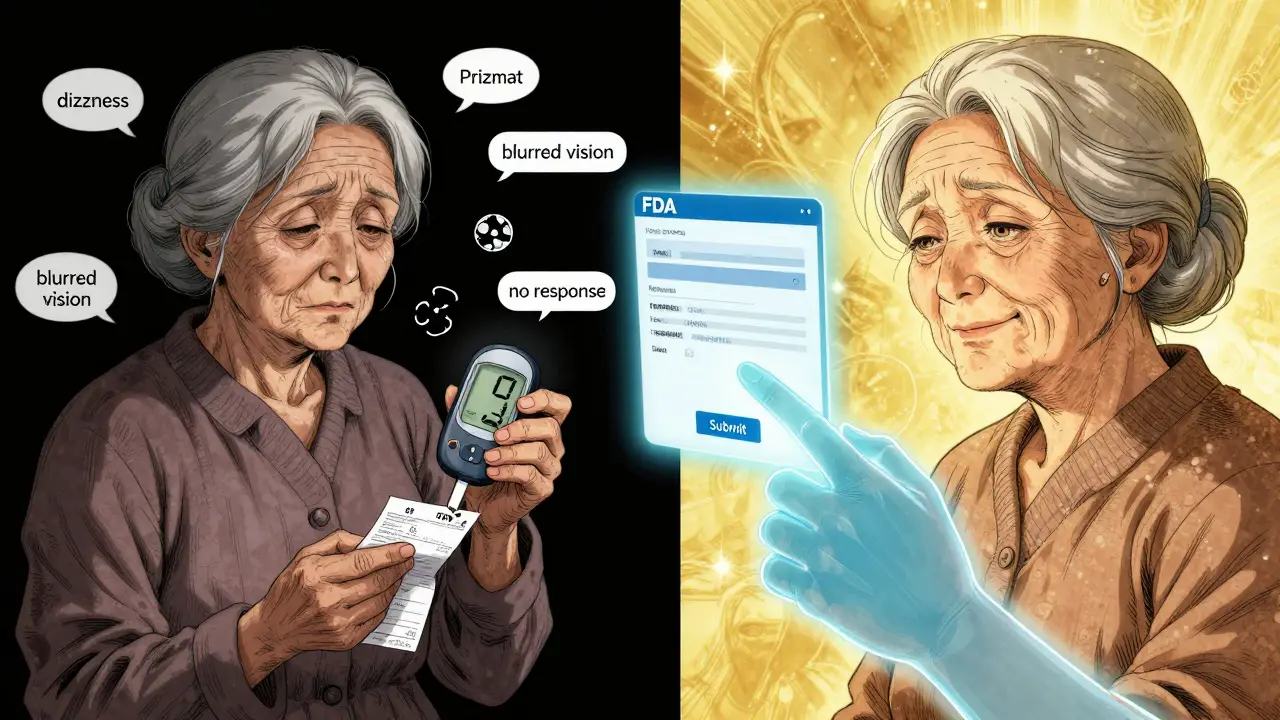
What information do you need?
You don’t need a medical degree, but you’ll need a few key details:
- Product info: Name, manufacturer, lot number, expiration date
- Your info: Age, sex, weight (if known)
- Event details: Date symptoms started, what happened, how long they lasted, outcome (e.g., recovered, hospitalized)
- Other meds: Any prescription, OTC, or supplement you were taking
- Your contact info: Name, phone, email - so they can follow up if needed
Here’s the hard truth: 41% of patient reports submitted in 2024 were missing lot numbers. That makes it harder for the FDA to trace the issue. If you lost the packaging, check your pharmacy receipt or call your pharmacy - they often keep records.
What happens after you file?
Once you submit, you should get a confirmation email within 5 business days - if you gave an email address. Most people don’t know this. It’s not guaranteed, but it should happen.
Your report goes into the FDA Adverse Event Reporting System (FAERS), which holds over 25 million reports since 1969. Trained analysts review them. If your report matches others, it gets flagged. That’s how safety alerts are born.
You won’t get a call. You won’t get a letter. You won’t know if your report led to a change. But if thousands of others report the same thing? The FDA will act. And your report will be part of that.

Why so many reports never get through
Here’s the ugly truth: 90-95% of adverse events are never reported. That’s according to a 2024 study in JAMA Internal Medicine. Why? Because it’s confusing, slow, or feels pointless.
Patients report:
- Website crashes (12 official FDA notices since August 2024)
- Not knowing what counts as reportable
- Feeling like their voice doesn’t matter
- Struggling to find lot numbers
- Language barriers - only English and Spanish forms are available
And here’s another problem: patient reports often lack medical documentation. The FDA found only 62% of consumer reports included enough info for full review, compared to 89% from doctors. That’s why the FDA launched a symptom wizard in late 2024 - it helps people describe symptoms in plain terms. In testing, it cut terminology errors by 33%.
What’s changing in 2025 and beyond
The FDA knows the system is broken. That’s why they’re rolling out the Next Generation Safety Reporting System (NGSRS) - starting January 15, 2025.
- Automated lot number verification - you’ll be able to scan a barcode
- AI-assisted symptom coding - your words get turned into standardized medical terms
- Faster processing - initial review time dropped from 22 to 9 business days
By 2027, the FDA plans to support reporting in five more languages. By 2028, they’ll merge all reporting channels into one unified portal. Right now, you have to use different systems for drugs, devices, and supplements. That’s changing.
And here’s something hopeful: companies like Medtronic are now letting patients report directly to the FDA through their apps. In just six months, that feature increased patient-initiated device reports by 27%.
Your report matters - even if you think it doesn’t
Some people say, “I’m just one person. What difference can I make?”
Think of it this way: If 100 people take a new painkiller and 3 of them have seizures, the FDA might never notice. But if 100 people report it? That’s 100 signals. That’s a pattern. That’s a red flag.
You don’t need to be an expert. You don’t need to be angry. You just need to tell the truth about what happened. Your experience is data. And data saves lives.
Don’t wait for someone else to report it. Don’t assume it’s “not that serious.” If it affected you - even once - file a report. It takes less time than ordering coffee online. And it might help someone else avoid the same thing.
Can I report anonymously?
Yes. The FDA is legally required to protect your identity under 21 CFR 10.75. You don’t have to give your name, phone, or email. But if you want a confirmation email or follow-up, you’ll need to provide contact info. Most people choose to include it so the FDA can ask for more details if needed.
What if I don’t know the lot number?
You can still report. Lot numbers are on only 62% of consumer-packaged products. If you can’t find it, write down the product name, manufacturer, and where you bought it. If you have a receipt or pharmacy record, that helps. The FDA will do its best with what you provide.
Can I report a problem with a dietary supplement?
Yes. Dietary supplements, including vitamins, herbs, and protein powders, are regulated by the FDA. If you had a reaction - like liver damage, heart palpitations, or severe nausea - you can and should report it. These products don’t go through the same testing as drugs, so patient reports are critical.
Do I need to tell my doctor before reporting?
No. You don’t need permission. In fact, many patients report because their doctor didn’t file a report or didn’t take the issue seriously. The FDA encourages patient reporting precisely because it captures experiences doctors might miss.
How long does it take for the FDA to act on a report?
There’s no fixed timeline. Some reports lead to quick action if they match a pattern. Others sit in the database for months or years until enough similar reports pile up. The FDA doesn’t notify you when they act - but if your report contributes to a safety update, you’ll be part of the reason it happened.



Gwen Vincent
February 25, 2026 AT 08:29I filed a report last year after my insulin pump stopped working mid-panic attack. No one at my doctor’s office thought it was worth reporting. But I did. Two months later, I got an email from the FDA asking for more details. Turns out, 17 other people had the same model fail in the same way. I didn’t know I was part of a pattern until then.
It felt weird, reporting to a government agency. Like I was shouting into a canyon. But now I know-my story mattered. Not because I was loud, but because I showed up.
Don’t wait for permission. Just send it. Even if you think it’s small. They’re listening, even if they don’t reply.
Nandini Wagh
February 26, 2026 AT 01:29So let me get this straight-you’re telling me the FDA’s entire safety system runs on goodwill and half-filled forms? And we’re supposed to be grateful they even let us report? Meanwhile, my cousin’s kid got hospitalized from a contaminated baby formula, and the only thing that happened was a vague ‘we’re looking into it’ email three months later.
It’s not a system. It’s a graveyard for complaints.
Holley T
February 27, 2026 AT 17:01Look, I get that the FDA wants patient reports, and yes, I agree they’re valuable-but let’s be real here. The system is still a dumpster fire. You say ‘it’s free and confidential’? Sure. But try reporting a device issue when the portal crashes every third click, and then you’re forced to mail a paper form that takes 14 business days to arrive at a warehouse in Maryland.
And don’t even get me started on the fact that supplements aren’t regulated like drugs but still get lumped into the same reporting portal. That’s like reporting a broken toaster and a faulty heart valve under the same category. The FDA needs to separate these systems, not just slap a ‘Next Generation’ label on it.
Also, the ‘symptom wizard’? Cute. But if I say ‘I felt like I was dying’ and it gets coded as ‘mild fatigue,’ we’re back to square one. AI doesn’t understand trauma. Humans do. Stop outsourcing empathy to algorithms.
Ashley Johnson
February 28, 2026 AT 04:55They’re using this to track us. I read somewhere that the FDA shares reports with insurance companies. That’s why they want your email and weight and what meds you take. It’s not about safety-it’s about raising your premiums or denying coverage later.
I know a guy who reported a bad reaction to a blood pressure pill. Two weeks later, his insurance canceled his plan. Coincidence? I don’t think so.
Also, why do they need your lot number? That’s like a serial number. They’re building a database of who bought what. You think that’s not being sold to pharma? Please. The FDA is just the middleman. The real power is in the data.
Don’t report. It’s not worth it. Let them keep lying.
Nerina Devi
March 1, 2026 AT 00:17In India, we don’t even have access to most of these reporting tools. No online portal in Hindi. No phone line that works here. We’re expected to report using U.S. systems with U.S. forms while our local pharmacies don’t even label lot numbers properly.
I had a friend who had a severe reaction to a vitamin D supplement. She tried reporting through the FDA portal, but it wouldn’t load. She called 1-800-FDA-1088-it rang for 22 minutes before disconnecting.
So she wrote a letter. Handwritten. Sent it via international mail. Took six weeks to arrive. No confirmation. No follow-up.
But she did it anyway. Because someone has to speak up. Even if the system ignores you, your truth still matters.
Dinesh Dawn
March 2, 2026 AT 21:34My sister had a pacemaker malfunction. She didn’t know what to do. Called her doctor, who said, ‘That’s not common.’ Called the hospital, they said, ‘You should report it to the FDA.’ She spent three hours trying to find the form. Gave up. Then I found the paper version. We filled it out together. Sent it. No reply.
But here’s the thing-we did it. Not because we expected a thank-you note. But because we knew someone else might read it someday and say, ‘Oh, that happened to me too.’
That’s enough.
Vanessa Drummond
March 3, 2026 AT 00:57Why are we still using fax machines in 2025? I filed a report via paper because the website crashed. I had to print, sign, scan, then fax it. I spent two hours on this. Two HOURS. For a system that says it’s ‘user-friendly.’
And now you’re telling me they’re rolling out a new portal in 2027? I’m 42. I’m not waiting three more years for a system that should’ve been fixed in 2018.
This isn’t about patient safety. It’s about bureaucratic inertia. And they’re laughing all the way to the bank while we’re stuck on hold.
Nick Hamby
March 3, 2026 AT 09:14There is a profound philosophical tension at the heart of this system: the individual’s moral duty to report versus the institutional failure to respond meaningfully.
On one hand, we are ethically obligated to contribute data that may prevent harm to others-a Kantian imperative. On the other, the state apparatus, burdened by underfunding and structural inefficiencies, renders that contribution largely invisible.
Yet, paradoxically, it is precisely this invisibility that renders the act of reporting sacred. Not because it yields immediate results, but because it affirms human agency in the face of systemic indifference.
Each report is an act of resistance. A quiet declaration: I was here. I suffered. I will not be erased.
And in the aggregate, these acts-though silent, unacknowledged, and uncelebrated-are the very foundation of public health integrity.
kirti juneja
March 3, 2026 AT 14:45My aunt took a supplement for arthritis and ended up in the ER with liver inflammation. She didn’t know what to do. I told her, ‘Just report it. Even if it’s messy.’ She typed out her story in broken English, sent it with no lot number, no phone number. Just her name, her age, and ‘I felt like my insides were melting.’
Three weeks later, the FDA sent a handwritten note: ‘Thank you for your courage.’
That’s it. No email. No call. Just that.
But you know what? It meant everything.
Because for once, someone saw her. Not as a number. Not as a glitch. As a person.
So yeah. Report. Even if it’s ugly. Even if it’s late. Even if you think no one cares.
Someone always does.