
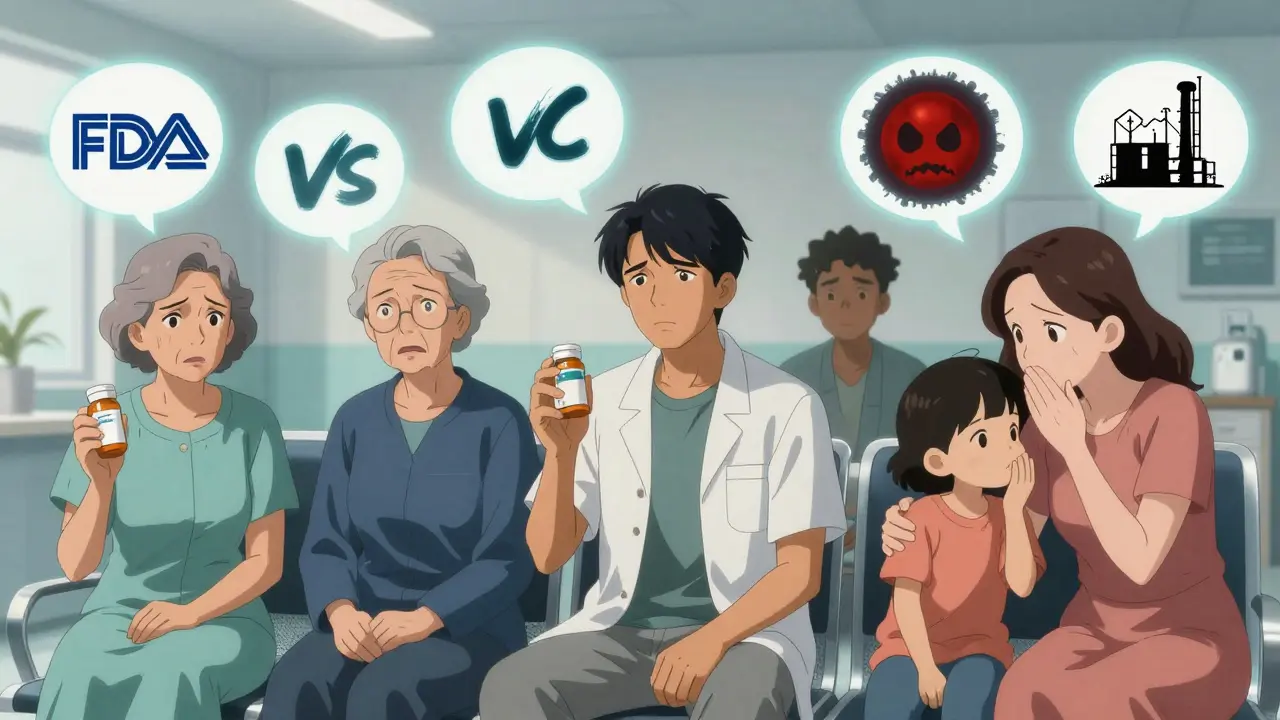
When your doctor switches your prescription from a brand-name drug to a generic, do you feel relieved because it’s cheaper-or uneasy because you’re not sure it’ll work the same? You’re not alone. Millions of people worldwide have this exact reaction, even though science says generics are just as safe and effective. The gap between what we know and what we feel is real, and it’s costing the healthcare system billions.
Why Do People Think Generics Are Less Safe?
The word "generic" itself triggers a mental shortcut. For many, it sounds like "basic," "inferior," or "cheap." That’s not how the FDA defines it. A generic drug must contain the same active ingredient, in the same strength, and work the same way in the body as the brand-name version. It must also meet the same strict manufacturing standards. But none of that matters if your brain associates "generic" with "lower quality." A 2012 CDC survey found that 20 to 40% of patients weren’t sure if generics were as safe or effective as brand-name drugs. One in five outright believed they were less safe. Why? Because of stories. Not data. Not clinical trials. Stories. One patient on Reddit shared how switching to generic sertraline caused severe withdrawal symptoms-until they went back to the brand and felt normal again. Another told their doctor their blood pressure spiked after switching to a generic. These experiences feel real, and they stick. Even when large studies show no difference in outcomes, one bad personal story can override decades of scientific evidence.Who’s Most Likely to Doubt Generics?
Not everyone feels the same way. Risk perception isn’t random-it follows patterns tied to age, education, income, and race. Older adults, especially those over 60, are more likely to worry about side effects. A 2024 study found 31.9% of seniors feared generics caused more side effects, compared to just 24.7% of younger patients. Why? Many have been on the same brand-name drug for years. They trust what’s familiar. Change feels risky. People with lower education levels are nearly twice as likely to believe generics are dangerous. One study showed those with less schooling were 1.95 times more likely to see generic use as a health risk. Meanwhile, higher-educated patients weren’t worried about safety-they were worried about switching. They feared changes in dosing schedules or pill appearance would mess up their routine. Race also plays a role. Black and Hispanic patients are 1.8 times more likely than White patients to express safety concerns about generics. That’s not because they’re less informed. It’s because they’ve seen healthcare systems fail them before. Trust doesn’t come from brochures-it comes from consistent, respectful care. Rural patients have their own myths. Some believe generics are weaker and need higher doses. Others think they’re made in unsafe factories overseas. Urban patients worry more about manufacturing quality, but rural patients worry about whether the drug will even work at all.The Power of the Doctor’s Words
Here’s the surprising truth: what your doctor says matters more than any FDA pamphlet. A 2011 study found patients who received a simple explanation from their doctor about bioequivalence were 3.2 times more likely to accept a generic. That’s not because they suddenly understood pharmacokinetics. It’s because their doctor-someone they trust-said it was okay. But too often, doctors don’t say anything. They just check the box for substitution. Or worse, they say, "It’s the same thing," without explaining what that means. That’s not enough. Patients need to know: "This pill has the same active ingredient, works the same way, and is held to the same safety standards. The only difference is the price." A 2017 study showed that when doctors used clear, simple language tailored to low-health-literacy patients, safety concerns dropped by 42%. That’s not magic. That’s communication.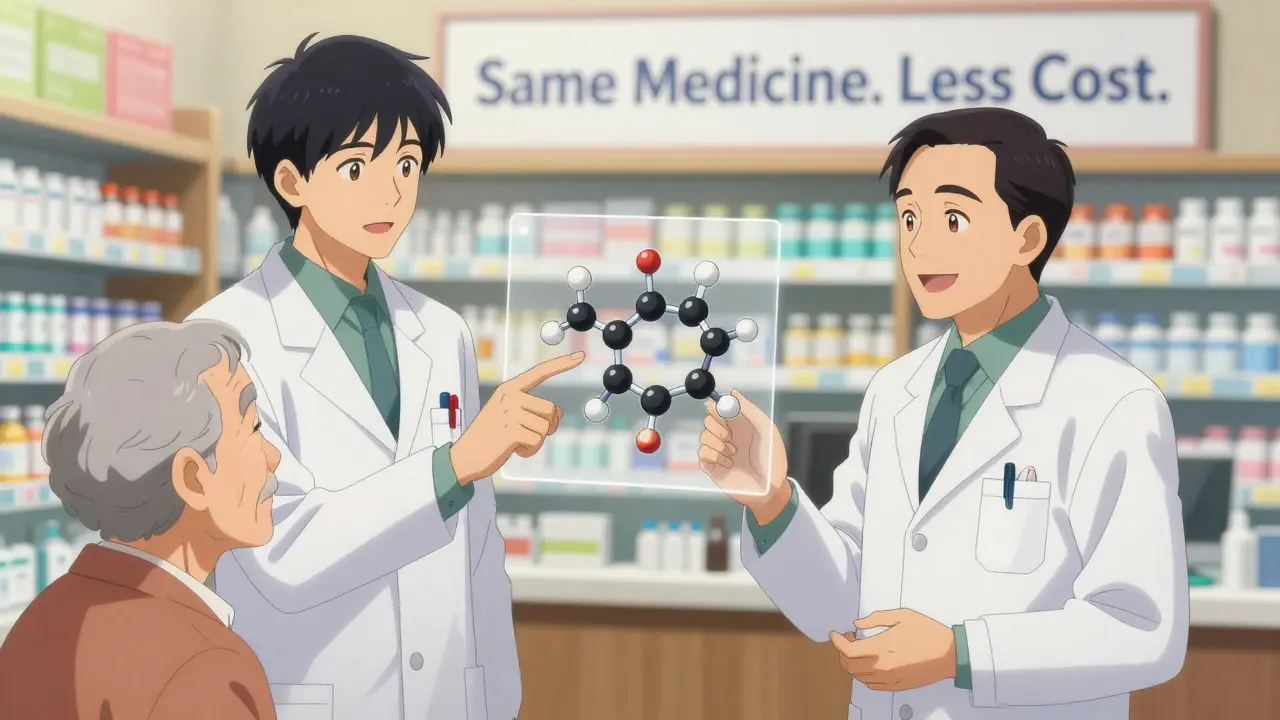
What About the Pharmacist?
Pharmacists are the last line of defense before you walk out with your prescription. They’re the ones who hand you the pill bottle and answer your last-minute questions. But here’s the problem: the average pharmacist spends just 47 seconds talking to a patient about a generic substitution. That’s less time than it takes to microwave your coffee. Still, when pharmacists do take the time to explain, adherence improves by 37%. Patients who get a quick, friendly chat about why the pill looks different but works the same are more likely to stick with it. That’s why programs that train pharmacists to deliver simple, reassuring messages are so effective. The FDA’s official guide on generics? It got a 3.2 out of 5 on clarity. AARP’s version? 4.5 out of 5. The difference? AARP used plain language. No jargon. No fine print. Just: "This is the same medicine. It’s just cheaper."Why Do Patients Still Ask for Brand Names?
Here’s the contradiction: 70% of patients agree generics are a better value. But nearly half have specifically asked for the brand-name version in the past year. Why? Because safety fears override logic. Even if you know generics save money, if you’re scared your blood pressure might spike or your depression might return, you’ll pay extra to avoid that risk. This isn’t just about individual choices. It’s about system design. Insurance plans that charge $0 for generics see 18% higher usage than those with tiered copays. When the cost barrier is gone, people are more willing to try-but only if they feel safe. Even brand-name companies are playing into this fear. They sell their own drugs as "authorized generics"-same formula, same factory, same pill-but now it’s labeled as a generic. Patients see this and think: "If it’s the same, why did they sell it as a brand first?"
What’s Changing Now?
The good news? Things are slowly improving. The FDA launched a new education campaign in 2023 targeting Spanish-speaking communities. Early results show a 15% drop in safety concerns. That’s progress. Machine learning is helping too. A 2024 study used AI to predict which patients were most likely to reject generics-with 87% accuracy. Now, clinics can flag high-risk patients and give them extra counseling before the prescription even leaves the office. But new challenges are emerging. Complex generics-like inhalers, creams, and injectables-are harder to copy exactly. Patients know this. A 2023 survey found 48% of people are specifically worried about these types of generics. That’s a new frontier.What Can You Do?
If you’re a patient: Ask questions. Don’t assume a generic won’t work. Ask your doctor: "Is this the same medicine?" Ask your pharmacist: "Will this do the same thing?" If you notice a change in how you feel after switching, report it. But don’t assume it’s the drug’s fault-sometimes it’s your body adjusting. If you’re a provider: Don’t just check the box. Say something. Use simple words. Say: "This is the same medicine. It’s just less expensive. We’ve been using it for years with no issues." If you’re a policymaker: Fund better education. Train pharmacists. Make generics $0 copay. Stop assuming people are irrational. They’re not. They’re responding to fear, not facts.It’s Not About the Pill. It’s About Trust.
At the end of the day, the issue isn’t science. It’s trust. People don’t distrust generics because they’re bad. They distrust them because they’ve been told, implicitly, that cheaper means worse. And in a system where health is tied to status, money, and control, that message sticks. The data is clear: generics are safe. They work. They save lives and money. But until we fix the story people tell themselves about what "generic" means, we’ll keep losing billions-not because the drugs don’t work, but because people don’t believe they do.Are generic drugs really as safe as brand-name drugs?
Yes. The FDA requires generic drugs to have the same active ingredient, strength, dosage form, and route of administration as the brand-name version. They must also meet the same strict manufacturing standards. Bioequivalence testing ensures they work the same way in the body. Over 90% of prescriptions in the U.S. are generics, and decades of real-world use confirm they are just as safe and effective.
Why do some people feel worse after switching to a generic?
Some patients report differences in side effects or effectiveness after switching. These experiences are real to them, but they’re often not caused by the drug itself. Factors like changes in inactive ingredients (fillers, dyes), placebo effects, or natural fluctuations in symptoms can play a role. In rare cases, certain generic versions of extended-release drugs like bupropion XL had formulation issues in the past, which the FDA addressed. If you feel different after switching, talk to your doctor-but don’t assume it’s the generic’s fault without investigation.
Do generics take longer to work than brand-name drugs?
No. Generics must demonstrate bioequivalence, meaning they reach the same level in your bloodstream at the same rate as the brand-name drug. If a brand-name drug takes 30 minutes to start working, the generic will too. Any perceived delay is usually psychological or due to other factors like diet, stress, or timing of doses.
Why do some generics look different from the brand name?
By law, generics can’t look identical to brand-name drugs because of trademark rules. So they may have different colors, shapes, or markings. But the active ingredient and how it works in your body are the same. The differences are only in non-medical parts like fillers or coatings-none of which affect safety or effectiveness.
Should I avoid generics if I have a serious condition like heart disease or epilepsy?
No. Generics are approved for all conditions, including serious ones. A 2009 NIH study found no difference in safety perceptions between generics for chronic conditions like heart disease and those for temporary symptoms. Millions of people with epilepsy, hypertension, and diabetes rely on generics safely every day. The key is consistency-if you switch, stick with the same generic manufacturer to avoid variability in inactive ingredients.



Matt Beck
January 5, 2026 AT 23:13So we’re just supposed to trust that a pill with a different color and shape is *exactly* the same? 🤔 I mean, if I swapped my Nike shoes for a no-name brand, would you tell me they’re ‘bioequivalent’? 😅 Science says yes-but my body remembers when the generic sertraline turned me into a zombie. I’m not irrational-I’m just… experienced. 🧠💥
Beth Templeton
January 7, 2026 AT 02:19Generics work. Stop being dramatic.
Tiffany Adjei - Opong
January 8, 2026 AT 09:43Oh honey, let me break it down for you like you’re five: the FDA doesn’t care if your *feelings* are hurt by a white oval pill. They care about active ingredients. But also-can we talk about how brand-name companies literally rebrand their own generics as ‘authorized generics’ to keep you paying more? 🤡 That’s not a conspiracy. That’s capitalism. And yes, I’ve read the studies. Twice.
Ryan Barr
January 9, 2026 AT 13:52It’s fascinating how the masses conflate price with quality. A true intellectual understands that cost efficiency doesn’t equate to inferiority-unless you’re buying socks from a gas station.
Cam Jane
January 11, 2026 AT 08:35Hey-I get it. Switching meds is scary. I was terrified when my doc switched me from brand-name Lipitor to the generic. I tracked my numbers for weeks. I kept a journal. I cried. But guess what? My cholesterol dropped the same. My energy stayed up. I even saved $80/month. 🙌 You’re not broken if you’re nervous. But you’re not alone either. Talk to your pharmacist. Ask them to walk you through it. They’ve seen this a thousand times. And if you feel weird? Report it. But don’t quit before you give it a real shot. You got this. 💪
Dana Termini
January 12, 2026 AT 14:27I switched to a generic for my thyroid med last year. At first I was worried. I checked my labs every month. No changes. No side effects. My doctor said it was the same. Turns out, she was right. I think the fear comes from not being told enough-not from the pill itself. Maybe we just need better conversations.
Amy Le
January 13, 2026 AT 22:24Let’s be real-America’s healthcare system is a scam. The FDA? A puppet. Generics are made in China. In factories with no oversight. You think they test every batch? 😏 I’ve seen the videos. The pills are dust. Your ‘bioequivalence’ is a marketing lie. You think your insulin is safe? Think again. 🇺🇸💊
Stuart Shield
January 14, 2026 AT 13:07Back in Glasgow, we’ve been on generics since the 70s. No one bats an eye. My gran’s on a generic blood thinner and she still argues with the telly. The real issue? We treat patients like idiots. Not the pills. The system. If your doctor just hands you a new bottle and says ‘it’s fine,’ of course you’re gonna panic. Give us a bloody chat, not a pamphlet.
Lily Lilyy
January 15, 2026 AT 02:53Dear friends, I want to say thank you for sharing your stories. It takes courage to speak up. And I want you to know: your feelings matter. Your health matters. And there is hope. Many pharmacies now offer free one-on-one consultations with pharmacists. You can ask questions. You can ask for the same generic manufacturer every time. You are not alone. You are valued. And your health is worth fighting for. With love, from a fellow patient.
Jeane Hendrix
January 15, 2026 AT 16:55ok so like i switched to generic adderall and my brain felt like mush for 3 weeks? but then i read somewhere that inactive ingredients can affect absorption? like the coating or filler? and i think maybe the generic had a different polymer? idk. but now i’m paranoid every time i get a new bottle. also, why do they make them look so different? like why not just copy the brand? is that illegal? 🤔
Katelyn Slack
January 16, 2026 AT 17:00my mom took a generic for her blood pressure and she swears it made her dizzy. she went back to brand and felt fine. i told her it was probably just stress. she said i dont understand. maybe i dont. but i also dont want her to pay $200 a month for something that should cost $5. i just wish there was a way to test it before you take it.
Melanie Clark
January 18, 2026 AT 07:04They don’t want you to know that generics are made in the same factories as brand names but labeled differently to maximize profit. The FDA approves them based on data that’s often submitted by the brand-name company itself. You think that’s a coincidence? Wake up. The pharmaceutical industry doesn’t care if you live or die-they care about your copay. I’ve seen the documents. The pills are identical. But the trust? That’s been stolen. And no, I won’t take it. Not after what they’ve done.