
Why Medication Safety at Home Matters More Than You Think
Every year, nearly 60,000 kids end up in the emergency room because they got into medicine they weren’t supposed to. Most of the time, it wasn’t because the parents were careless - it was because the medicine was within reach. A grandparent left a pill bottle on the counter. A toddler climbed onto a chair to grab a bottle from a high shelf. A babysitter didn’t know the child had already taken their dose. These aren’t rare accidents. They’re preventable.
Medication errors at home don’t just hurt kids. They affect older adults too. One in three seniors takes five or more medications daily. Mix those together without a clear system, and you’ve got a recipe for dangerous interactions, overdoses, or missed doses. The good news? You don’t need to be a nurse to build a safe medication routine. You just need a plan.
Store Medications Like You Store Guns
Think about how you store firearms - locked up, out of reach, and separate from ammunition. That’s the same standard you should use for medicine. The CDC says 79% of emergency visits for kids under 2 happen because they found meds in a purse, on a counter, or in a bathroom cabinet. That’s not luck. That’s poor storage.
Here’s what actually works:
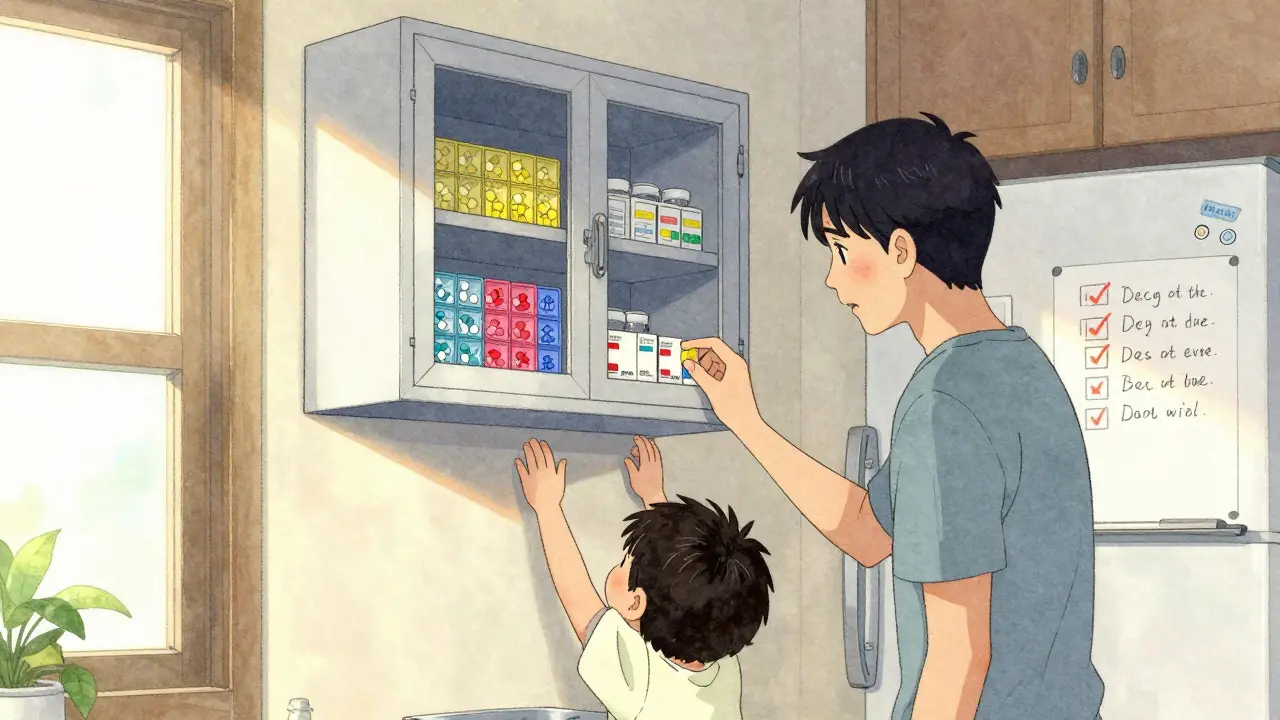
- Keep all medications - prescription, OTC, vitamins, even cough syrup - in a locked cabinet. Not just any cabinet. One with a childproof lock.
- Never store meds in the bathroom. Humidity ruins pills. Moisture turns tablets into mush and makes liquids less effective.
- Keep meds up and away. Not just high shelves. Lock them above eye level, where a child can’t climb to reach them.
- If you have opioids in the house, keep naloxone (Narcan) on hand. It’s not just for addicts. It’s for families. Opioid overdoses can happen to anyone, even from a single accidental dose.
One study found that households using locked storage saw a 34% drop in child medication exposures. That’s not a small win. That’s life-saving.
Know the Five Rights of Medication Administration
When you give a pill, ask yourself: Is it the right child? Right medicine? Right dose? Right time? Right way?
That’s the Five Rights - a simple checklist used in hospitals that works just as well at home. Skip one, and you risk harm.
- Right child: Double-check the name on the bottle. Don’t assume the bottle with the red cap is for your daughter. It might be your husband’s blood pressure pill.
- Right medicine: Read the label twice. Generic names can be confusing. Lisinopril isn’t the same as Lexapro. Brand names change too.
- Right dose: Use the syringe that came with the liquid medicine. Not the cap. Not a spoon. Syringes are accurate. Spoons are not. Studies show using syringes cuts dosing errors by 47%.
- Right time: Don’t guess. Set alarms. Write it down. If your kid takes medicine at 8 a.m. and 8 p.m., don’t shift it to 9 p.m. just because you were late.
- Right route: Oral pills aren’t for the nose. Eye drops aren’t for the mouth. Always check the instructions.
One caregiver in Melbourne told us she taped a sticky note to the fridge with the Five Rights written out. Every time she gave a pill, she read them aloud. She hasn’t made a mistake in over a year.
Build a Master Medication List - And Keep It Updated
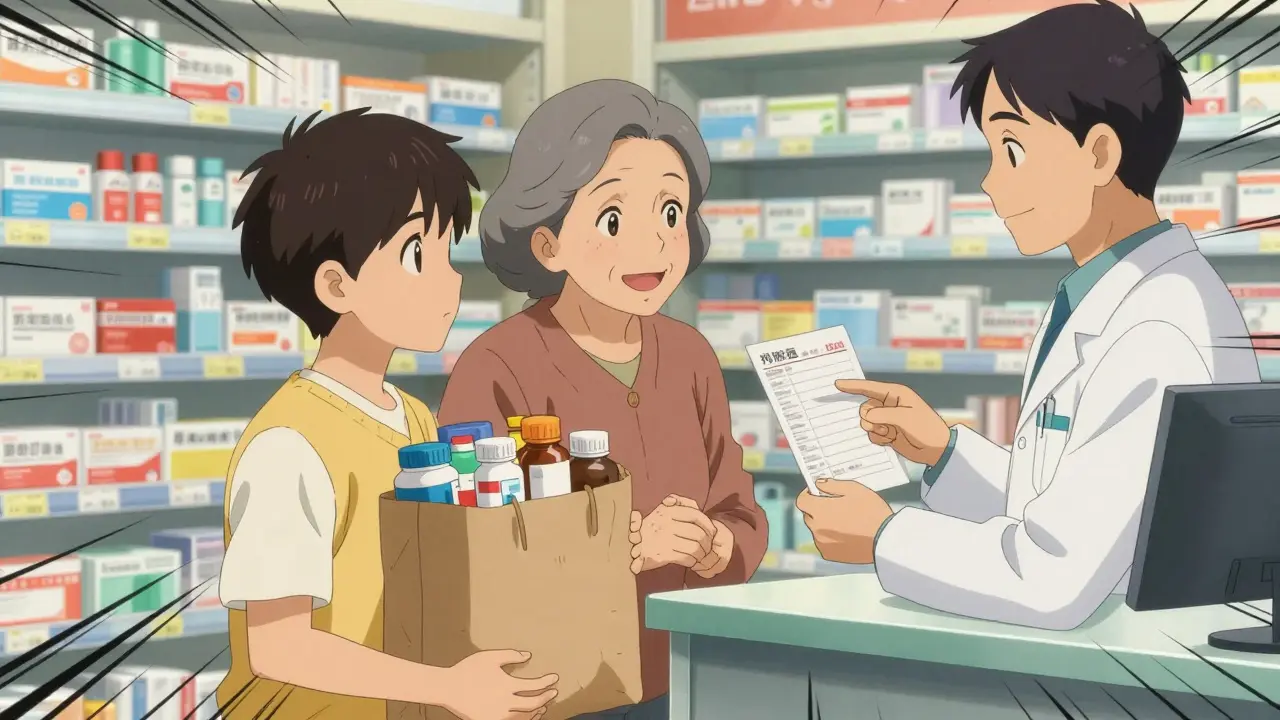
How many medications does your family take? Not just prescriptions. Think vitamins. Herbal teas. CBD gummies. Pain patches. Eye drops. All of it.
Most families can’t answer that question. And that’s dangerous. The American Pharmacists Association says you should do a “brown bag” review every six months - gather every bottle, jar, and packet in a bag and take it to your pharmacist. They’ll spot duplicates, interactions, and drugs you no longer need.
But you don’t have to wait. Start now. Make a simple list:
- Medication name (brand and generic)
- Dose (e.g., 10 mg, 5 mL)
- When to take it (e.g., “with breakfast,” “at bedtime”)
- Purpose (e.g., “for high blood pressure,” “for allergies”)
- Start date
- Side effects to watch for
Put this list on the fridge. Save a copy on your phone. Give one to your doctor. Give one to your partner. If your child gets sick and you rush to the ER, this list could save their life.
Use Tools That Actually Work
There are a million apps and gadgets for medication management. But most of them fail because they’re too complicated.
Here’s what real families use - and stick with:
- 7-day pill organizers: Used by 68% of caregivers who say they reduced errors. Choose ones with alarms or compartments for morning/afternoon/evening.
- Color-coded tape: One Reddit user painted blue tape on her husband’s blood pressure pills and red tape on his diabetes meds. Her kids started calling them “blue pills” and “red pills.” No more mix-ups.
- Digital reminders: Apps like Medisafe work well - if you’re tech-savvy. But if you’re over 65 and not used to smartphones? Don’t force it. Use a simple alarm clock or a wall calendar with checkmarks.
- Buddy system: Two people verify each dose. One reads the label. The other confirms the dose. It adds 30 seconds, but cuts errors by half.
One family in Melbourne switched from digital alerts to a whiteboard on the kitchen wall. Every time someone took a pill, they checked it off. Their 8-year-old even helped. “It became a game,” the mom said. “And now no one forgets.”
Dispose of Old Meds - Don’t Just Toss Them
That bottle of antibiotics from last winter? The leftover painkillers from the surgery? Don’t keep them. Don’t flush them. Don’t throw them in the trash.
Unused meds are a major cause of accidental poisonings - and environmental damage. The CDC says 60% of households still keep old pills “just in case.” That’s a ticking time bomb.
Here’s what to do:
- Find a drug take-back program. Many pharmacies, hospitals, and police stations offer free drop-off bins.
- If none are nearby, mix pills with coffee grounds or cat litter in a sealed bag before tossing. This makes them unappealing and unusable.
- Never pour liquid meds down the sink. Pour them into a sealable container with kitty litter, then trash it.
Get rid of expired, unused, or unneeded meds every 6 months. Make it part of your routine - like cleaning out the fridge.
Plan for Mistakes - Because They Happen
Even the best routines fail. Someone forgets. Someone misreads. Someone gives two doses by accident.
What do you do?
- If you miss a dose: Give it as soon as you remember. But if it’s almost time for the next one, skip the missed one. Never double up.
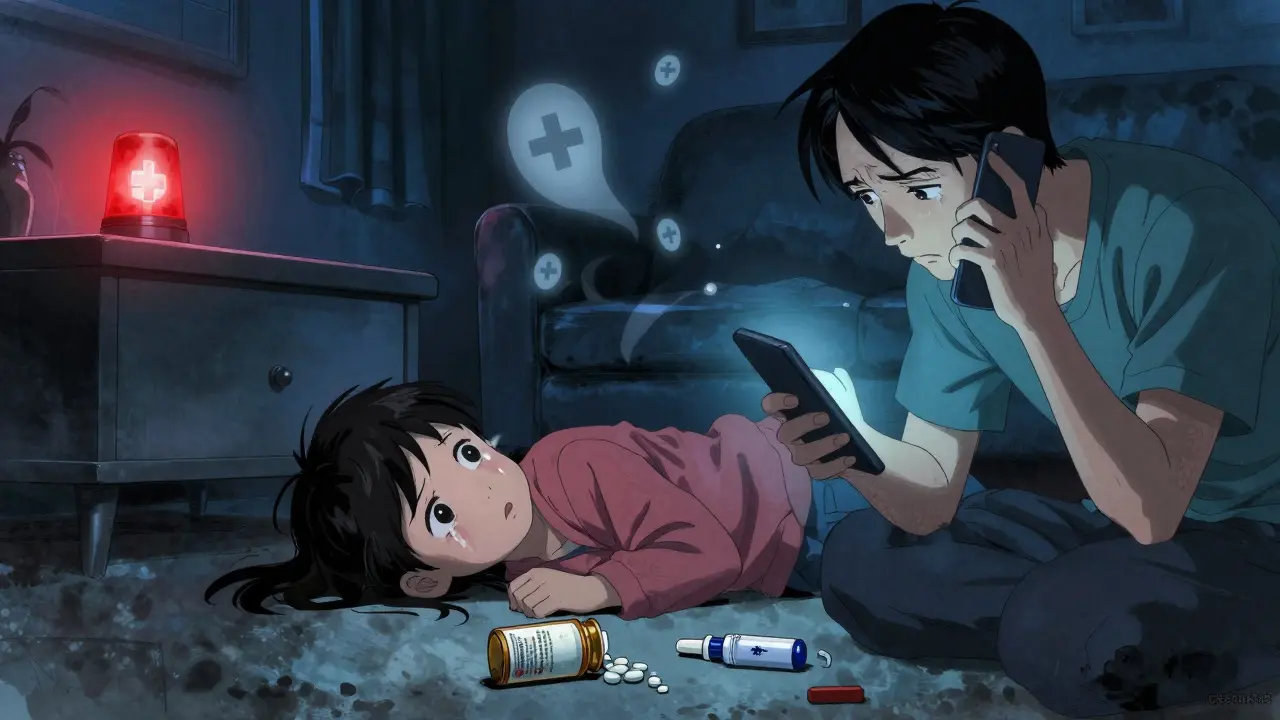
- If you give too much: Call Poison Control immediately. The number is 1-800-222-1222. Save it in your phone. Write it on the fridge. Know it by heart.
- If someone has trouble breathing, is unusually sleepy, or has tiny pupils after taking medicine: Call 000. Don’t wait. Give naloxone if you have it.
Most families don’t know the Poison Control number. That’s a problem. 60% of households don’t have it written down. Fix that today.
Review With Your Doctor - At Least Once a Year
Doctors don’t always know what you’re taking at home. You might be on five prescriptions. Add three supplements. Two OTC painkillers. And suddenly, you’re at risk for dangerous interactions.
The American Geriatrics Society says 15% of hospital admissions for seniors are caused by bad medication combinations. Many of these are avoidable.
Ask your doctor:
- “Which of these meds can I stop?”
- “Is this still necessary?”
- “Are any of these linked to falls or confusion?”
Anticholinergic drugs - common in older adults for allergies, sleep, or bladder control - can increase fall risk by 50%. If your grandparent is stumbling more, ask if one of their meds could be the cause.
Start Small. Stay Consistent.
You don’t need to fix everything tomorrow. Start with one thing:
- Lock up your meds tonight.
- Write down your family’s medication list by tomorrow.
- Call Poison Control and save the number.
- Use a pill organizer for one person for one week.
It takes 2-3 weeks to build a new habit. But once it’s in place, you’ll sleep better. You’ll worry less. And you’ll know your family is protected.
Medication Safety Is a Family Job
This isn’t just the parent’s job. It’s everyone’s. Grandparents, babysitters, teens, even younger kids - they all need to know where the meds are, and why they’re locked away.
Teach your kids: “Medicine isn’t candy. It’s a tool. And tools need to be kept safe.”
When you make medication safety part of your family culture, you don’t just prevent accidents. You build trust, awareness, and responsibility.
What’s the most common mistake families make with medications?
The biggest mistake is storing meds where kids can reach them - on counters, in purses, or in unlocked cabinets. Even if you think your child can’t climb, they will. Most exposures happen when a caregiver is distracted, not when no one is watching. Locked storage is non-negotiable.
Can I use the same pill organizer for everyone in my family?
No. Even if pills look similar, mixing them can be deadly. Use separate organizers for each person. Label them clearly with names and colors. A red organizer for Grandma, blue for Dad - it’s simple, but it prevents confusion.
Are child-resistant caps enough to keep kids safe?
No. Only 55% of parents use them correctly. And kids as young as 18 months can open them. Child-resistant doesn’t mean child-proof. Locking your meds in a cabinet is the only reliable way to keep them out of reach.
How do I know if a medication is expired?
Check the expiration date on the bottle. If it’s past that date, don’t use it. Some meds lose potency quickly - like insulin, liquid antibiotics, or epinephrine. If you’re unsure, take it to a pharmacy. They’ll tell you if it’s still safe.
What should I do if my child swallows medicine by accident?
Call Poison Control at 1-800-222-1222 right away. Don’t wait for symptoms. Don’t try to make them vomit. Have the medicine bottle ready - the poison control specialist will need the name, dose, and time taken. Keep this number saved in your phone and posted on the fridge.
Medication safety isn’t about perfection. It’s about preparation. The more you plan, the less you panic. And in a crisis, that’s everything.



Shanahan Crowell
January 3, 2026 AT 14:09JUNE OHM
January 5, 2026 AT 05:53Kerry Howarth
January 6, 2026 AT 04:46Lori Jackson
January 7, 2026 AT 21:17erica yabut
January 8, 2026 AT 10:00Tru Vista
January 10, 2026 AT 09:13Ian Ring
January 12, 2026 AT 04:11Palesa Makuru
January 13, 2026 AT 20:40Vincent Sunio
January 15, 2026 AT 19:39Ian Detrick
January 17, 2026 AT 18:30innocent massawe
January 18, 2026 AT 14:28Philip Leth
January 19, 2026 AT 05:31Sarah Little
January 19, 2026 AT 14:23