
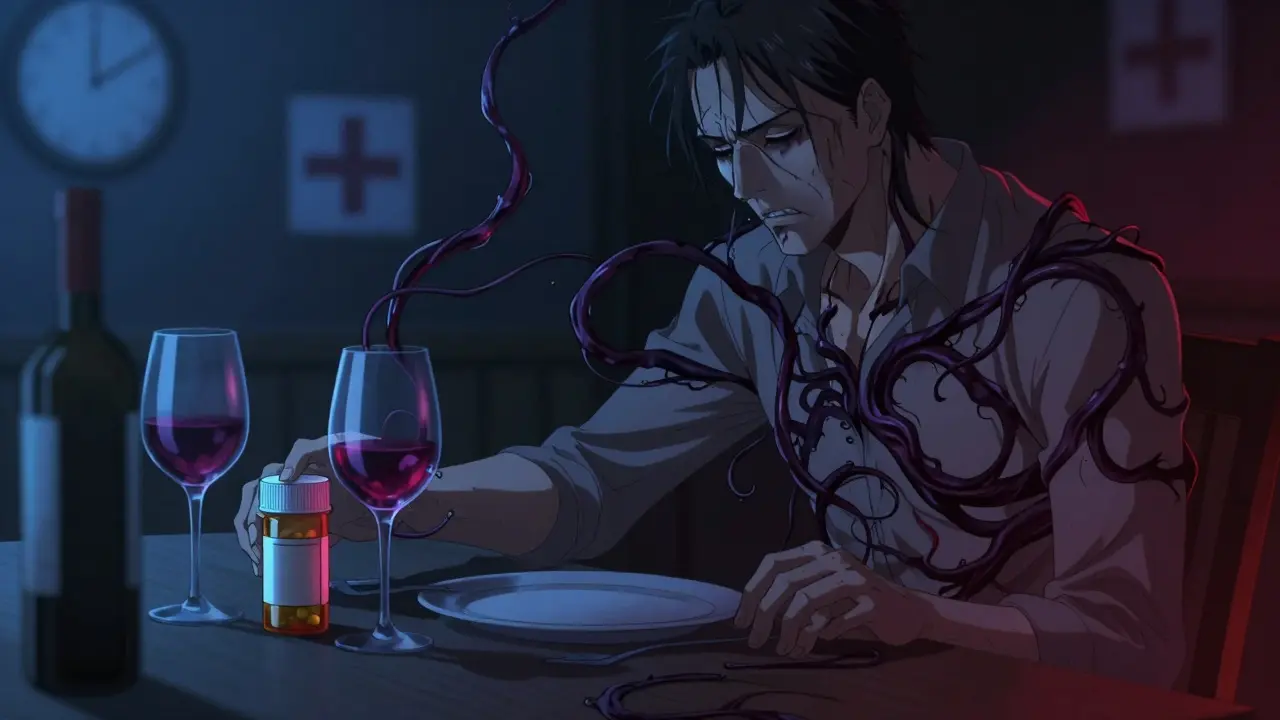
Alcohol & Opioid Respiratory Depression Calculator
Calculate Your Risk
This tool demonstrates the combined effect of alcohol and opioids on breathing rate. Remember: there is no safe amount of alcohol when taking opioids.
Results
Normal breathing: 12-20 breaths per minute
When you take an opioid for pain and have a drink at dinner, you might think it’s harmless. After all, millions do it. But the truth is, alcohol and opioids together can shut down your breathing - and fast. You don’t need to be a heavy drinker or a high-dose opioid user. Even small amounts of both can be deadly.
Why This Combination Is So Dangerous
Both alcohol and opioids slow down your central nervous system. That’s why they make you feel relaxed, drowsy, or even euphoric. But when they’re combined, their effects don’t just add up - they multiply. This is called synergistic depression. Your brain’s ability to control breathing gets overwhelmed. Your lungs stop taking in enough oxygen. Your heart slows. And without intervention, you can die within minutes. The U.S. Food and Drug Administration (FDA) put a black-box warning on all prescription opioids in 2016 because of overwhelming evidence. This is the strongest warning they can issue. It says clearly: Do not mix alcohol with opioids. The reason? Data from the Centers for Disease Control and Prevention (CDC) shows that in 2022, over 107,900 drug overdose deaths occurred in the U.S. - and 81% of them involved more than one substance. Alcohol was in nearly half of all opioid-related deaths.How Much Is Too Much?
There’s no safe amount. A 2017 study found that just 20mg of oxycodone - a common prescription dose - reduced breathing by 28%. When researchers added alcohol to reach a blood alcohol level of 0.1% (the legal driving limit in most U.S. states), breathing dropped another 19%. Older adults saw even sharper drops. Apneic episodes - periods where breathing stops entirely - became more frequent and longer. This isn’t about binge drinking. Someone having one glass of wine with their painkiller could be at risk. Alcohol lowers the threshold for overdose. That means if you normally tolerate a certain dose of oxycodone or hydrocodone, alcohol can make that same dose fatal.Which Opioids Are Most Dangerous with Alcohol?
All opioids carry risk, but some are more commonly involved in fatal combinations. Prescription opioids like oxycodone (OxyContin), hydrocodone (Vicodin), and fentanyl are top culprits. Fentanyl is especially deadly because it’s so potent - even tiny amounts can stop breathing. Data from Texas shows alcohol was involved in 17% of fentanyl-related deaths in 2019, up from 9% in 2010. Heroin users also frequently mix in alcohol. In the same Texas study, alcohol co-involvement in heroin deaths ranged from 13% to 20% over nine years. Even methadone, used in addiction treatment, becomes far more dangerous with alcohol. One study found methadone patients who drank had 4.6 times higher risk of overdose death than those who didn’t.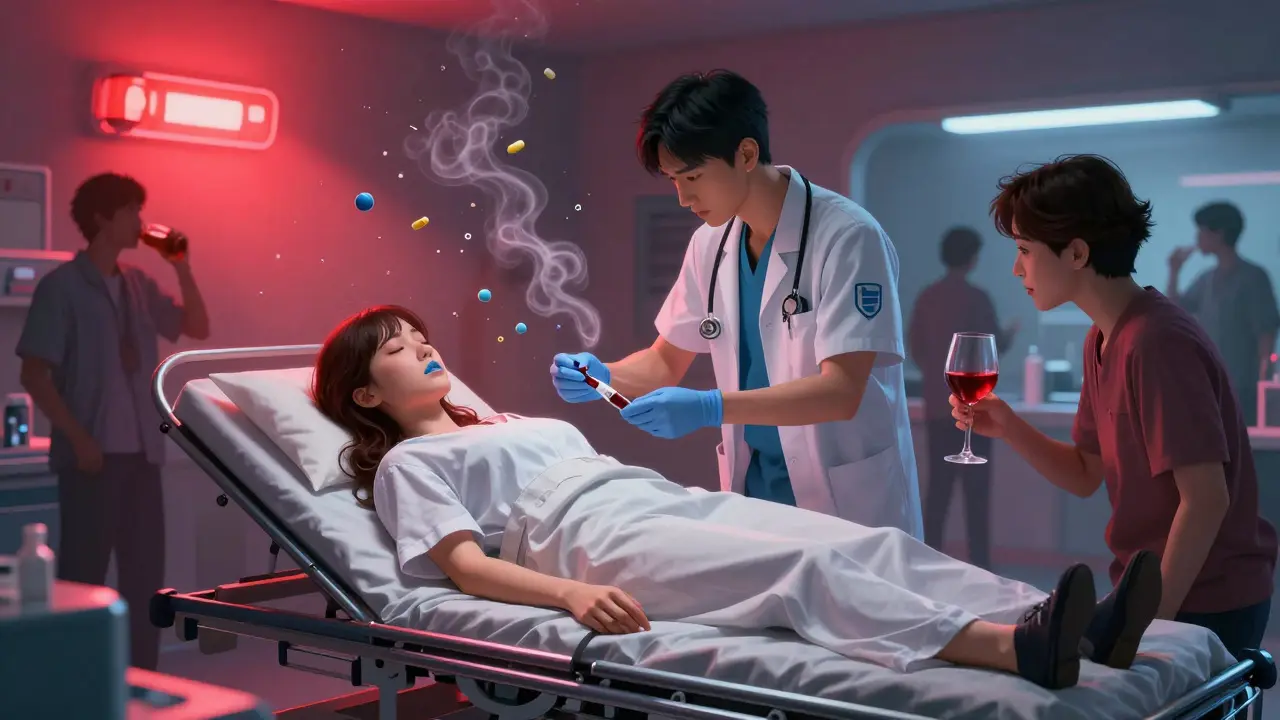
It’s Not Just Alcohol
Many people who mix alcohol and opioids are also taking benzodiazepines - drugs like Xanax or Valium used for anxiety or sleep. This triple threat - alcohol, opioids, and benzodiazepines - is one of the deadliest combinations in modern drug use. The National Institute on Drug Abuse (NIDA) reports that in 2021, nearly 14% of opioid overdose deaths also involved benzodiazepines. Add alcohol to that, and the risk skyrockets. Doctors are supposed to screen for alcohol use before prescribing opioids. The American Society of Addiction Medicine says patients with alcohol use disorder are 3.2 times more likely to overdose on opioids. Yet, a 2022 report from the Department of Labor found that 17.3% of workers’ compensation opioid prescriptions went to people with documented alcohol problems.What Happens in the Body?
Alcohol and opioids both act on GABA receptors in the brain, which control relaxation and sedation. They also suppress the brainstem - the part that automatically tells you to breathe. When you’re asleep, your body doesn’t need to think about breathing. But if both alcohol and opioids are present, your brain can’t even trigger that reflex. Your oxygen levels drop. Carbon dioxide builds up. You slip into unconsciousness. Then, breathing stops. Post-mortem studies show alcohol changes how opioids are processed in the body. Researchers from the University of Florida found that in 30% of buprenorphine-related deaths, alcohol was present. It didn’t just add to the effect - it changed the way the drug was absorbed and metabolized, making overdose more likely even at lower doses.Who’s at Risk?
Men are more likely to die from this combination. In Texas, 77% of alcohol-opioid deaths between 2010 and 2019 were among males. But women aren’t safe - they’re often prescribed opioids for chronic pain and may drink to manage stress or sleep. Age matters too. Older adults metabolize alcohol and drugs slower, so even small amounts linger longer. People in recovery are especially vulnerable. Someone who’s been sober for months might think they can handle “just one drink.” But their tolerance to opioids has dropped. A dose they used to take without issue can now be fatal - especially with alcohol.
What Can Be Done?
The CDC recommends naloxone for anyone using opioids, especially if they also drink. Naloxone can reverse an opioid overdose - but only if given in time. In Massachusetts, 23% of naloxone reversals in 2022 involved alcohol. That means many people who survive these overdoses owe their lives to bystanders who knew how to act. Healthcare providers are now required to include alcohol interaction warnings in patient education materials. The FDA’s 2022 REMS program made this mandatory by the end of 2023. Still, many patients don’t read the warnings - or don’t understand them. In early 2023, SAMHSA launched the “Don’t Mix” campaign with $15 million in funding. Their goal: reduce alcohol-opioid overdose deaths by 10% by 2025. Public health campaigns are starting to use real stories - not just statistics - to get the message across.What to Do If You or Someone You Know Is Mixing Them
If you’re taking opioids for pain and you drink alcohol - even occasionally - talk to your doctor. Don’t wait for an emergency. Ask about alternatives to opioids. Ask about non-drug pain management. Ask about alcohol screening. If you’re helping someone who uses both, learn how to use naloxone. Keep it in your home. Know the signs of overdose: slow or shallow breathing, blue lips or fingertips, unresponsiveness. Call emergency services immediately - even if you give naloxone. The effects of alcohol can last longer than naloxone. If you’re in recovery, avoid alcohol completely. Your body’s tolerance has changed. What felt safe before could kill you now.There’s Hope - But Not Without Action
The science is clear. Alcohol and opioids together are a deadly mix. The numbers don’t lie. Over 100,000 deaths in a single year. Rising trends. New biomarkers being discovered to predict overdose before it happens. But awareness doesn’t stop deaths. Action does. Talking to your doctor. Carrying naloxone. Saying no to that drink when you’re on painkillers. These small choices save lives. This isn’t about fear-mongering. It’s about facts. And the fact is, you don’t have to be an addict to die from this combination. You just have to be human - and unaware.Can mixing alcohol and opioids kill you even if you don’t take a lot?
Yes. Even low doses of both substances can be fatal. Alcohol lowers the threshold for opioid overdose, meaning a dose you normally tolerate can become deadly when combined with just one drink. Studies show respiratory depression increases significantly at blood alcohol levels as low as 0.1% - the legal driving limit in many places.
Which prescription opioids are most dangerous with alcohol?
Oxycodone (OxyContin), hydrocodone (Vicodin), fentanyl, and methadone carry the highest risk. These are all Schedule II controlled substances with strong respiratory depressant effects. Fentanyl is especially dangerous because of its potency - even tiny amounts can stop breathing, and alcohol makes that risk much worse.
Does naloxone work if alcohol is involved in the overdose?
Yes, naloxone can reverse opioid-induced respiratory depression even when alcohol is present. But it doesn’t reverse alcohol’s effects. The person may still be sedated or at risk of vomiting and choking. Emergency medical help is always needed - even after naloxone is given.
Can I have one drink if I’m on a low dose of opioids?
Medical experts say no. There’s no proven safe level of alcohol when opioids are in your system. The interaction is unpredictable and can vary by body weight, age, metabolism, and liver function. Even one drink can push your breathing into danger. The safest choice is complete avoidance.
Are older adults more at risk?
Yes. Older adults metabolize alcohol and opioids more slowly, so both substances stay in their system longer. Their bodies are also less able to compensate for breathing suppression. Studies show older patients experience deeper and longer pauses in breathing when mixing these substances, increasing the chance of fatal overdose.
What should I do if someone overdoses from mixing alcohol and opioids?
Call emergency services immediately. If you have naloxone, administer it right away. Try to keep the person awake and breathing. Lay them on their side to prevent choking. Do not leave them alone. Even if they wake up after naloxone, they still need medical care - the effects of alcohol can outlast the reversal.
Is it safe to mix alcohol with buprenorphine or methadone?
No. Both buprenorphine and methadone are opioids used to treat addiction, but they still carry overdose risk when mixed with alcohol. Studies show alcohol increases the risk of fatal overdose by 4.6 times in methadone patients. Even though buprenorphine has a ceiling effect, alcohol removes that safety buffer.
Why do doctors still prescribe opioids to people who drink?
Some do, despite guidelines. The American Society of Addiction Medicine recommends screening for alcohol use before prescribing opioids - but not all doctors follow this. A 2022 report found nearly one in five workers’ compensation opioid prescriptions went to people with alcohol use disorder. This gap in care is being addressed through new FDA requirements and public health campaigns.
Are there any warning signs before an overdose happens?
Yes. Early signs include extreme drowsiness, confusion, slow or shallow breathing, bluish lips or fingernails, and unresponsiveness. New research from the University of Pittsburgh found reduced heart rate variability can predict 83% of alcohol-opioid overdoses up to 30 minutes before respiratory arrest - suggesting future monitoring tools may help save lives.
Can I use alcohol to help with opioid withdrawal symptoms?
Never. Alcohol may temporarily ease anxiety or insomnia during withdrawal, but it increases the risk of seizures, delirium, and death. It also reactivates addiction pathways. Safe withdrawal requires medical supervision and non-addictive medications like clonidine or gabapentin - not alcohol.


Jessica Salgado
December 16, 2025 AT 22:12I used to think one glass of wine with my oxycodone was fine-until my cousin almost died last year. She didn’t even drink much, just a splash with dinner. But her breathing just… stopped. We had to use naloxone. It’s terrifying how fast it happens. I don’t touch alcohol anymore when I’m on meds. Not worth it.
My doctor never warned me properly. I had to find this out the hard way.
amanda s
December 17, 2025 AT 16:57Oh please. This is just more fear-mongering from the medical-industrial complex. People have been drinking and taking painkillers for centuries. If you can’t handle your liquor and your meds, that’s your problem, not the drug’s.
Stop treating adults like children. I’ll have my whiskey and my hydrocodone, thank you very much.
Peter Ronai
December 19, 2025 AT 12:13Wow. So you’re telling me that combining two depressants… depresses the system? Groundbreaking. I’m shocked. The FDA issued a black box warning? Shocking. Alcohol slows breathing? Revolutionary.
Here’s the real problem: people don’t read labels. Not the fault of the drugs. The fault is in the people who can’t follow basic instructions. Also, your ‘one glass’ is someone else’s three. Stop blaming the medicine.
Michael Whitaker
December 20, 2025 AT 14:34While I appreciate the empirical rigor of the data presented, I must offer a counterpoint grounded in pharmacokinetic principles: the synergistic effect is not merely additive but allosteric in nature, particularly concerning GABA-A receptor modulation. Furthermore, the CYP3A4 enzyme pathway is significantly inhibited by ethanol, thereby increasing the bioavailability of opioids such as oxycodone.
It is not merely a matter of dosage-it is a matter of metabolic interference. One might argue that this is not common knowledge, yet it is well-documented in peer-reviewed journals dating back to at least 2008.
Sachin Bhorde
December 21, 2025 AT 06:57Bro, this is real. I work in ER in Delhi, we get 2-3 cases a week of ppl mixing painkillers with cheap whiskey. They think it’s chill, but their oxygen drops to 70% in mins. Naloxone saves lives, but u need to call ambulance FAST.
Also, methadone + alcohol = death trap. I’ve seen it. Don’t be that guy. Your liver won’t thank u. And yes, even one beer is risky. Trust me, I’m a nurse.
Joe Bartlett
December 22, 2025 AT 22:01One drink. One pill. That’s all it takes. I’ve lost two friends to this. No drama. No hype. Just facts. Don’t mix them. Simple.
Marie Mee
December 23, 2025 AT 16:01They’re lying. This is all part of the government’s plan to control us. Why do you think they made it so scary? So we’d stop drinking and take their pills quietly. I don’t trust doctors. I don’t trust the FDA. I’ve been taking my meds with wine for years and I’m fine. They just want you scared.
Also, my cousin’s friend’s neighbor’s dog got hit by a car last Tuesday. Coincidence? I think not.
Naomi Lopez
December 24, 2025 AT 12:16It’s fascinating how society romanticizes the idea of ‘moderation’ when it comes to CNS depressants. The language of ‘one glass’ is dangerously misleading-it implies a threshold of safety that simply does not exist in pharmacological terms. The margin for error is not just narrow; it is functionally nonexistent.
Furthermore, the normalization of this behavior in media and social circles reflects a broader cultural failure to engage with neurophysiological risk. One might argue that ignorance is no longer an excuse.
Salome Perez
December 25, 2025 AT 06:49In my village in Oaxaca, we’ve long known that mixing spirits with strong medicines is asking for trouble. Our abuela used to say, ‘El cuerpo no entiende de recetas, entiende de señales.’ The body doesn’t understand prescriptions-it understands signals.
My cousin, a nurse in Mexico City, told me about a man who died after one shot of tequila with his tramadol. He was 42. He had a baby. The family still doesn’t understand why.
Let’s stop treating this like a Western medical problem. It’s a human one. We need compassion, not just warnings.
Evelyn Vélez Mejía
December 26, 2025 AT 03:56There is a profound existential irony in the fact that we have developed pharmaceuticals to alleviate suffering, yet our very attempts to control pain have become instruments of our own demise.
We are not merely victims of pharmacology-we are participants in a cultural ritual of self-medication, where vulnerability is masked as autonomy. The question is not whether alcohol and opioids are dangerous together-it is why we insist on combining them at all.
Is it fear of stillness? The terror of feeling without distraction? Perhaps we are not trying to numb pain-we are trying to escape the silence that follows its absence.
Victoria Rogers
December 27, 2025 AT 15:09So what? You say it’s deadly? So is driving. So is eating sugar. So is breathing polluted air. This is just another panic trend. I’m sure the CDC is getting paid by naloxone manufacturers.
Also, why are men 77% of the deaths? Probably because women are too weak to handle their pain. Just sayin’.
Meghan O'Shaughnessy
December 28, 2025 AT 07:06My dad’s on hydrocodone for his back. He doesn’t drink anymore-not since his doctor sat him down and showed him the stats. He says he’d rather feel the pain than risk not waking up.
He started doing yoga. Uses heat packs. Even tried acupuncture. He says he’s more present now. I never thought I’d say this… but I’m proud of him.