
You take a pill for a headache. You take another for a fever. Maybe you pop some cold medicine because the sniffles won't quit. It feels harmless, right? But if those pills all contain acetaminophen, a widely used over-the-counter analgesic and antipyretic medication first introduced in the United States in 1955, you might be quietly loading your liver with more than it can handle.
Acetaminophen is everywhere. It’s in Tylenol, in Excedrin, in NyQuil, in prescription opioids like Vicodin, and in dozens of other products. The U.S. Food and Drug Administration reports that acetaminophen is present in approximately 600 different medications. This ubiquity makes it one of the most commonly consumed drugs globally, but it also creates a hidden trap. Unlike ibuprofen, which causes stomach bleeding, acetaminophen fails silently until the damage is done. In the U.S., it accounts for over 56,000 emergency department visits and about 500 deaths every year. Here is how to keep this powerful drug from becoming a poison.
The Silent Danger: How Acetaminophen Damages Your Liver
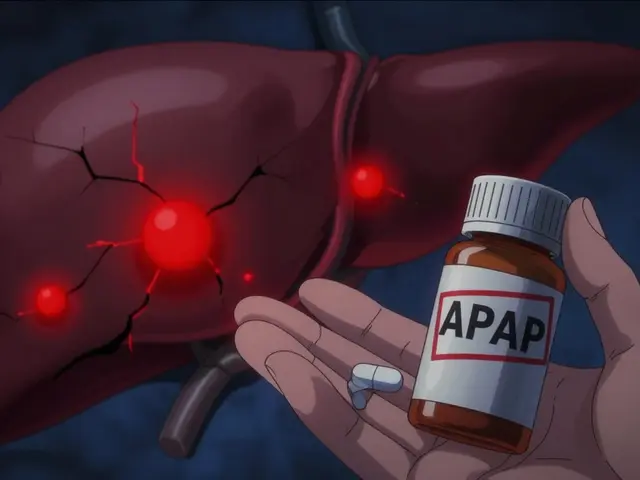
To understand why you need to be careful, you have to look at what happens inside your body. When you take acetaminophen at normal doses, your liver processes it safely. But there is a limit. Once you exceed that limit, the liver’s metabolic pathways get saturated. Instead of breaking the drug down cleanly, it produces a toxic byproduct called N-acetyl-p-benzoquinone imine (NAPQI).
Your liver usually neutralizes NAPQI using glutathione, an antioxidant reserve. But if you take too much acetaminophen, you deplete your glutathione stores. Once those reserves are gone, NAPQI attacks your liver cells directly, causing necrosis or cell death. This is not a gradual process; it can happen fast. According to the National Institute of Diabetes and Digestive and Kidney Diseases, acetaminophen-related acute liver failure accounts for nearly 46% of all acute liver failure cases in the U.S. That makes it the single biggest cause of sudden liver collapse in the country.
The scary part? You might feel fine while the damage is happening. Symptoms often don’t show up until 24 hours later, giving you a false sense of security. By the time you feel sick, significant liver injury may already be underway.
Know Your Limits: Safe Dosage Guidelines
Most people think they know the safe dose, but many get it wrong. The maximum recommended daily dose for adults is precisely 4 grams (4,000 mg). That equals eight 500mg tablets. For children, the limit is stricter: 90 mg per kilogram of body weight per day.
However, experts often recommend staying lower to build in a safety buffer. Many doctors suggest capping your intake at 3,000 mg per day unless specifically told otherwise. Why? Because individual tolerance varies based on age, weight, alcohol consumption, and existing health conditions.
Here is a quick breakdown of safe vs. dangerous levels:
- Safe Therapeutic Dose: Up to 4,000 mg in 24 hours for healthy adults.
- Caution Zone: 4,000-7,500 mg. Risk increases significantly here, especially with alcohol use.
- Toxic Threshold (Acute): More than 6,000 mg or 150 mg/kg in a single ingestion or over 24-48 hours.
- Toxic Threshold (Chronic): More than 4,000 mg or 100 mg/kg for longer than 48 hours.
Note that "extra strength" formulations contain 500 mg per tablet, while regular strength contains 325 mg. Mixing them without calculating the total milligrams is a common mistake. If you take six extra-strength tablets (3,000 mg) and then add two regular-strength tablets (650 mg), you’ve hit 3,650 mg. Add even one more regular tablet, and you’re over the 4g limit.
The Four Stages of Toxicity: What to Watch For
If you do accidentally take too much, knowing the timeline can save your life. Acetaminophen toxicity unfolds in four distinct stages. Each stage has specific symptoms and lab values that doctors look for.
| Stage | Timeframe | Key Symptoms & Signs | Critical Action |
|---|---|---|---|
| Stage I | 0-24 hours | Nausea (78% of cases), vomiting (65%), sweating, pale skin, malaise. Lab values often still normal. | Call Poison Control immediately if overdose is suspected. |
| Stage II | 24-72 hours | Pain in upper right abdomen. Liver enzymes (AST/ALT) begin rising sharply. Patient may feel temporarily better. | Monitor liver function tests closely. |
| Stage III | 72-96 hours | Peak toxicity. Jaundice (yellowing skin/eyes), confusion, high ammonia levels, kidney failure risk. Enzymes can exceed 10,000 IU/L. | Intensive care required. Antidote administration critical. |
| Stage IV | After 5 days | Either full recovery or multi-organ failure. Mortality rate is 2-4% if treated, but 30-40% if untreated. | Long-term monitoring for liver regeneration. |
Notice Stage II? Patients often report feeling better during this phase because the initial nausea fades. This is the most dangerous window. People assume they are recovering when their liver is actually taking heavy damage. Never wait for symptoms to disappear before seeking help if you suspect an overdose.
Common Mistakes That Lead to Accidental Overdose
You don’t have to be careless to end up in the hospital. Most overdoses are unintentional. They happen because we don’t realize how many different products contain acetaminophen.
Consider this scenario: You have a bad cold. You take NyQuil at night for sleep and congestion. In the morning, you have a headache, so you take Tylenol. At work, you feel achy, so you take a combination pain reliever. You haven’t taken a single "too many" pill of any one brand, but your total acetaminophen load might have exceeded 4 grams. Studies show that 25% of accidental overdoses occur exactly like this-when patients take multiple acetaminophen-containing products simultaneously without recognizing the cumulative dose.
Other frequent errors include:
- Ignoring Prescription Opioids: Medications like Percocet and Vicodin contain acetaminophen. If you take these plus OTC Tylenol, you double-count the dose.
- Alcohol Consumption: Drinking as little as three alcoholic drinks daily while taking acetaminophen increases liver stress. Alcohol induces enzymes that create more toxic metabolites.
- Kitchen Spoon Errors: For liquid formulations, using a tablespoon instead of a teaspoon can lead to massive dosing errors. The CDC notes that measurement errors account for 12% of pediatric overdoses.
- Pre-existing Liver Conditions: If you have cirrhosis or hepatitis, your safe limit drops to 2,000 mg per day. Always check with your doctor.
A user on a medical forum shared a stark example: "I took extra Tylenol on top of my cold medicine not realizing both contained acetaminophen-I ended up in the ER with ALT levels over 3,000." That is nearly ten times the normal level. It happened because he didn’t read the label carefully enough.
Prevention Strategies: A Practical Checklist
Preventing acetaminophen overdose isn’t about memorizing complex chemistry. It’s about building simple habits. Here is a step-by-step guide to keeping yourself safe.
- Read Every Label: Look for "acetaminophen" or its abbreviation "APAP" on the Drug Facts panel. It will always be listed under "Active Ingredients." If it’s there, count it toward your daily total.
- Keep a Daily Log: If you are managing chronic pain or a severe illness, write down every dose you take. Include the time and the milligram amount. This prevents memory lapses.
- Limit Alcohol: Avoid drinking alcohol while taking acetaminophen. If you must drink, keep it to a minimum and never combine it with high-dose pain relief.
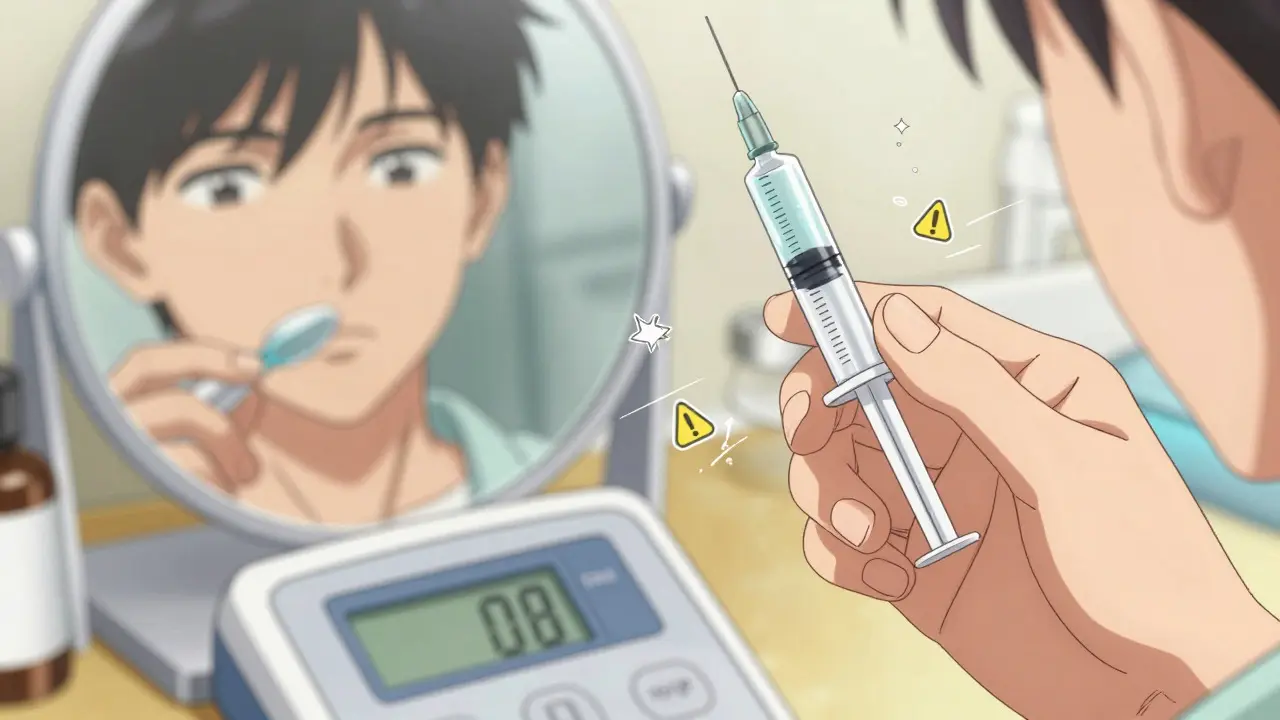
- Use Proper Measuring Tools: Never use kitchen spoons for liquid medicine. Use the dosing cup or syringe that came with the bottle. Kitchen spoons vary in size and can lead to 41% measurement errors.
- Check with Your Pharmacist: Before starting a new medication, ask your pharmacist if it interacts with your current pain relievers. They can calculate your total daily exposure.
For parents, the rules are stricter. The American Academy of Pediatrics specifies dosing based on weight: 10-15 mg per kg per dose, no more than five doses in 24 hours. Always use the child-specific formulation, not adult tablets crushed up. Adult "extra strength" pills are too large and potent for small children.

What to Do If You Think You’ve Taken Too Much
If you suspect an overdose, speed is everything. The window for effective treatment is narrow. Dr. William Lee, a leading hepatologist, notes that optimal outcomes require intervention within 8 hours of ingestion.
Do not wait for symptoms. Call the Poison Control Center immediately. In the U.S., the number is 1-800-222-1222. It is free, confidential, and available 24/7. Tell them exactly what you took, how much, and when. They will tell you whether you need to go to the ER.
In the hospital, the standard treatment is N-acetylcysteine (NAC). This antidote replenishes your glutathione stores and stops the liver damage. Data shows that 90% of patients treated with NAC within 8 hours make a full recovery without lasting liver damage. If treatment starts after 16 hours, the recovery rate drops to just 60%. That difference matters.
Recent guidelines from America's Poison Centers emphasize using the Rumack-Matthew nomogram to assess risk accurately. This tool helps doctors determine if blood levels are toxic based on the time since ingestion. Intravenous NAC is now the first-line treatment in most centers, offering faster absorption than oral forms.
Future of Safety: Better Labels and Tech
Regulators are working to close the gap between consumer knowledge and product complexity. The FDA has proposed requiring "acetaminophen" to appear in larger, bolded text on all product labels. Currently, the warning is often buried in small print, making it easy to miss. A 2022 survey found that only 38% of patients could correctly identify acetaminophen as the ingredient requiring the liver warning.
Technology is also stepping in. New smartphone apps are being developed to scan medication barcodes and calculate your cumulative acetaminophen exposure in real-time. Imagine snapping a photo of your pill bottles and having the app alert you if you’re approaching the 4g limit. While not yet universal, these tools represent a significant shift toward proactive safety.
Meanwhile, research continues into alternative antidotes. Fomepizole, currently used for ethylene glycol poisoning, is showing promise in clinical trials as an additional option when NAC is contraindicated. These developments aim to provide more safety nets for patients who present late.
Frequently Asked Questions
Is acetaminophen safer than ibuprofen?
It depends on your health profile. Acetaminophen is safer for the stomach and kidneys, making it ideal for people with ulcers or renal issues. However, it carries higher risks for the liver compared to ibuprofen. If you have healthy livers and no stomach issues, both are generally safe at recommended doses. If you have liver disease, stick to acetaminophen at reduced doses (≤ 2 g/day) as advised by your doctor.
Can I take acetaminophen every day?
Yes, but only if you stay within the daily limit of 4,000 mg. Chronic use at therapeutic doses is considered safe for most adults. However, long-term users should monitor their liver function periodically, especially if they consume alcohol regularly or have pre-existing liver conditions. Consistency in tracking your total daily intake is key to preventing chronic toxicity.
What is the difference between Tylenol and acetaminophen?
There is no chemical difference. Acetaminophen is the generic name of the drug, while Tylenol is the most famous brand name. Other brands like Panadol, Feverall, and store-brand generics also contain acetaminophen. When checking labels, look for the word "acetaminophen" rather than relying on brand names to avoid duplicate dosing.
How quickly does acetaminophen overdose show symptoms?
Symptoms typically appear within 24 hours, but they can be delayed. Early signs include nausea, vomiting, and fatigue. These symptoms are often mild and non-specific, which leads many people to ignore them. By the time severe abdominal pain or jaundice appears (48-96 hours), significant liver damage may have occurred. Therefore, action should be taken based on dosage calculation, not symptom presence.
Does alcohol increase the risk of acetaminophen overdose?
Yes, significantly. Regular alcohol consumption induces liver enzymes that convert more acetaminophen into the toxic metabolite NAPQI. Even moderate drinking (three or more drinks daily) can lower the threshold for liver injury. If you drink alcohol, consider reducing your acetaminophen dose or switching to an alternative pain reliever like ibuprofen, provided your stomach tolerates it well.