
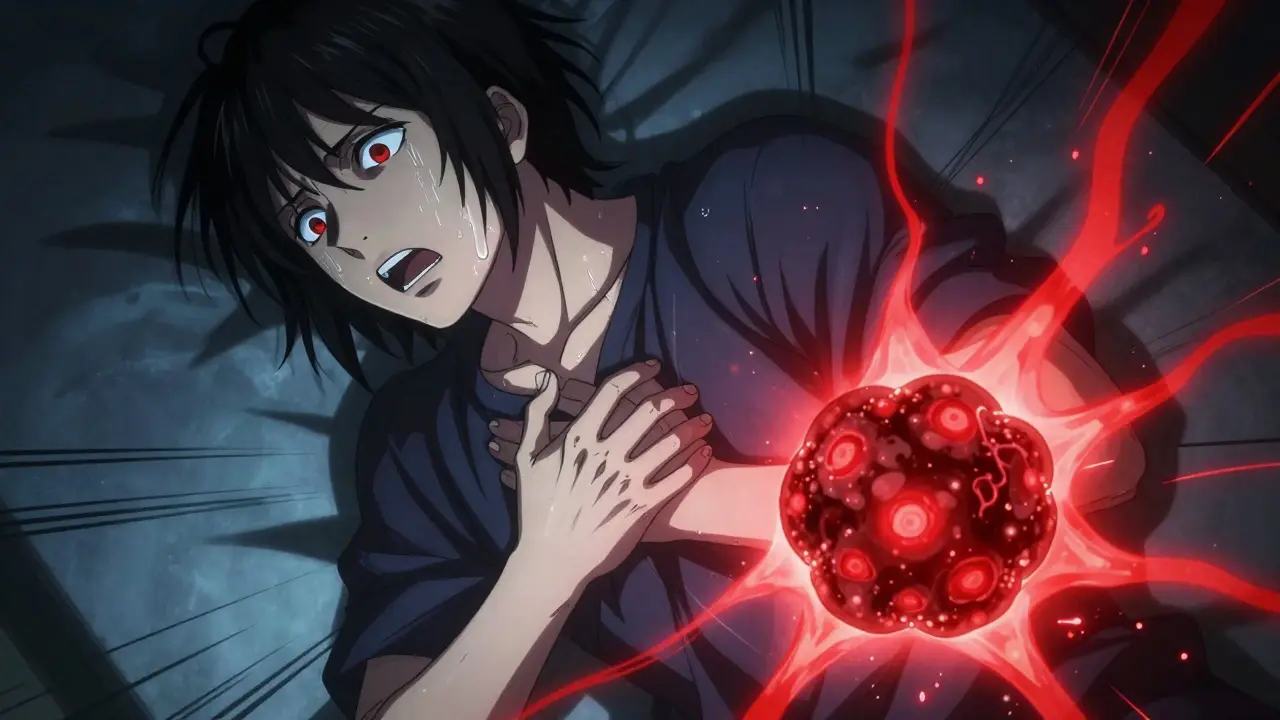
A sudden, crushing headache. Sweating so bad your shirt sticks to your back. Heart pounding like you just ran a marathon-even though you’re sitting still. If this happens to you out of nowhere, and it keeps happening, it’s not just stress. It could be a rare adrenal tumor called pheochromocytoma.
Most people with high blood pressure have it all the time. Their numbers are just consistently high. But with pheochromocytoma, your blood pressure spikes in wild, unpredictable bursts-sometimes hitting 200/120 or higher. These episodes don’t come from stress, caffeine, or bad habits. They come from a tiny, hidden tumor on one of your adrenal glands that’s dumping adrenaline into your bloodstream like a broken faucet.
It’s rare. Less than 1 in 100 people with high blood pressure have it. But here’s the thing: if you have this tumor and it’s not found, it can kill you. A single uncontrolled surge during surgery, childbirth, or even a routine MRI can trigger a heart attack or stroke. The good news? Once you know it’s there, surgery can fix it. Completely. For most people, their blood pressure goes back to normal, and they never need meds again.
What Exactly Is a Pheochromocytoma?
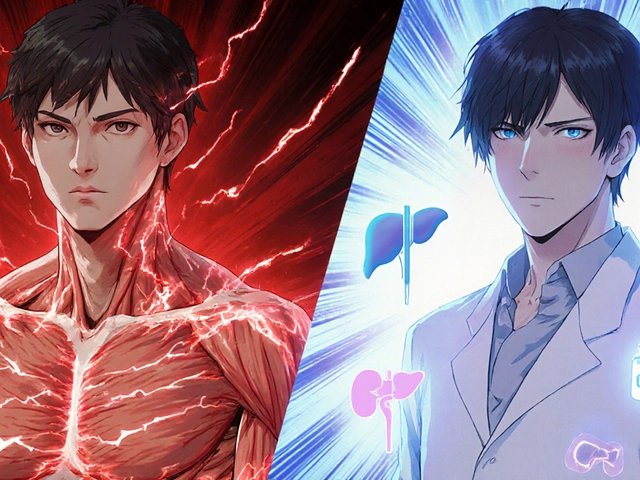
A pheochromocytoma is a tumor that grows in the middle part of the adrenal gland-the part that makes adrenaline and noradrenaline. These are the hormones your body uses to jump into action when you’re scared or in danger. Think: running from a bear, dodging a car. That rush you feel? That’s these hormones.
In someone with this tumor, the cells act like they’re always in danger. They pump out way too much adrenaline, even when you’re just watching TV or sleeping. The result? Episodes of extreme high blood pressure, pounding heart, sweating, and anxiety that feel like panic attacks but aren’t.
About 90% of these tumors are benign. That means they don’t spread. But 1 in 10 can turn cancerous. And even the non-cancerous ones are dangerous because of what they do to your body. The tumor itself is usually small-less than 2 inches-but its effects are huge.
The Classic Signs: It’s Not Just High Blood Pressure
Most doctors think of high blood pressure as a slow, steady problem. Pheochromocytoma doesn’t work that way. It’s episodic. You get spells. And those spells have a pattern.
- Severe headaches-85% of people get them. Often described as the worst headache of their life.
- Profuse sweating-drenching, cold, and sudden. Happens even in cool rooms.
- Heart palpitations-like your heart is trying to jump out of your chest.
These three together? That’s the classic sign. But you might also get:
- Pale skin
- Abdominal pain or nausea
- Weight loss without trying
- Feelings of doom or panic
Triggers? They’re everywhere. Exercise. Stress. Lifting something heavy. Even going to the bathroom (if the tumor is in the bladder wall). Getting an MRI or getting anesthetized for surgery can set it off. That’s why doctors who don’t know about this condition often misdiagnose it as anxiety-or worse, ignore it.
Why Most People Are Misdiagnosed for Years
On average, it takes 3.2 years to get a correct diagnosis. Why? Because most doctors see one case in their entire career. Primary care physicians might never see one.
People end up seeing therapists for panic disorder. Cardiologists for arrhythmias. Neurologists for migraines. They get meds for anxiety, beta-blockers for heart racing, or migraine pills. Nothing works because the root cause isn’t being treated.
One patient I read about had 7 different doctors over 4 years. Every time her blood pressure spiked to 240/130, they called it a panic attack. She was told to breathe deeply. She finally got diagnosed when she collapsed in the ER and a nurse noticed her urine was dark-like coffee. That’s a clue. Too much adrenaline breaks down into metanephrines, which show up in urine.
How It’s Diagnosed: The Blood and Urine Test That Saves Lives
The gold standard test? 24-hour urinary fractionated metanephrines. Or a plasma-free metanephrine test. These measure the breakdown products of adrenaline and noradrenaline. If your levels are more than 3 times above normal? You almost certainly have a tumor.
These tests are 96-99% accurate at finding it. That’s better than most cancer screenings. But here’s the catch: the sample has to be handled right. It needs to be kept cold and acidified. If it’s not, the results can be wrong.
Doctors don’t order these tests unless they’re suspicious. That’s why you need to speak up. If you’ve had unexplained spells of high BP with sweating and heart racing, ask for this test. Don’t wait for them to think of it.
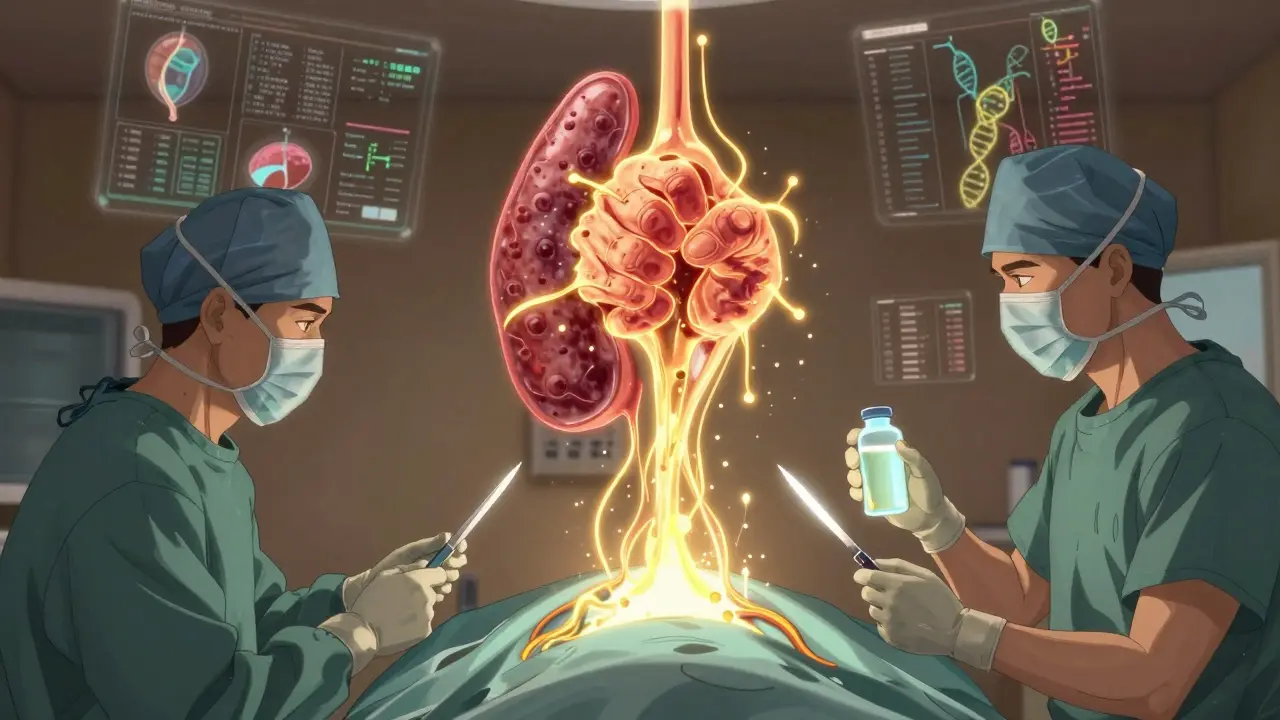
Imaging: Finding the Tumor
Once the blood or urine test is positive, you need imaging. The old rule was the “10-10-10 rule”: 10% are in both adrenal glands, 10% are outside the adrenal gland (called paragangliomas), and 10% are cancerous.
But new data shows that’s outdated. About 35-40% of cases are inherited. If you have a mutation in genes like SDHB, SDHD, VHL, or RET, you’re more likely to have multiple tumors or cancer. That’s why genetic testing is now recommended for everyone diagnosed with pheochromocytoma-even if no one in your family has it.
CT or MRI scans find the tumor in most cases. But the newest tool is 68Ga-DOTATATE PET/CT. It’s more sensitive than old scans, especially for small or hidden tumors. It’s becoming the go-to for tricky cases.
Preparation for Surgery: Why You Can’t Just Go Under the Knife
This is critical. You can’t just schedule surgery and walk in. If you do, you could die.
The tumor is always pumping out adrenaline. Your blood vessels are tightly squeezed shut. Your body is used to this. If you suddenly remove the tumor without preparing, your body has no way to adjust. Blood pressure crashes. You go into shock.
So doctors do something counterintuitive: they block the adrenaline effect first.
For 7 to 14 days before surgery, you take phenoxybenzamine. It blocks adrenaline receptors. This lets your blood vessels relax. Your blood pressure drops. Then, you start drinking lots of fluids and eating a high-sodium diet. Why? Because your body has been holding onto water, and you need to expand your blood volume. Without this, your blood pressure can crash after surgery.
This prep phase is non-negotiable. Surgeons won’t operate without it. Studies show that skipping this increases the risk of death during surgery by 30-50%.
The Surgery: What Happens
Most of the time, the tumor is removed using laparoscopic adrenalectomy. That means 3-4 small cuts, a camera, and tiny tools. It’s minimally invasive. Most people go home in 1-2 days.
95% of these surgeries go well. Complications are rare when done by experienced teams. But about 5-8% of cases need to be switched to open surgery. Why? If the tumor is stuck to big blood vessels or bleeds too much, they need to open you up to be safe.
If you have tumors on both adrenal glands (about 10% of cases), both are removed. That means you’ll need to take steroid replacement pills for the rest of your life-hydrocortisone and fludrocortisone. Your body can’t make cortisol or aldosterone anymore.
What Happens After Surgery
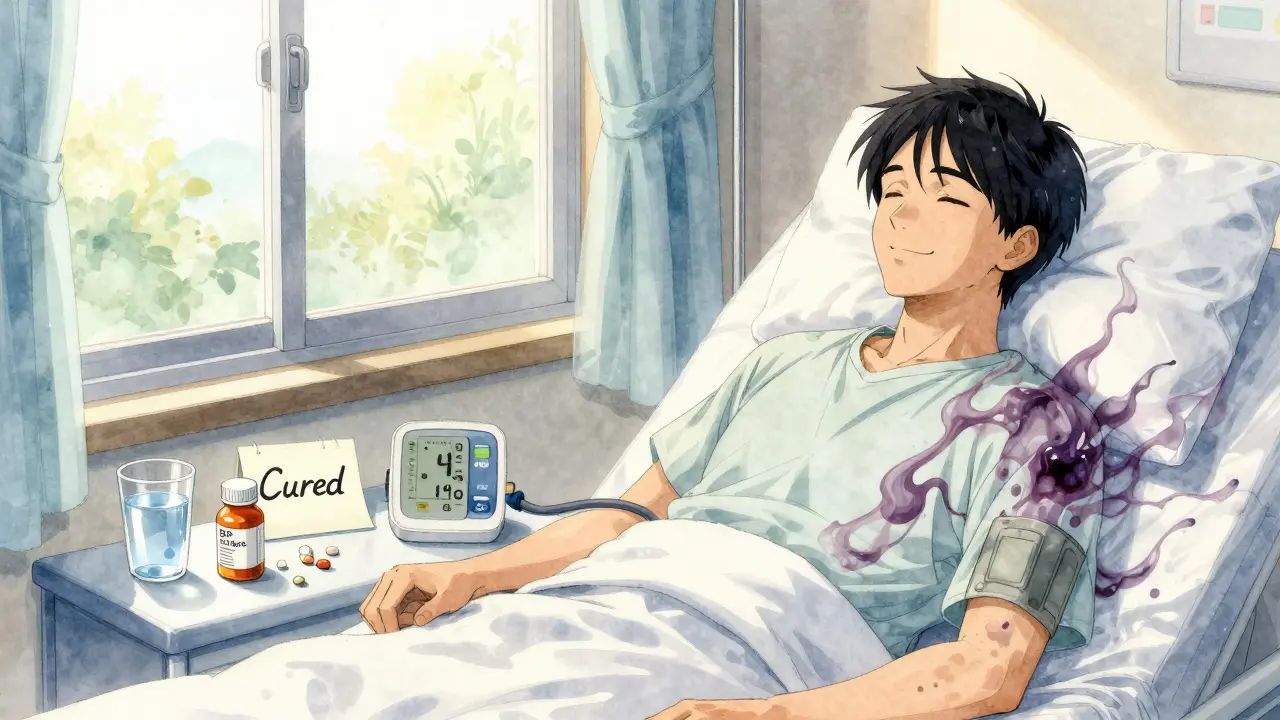
For 85-90% of people, blood pressure returns to normal. Many stop all their blood pressure meds within weeks. One Reddit user wrote: “My BP normalized in 48 hours. Off all meds after 3 weeks.”
But recovery isn’t always smooth. Some people feel exhausted for months. That’s normal. Your body spent years in overdrive. Now it’s recalibrating.
For those with cancerous tumors or inherited syndromes, follow-up is lifelong. You need annual scans and blood tests. SDHB mutation carriers have up to a 50% lifetime risk of cancer. They need whole-body MRIs every year.
What Happens If You Don’t Treat It
Left alone, pheochromocytoma can kill you. The adrenaline surges can cause:
- Heart attack
- Stroke
- Heart failure
- Multi-organ failure
Even if you’re not having symptoms, the tumor is still active. It can rupture. It can grow. It can spread.
Survival rates tell the story. For benign, single tumors removed surgically? 95% alive at 10 years. For metastatic cancer? Only 50% alive at 5 years. That’s why early detection is everything.
What’s New in Treatment
For the 10% with cancer that spreads, things are improving. A new treatment called 177Lu-DOTATATE (a type of targeted radiation) is helping. In trials, it shrank tumors in 65% of patients.
For people with inherited syndromes like VHL, a new drug called Belzutifan is showing promise. It blocks a protein that helps tumors grow. It’s not a cure, but it can shrink tumors and delay surgery.
Future hope? Blood tests that detect tumor DNA before the tumor even shows up on scans. Liquid biopsies. That could change everything.
Final Thought: If You Suspect It, Push for the Test
Pheochromocytoma is rare. But it’s one of the few tumors that can be cured with surgery. If you’ve had unexplained spikes in blood pressure, sweating, heart racing, and headaches-don’t accept ‘it’s anxiety.’ Ask for a metanephrine test. Bring this article. Print the symptoms list.
You might be the 1 in 1,000 person with this tumor. But if you are, finding it could save your life. And once it’s gone, you might never need another blood pressure pill again.
Geoff Forbes
February 16, 2026 AT 22:54Look, I’ve read the entire NIH whitepaper on pheochromocytoma, and let me tell you-most primary care docs are just glorified triage clerks. They don’t even know metanephrines are the gold standard. I had a neighbor misdiagnosed for 6 years as ‘anxiety’-turns out her tumor was the size of a lime. She’s now off all meds. The real tragedy? The system rewards ignorance. If you’re not a specialist, you’re basically a glorified receptionist with a stethoscope.
Jonathan Ruth
February 17, 2026 AT 12:50Anyone who says this is rare is lying. I work in ER in Texas and we see 2-3 cases a year. Most patients come in after their BP hits 260/140 and they’re screaming about ‘the worst headache of their life.’ Then they blame caffeine or stress. No. It’s a ticking time bomb in your adrenal gland. And yeah I know the test requires cold handling-most labs screw it up because they’re too lazy to follow protocol. Stop being lazy and test for it. Period.
Philip Blankenship
February 18, 2026 AT 04:12Man, I’ve been following this stuff since my uncle had it back in ‘09. I remember how he’d just sit there sweating like he’d just run a marathon in a sauna, and his wife thought he was having a panic attack. Then one day he passed out in the grocery store and they found the tumor. Surgery was a breeze-laparoscopic, went home next day. Now he’s out hiking, biking, no meds. It’s wild how one tiny thing can throw your whole body into chaos. And the prep before surgery? That’s the real unsung hero. Phenoxybenzamine and salt water? Sounds weird but it’s genius. Your body’s been in survival mode for years, and you gotta gently reset it. Kinda like rebooting a frozen computer. Just… with more sweat and more IV fluids.
Linda Franchock
February 19, 2026 AT 23:13So you’re telling me that people who’ve been told they have anxiety for years might actually have a tumor? Wow. I mean… that’s both terrifying and kind of beautiful. Like, imagine being told you’re ‘overreacting’ when your body’s literally screaming for help. I’m glad this article exists. But honestly? It’s not enough. We need better awareness. Like, billboards. TV ads. A TikTok trend. #PheoSymptoms. Because if your doctor doesn’t know about it, and you don’t know to ask, you’re basically playing Russian roulette with your adrenal glands.
Prateek Nalwaya
February 21, 2026 AT 15:46Interesting how evolution gave us this adrenaline surge mechanism to survive bears, and now it’s a silent assassin hiding in our bodies. It’s poetic in a way-our own survival system turned against us. I wonder if ancient humans ever had this? Probably not, because they either died young from it or survived because they were constantly running from lions. Maybe pheochromocytoma is the price we pay for modern comfort. Sitting still. Watching TV. Not moving. And yet our bodies are still wired for the wild. The tumor? It’s just the ghost of our evolutionary past screaming through our veins.
Oliver Calvert
February 22, 2026 AT 10:57Just want to clarify one thing-68Ga-DOTATATE PET/CT isn’t just for tricky cases anymore. It’s becoming first-line for anyone with a positive metanephrine test. The sensitivity for extra-adrenal tumors is off the charts. Also, if you’re getting an MRI and you haven’t been screened, that’s a cardiac arrest waiting to happen. I’ve seen it. One guy coded during his brain scan. No one knew. Don’t be that guy.
Kancharla Pavan
February 23, 2026 AT 03:16You people are too soft. This isn’t some medical mystery-it’s a failure of the entire healthcare system. You wait years because doctors are lazy? Because they don’t want to think? Because they’d rather prescribe Xanax than do a simple urine test? That’s not incompetence. That’s negligence. And now you want to thank the author for ‘raising awareness’? No. You should be demanding systemic change. Mandatory screening for anyone with episodic hypertension. No exceptions. No ‘maybe.’ If you’re not testing for metanephrines, you’re not a doctor-you’re a liability.
PRITAM BIJAPUR
February 24, 2026 AT 13:56Life is a symphony of hidden signals 🌌. That tumor? It’s not evil. It’s just… out of tune. Our bodies are ancient, complex, and deeply wise. They don’t lie. They scream. But we’ve trained ourselves to ignore the screams. We numb them with caffeine, anxiety meds, and hustle culture. And then we wonder why we’re tired. Why we’re anxious. Why we feel like something’s wrong but can’t name it. Pheochromocytoma doesn’t care about your diagnosis. It just wants you to listen. When your heart pounds without cause… it’s not panic. It’s your soul whispering: ‘I’m here. I’m real. Don’t ignore me.’ Surgery doesn’t just remove a tumor. It restores harmony. And sometimes… that’s the most spiritual thing a scalpel can do.
Tony Shuman
February 25, 2026 AT 11:51Yeah right. This is all just Big Pharma propaganda. The real cure is fasting, cold showers, and avoiding EMF radiation. You think a tumor is the problem? Nah. It’s the toxins in your tap water. Or the fluoride. Or the 5G towers. I’ve got a cousin who cured his ‘pheo’ with lemon juice and yoga. Now he’s running marathons. They don’t want you to know this because surgery costs $80K. But if you’re smart, you’ll skip the hospital and start drinking lemon water at 5 AM. That’s real medicine. Not some lab test they’re selling you.