
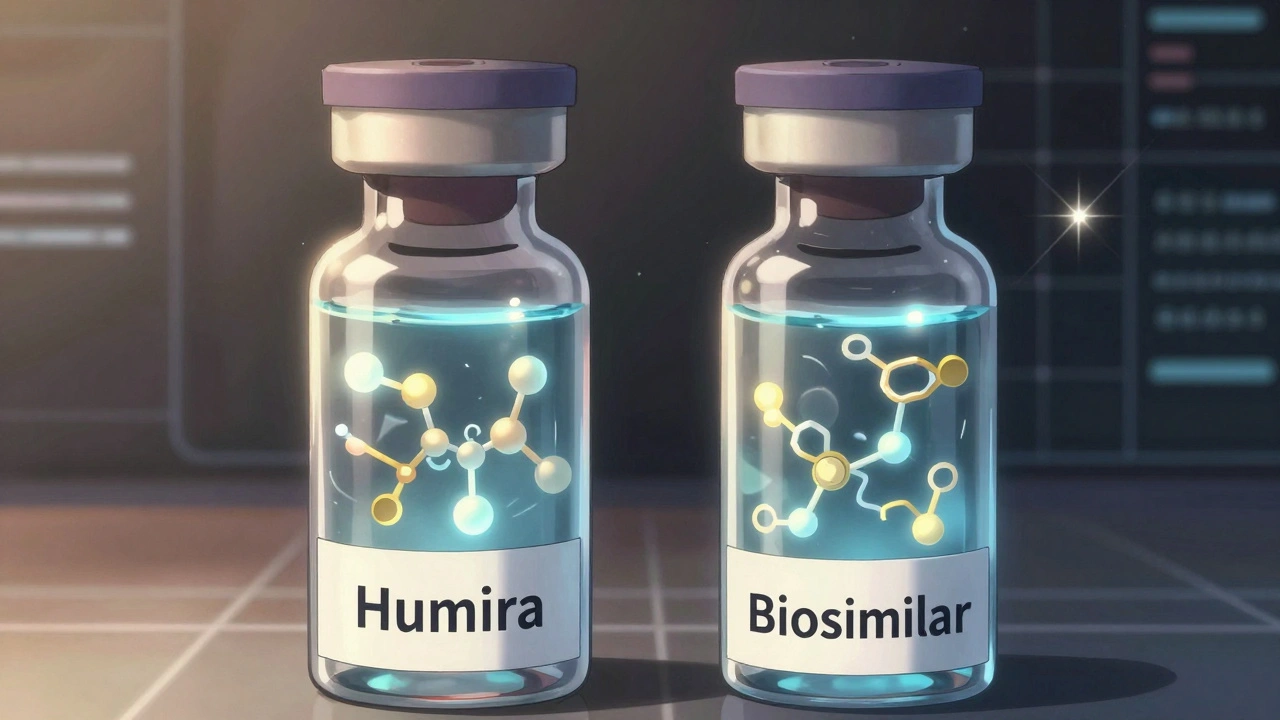
When you take a medication like Humira or Enbrel, you expect it to work the same way every time. But what if the version you get this month isn’t exactly the same as last month’s-even though it’s the same drug name? That’s not a mistake. It’s lot-to-lot variability, and it’s built into the biology of how these medicines are made.
Why Biologics Are Never Identical
Small-molecule drugs like aspirin or metformin are made through chemical reactions in a lab. Every tablet has the same molecules, arranged the same way. That’s why generics can be exact copies. But biologics? They’re made inside living cells-usually yeast or hamster ovary cells-that are engineered to produce a specific protein, like an antibody. These cells aren’t machines. They’re biological systems. And like all living things, they don’t produce perfect copies every time. Each batch, or lot, of a biologic contains millions of slightly different versions of the same protein. Some molecules might have an extra sugar attached. Others might have a different amino acid folded in a slightly different shape. These aren’t flaws. They’re natural byproducts of biological manufacturing. The U.S. Food and Drug Administration (FDA) calls this inherent variation. And it’s not just in biosimilars-it’s in the original brand-name biologics too.Biosimilars Aren’t Generics
This is where people get confused. Biosimilars are often called “generic biologics,” but that’s misleading. Generics are chemically identical to their brand-name counterparts. Biosimilars are highly similar-but not identical. The FDA makes this clear: “Biosimilars Are Not Generics.” Why does it matter? Because the approval path is totally different. Generics go through the ANDA process, which only requires proving they’re absorbed the same way in the body. Biosimilars go through the 351(k) pathway, which demands hundreds of analytical tests, functional studies, and sometimes clinical trials to prove that any differences in the protein structure don’t affect safety or effectiveness. For a biosimilar to be approved, the manufacturer must show that its lot-to-lot variation matches the reference product’s variation. If the original Humira has a certain range of glycosylation patterns across its lots, the biosimilar must fall within that same range. It’s not about being identical-it’s about being predictably similar.How Regulators Handle the Variation
The FDA doesn’t expect perfection. They expect control. Manufacturers must prove they have a solid strategy to keep variation within acceptable limits. This includes monitoring things like:- Glycosylation patterns (sugar attachments on proteins)
- Charge variants (how molecules carry electrical charge)
- Fragmentation and aggregation (when proteins break apart or clump)

What This Means for Labs and Testing
Lot-to-lot variability doesn’t just affect patients taking biologics. It also hits lab professionals who use these same proteins as reagents in diagnostic tests. Imagine a lab uses a monoclonal antibody to measure cholesterol levels. If they switch to a new lot of that antibody, the results might shift slightly-even if the patient’s actual cholesterol hasn’t changed. A 2022 survey found that 78% of lab directors consider reagent lot changes a “significant challenge.” Why? Because quality control samples don’t always behave like real patient samples. A new reagent lot might look fine on QC controls but still give different results on actual blood tests. That’s called poor commutability. One documented case showed a change in HbA1c reagent lot caused patient results to jump by 0.5%-enough to push someone from “pre-diabetic” to “diabetic” on paper, even if their health hadn’t changed. To prevent this, labs use statistical methods like moving averages and require at least 20 patient samples with duplicate testing to verify a new reagent lot. It’s time-consuming. In smaller labs, this process can eat up 15-20% of technical staff time each quarter.Why This Variation Isn’t a Problem-It’s a Feature
It’s tempting to see variability as a flaw. But without it, we wouldn’t have these medicines at all. Biologics are too complex to make with traditional chemistry. The ability to tweak protein structures through biological systems is what lets us treat autoimmune diseases, cancer, and rare genetic disorders. The variation isn’t random chaos-it’s controlled, measurable, and managed. The real risk isn’t the variation itself. It’s assuming it doesn’t exist. Clinicians who don’t understand this might blame a patient’s worsening symptoms on the biosimilar, when the real issue could be something else entirely. On the flip side, manufacturers who ignore variability risk inconsistent performance-and regulatory rejection.The Big Picture: Growth, Access, and Future Challenges
The global biosimilars market was worth $10.6 billion in 2023 and is projected to hit $35.8 billion by 2028. That’s a 27.5% annual growth rate. In the U.S., biosimilars now make up about 32% of all biologic prescriptions by volume. More interchangeable biosimilars are coming. By 2026, experts predict 70% of new applications will include interchangeability data-up from 45% in 2023. That means more patients will get cheaper versions of drugs like Humira, Enbrel, and Remicade without needing a new prescription. But as biologics get more complex-think antibody-drug conjugates or cell therapies-the challenge of controlling variability grows. These next-gen drugs have even more moving parts. The tools we use today, like mass spectrometry and AI-driven analytics, will need to get even smarter. For now, the system works because regulators, manufacturers, and labs all accept one truth: perfect consistency isn’t possible-or even necessary. What matters is that the variation stays within bounds, and that we can prove it doesn’t change how the medicine behaves in the body.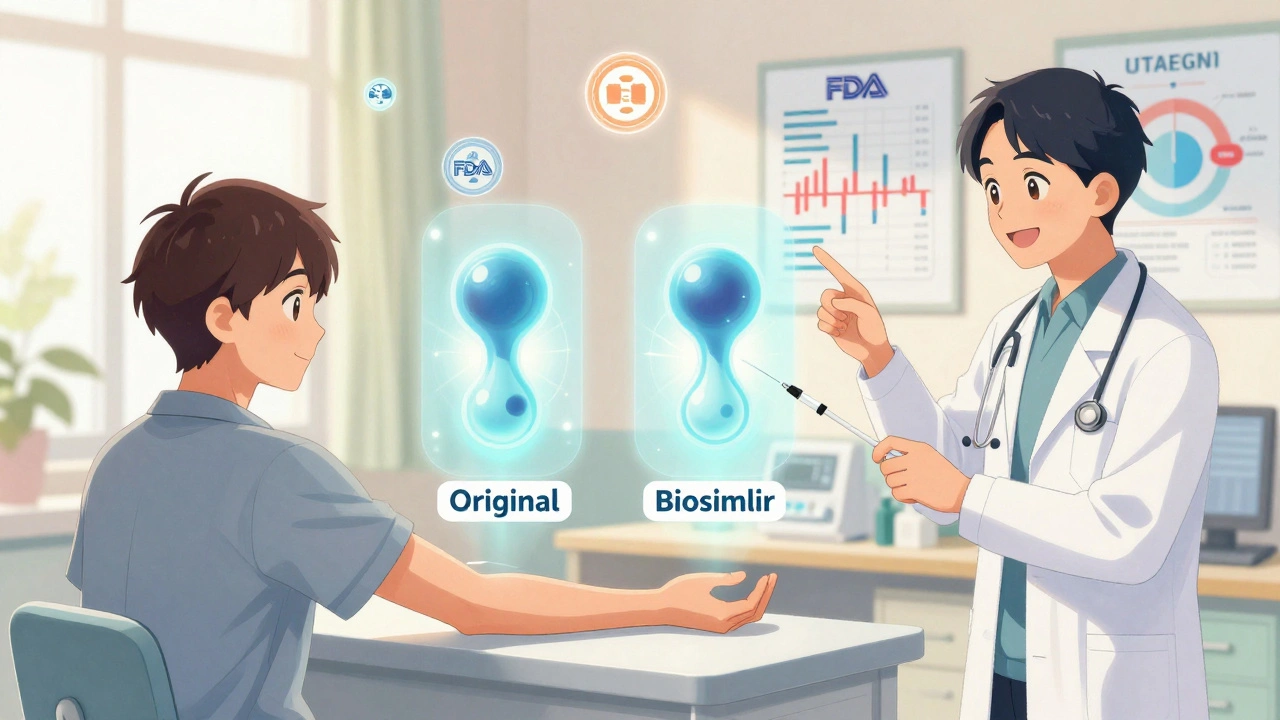
What You Should Know as a Patient or Provider
If you’re a patient taking a biosimilar:- Don’t panic if your prescription changes. The new product has been tested to behave the same way.
- Report any unusual side effects-but don’t assume they’re caused by the switch. Many factors can influence how you feel.
- Ask your doctor if your drug is interchangeable. That means you can be switched without a new prescription.
- Understand that lot-to-lot variation is normal, not a red flag.
- Don’t assume a change in lab results is due to a biosimilar switch-check for other causes first.
- Stay informed about which biosimilars in your field have interchangeable status. That affects how easily patients can access them.
Frequently Asked Questions
Is lot-to-lot variability the same as contamination or poor quality?
No. Contamination means foreign substances are in the product-like bacteria or foreign chemicals. Lot-to-lot variability refers to natural, expected differences in the protein structure itself, like slight changes in sugar attachments or folding patterns. These are normal and controlled. Regulatory agencies like the FDA define acceptable ranges for these variations. If a product falls outside those ranges, it’s rejected-not because it’s contaminated, but because it’s inconsistent.
Can switching between biosimilar lots affect my treatment?
Switching between different lots of the same biosimilar is safe. Manufacturers design their processes to ensure each lot behaves the same way in the body. Even the original brand-name biologic has lot-to-lot variation. The key is that all lots stay within the same acceptable range. The FDA requires manufacturers to prove this before approval. Patients have been switching between lots of biologics for over 20 years without safety issues.
Why do some biosimilars have the “interchangeable” label and others don’t?
Interchangeable biosimilars have gone through an extra step: a switching study. In this study, patients are repeatedly switched between the biosimilar and the original biologic to prove there’s no increased risk or loss of effectiveness. Only 12 out of 53 U.S.-approved biosimilars have this designation as of May 2024. It’s not about being better-it’s about meeting a higher bar for pharmacy-level substitution without a doctor’s order.
Do biosimilars cost less because they’re lower quality?
No. Biosimilars cost less because they don’t need to repeat the original clinical trials. The reference product already proved safety and effectiveness. Biosimilar makers only need to show their product is highly similar and behaves the same way. The manufacturing process is still complex and expensive-often more so than making a small-molecule generic. The savings come from reduced development costs, not lower quality.
How do labs know when a new reagent lot is safe to use?
Labs use statistical verification. They test at least 20 patient samples with duplicate measurements using both the old and new reagent lots. They compare the results and check if the difference falls within a predefined analytical performance limit. If the variation is too large, they can’t use the new lot. This process can take weeks and requires significant lab resources, especially in smaller facilities.



Paul Dixon
December 10, 2025 AT 14:01Man, I never thought about how wild it is that our meds are basically grown, not manufactured. Like, imagine if your aspirin changed flavor every batch because the yeast had a bad day. Crazy stuff. Glad they’re keeping it in check though.
matthew dendle
December 11, 2025 AT 23:20so biosimilars are just like… generic versions of a magic spell that sometimes works better on tuesdays? lol. who wrote this like a textbook but forgot to add memes?
Monica Evan
December 12, 2025 AT 13:56As a lab tech who’s dealt with reagent lot changes, this hits hard. One time a new antibody lot made our HbA1c values jump 0.6%-patients got falsely flagged as diabetic. We had to pull 3 weeks of data, retest 40 samples, and beg the vendor for old lot numbers. It’s not just theory-it’s real stress. Glad the post called out commutability. Most docs have no clue.
Mia Kingsley
December 12, 2025 AT 20:38so you’re telling me the drug I’m paying 700 bucks for is basically a snowflake that changes its personality every month? and we’re supposed to trust this? i’m out. this whole system is a scam wrapped in a lab coat.
Aidan Stacey
December 13, 2025 AT 16:28Let me tell you something-this isn’t just about science. It’s about trust. When my sister switched from Humira to a biosimilar, she was terrified. We sat down, read this stuff together, and realized: it’s not about perfection. It’s about consistency within a safe range. That’s the real win. Pharma companies? They’re not perfect. But the system? It’s working. And that’s worth celebrating.
Jean Claude de La Ronde
December 13, 2025 AT 22:16so we’ve got a system where we grow drugs like mushrooms in a basement and call it precision medicine? genius. the only thing more unpredictable than the protein folding is the FDA’s approval timeline. also, who the hell named this ‘inherent variation’? sounds like a rejected band name.
Jimmy Kärnfeldt
December 14, 2025 AT 04:54It’s funny how we treat biology like it should behave like a machine. But life doesn’t do perfect copies. Even identical twins have different fingerprints. So why should a protein made by living cells be any different? The real miracle isn’t that these drugs vary-it’s that they work anyway. And we’ve got scientists and regulators who actually care enough to measure and manage it. That’s not broken. That’s brilliant.
Ariel Nichole
December 15, 2025 AT 09:46Just wanted to say thanks for explaining this so clearly. I work in pharmacy and get asked this all the time. Patients think biosimilars are ‘cheap knockoffs.’ This post helps me explain it without sounding like a robot. Also, the lab reagent part? So true. We had to redo QC for three months last year because of one lot change. Ugh.
Katherine Liu-Bevan
December 16, 2025 AT 12:41The most concerning aspect isn’t the variability itself-it’s the lack of public awareness. Clinicians assume patients understand biosimilars are safe, but most don’t. The term ‘interchangeable’ is misleading; it sounds like ‘identical,’ which it isn’t. Clear communication is critical. Patients need to know: it’s not a downgrade, it’s a different path to the same outcome. Transparency builds trust.
Lisa Stringfellow
December 16, 2025 AT 17:28So we’re just supposed to shrug and say ‘eh, it’s biology’ while patients get weird side effects? And you call this progress? I’ve seen people get worse after switching. No one tracks it. No one cares. Just let the insurance company save a buck and call it a day. Real science my ass.