
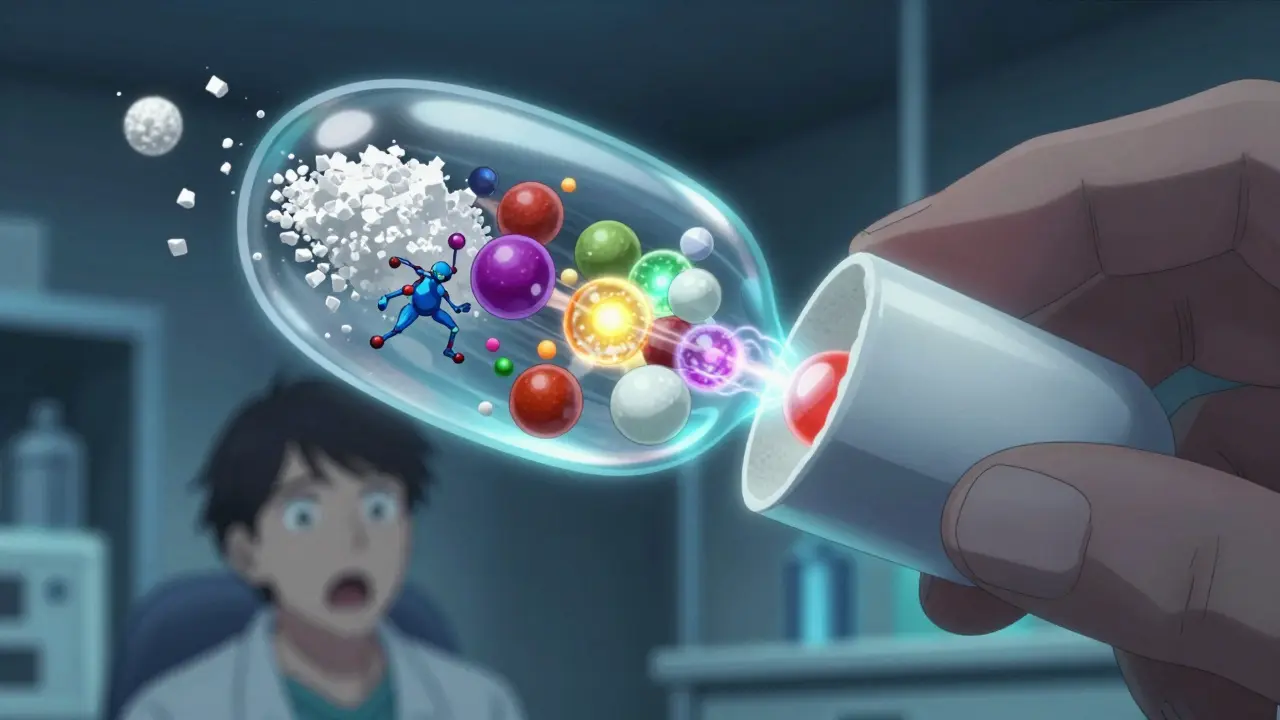
When you take a pill, you think you’re swallowing just the medicine. But that pill is mostly excipients-the so-called "inactive" ingredients that make up 60% to 99% of its weight. Lactose, magnesium stearate, corn starch, tartrazine, propylene glycol-these aren’t the active drugs. They don’t cure your infection or lower your blood pressure. Or do they?
What excipients actually do
Excipients aren’t filler in the lazy sense. They’re carefully chosen to make the drug work. They hold the pill together so it doesn’t crumble. They help it dissolve at the right time in your gut. They mask the bitter taste of the active ingredient. Some even keep the medicine stable for years on the shelf. Without them, most pills would be useless-too bitter to swallow, too unstable to store, or too fast-acting to be safe.The FDA lists around 1,500 approved excipients across all drug forms: oral, injectable, eye drops, ear drops. Each drug typically contains 5 to 15 of them. For example, a common blood pressure pill might use microcrystalline cellulose as a filler, croscarmellose sodium as a disintegrant, magnesium stearate as a lubricant, and titanium dioxide for color. Each has a job. And each has a history of safe use-at least, that’s what we thought.
The myth of "inactive"
The term "inactive" is misleading. A 2020 study in Science tested 314 common excipients against 44 biological targets. Thirty-eight of them showed measurable activity. That’s not a fluke. Aspartame, used in sugar-free medications, blocked the glucagon receptor at concentrations found in the bloodstream after normal dosing. Sodium benzoate, a preservative, inhibited monoamine oxidase B-an enzyme linked to Parkinson’s. Propylene glycol, found in liquid meds and dissolvable tablets, interfered with monoamine oxidase A, which affects mood and stress responses.These aren’t theoretical effects. In real patients, these compounds reach concentrations in the body that overlap with their biological activity levels. That means what we’ve called "inert" might actually be tweaking your body’s chemistry in ways we didn’t expect. Dr. Giovanni Traverso, lead author of the study, put it bluntly: "The blanket classification of excipients as ′inactive′ is scientifically inaccurate for a meaningful subset of these compounds."
When differences matter
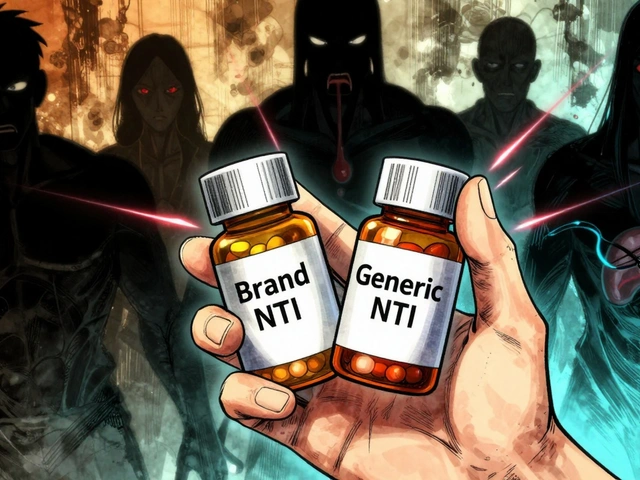
Generic drugs are supposed to be the same as brand-name ones. But when it comes to excipients, they don’t have to be. The FDA allows generic manufacturers to swap out inactive ingredients as long as they can prove safety and efficacy aren’t affected. Sounds fair. But proving that isn’t easy.For injectables, eye drops, and ear drops, the rules are strict: same excipients, same amounts. That’s because these go directly into your bloodstream or sensitive tissues. But for pills? You can change almost anything. That’s why a generic version of a heart medication might use sodium starch glycolate instead of croscarmellose sodium as a disintegrant. One breaks down faster. One slower. Could that change how much drug gets absorbed? Yes.
In 2020, Aurobindo tried to launch a generic version of Entresto. The FDA rejected it. Why? They replaced magnesium stearate with sodium stearyl fumarate. In vitro tests showed a 15% difference in how fast the drug released at gut pH levels. That’s enough to worry regulators. The brand version was designed to release slowly. The generic? It might release too fast-or too slow. Either way, it could hurt patients.
On the flip side, Teva’s generic of Jardiance swapped out one disintegrant for another and passed with flying colors. Bioequivalence studies showed nearly identical absorption rates. The key difference? They tested it. They didn’t assume it was fine.
Who gets hurt?
Most people won’t notice a difference. But some will. People with allergies to lactose, gluten, or tartrazine (a yellow dye) can have reactions-even if the active drug is perfect. A 2023 FDA pilot program flagged aspartame and saccharin in orally disintegrating tablets after reports of rare hypersensitivity reactions. Only 0.002% of users. But when you’re one of them, that’s 100%.Then there’s the hidden risk: drug interactions. If an excipient affects an enzyme like monoamine oxidase, it could change how other medications you take are processed. Imagine taking an antidepressant and a generic blood pressure pill. One contains sodium benzoate. That could interfere with how your body breaks down the antidepressant. No one tracks that. No one tests for it. Not unless you’re in a clinical trial.
Why the system is stuck
The FDA’s Inactive Ingredient Database (IID) is the gold standard. It tells you which excipients are approved, and at what concentrations, for each route of administration. But it doesn’t tell you what those excipients do in your body beyond their technical function. It doesn’t flag biological activity. It doesn’t warn about enzyme interference.Generic drug makers save millions by using common, cheap excipients. But when they use a novel one-or change the concentration-they must prove safety. That costs $1.2 million and 18 months on average. Most don’t want to do it. So they stick with the usual suspects. But as new delivery systems emerge-extended-release pills, chewables, nasal sprays, patches-the old excipients don’t always cut it. That’s why 87% of new drugs now include at least one novel excipient.
The system is catching up. In 2023, the FDA proposed updating the IID with predicted tissue concentrations for each excipient. That’s huge. It means they’ll start modeling where these compounds end up in your body-not just how much you swallow. And they’re building computational tools to predict interactions with biological targets, based on that 2020 Science study.

What’s next?
By 2025, the FDA expects 30% of complex generic applications to need extra excipient safety data-up from 18% in 2022. That’s because more drugs are being designed for specific populations: elderly patients with kidney issues, kids who can’t swallow pills, people with rare allergies.The International Pharmaceutical Excipients Council is pushing for concentration thresholds below which excipients are presumed safe. But critics say that’s flawed. Your body isn’t a lab rat. A dose that’s safe for a 70kg adult might be toxic for a 40kg child or someone with liver disease. One-size-fits-all doesn’t work in medicine.
Meanwhile, the pharmaceutical industry is spending billions to find better excipients-ones that are more biocompatible, less reactive, and easier to track. The global market for excipients is projected to hit $11.3 billion by 2028. That’s not just about cost. It’s about control. If you can design an excipient that doesn’t interfere with biology, you don’t just make a better pill. You make a safer one.
What you can do
You can’t test your meds for excipient interactions. But you can be informed. If you’ve had unexplained reactions to a medication-rash, nausea, dizziness, mood changes-ask your pharmacist: "What’s in this pill besides the active ingredient?" Check the label. Look up the excipients in the FDA’s IID. If you’re on multiple medications, talk to your doctor about possible interactions-not just between drugs, but between drugs and their fillers.And if you have a known allergy-lactose, gluten, dyes-make sure your prescriptions are flagged. Generic switches can slip through. A pill that says "same active ingredient" might still contain something you’re sensitive to.
The truth is, we’ve treated excipients like harmless bystanders. But biology doesn’t care what we call them. If a molecule can bind to a receptor, it will. And if it does, it’s not inactive. It’s just unmonitored.
Are excipients really safe if they’re labeled "inactive"?
Not always. While most excipients have decades of safe use at approved doses, research shows some-like aspartame, sodium benzoate, and propylene glycol-can interact with biological targets at concentrations found in the body after normal dosing. The term "inactive" is a regulatory label, not a biological one. For most people, they’re harmless. But for those with sensitivities or on multiple medications, they can contribute to unexpected reactions.
Can generic drugs have different excipients than brand-name versions?
Yes. For oral tablets and capsules, the FDA allows generic manufacturers to use different excipients as long as they prove the drug works the same way. This is common. But for injectables, eye drops, and ear drops, excipients must match the brand exactly. The difference matters because excipients can affect how quickly the drug dissolves, which impacts absorption.
Why do some people react to generics but not brand-name drugs?
It’s often due to excipient differences. A person allergic to lactose might tolerate a brand-name pill that uses starch but react to a generic that uses lactose as a filler. Others may experience subtle changes in drug absorption due to different disintegrants or lubricants, leading to reduced effectiveness or side effects. These reactions are rare but documented, especially in patients with complex health conditions.
How do regulators decide if an excipient is safe?
The FDA relies on three main paths: prior safe use (listed in the Inactive Ingredient Database), toxicology studies, or an excipient bridging argument supported by pharmacokinetic data. For novel excipients or concentration changes, companies must provide evidence that the change doesn’t alter safety or efficacy. But the system doesn’t yet screen excipients for biological activity beyond traditional toxicity tests.
Is there a list I can check for excipients in my medication?
Yes. The FDA’s Inactive Ingredient Database (IID) lists all approved excipients by route and concentration limits. You can also find the full list of ingredients on the drug’s package insert or by asking your pharmacist. The FDA’s website has a public search tool for the IID. If you’re concerned about a specific ingredient, look it up there.
What this means for the future
The pharmaceutical world is slowly waking up. Excipients aren’t just fillers. They’re part of the medicine. And as drug delivery gets more advanced-think smart pills that release in specific parts of the gut, or patches that deliver drugs through the skin-the role of excipients will only grow. The next big leap won’t be a new active ingredient. It’ll be a new, safer excipient.For now, the system works for most people. But if you’ve ever felt like a medication didn’t work quite right-despite taking it exactly as prescribed-don’t assume it’s just you. It might be the filler.

Jake Moore
January 18, 2026 AT 06:49Let’s be real-excipients aren’t just ‘fillers.’ They’re the unsung heroes (or villains) of pharmaceutical science. I’ve seen patients switch generics and suddenly feel like crap, and no one checks the excipient list. It’s like blaming the driver when the car’s fuel line is clogged with cheap additives. The FDA’s database is a start, but it’s decades behind the science. We need real-time pharmacokinetic mapping for every excipient, not just ‘approved since 1992’ labels.
rachel bellet
January 20, 2026 AT 04:41Oh, here we go again-the ‘inactive’ ingredient conspiracy. Let me remind you: if these compounds were truly bioactive at therapeutic doses, we’d see population-level effects. We don’t. Aspartame’s glucagon receptor blockade? At 0.001% of the dose needed for pharmacological effect. This is cherry-picked in vitro data being weaponized by people who think ‘chemical’ equals ‘poison.’ The burden of proof isn’t ‘prove it’s harmless’-it’s ‘prove it’s harmful.’ And so far? It’s not.
Nishant Sonuley
January 20, 2026 AT 05:46Look, I get it-you’re scared of pills because they have ‘unnatural’ stuff in them. But here’s the thing: every single thing you eat, drink, or breathe is a chemical. Water is H2O. Salt is NaCl. Oxygen is O2. The idea that ‘natural’ is better is a marketing scam. The real issue? Pharma companies don’t test for interactions between excipients and polypharmacy regimens. That’s not a conspiracy-that’s a regulatory gap. And yeah, it’s messed up. But blaming lactose for your anxiety? That’s just… lazy.
Naomi Keyes
January 21, 2026 AT 00:50While it is true that the term ‘inactive’ is, in fact, a regulatory misnomer-particularly in light of the 2020 Science study-it is also important to recognize that biological activity does not equate to clinical significance. Concentration thresholds, pharmacokinetic profiles, and individual metabolic variance must all be considered. To conflate in vitro binding affinity with in vivo pathophysiological impact is a classic logical fallacy-namely, the fallacy of reification.
Zoe Brooks
January 22, 2026 AT 16:01My cousin switched to a generic blood pressure med and started having panic attacks. No one linked it until she checked the label-lactose monohydrate. She’s lactose intolerant. The brand version used starch. The generic? Didn’t say. She cried. I cried. We’re not outliers. We’re the people the system forgets. 🙏
Stacey Marsengill
January 23, 2026 AT 16:21They’re lying to you. All of them. The FDA, the pharma giants, your doctor-they all know. Propylene glycol? It’s in antifreeze. Sodium benzoate? It’s a preservative that turns into benzene when it hits heat. And they put it in your child’s chewable vitamin. You think that’s safe? Wake up. This isn’t medicine. It’s chemical warfare disguised as healthcare.
Max Sinclair
January 23, 2026 AT 21:06Good post. I appreciate the nuance. The real problem isn’t that excipients are dangerous-it’s that we treat them as invisible. We don’t track them in electronic health records. We don’t educate patients. We don’t require manufacturers to flag potential interactions. It’s not about fear-it’s about transparency. If you’re on five meds, you deserve to know if your blood pressure pill’s filler might be slowing down your antidepressant. That’s basic patient rights.
Ryan Otto
January 24, 2026 AT 06:02Did you know that the FDA’s Inactive Ingredient Database was created in 1989? Before the internet. Before smartphones. Before we understood epigenetics. And now they’re using it to approve drugs for children? This isn’t oversight-it’s institutional negligence. The fact that novel excipients are allowed without full toxicokinetic profiling? That’s not science. That’s corporate lobbying wrapped in a white coat. The next pandemic won’t be viral. It’ll be pharmacological.
Praseetha Pn
January 24, 2026 AT 15:25Oh please. You think this is the first time someone noticed this? The EU banned titanium dioxide in food in 2022 because it’s a carcinogen. But in pills? Still fine. Why? Because pills aren’t ‘food’-they’re ‘medicine.’ And medicine is a religion. You don’t question the priest. You swallow. And if you get sick? It’s your fault for not ‘taking it as directed.’ Meanwhile, the same companies that make the pills also own the labs that ‘prove’ they’re safe. It’s a closed loop of lies. Wake up, sheeple.
Emma #########
January 25, 2026 AT 10:34I’ve had patients come in with unexplained rashes after switching generics. No one thinks to ask about the dye or the binder. I started asking. It changed everything. One woman had a reaction every time she took a pill with FD&C Yellow No. 5. She thought she was allergic to ‘medicine.’ Turns out, it was the color. We switched her to a different generic-and she’s been fine for a year. It’s not complicated. Just… overlooked.
Andrew Short
January 27, 2026 AT 04:48Excipients? Please. The real problem is that you’re all too lazy to read the label. If you don’t know what’s in your pill, you deserve to be sick. This isn’t rocket science. It’s basic hygiene. The FDA doesn’t need to change anything. You do. Stop blaming the system. Start reading the tiny print. It’s right there. Right. Next. To. The. Barcode.
christian Espinola
January 27, 2026 AT 19:37It’s all part of the Great Pharma Cover-Up. They don’t want you to know that your antidepressant’s filler is altering your serotonin levels. That’s why they call it ‘inactive.’ So you don’t ask questions. So you don’t sue. So they keep selling. This isn’t science. It’s control. And you’re being played.
Chuck Dickson
January 28, 2026 AT 04:02Hey, if you’re worried about excipients, start with the big stuff: sugar, gluten, artificial dyes. Those are the real offenders. But don’t panic-most people are fine. The system’s flawed, sure. But it’s not broken. And the fact that we’re even talking about this? That’s progress. Keep asking questions. Keep checking labels. That’s how change happens. One pill at a time. 💪
Robert Cassidy
January 28, 2026 AT 15:59They’re coming for your pills next. After they take your freedom, your guns, your right to breathe clean air-they’ll come for your medicine. They’ll replace your thyroid med with a ‘bio-identical’ version that’s really just sugar and fear. You think this is about science? No. It’s about control. They want you dependent. They want you docile. And they’re using your own pills to do it. Wake up. The matrix is real.
rachel bellet
January 29, 2026 AT 18:24And yet, here’s the kicker: the 2020 Science study’s own data showed that 99.7% of excipients showed zero biological activity at physiologically relevant concentrations. The 38 that did? Most required doses 100x higher than what you’d get from a pill. So yes, technically active. Practically irrelevant. The media turns ‘possible’ into ‘probable’ and then into ‘catastrophic.’ That’s not science. That’s clickbait dressed in a lab coat.