
Medication costs are skyrocketing, and for many of us, the monthly bill feels less like a health expense and more like a financial crisis. You might have heard that splitting pills can cut those costs in half. It’s a tempting idea, especially when you’re choosing between groceries and your blood pressure meds. But here is the hard truth: not every pill can be split, and doing it wrong can be dangerous. Some medications require precise dosing, where even a tiny error can lead to hospital visits or ineffective treatment.
So, how do you know if you can save money without risking your health? The answer lies in understanding which pills are safe to split, using the right tools, and following strict protocols. This guide will walk you through exactly what you need to know to split pills safely, identify the drugs you should never touch with a splitter, and calculate whether the savings are actually worth the effort.
Why Pill Splitting Works (And When It Doesn’t)
Pill splitting is the practice of dividing a higher-dose tablet into two halves to achieve a lower required dose. For example, if your doctor prescribes 10mg of a medication, but the pharmacy only stocks 20mg tablets at a similar price, splitting one 20mg tablet gives you two doses. This works because pharmaceutical pricing often follows a non-linear model. Higher doses don’t always cost proportionally more. Sometimes, a 40mg tablet costs only slightly more than a 20mg tablet, making the cost per milligram significantly lower for the larger size.
Pill splitting is a cost-saving strategy where patients divide higher-dose tablets to obtain lower doses, potentially reducing pharmaceutical expenses by 25-50%. According to recent data, approximately 14.9% of Medicare beneficiaries use this method to manage costs.However, this isn't a universal fix. The savings depend entirely on the specific drug's pricing structure. In some cases, like certain generic statins, splitting a 40mg tablet might save you 38% compared to buying two 20mg tablets. In other cases, such as some antidepressants, the lower dose might actually be cheaper per unit, meaning splitting saves you nothing-or even costs you more if the pill crumbles and you waste medication.
Before you start splitting, you must verify the economics. Call your pharmacist and ask: "Is the higher dose significantly cheaper per milligram than the lower dose I need?" If the answer is no, skip the splitter. If yes, proceed with caution.
The Critical Rule: Scored vs. Unscored Tablets
You’ve probably noticed that some pills have a line down the middle. These are called scored tablets. That line is a manufacturer’s indication that the tablet is designed to be split evenly. However, having a score line does not automatically mean the medication is safe to split. It just means it’s physically easier to break.
The real safety check comes from the medication’s formulation. You need to look for three things:
- Immediate Release: These pills release the drug all at once. They are generally safer to split if they are scored.
- Extended-Release (ER/XR): These pills are engineered to release medication slowly over time. Splitting them destroys the mechanism, causing the entire dose to hit your system at once. This can be fatal.
- Enteric-Coated: These have a special coating to protect the drug from stomach acid or to protect the stomach from the drug. Splitting exposes the core, ruining its effectiveness.
If your pill has any variation of "ER," "XR," "SR," "LA," or "CR" in the name, do not split it. Examples include Metformin ER, Adderall XR, and Omeprazole enteric-coated capsules. These formulations rely on their physical structure to work correctly. Breaking them changes how your body absorbs the drug, leading to unpredictable results.
Medications You Should Never Split
Some medications have a narrow therapeutic index. This means the difference between a helpful dose and a harmful dose is very small. Even a slight uneven split-where one half is 60% and the other is 40%-can cause serious side effects or therapeutic failure.
| Medication Class | Examples | Risk of Splitting |
|---|---|---|
| Blood Thinners | Warfarin, Clopidogrel | High risk of bleeding or clotting due to dose variance |
| Thyroid Medications | Levothyroxine (Synthroid) | Hormone levels fluctuate wildly with minor dose errors |
| Heart Medications | Digoxin, Carvedilol | Narrow margin for cardiac toxicity |
| Anti-Seizure Drugs | Phenytoin, Valproate | Risk of breakthrough seizures |
| Immunosuppressants | Tacrolimus, Cyclosporine | Risk of organ rejection or toxicity |
If you take any of these drugs, talk to your doctor about switching to a lower-strength tablet instead of splitting. The FDA has documented numerous adverse events linked to improper splitting of these specific classes. The risk simply outweighs the potential savings.
Using the Right Tool: Why Knives Fail
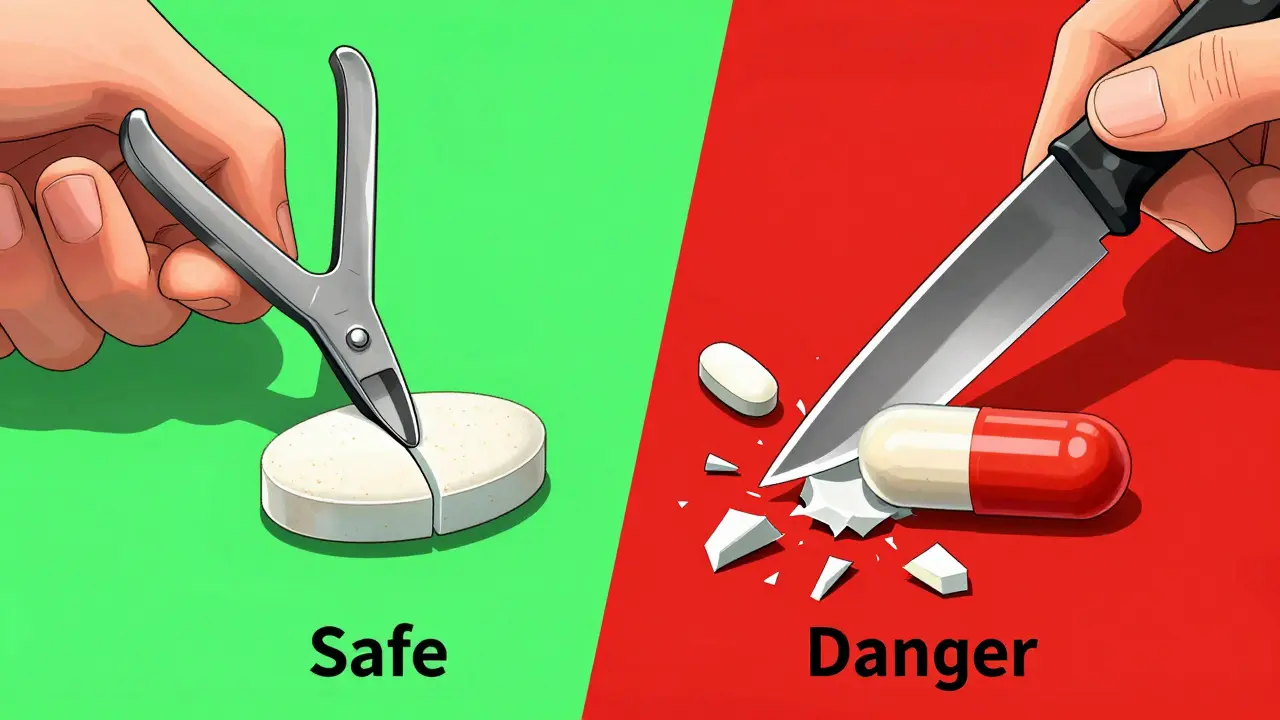
If you decide to split your pills, you need the right tool. Using a knife, scissors, or your teeth is a recipe for disaster. Studies show that knife-splitting results in dose variations of 25-72%. That means one half could contain nearly double the intended dose, while the other contains almost none. This level of inconsistency is unacceptable for daily medication management.
Pill splitters are specifically designed tools with V-shaped holders and retractable blades that ensure accurate division of tablets. They typically cost between $3 and $10 and are available at most pharmacies.A dedicated pill splitter uses a V-shaped groove to hold the tablet steady and a sharp blade to press down evenly. This method achieves dose accuracy within 5-15% variance, which is much safer. Most splitters come with a storage compartment to keep the halves protected from moisture and light until you take them.
When buying a splitter, look for one with a sturdy plastic or metal construction. Cheap plastic models may bend under pressure, leading to uneven splits. Test it with a few dummy pills first to get a feel for the pressure needed. You should aim for clean breaks without crumbling. If the pill consistently crumbles, it might not be suitable for splitting, regardless of the tool.
Step-by-Step Safe Splitting Protocol
To minimize risks, follow this strict protocol every time you split a pill:
- Get Approval: Always consult your doctor or pharmacist first. Ask specifically: "Is this medication approved for splitting?" Check the package insert for any warnings against splitting.
- Check the Score: Ensure the tablet has a clear score line. If it doesn’t, do not split it unless explicitly instructed by your healthcare provider.
- Clean Your Hands and Tool: Wash your hands thoroughly. Clean the pill splitter with alcohol wipes before each use to prevent contamination.
- Split Immediately Before Use: Do not split pills days in advance. Exposure to air, heat, and humidity degrades the medication. Split the pill right before you are ready to take it. If you must store halves, keep them in the original blister pack or a dry, dark container and use them within 24 hours.
- Discard Crumbs: If the pill crumbles during splitting, discard the pieces. Do not try to salvage the powder. Taking an incomplete dose leads to subtherapeutic levels, which can worsen your condition.
- Practice First: If you are new to splitting, practice with a few extra pills (if available) to build muscle memory. Most people achieve proficiency after 3-5 attempts.
Consistency is key. Try to split your pills at the same time of day and in the same manner to maintain routine and reduce anxiety about dosage accuracy.

Alternatives to Pill Splitting
While pill splitting can save money, it’s not the only option. Sometimes, other strategies offer better value and safety:
- Patient Assistance Programs: Many pharmaceutical companies offer free or low-cost medication to qualifying patients. These programs can provide savings up to 53%, often exceeding what you’d save by splitting.
- Pharmacy Discount Cards: Services like GoodRx or Mark Cuban Cost Plus Drugs can lower cash prices significantly. Compare these prices against the split-pill cost.
- Generic Substitutions: Ask your doctor if a generic version of your medication is available. Generics are legally required to have the same active ingredients and efficacy as brand-name drugs but often cost a fraction of the price.
- Therapeutic Alternatives: Your doctor might switch you to a different medication in the same class that is naturally cheaper or available in the exact dose you need.
In many cases, combining these approaches yields greater savings than splitting alone. For instance, using a discount card for a generic lower-dose tablet might be cheaper and safer than splitting a brand-name higher-dose tablet.
Frequently Asked Questions
Can I split my pills if they don't have a score line?
Generally, no. Score lines indicate that the manufacturer has tested the tablet for even splitting. Without a score line, the risk of uneven dosing increases significantly. Only split unscored pills if your doctor or pharmacist explicitly approves it and provides guidance on how to do so safely.
How long can I store split pills?
Ideally, you should split pills immediately before taking them. If you must store them, keep them in a dry, cool place away from light and moisture. Most experts recommend using split halves within 24 to 48 hours. Extended storage can degrade the medication's potency, especially for drugs sensitive to humidity.
Is pill splitting covered by insurance?
Insurance coverage varies. Some plans may reimburse for the higher-dose tablet if prescribed for splitting, while others may deny claims if the prescription doesn't match the dispensed strength. Always check with your insurer and pharmacy beforehand. Medicare Part D regulations prohibit automatic denial of reimbursement for split tablets, but individual plan rules still apply.
What if my pill crumbles when I try to split it?
If your pill crumbles, stop splitting it. Crumbling indicates that the tablet's structure is not stable enough for division. Discard the crumbs and take a whole pill instead, or consult your pharmacist for alternative cost-saving options. Taking crumbled fragments leads to inaccurate dosing and potential health risks.
Are there any apps or tools to help me track split pills?
Yes, several medication tracking apps allow you to log custom doses, including split pills. Look for apps that let you set reminders for half-doses and track adherence. Additionally, some pharmacies offer digital consultations where pharmacists can demonstrate proper splitting techniques via video call.