
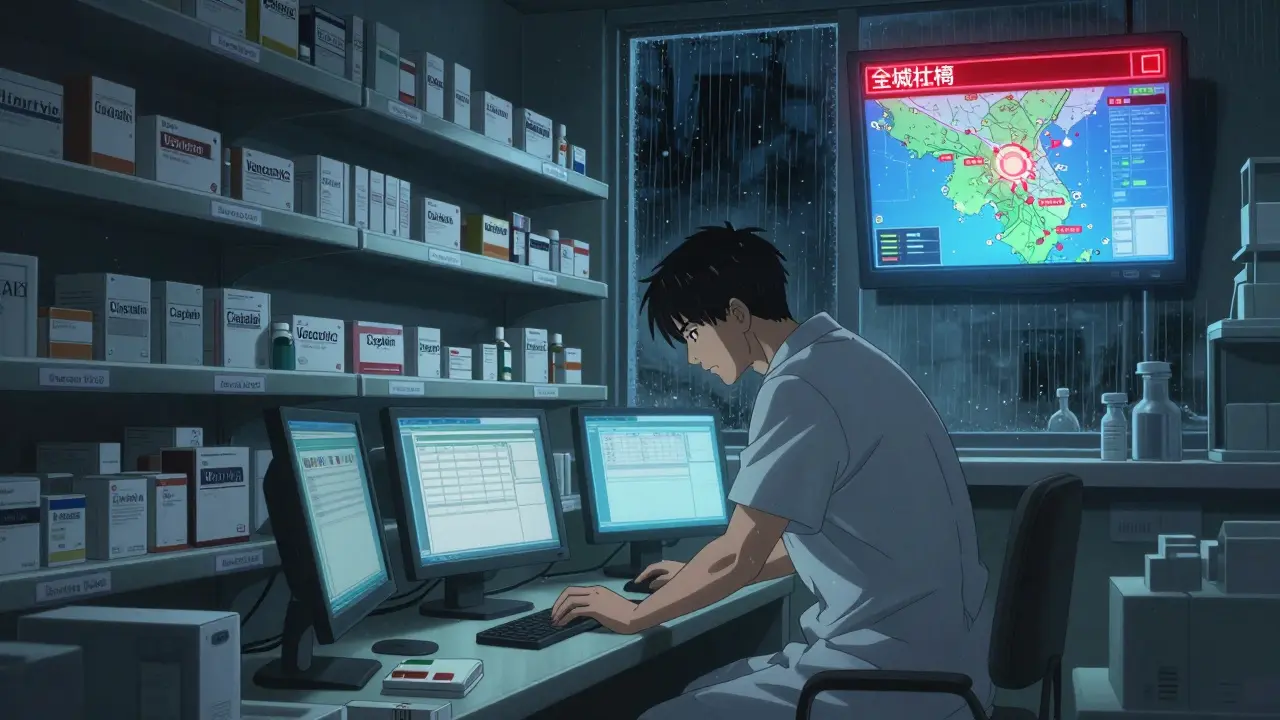
Drug shortages aren’t just inconvenient-they’re life-threatening. In 2024, over 300 drugs were in short supply across the U.S., including antibiotics, cancer treatments, and anesthesia. Hospitals scrambled. Patients delayed care. Pharmacists spent hours tracking down alternatives. And while the federal government has launched new programs to fix this, the real question is: are they working?
The Scale of the Problem
By the end of 2024, the FDA listed 98 active drug shortages. But other groups, like the American Hospital Association, counted over 270. Why the gap? Because different agencies track different things. The FDA focuses on drugs that directly affect patient care-like injectables and oncology meds. Others include over-the-counter items or drugs with partial availability. Either way, the numbers are alarming. Sterile injectables make up 73% of all shortages. These are the drugs given in hospitals: chemotherapy, painkillers, antibiotics. When they run out, there’s no easy backup.
Just one manufacturer can control 68% of the market for a single injectable drug. If that one plant shuts down-due to equipment failure, quality issues, or supply chain disruption-the whole country feels it. In 2023, a single factory in India caused a nationwide shortage of the antibiotic vancomycin. Hospitals had to ration doses. Emergency rooms delayed surgeries. Cancer patients got less effective alternatives.
The Strategic Active Pharmaceutical Ingredients Reserve (SAPIR)
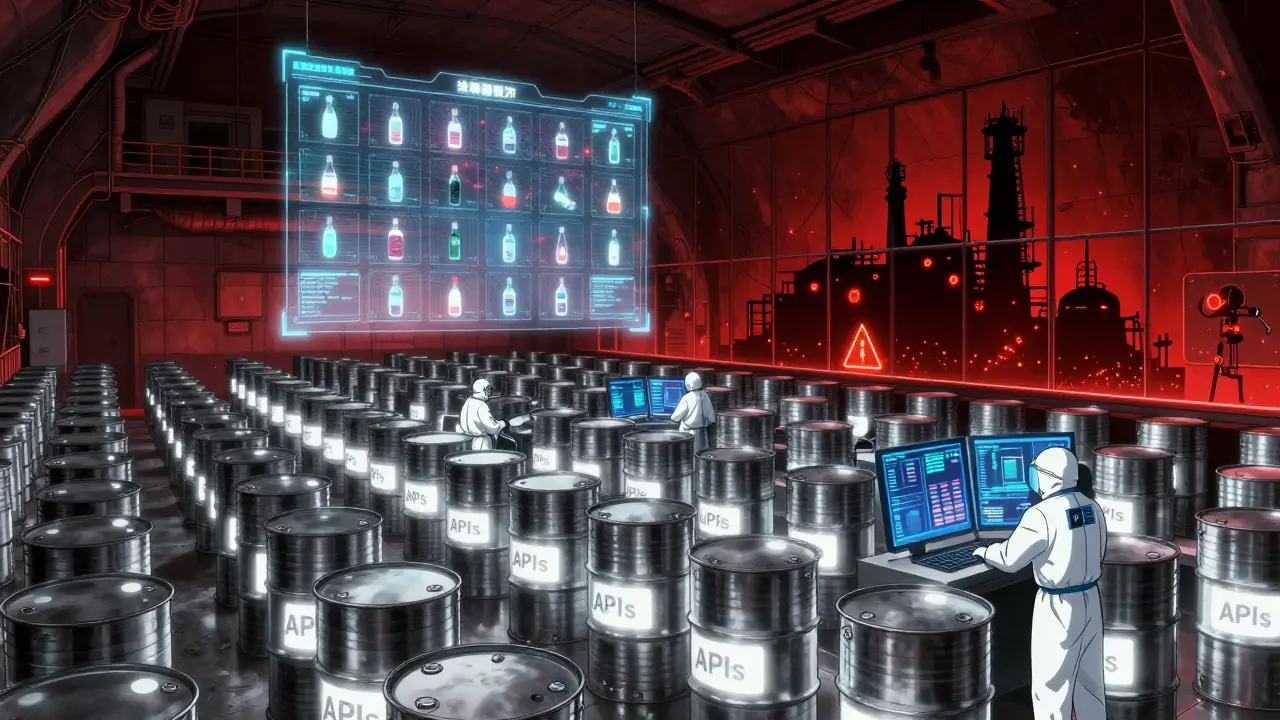
In August 2025, President Trump signed Executive Order 14178, expanding the Strategic Active Pharmaceutical Ingredients Reserve (SAPIR). This isn’t about stockpiling pills or vials. It’s about hoarding the raw chemicals-APIs-that make those drugs. Why? Because APIs cost 40-60% less than finished drugs, last 3-5 years longer, and take up less space. The goal: keep enough raw material on hand to quickly produce critical drugs during a crisis.
SAPIR targets 26 essential medicines: antibiotics like meropenem, anesthetics like propofol, and cancer drugs like cisplatin. These are the ones most likely to cause harm if they disappear. The plan is to store APIs from trusted suppliers, ideally within the U.S. or close allies like Canada and Ireland. But here’s the catch: only 12% of critical API production has been brought back to the U.S. in the last seven years, despite billions spent on incentives.
And SAPIR doesn’t cover most shortage-prone drugs. The FDA says 98% of shortage events involve medications outside the 26-drug list. That means if your hospital runs out of a common blood pressure med or a diabetes drug, SAPIR won’t help. It’s a targeted solution to a broad problem.
What the FDA Is Actually Doing
The FDA doesn’t just sit back and wait for shortages to happen. It works directly with manufacturers to fix problems before they escalate. In 85% of cases, the agency uses flexible enforcement-allowing temporary imports, speeding up inspections, or approving alternate production lines. This worked during the 2018-2020 saline shortage. When 90% of U.S. hospitals lost access to IV fluids, the FDA fast-tracked imports from Europe and approved new suppliers. The shortage ended in under six months.
Now, the FDA has launched an AI-powered monitoring system that predicts shortages 90 days in advance. It tracks shipping data, factory output, hospital orders, and even weather patterns that might disrupt supply chains. So far, it’s 82% accurate. That’s a big step forward. But predicting a shortage doesn’t solve it. You still need the raw materials, the capacity, and the legal authority to make more.
Manufacturers are legally required to report potential shortages six months in advance. But only 58% comply. Small companies, especially those with fewer than 50 employees, ignore the rule 82% of the time. Why? Because there’s no penalty. Between 2020 and 2024, the FDA issued just 17 warning letters for non-reporting. In the EU, under similar rules, they issued 142.
Why Domestic Production Isn’t Catching Up
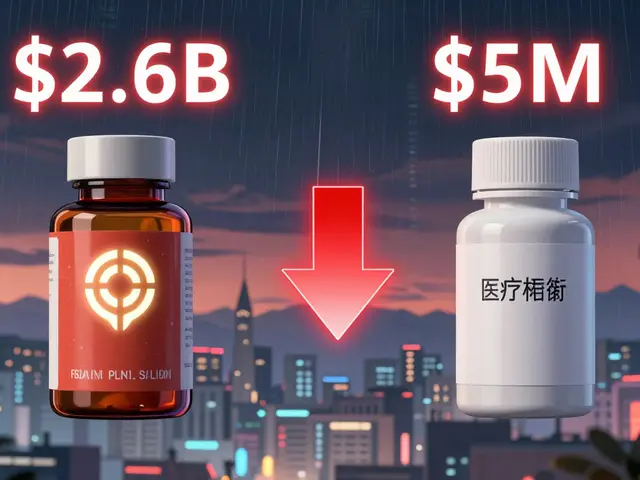
The government wants to make more drugs in America. The CHIPS Act even gave $285 million to build new pharmaceutical plants. But that’s less than 5% of what’s needed. Building a new API facility takes 28-36 months in the U.S.-compared to 18-24 months in the EU. Why? Because U.S. regulations are stricter, inspections are slower, and the approval process is more bureaucratic.
And even when plants open, they often don’t make the right drugs. Most new facilities focus on high-margin drugs-like biologics for rare diseases. The cheap, low-profit essentials-like generic antibiotics or saline-get ignored. Why build a factory that barely makes money? That’s the core problem. The market doesn’t reward companies for making drugs everyone needs. It rewards them for making drugs only a few can afford.
Just three companies control two-thirds of the sterile injectable market. That’s not competition. That’s a bottleneck. One plant failure, one quality issue, one fire-and the whole country runs out.
What’s Not Being Done
While SAPIR and AI tools get attention, some of the most effective fixes are being rolled back. The Biden-era rule that forced drugmakers to disclose supply chain risks? Gone. Funding for state public health programs? Cut by 22%. The Biomedical Advanced Research and Development Authority (BARDA), which funded next-gen manufacturing tech, lost $850 million in its 2026 budget.
Meanwhile, the European Union has a centralized system where every member state shares real-time data on drug availability. They require mandatory stockpiling and have reduced shortages by 37% since 2022. The U.S. has no such system. Each state, each hospital, each pharmacy is on its own.
Experts like Dr. Luciana Borio, former FDA acting chief scientist, say the U.S. approach is “reactive rather than preventative.” Stockpiling APIs helps in a crisis. But it doesn’t fix why the crisis keeps happening. The root causes-economic disincentives, market concentration, regulatory delays-remain untouched.

The Human Cost
Behind every shortage statistic is a patient, a nurse, a pharmacist.
Hospitals now spend an average of $1.2 million a year just managing drug shortages. Pharmacists work 10+ hours a week tracking down alternatives. One pharmacist on Reddit said they had to compound cisplatin from raw chemicals because the pre-made version was gone. Another said they used five different manufacturers for the same drug in a single week.
Patients are skipping doses. A September 2025 survey found 29% of Americans skipped medication because it wasn’t available-not because they couldn’t afford it, but because it simply wasn’t on the shelf. Cancer patients were hit hardest: 68% reported treatment delays or substitutions.
And substitutions aren’t harmless. Switching from one antibiotic to another can mean longer hospital stays, more side effects, or even treatment failure. In one study, 42% of hospitals reported medication errors directly tied to shortage-related changes.
The Road Ahead
There are glimmers of hope. The FDA is now fast-tracking second-source manufacturers-companies that can make the same drug as the original. Fourteen applications are already in review. If approved, they could add backup supply for eight critical drugs by mid-2026.
H.R.5316, the Drug Shortage Act, could help too. It would allow hospitals to use compounded versions of shortage drugs without waiting for full FDA approval. That could cut response time from months to days. But the Congressional Budget Office estimates it would only reduce shortages by 15-20% at a cost of $740 million over five years. That’s less than 0.1% of total U.S. drug spending.
The truth? There’s no single fix. Stockpiling helps. Predictive tools help. But without fixing the economics-without paying manufacturers fairly to make cheap, essential drugs-the shortages will keep coming. Until then, hospitals will keep rationing. Pharmacists will keep calling every distributor. And patients will keep wondering why the medicine they need isn’t there.


Ann Romine
January 2, 2026 AT 22:46My mom’s on chemo, and last month they switched her drug twice because the usual one was gone. She got nauseous for days from the substitute. No one talks about how this feels for patients-just stats and policies. But when your life depends on a vial that’s out of stock, it’s not a policy problem. It’s a human one.
I work in a small hospital pharmacy. We’re not even talking about fancy drugs anymore-just saline, antibiotics, insulin. We’re playing drug roulette every shift. And no, SAPIR won’t fix this. It’s like stocking fire extinguishers but ignoring the wiring that’s sparking.
Why are we still letting one company control 70% of a life-saving drug? That’s not capitalism. That’s a vulnerability we built ourselves.
Todd Nickel
January 4, 2026 AT 15:45It’s worth noting that the FDA’s predictive AI system, while impressive at 82% accuracy, is fundamentally limited by the quality and completeness of the data it receives-and that’s the problem. Manufacturers are not required to report disruptions unless they meet a very narrow definition of ‘shortage,’ and even then, the reporting window is six months, which is meaningless when a factory burns down overnight.
The real bottleneck isn’t just production-it’s the lack of interoperability between state and federal systems. The EU’s centralized model works because it forces transparency. Here, every hospital is its own island, and pharmacists are the only ones with real-time visibility. Meanwhile, the government spends billions on stockpiling APIs while ignoring the fact that 98% of shortages involve drugs outside that list. It’s like building a bunker for one type of weapon while the enemy attacks with something else entirely.
And let’s not forget: the incentives are misaligned. Why would a company invest in a $20 generic antibiotic when they can make $20,000 per dose on a biologic for a rare disease? The market doesn’t reward public health. It rewards profit margins. Until that changes, no amount of AI or stockpiling will matter.
Bryan Anderson
January 6, 2026 AT 06:29I appreciate the depth of this analysis. As someone who works in public health administration, I’ve seen firsthand how fragmented our system is. The FDA’s efforts are commendable, but they’re operating with one hand tied behind their back.
The lack of penalties for non-reporting is staggering. In my state, we’ve had three manufacturers miss reporting deadlines in the last year alone. No fines. No follow-up. Just silence.
What’s missing is a unified national strategy-not just for stockpiling, but for incentivizing production of essential generics. We need to treat these drugs like critical infrastructure, not commodities. That means guaranteed purchase agreements, tax credits for low-margin production, and faster approvals for second-source manufacturers.
It’s not rocket science. It’s just political will. And right now, that’s in short supply too.
Matthew Hekmatniaz
January 6, 2026 AT 13:57Reading this made me think about how we value things in this country. We’ll spend billions on defense systems, space missions, and luxury tech-but when it comes to the medicines that keep people alive, we treat them like an afterthought.
I’ve talked to nurses who cry because they can’t give a patient their chemo drug. I’ve talked to pharmacists who’ve had to call 17 different suppliers in one day just to find a single vial.
It’s not just about policy. It’s about culture. We need to stop seeing healthcare as a transaction and start seeing it as a shared responsibility. We all need these drugs. So why aren’t we all demanding better?
Maybe the answer isn’t more stockpiles. Maybe it’s more solidarity.
Liam George
January 8, 2026 AT 00:44Let’s be real. This whole drug shortage thing is a controlled demolition. The FDA, Big Pharma, and the government are in bed together. SAPIR? A distraction. They want you focused on stockpiling APIs while they quietly move production overseas to avoid regulation and keep profits high.
Ever wonder why the same three companies control 68% of the market? Because they bought the laws. The CHIPS Act gave $285M to pharma? That’s chump change. The real money went to lobbyists who killed the Biden-era supply chain transparency rules.
The AI system? Just a PR tool. It predicts shortages because they *want* you to think they’re doing something. Meanwhile, the real crisis-the collapse of domestic manufacturing-is being buried under jargon and false hope.
Wake up. This isn’t incompetence. It’s intentional. They need you dependent on fragile, foreign-made drugs so they can control pricing, supply, and ultimately, your health.
And don’t get me started on how the EU’s system is just a Trojan horse for socialist healthcare. They’re already rationing. We’re just pretending we’re not there yet.
sharad vyas
January 9, 2026 AT 00:29In India, we have similar problems but different solutions. Many small clinics use local manufacturers for generics. They are not perfect, but they are reliable because they are close to the people. No one waits six months to report a shortage. If a drug is gone, the pharmacist calls the next town.
Here in the U.S., everything is so big and slow. Maybe the answer is not more federal programs, but more local networks. Trust the pharmacists. Let them share. Let them help each other.
Also, why do we need to make everything in America? If a good, safe API comes from Ireland, why not use it? We fear foreign, but we forget: medicine is medicine, no matter where it is made.
Dusty Weeks
January 10, 2026 AT 22:53so like... is this all just a big corporate scam?? 😔💊
my aunt had to wait 3 weeks for her blood pressure med bc "supply chain issues"
and now they want us to believe this "sapir" thing is gonna fix it?? 🤡
we need to burn the whole system down. 🧨 #pharmabillionaires
Sally Denham-Vaughan
January 12, 2026 AT 02:03Y’all are overthinking this. I work in a hospital pharmacy. We don’t need more AI or stockpiles. We need one simple rule: if a drug is on the FDA’s essential list, the government buys it in bulk and guarantees a minimum price to manufacturers. No more guessing. No more loopholes.
Simple. Cheap. Effective.
And if a company won’t make it? Fine. Let someone else take over. We’ve got the tech. We’ve got the talent. We just need the guts to stop treating medicine like a stock market ticker.
Also, can we please stop calling it a "shortage"? It’s not a shortage. It’s a failure of will.
Just sayin’. 😊