
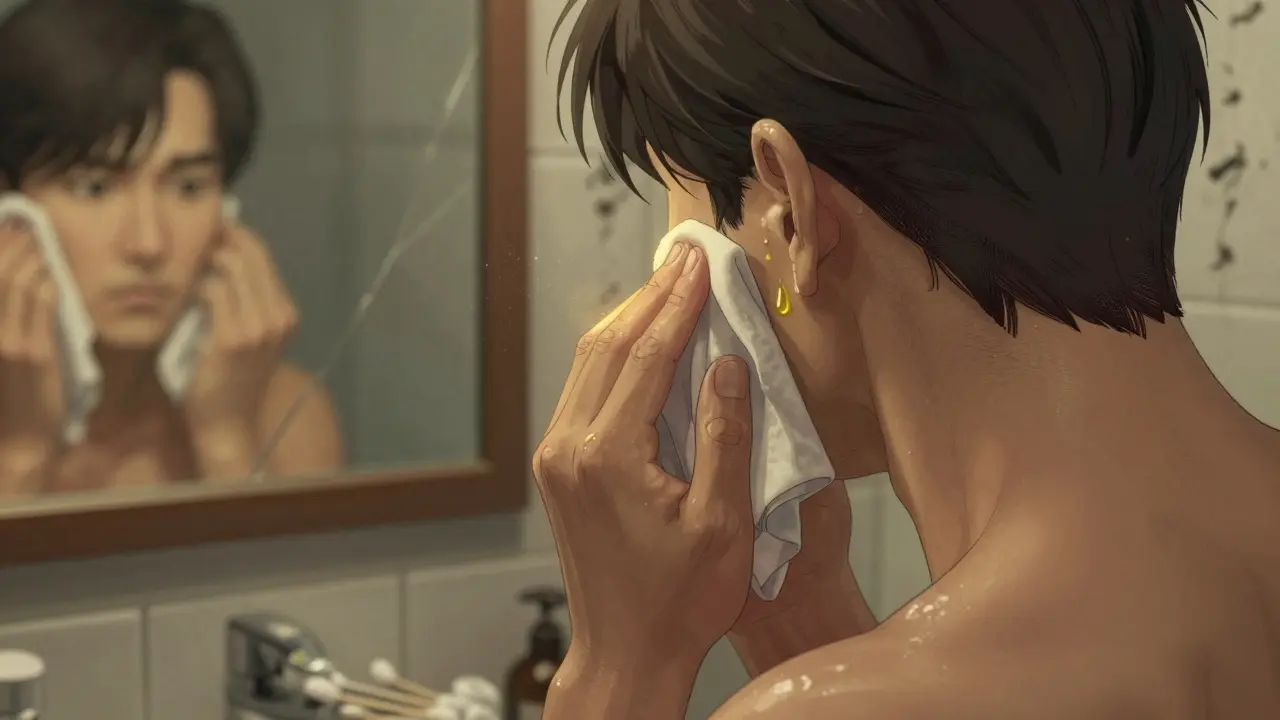
Most people think earwax is something to clean out - but that’s exactly what makes it dangerous. Earwax, or cerumen, isn’t dirt. It’s a natural protector: it traps dust, repels water, and keeps bacteria out. When it builds up and hardens, it becomes an impaction - and that’s when problems start. You might not even realize you have it until your hearing feels muffled, your ear aches, or you start hearing ringing. And if you’ve ever stuck a cotton swab in your ear to fix it? You’re not alone. But you’re also making it worse.
What Does Earwax Impaction Actually Feel Like?
- You notice you’re asking people to repeat themselves more often - especially in noisy places.
- Your ear feels full, like it’s plugged with cotton.
- You get a dull ache that doesn’t go away with painkillers.
- You hear a constant ringing - not loud, but always there.
- You feel dizzy when you stand up quickly.
- Your ear itches, even though you haven’t touched it.
- You cough for no reason - yes, that’s a real symptom.
But here’s what most people miss: not all earwax is blocked. About 30-40% of people have visible wax during a checkup - but no symptoms. That’s normal. Impaction only counts when it’s causing trouble. If you’re not hearing poorly or feeling pain, leave it alone. Your ears clean themselves.
Why Your Cotton Swab Is Making Things Worse
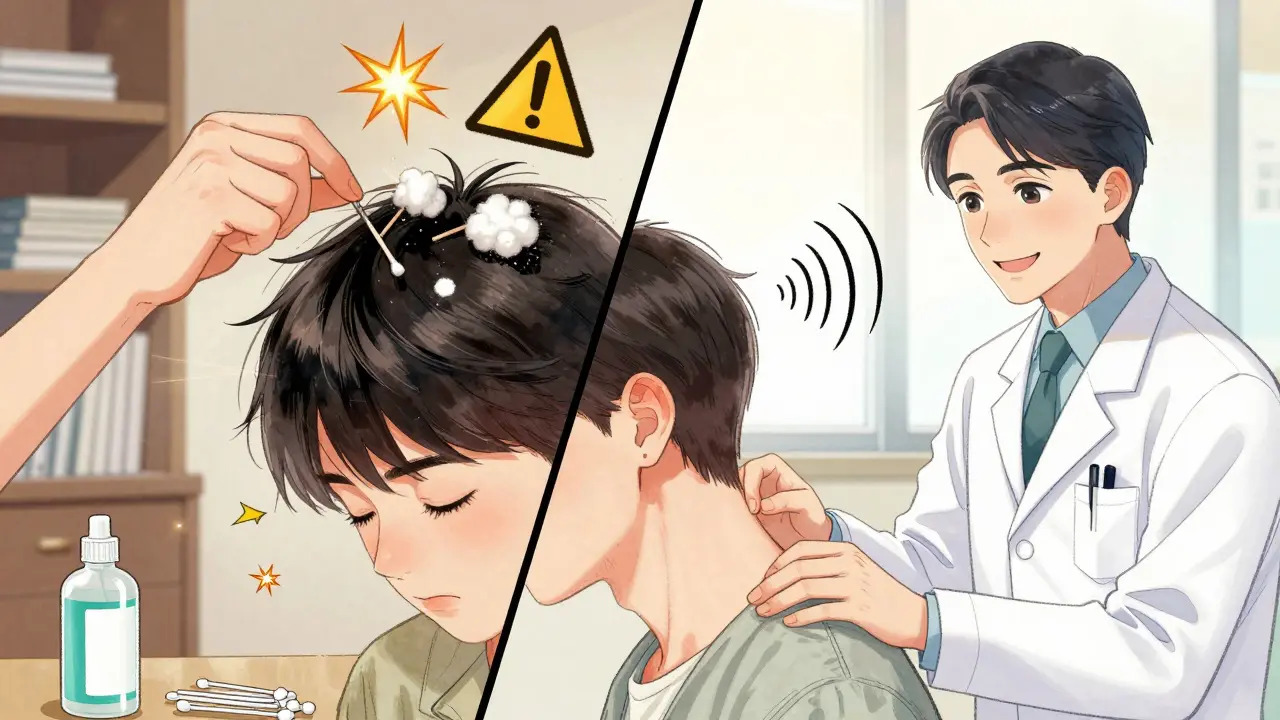
You’ve seen the ads. You’ve bought the kits. You’ve pushed that little swab in, thinking you’re helping. But here’s the truth: every time you stick something in your ear, you’re not cleaning it - you’re pushing wax deeper. The NHS says cotton swabs cause 60-70% of all iatrogenic (doctor-caused) impactions. That’s not a typo. Doctors see this every day.Think of your ear canal like a slide. Wax naturally moves from the inside out - like a conveyor belt. Your job isn’t to push it down. It’s to let it come out on its own. When you jam a swab in, you’re not removing wax. You’re packing it tighter against your eardrum. That’s why so many people end up in urgent care with worse pain, bleeding, or even a perforated eardrum.
And it’s not just swabs. Hearing aid users are 35-40% more likely to get impacted wax because the devices block the natural exit path. Older adults, especially those over 65, are at higher risk too. So are people with curly ear hair or oddly shaped ear canals. But the biggest risk factor? Trying to fix it yourself.
What Not to Do (And Why)
Let’s clear this up fast. There are three things you should never, ever try at home:- Ear candling - No, burning a cone in your ear won’t suck out wax. The FDA has banned it as a misbranded device since 2010. It causes burns, wax drips into the ear, and even eardrum tears.
- Home suction devices - Those little vacuum tools you see on Amazon? They’re not medical grade. Between 2018 and 2022, the FDA logged over 12,500 injuries from them - 3,000 of those were perforated eardrums.
- Hydrogen peroxide drops - Yes, they fizz. That doesn’t mean they work better. They irritate the skin inside your ear, and 15% of users report burning or swelling. They’re not safer - just noisier.
And TikTok? Over 1.2 billion views show people using hairpins, paper clips, and even toothbrushes to dig out wax. These aren’t hacks. They’re accidents waiting to happen. One wrong move, and you could lose hearing - permanently.
Safe Ways to Remove Earwax - At Home and With a Doctor
If you’ve got symptoms, here’s what actually works.Step 1: Soften It First (At Home)
NHS England recommends a simple 5-day plan:- Lie on your side, affected ear up.
- Put 2-3 drops of olive oil or almond oil (skip almond if allergic) into your ear.
- Stay still for 5-10 minutes so it soaks in.
- Repeat 3-4 times a day for 3-5 days.
- After that, gently wipe the outer ear with a damp cloth. Don’t stick anything inside.
This isn’t magic. It’s science. Oil softens hardened wax so it can move out naturally. Studies show this works in about 58% of cases. If your symptoms don’t improve after 5 days, stop. Don’t keep trying. Go see a professional.
Step 2: Professional Removal - What Actually Works
When home methods fail, clinics have three proven tools:| Method | Effectiveness | Best For | Risks |
|---|---|---|---|
| Manual removal (curette or forceps) | 92% | Hard, dry wax; patients with history of ear surgery | Minor discomfort; rare eardrum scratch |
| Warm water irrigation | 85% | Softened wax; no perforation history | Not safe if you’ve had eardrum damage |
| Microsuction | 96% | All cases, especially complex or sensitive ears | Very low risk; slight noise sensitivity |
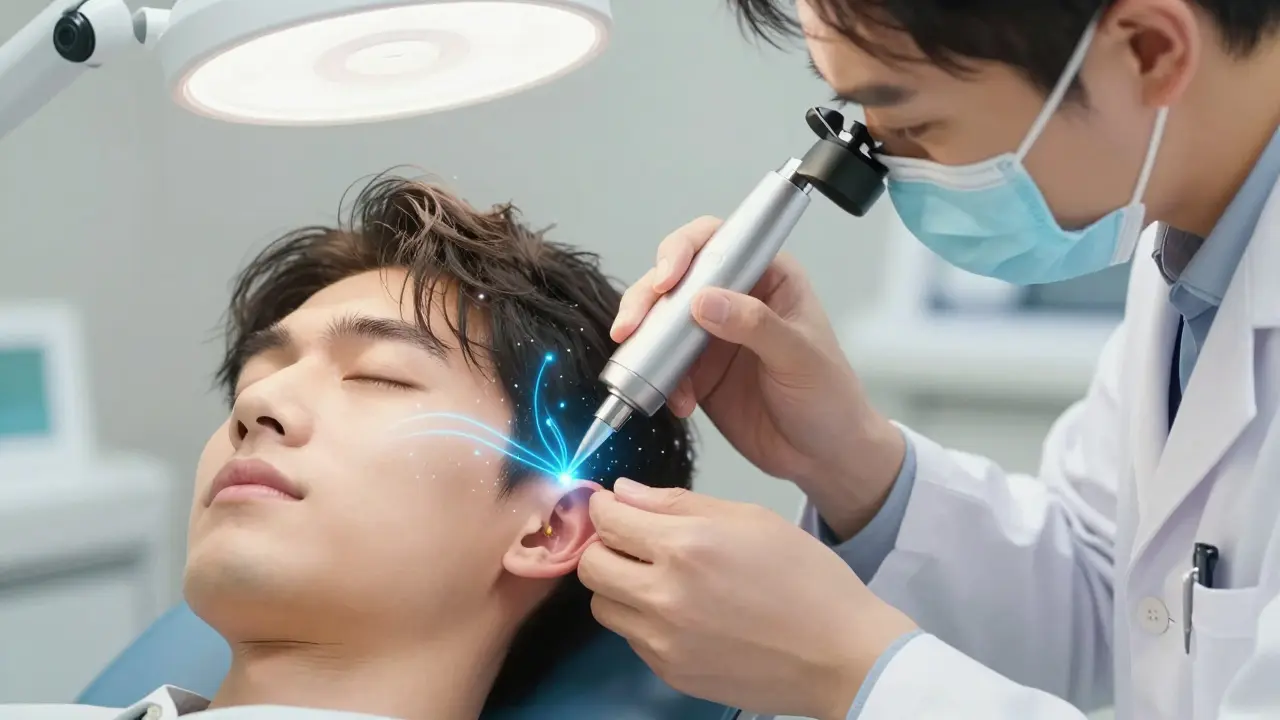
Microsuction is the gold standard. It uses gentle suction and a tiny camera to see exactly where the wax is. No water. No pressure. No risk of pushing wax deeper. A 2020 review in the Journal of Laryngology & Otology found it’s the safest and most effective option - with 96% success in one visit.
And here’s the surprise: 85% of patients are completely clear after just one appointment. Most visits take less than 20 minutes. You walk out with better hearing and no pain.
Who Needs to Be Extra Careful?
Some people should never try home remedies at all:- If you’ve ever had ear surgery
- If you have a perforated eardrum
- If you have a history of ear infections
- If you use a hearing aid or cochlear implant
- If you’re over 65 and have never had your ears checked
For these groups, even oil drops can be risky. A 2023 study from Johns Hopkins found that people with prior ear issues are 300% more likely to suffer complications from home attempts. Always see a professional first.
What Happens If You Ignore It?
Left untreated, impacted wax can cause more than just muffled hearing. It can lead to:- Chronic ear infections
- Permanent hearing damage
- Balance problems and falls (especially in older adults)
- Delayed diagnosis of other conditions - like tumors or cholesteatoma - because the doctor can’t see your eardrum
And here’s the truth most people don’t want to hear: 22% of people who think they have earwax impaction actually have something else - like an infection or a growth. Only a trained clinician with an otoscope can tell the difference. Self-diagnosing is dangerous.
What’s New in 2026?
The field is changing. In 2023, the FDA cleared the Eareto OtoSonic - the first prescription-only home device that uses low-frequency ultrasound to soften wax. Early trials show 78% effectiveness. But it’s not for everyone. It still requires a doctor’s approval, and it’s not a replacement for professional care.Also, telehealth is stepping in. A 2023 study in JAMA Network Open found that doctors can accurately diagnose earwax blockage over video - with 89% accuracy. If you’re unsure, you can now get a remote assessment before heading to the clinic.
But here’s the bottom line: no tech replaces a trained professional. Even the best devices can’t see what’s behind the wax. And that’s where the real danger lies.
Final Advice: Let Your Ears Do Their Job
Your ears aren’t broken. They don’t need cleaning. They’re designed to push wax out on their own. The only time you need to act is when you feel symptoms. And even then - don’t reach for a swab. Don’t YouTube a hack. Don’t risk your hearing for a quick fix.Instead, try oil drops for a few days. If it doesn’t help, book an appointment with a clinic that offers microsuction. It’s quick. It’s safe. And you’ll hear your own voice again - clearer than you remember.
Earwax isn’t the enemy. Trying to remove it yourself is.
Can earwax cause permanent hearing loss?
Yes - but only if left untreated for a long time or if you try to remove it improperly. Impacted wax blocks sound from reaching the eardrum, which causes temporary hearing loss. But if you use sharp objects or high-pressure water, you can rupture the eardrum or damage inner ear structures, leading to permanent hearing damage. Most cases are reversible with professional removal.
How often should I get my ears checked for wax buildup?
If you have no symptoms, you don’t need routine checks. But if you use hearing aids, are over 65, have narrow ear canals, or produce a lot of wax, get checked once a year. People with developmental disabilities or chronic ear issues may need checks every 3-6 months. Never wait for pain - if your hearing changes, see someone.
Is it safe to use baby oil for earwax removal?
Yes, baby oil is safe and effective for softening wax. It’s a type of mineral oil, which studies show works in about 58% of cases. Use 2-3 drops twice a day for 3-5 days. Don’t use it if you suspect an eardrum perforation - always get checked first. Avoid almond oil if you have nut allergies.
Why does my ear itch when I have impacted wax?
Wax buildup irritates the sensitive skin inside the ear canal. It can also trap moisture and bacteria, leading to mild inflammation. Itching is a common early sign - but scratching or poking at it makes it worse. Don’t use cotton swabs. Instead, soften the wax with oil and let it clear naturally or get professional help.
Can earwax cause dizziness?
Yes. The inner ear controls balance, and when wax presses against the eardrum, it can affect pressure signals sent to your brain. This can cause mild dizziness, especially when changing positions. It’s not the same as vertigo, but it’s real. Once the wax is removed, dizziness usually goes away within hours.
Are earwax removal kits from the pharmacy safe?
Only if they’re just oil-based drops - like Debrox or Murine. These are safe for softening wax. But kits that include syringes for irrigation or suction tools are risky. Most people use them incorrectly, which can push wax deeper or damage the ear canal. Stick to drops only, and never use irrigation unless a doctor says it’s safe for you.
Next steps: If you’re experiencing symptoms, start with oil drops for 5 days. If there’s no improvement, find a clinic that offers microsuction. Avoid all DIY tools. Your hearing is worth more than a quick fix.




Curtis Younker
January 27, 2026 AT 05:52Bro, I used to stick Q-tips in my ears like they were magic wands-until I got that awful fullness and ringing. Then I tried the oil drops for five days like the post said. Holy crap, it worked. I could hear my own damn breathing again. No drama, no pain, just olive oil and patience. My ears are basically self-cleaning robots, and I was the idiot trying to upgrade them with a toothpick.
Dan Nichols
January 27, 2026 AT 13:4078% of people have two symptoms so it’s definitely wax? That’s not statistics that’s wishful thinking. You’re conflating correlation with causation. I’ve had tinnitus for ten years and my ears are clean as a whistle. Your study cherry-picks symptoms that overlap with anxiety, migraines, and sinus pressure. Don’t turn every ear itch into a medical crisis.
Renia Pyles
January 28, 2026 AT 10:10Of course you’re gonna get a perforated eardrum if you use a hairpin. But guess what? So do people who blindly trust doctors who use metal tools in their ears. Who gave you the right to say what’s safe? I’ve had microsuction and it felt like a dentist drilling into my skull. You’re selling fear, not facts.
Karen Droege
January 29, 2026 AT 18:17Y’all are missing the forest for the earwax. This isn’t just about cleaning ears-it’s about trusting your body. We’ve been conditioned to think our bodies are broken machines needing constant tinkering. But your ear canal? It’s got a built-in conveyor belt. Oil drops aren’t a hack-they’re a return to humility. I’m a nurse and I’ve seen too many people come in with bleeding canals from ‘TikTok detoxes.’ Stop weaponizing curiosity. Let your body breathe.
Shawn Raja
January 30, 2026 AT 08:40Listen-your ears are not a trash can you gotta vacuum out every Tuesday. They’re a sacred tunnel designed by evolution to protect your most delicate sense. That sticky brown stuff? It’s not gunk-it’s gold. Like nature’s armor. And yet here we are, 2026, still shoving cotton sticks into our heads like cavemen trying to light a fire with a stick. We’ve got AI that writes poetry but can’t stop poking our ears. What the hell is wrong with us? We’re scared of stillness. We’re scared of not doing something. But sometimes… the most powerful thing you can do is nothing. Just breathe. Let the wax come out. It will. It always does.
Geoff Miskinis
January 30, 2026 AT 12:17The cited studies are methodologically flawed. The Rochester data conflates self-reported symptoms with clinical diagnosis-no otoscopic confirmation. The 96% microsuction success rate? That’s from a single-center retrospective with selection bias. And microsuction isn’t ‘gold standard’-it’s expensive, inaccessible to 80% of the global population, and often overused. Olive oil is more effective than irrigation in soft wax, yes, but the NHS guidelines are outdated. The 2023 Cochrane review shows no significant difference between irrigation and microsuction for uncomplicated cases. Also-ear candling? The FDA ban was due to lack of evidence, not safety. It’s not illegal in the EU. You’re propagating medical dogma disguised as wisdom.
Napoleon Huere
January 31, 2026 AT 10:33What if the real problem isn’t earwax… but our obsession with control? We don’t want to sit with discomfort. We don’t want to wait. We want to fix it NOW with a tool, a drop, a video. But the ear doesn’t work like a sink. It’s not a pipe. It’s a living system. And maybe the itching? The dizziness? The muffled hearing? Maybe those aren’t signs of blockage… but signals. Signals that we’re too loud, too rushed, too disconnected from our own biology. I stopped cleaning my ears. I started listening-to silence, to birds, to my own heartbeat. And guess what? The wax came out. On its own. Without me. Isn’t that beautiful?
Allie Lehto
February 2, 2026 AT 04:04OMG I CANT BELIEVE PEOPLE STILL USE Q-TIPS 😭 I DID TOO AND NOW I HAVE TINNITUS AND I CANT SLEEP 😭 I WAS SO STUPID BUT NOW I USE OLIVE OIL AND I FEEL SO MUCH BETTER!! 🙏🙏🙏 dont be like me!!!
Shweta Deshpande
February 2, 2026 AT 11:30My grandma’s 72 and she’s never had her ears checked-until last year when she started saying ‘what?’ every five seconds. We took her to a clinic, they did microsuction, and she started crying because she heard her own voice again. She hadn’t heard it clearly since 2007. That’s not hype-that’s life-changing. I used to think earwax was just gross. Now I see it as a silent thief stealing connection. Don’t wait until you’re isolated because you can’t hear your grandkids laugh. Just try the oil. Five days. No tools. No drama. Just care.
Aishah Bango
February 2, 2026 AT 18:33People who use ear candling deserve every burn they get. It’s not just stupid-it’s a moral failure. You’re putting a lit candle in your head because some influencer said so? You’re not just risking your hearing-you’re risking your dignity. This isn’t a medical issue. It’s a cultural collapse. We’ve replaced wisdom with viral trends. And now we’re paying with our ears. Shame on you.