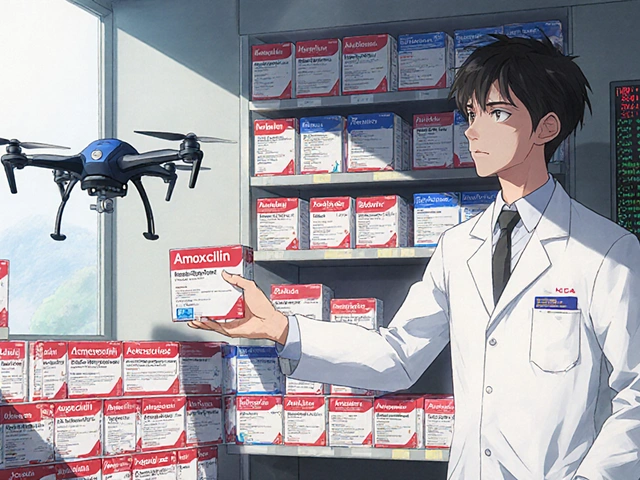
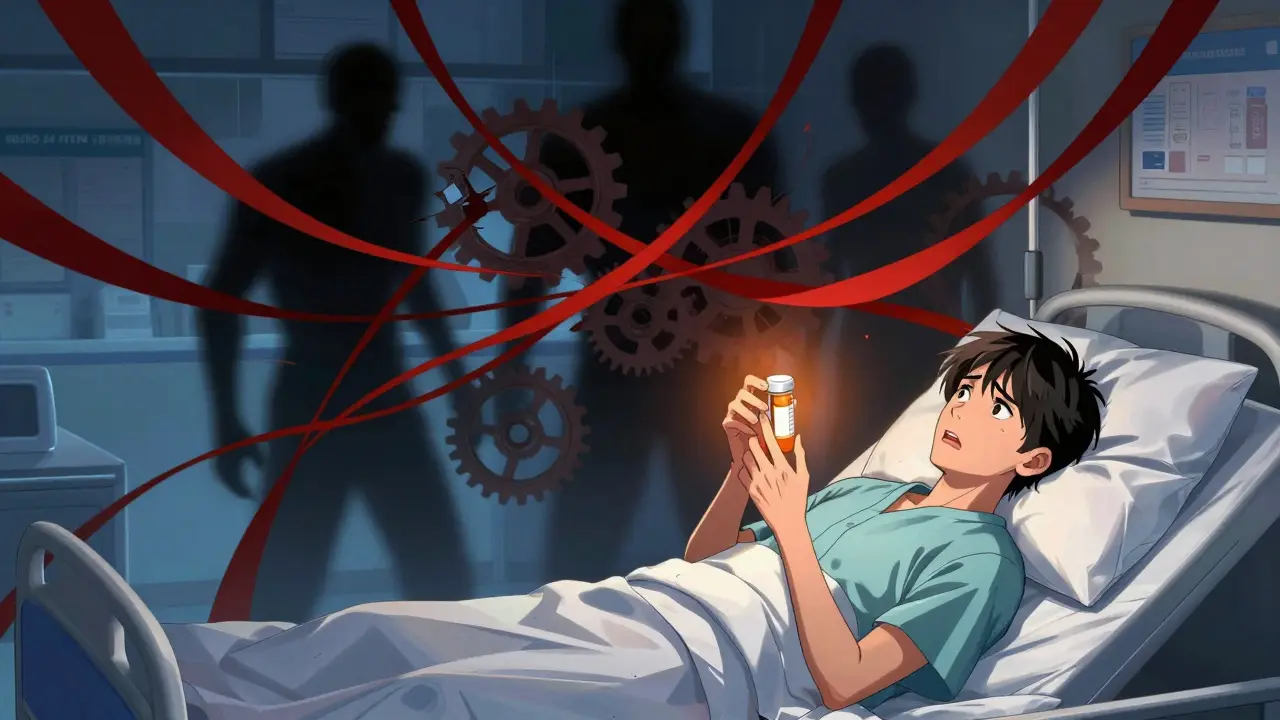
Imagine getting sick, going to the doctor, and leaving with a prescription that actually makes you worse. It sounds like a nightmare scenario from a bad movie, but it happens far too often in real life. We tend to think of healthcare as purely beneficial, yet one of its biggest risks comes from the very tools meant to heal us: medications. Medication safety is the prevention of errors and adverse events throughout the entire medication use process, from prescribing to monitoring. It isn't just about avoiding typos on a label; it is a massive, complex system that touches every aspect of modern medicine.
In 2017, the World Health Organization (WHO) launched the 'Medication Without Harm' global challenge. Their goal? To reduce severe avoidable medication-related harm by 50% within five years. Why such an aggressive target? Because unsafe medication practices are among the leading causes of injury and avoidable harm in healthcare systems worldwide. As of 2025, this remains a critical public health priority. The stakes have never been higher, with new drugs entering the market faster than ever, populations aging, and technology introducing both solutions and new vulnerabilities.
The True Cost of Mistakes
We often hear about medical breakthroughs, but we rarely talk about the hidden costs of failure. The numbers are staggering. According to WHO data from 2025, the global cost associated with medication errors hits approximately $42 billion USD annually. That money could fund thousands of clinics or research programs, but instead, it vanishes into the void of preventable mistakes.
In the United States, the picture is even more detailed-and alarming. The National Community Pharmacists Association (NCPA) reports that medication non-adherence alone contributes to $300 billion in avoidable healthcare costs each year. More critically, it leads to 125,000 preventable deaths annually. When patients don't take their meds correctly-or when they take the wrong ones-the consequences ripple through the entire system. The Centers for Disease Control and Prevention (CDC) notes that adverse drug events (ADEs) cause more than 1.5 million emergency department visits every year in the U.S. alone.
So, why is this happening now? Several factors are colliding. First, there is an explosion of new medicines. Between 2000 and 2023, the FDA approved 3,200 new molecular entities. Second, older drugs are finding new uses; 75% of generic drugs have expanded indications since 2010. Third, our population is aging. By 2030, 21% of the U.S. population will be aged 65 or older. Older adults often take multiple medications, increasing the risk of interactions. Finally, the sheer volume of therapy is rising. In 2024, there were 215 billion days of therapy in the U.S., a 1.7% increase from the previous year, according to the IQVIA Institute's 2025 report.
Technology: A Double-Edged Sword
When people ask how to fix medication safety, the answer often points to technology. And rightly so. Electronic health records (EHRs) with clinical decision support systems have proven effective, reducing prescribing errors by 55% according to a 2024 study in JAMA Internal Medicine. Barcode-assisted medication administration (BCMA) systems are another game-changer, decreasing administration errors by 86% based on a 2023 BMJ Quality & Safety meta-analysis.
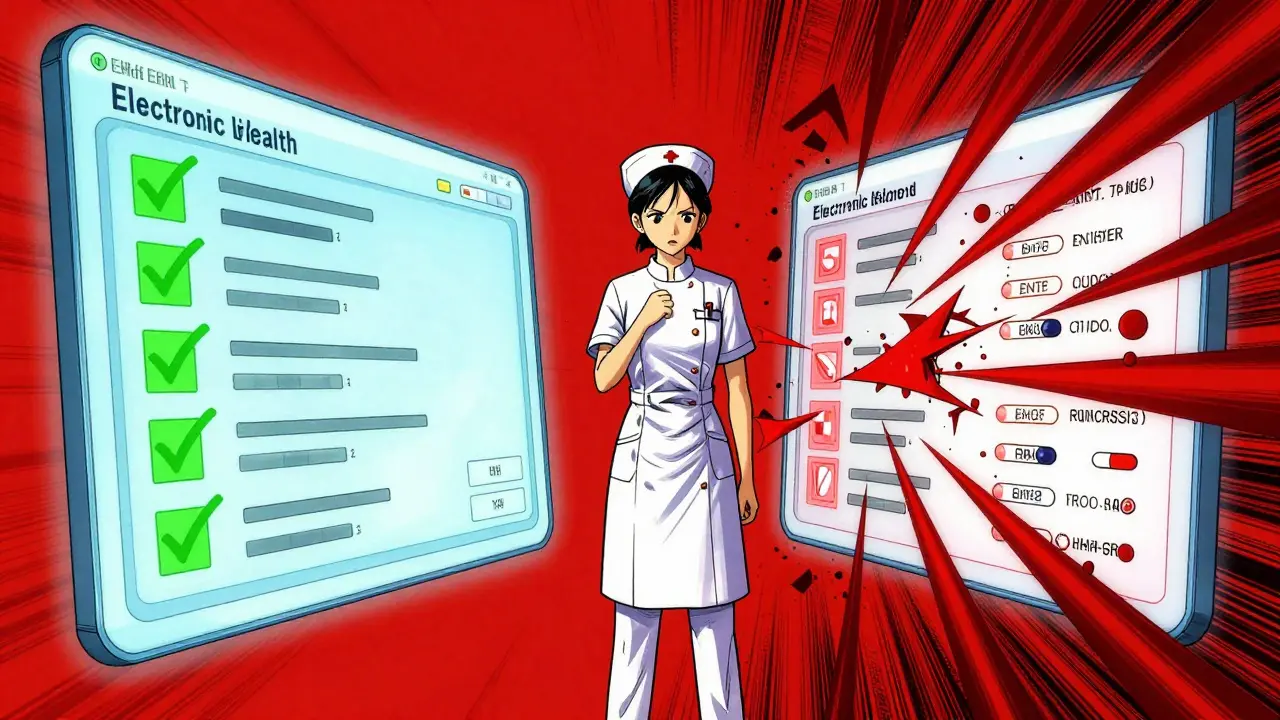
However, technology isn't a magic bullet. It introduces new types of problems. Human factors engineering shows that poor interface design can lead to significant errors. On Reddit’s r/HealthIT community, pharmacists reported that 43% of prescription errors they intercepted involved incorrect dosing due to EHR interface flaws. Nurses reported that 68% experienced at least one near-miss medication error per month due to look-alike/sound-alike drug names, a problem that digital systems haven't fully solved.
Artificial intelligence is emerging as a powerful tool here. AI applications for medication safety prediction are showing 73% accuracy in identifying high-risk patients, according to Sharma et al.'s 2025 publication. Yet, integration remains a hurdle. Only 63% of U.S. hospitals had fully compliant interoperable systems by December 2024, despite mandates from the 21st Century Cures Act. If systems don't talk to each other, safety gaps remain wide open.
The Silent Threat: Counterfeit Drugs
Beyond hospital walls, a darker threat looms: substandard and falsified (SF) drugs. This isn't just a problem in developing nations; it is hitting home hard. The U.S. Drug Enforcement Administration (DEA) seized more than 80 million fentanyl-laced counterfeit tablets in 2023 alone. Fentanyl has become the leading cause of death for Americans aged 18-45, according to ECRI's 2025 alert.
This crisis highlights why medication safety is a public health priority beyond clinical settings. It involves supply chain security, regulation, and consumer awareness. The FDA’s final rule on drug supply chain security requires full implementation of the Drug Supply Chain Security Act (DSCSA) by November 27, 2025. This aims to create electronic, interoperable tracing of prescription drugs at the package level. Until then, the risk of counterfeit drugs entering legitimate channels remains high, threatening millions of patients.
| Country/Region | Key Initiative/System | Outcome/Metric |
|---|---|---|
| United States | FDA Sentinel Initiative, CMS Star Ratings | Fragmented reporting; only 14% of errors formally reported (ECRI 2025) |
| Netherlands | National Medication Safety Program | 44% reduction in medication errors via standardized e-prescribing |
| India | Pharmacovigilance Programme of India (PvPI) | 182 ADRs reported per million population (2024) |
| United Kingdom | National Reporting and Learning System | 30% reduction in serious medication errors |
System Failures vs. Individual Blame
For decades, medication errors were blamed on individual nurses or doctors who made a mistake. But experts are shifting the narrative. Dr. Roseanne Sayther’s 2024 commentary in JAMA Internal Medicine argues that current efforts focus too heavily on individual practitioner errors rather than systemic issues. Her analysis revealed that 89% of medication errors stem from system failures, not individual negligence.
What does a system failure look like? It might be a lack of time for proper medication reconciliation during care transitions. Studies show that 67% of patients experience at least one unintentional medication discrepancy when moving between care settings, such as from hospital to home. It could be inadequate training, inconsistent regulations across states, or poor communication protocols.
The American Hospital Association’s 2024 Patient Safety Culture Survey found that 76% of patients reported experiencing at least one communication issue about their medications during hospitalization. Another 32% reported confusion about discharge instructions. These aren't just stats; they represent real people who leave the hospital unsure of what to take, when to take it, or why they are taking it.
The Economic Case for Safety
If you’re still wondering why medication safety deserves top priority, consider the economics. Investing in safety isn't just morally right; it makes financial sense. Dr. Donald Berwick, former CMS Administrator and Harvard professor, published a 2024 Health Affairs analysis showing that every $1 invested in medication safety interventions generates $7.50 in healthcare savings.
Pharmacist-led interventions offer the highest return on investment, generating $13.20 per dollar invested. Pharmacist-led medication regimen management (MRM) increases adherence by 40% and saves an average of $1,200 annually per patient, according to the PharmD Live 2025 report. With Medicare Advantage plans increasingly incorporating medication adherence metrics into provider payment models, the financial incentives are aligning with patient outcomes.
CMS’s inclusion of 16 Patient Safety measures in its 2025 Star Ratings program creates direct financial rewards. Top-performing Medicare Part D plans receive $1.20-$1.80 additional monthly payment per member for achieving 90%+ adherence rates on key medications. This shifts the focus from volume of prescriptions to quality of care.
Building a Safer Future
Solving the medication safety crisis requires a multi-pronged approach. The Agency for Healthcare Research and Quality (AHRQ) outlines a 12-18 month implementation timeline for comprehensive programs. This includes assessment, technology implementation, staff training, and optimization.
Success stories provide a roadmap. The Mayo Clinic implemented AI-powered medication reconciliation, reducing post-discharge medication errors by 52% across their three-hospital system. Geisinger Health’s pharmacist-led medication therapy management program achieved 89% adherence rates for chronic conditions and reduced hospital readmissions by 27%. These examples prove that change is possible.
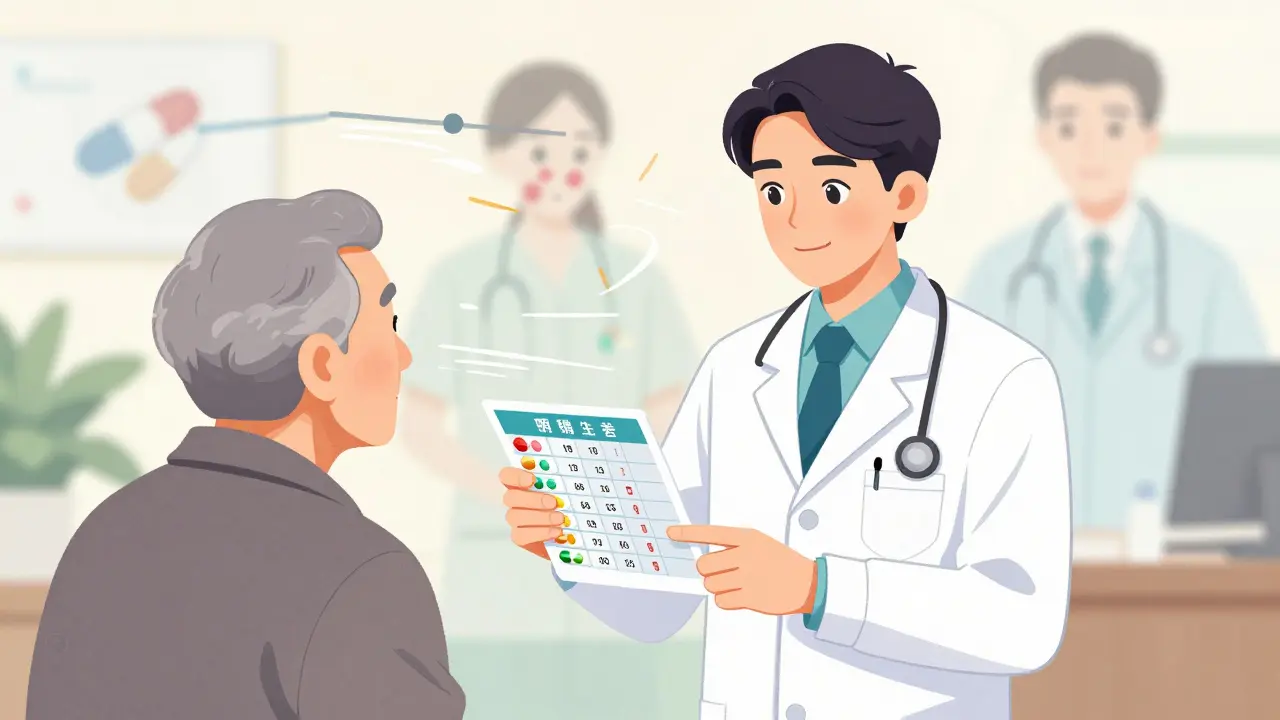
Practical steps include using visual medication schedules, which reduce errors by 38%, and standardized order sets, which decrease errors by 62%. Patient-facing medication portals can increase adherence by 29%. However, challenges remain. Staff resistance affects 67% of hospitals, and inadequate time for reconciliation is cited as the top barrier by 82% of clinicians.
Looking ahead, the trajectory is clear. The global patient safety software market is projected to reach $5.1 billion by 2029. Experts predict AI-driven systems will reduce preventable medication harm by 35% by 2027. But technology alone won't save us. We need cultural change, better regulation, and a relentless focus on the human elements of care. Medication safety is not a niche concern; it is the foundation of trustworthy healthcare.
What is the most common cause of medication errors?
While individual mistakes happen, studies show that 89% of medication errors stem from system failures rather than individual negligence. Common system issues include poor communication during care transitions, inadequate time for medication reconciliation, confusing EHR interfaces, and look-alike/sound-alike drug names.
How much do medication errors cost the healthcare system?
Globally, medication errors cost an estimated $42 billion USD annually. In the U.S., medication non-adherence alone contributes to $300 billion in avoidable healthcare costs and 125,000 preventable deaths each year. Adverse drug events also cause over 1.5 million emergency department visits annually.
Can technology prevent medication errors?
Yes, but with caveats. Electronic health records with clinical decision support reduce prescribing errors by 55%, and barcode-assisted administration reduces errors by 86%. However, poor interface design can introduce new errors. Technology must be paired with proper training and system integration to be fully effective.
What is the role of pharmacists in medication safety?
Pharmacists play a critical role. Pharmacist-led medication regimen management increases adherence by 40% and saves an average of $1,200 annually per patient. They also provide expert review of prescriptions, manage complex regimens for aging patients, and educate patients on proper usage, offering the highest return on investment for safety interventions.
Why is medication safety considered a public health priority?
Medication safety is a public health priority because it affects nearly everyone. With aging populations, increased use of new drugs, and the threat of counterfeit medications, unsafe practices are a leading cause of injury and death. Improving medication safety has a greater impact on population health than many specific medical treatments, making it foundational to effective healthcare delivery.