
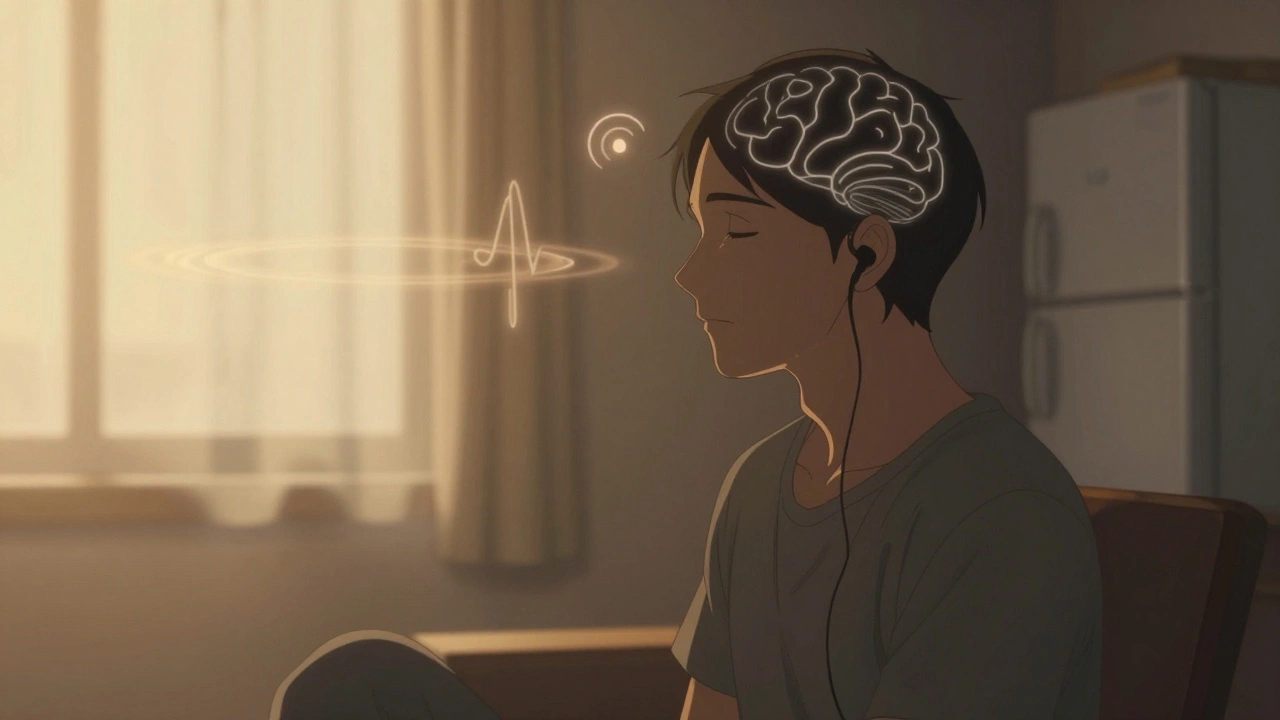
Most people with tinnitus are told to just live with it. But what if the noise in your head isn’t something you need to silence - it’s something your brain can learn to ignore? That’s the core idea behind tinnitus retraining therapy, or TRT. It doesn’t promise to make the ringing disappear. Instead, it helps your brain stop reacting to it like a threat. And for many, that’s enough to turn tinnitus from a daily nightmare into a quiet background hum - something you notice only occasionally, if at all.
Why Tinnitus Feels So Loud (Even When It Isn’t)
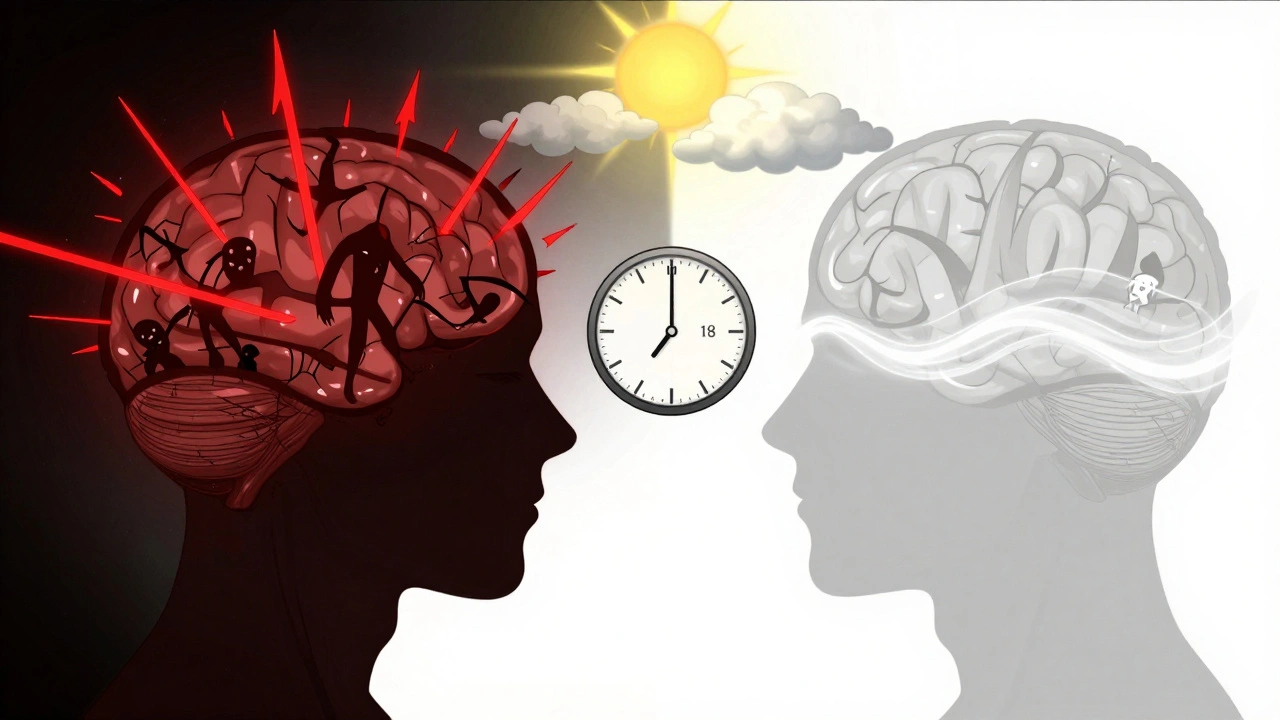
Tinnitus isn’t a disease. It’s a symptom. Your ears might be fine, but your brain is misinterpreting random neural signals as sound. That’s why you hear ringing, buzzing, or hissing even in quiet rooms. The problem isn’t the noise itself - it’s how your brain reacts to it. When tinnitus first shows up, your brain treats it like a danger signal. Your amygdala (the fear center) and your autonomic nervous system (which controls stress responses) kick in. Suddenly, you’re anxious, sleepless, irritable. And the more you focus on it, the louder it seems. This creates a loop: tinnitus → stress → more attention → louder perception → more stress. TRT breaks that loop - not by fighting the sound, but by rewiring your brain’s response to it.The Two Pillars of TRT: Counseling and Sound Therapy
TRT isn’t one thing. It’s two tightly connected parts: specialized counseling and low-level sound therapy. Neither works well without the other. The counseling part is where the real change happens. You meet with a trained audiologist for 60 to 90 minutes, usually once a month for the first few months. These aren’t generic advice sessions. They’re deep, science-based lessons in how your hearing system works. You’ll learn about the cochlea, the auditory nerve, how the brain filters signals, and why tinnitus forms. The goal? To reclassify tinnitus from a threat to a harmless, neutral signal - like the sound of a refrigerator running. You’ll hear things like: “Your brain didn’t make this up. It’s real. But it’s not dangerous.” This isn’t just comforting. It’s neurologically powerful. Studies show this reclassification reduces activity in the limbic system, which is responsible for emotional reactions. Over time, your brain stops tagging tinnitus as something to worry about. Then there’s the sound therapy. This is where most people get confused. You don’t turn up music or white noise to drown out the ringing. That makes it worse. Instead, you use very quiet, continuous broadband sound - like gentle static or ocean waves - delivered through small devices worn in the ears, or through hearing aids if you have hearing loss. The volume is set just below your tinnitus level. Why? To reduce the contrast between the tinnitus signal and the background noise. Your brain starts to treat both as normal, unimportant sounds. You need to use this sound for 6 to 8 hours a day, every waking hour. That’s the hard part. But it’s not optional. Without consistent exposure, the brain keeps focusing on the silence around the tinnitus - and that silence makes the noise stand out even more.Who Benefits Most From TRT?
TRT doesn’t work the same for everyone. It’s tailored to your specific case. Experts classify patients into four groups:- Group 1: Normal hearing, tinnitus only - uses sound generators only.
- Group 2: Hearing loss, no awareness of tinnitus in quiet - uses hearing aids only.
- Group 3: Hearing loss with tinnitus - uses both hearing aids and sound generators.
- Group 4: Tinnitus plus sensitivity to loud sounds (hyperacusis) - needs modified sound therapy.
How Long Does It Take to Work?
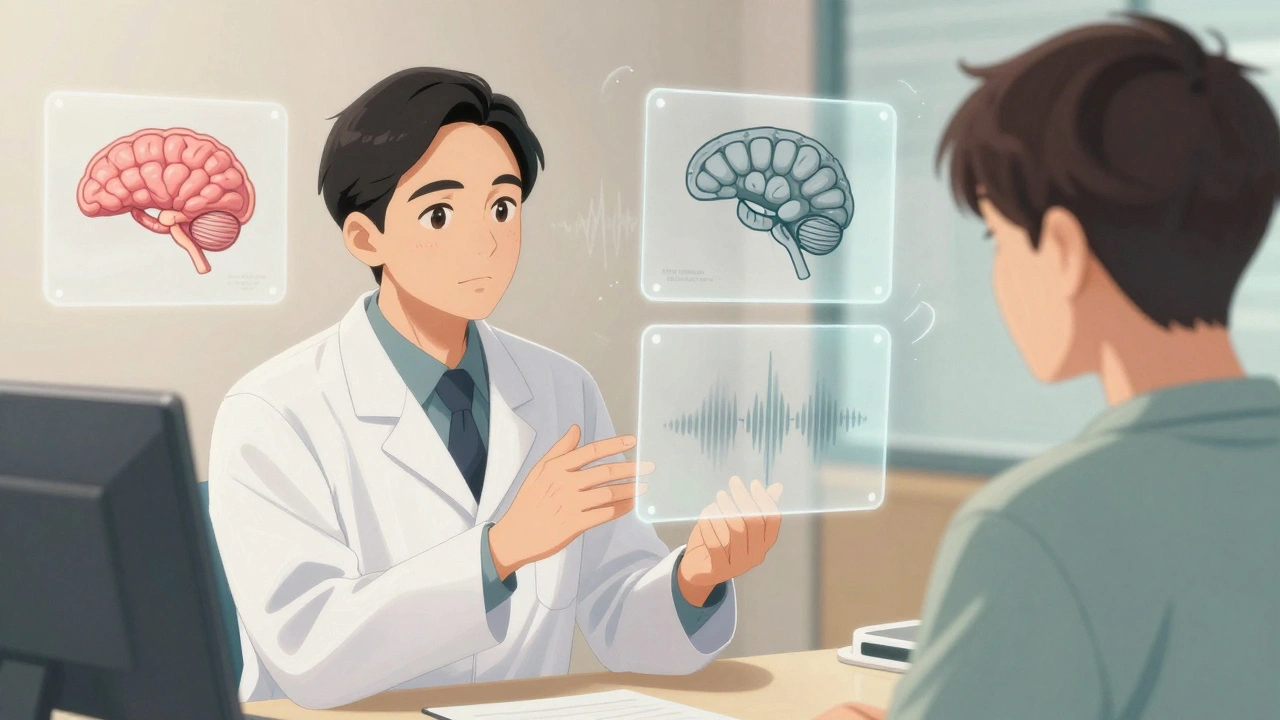
TRT isn’t quick. It’s not a pill you take for a week. It’s a long-term brain training program. Most people start noticing changes after 3 to 6 months. But full habituation - where tinnitus no longer bothers you - usually takes 12 to 24 months. A 2002 study in the Journal of the American Academy of Audiology found that 80% of patients who stuck with the full protocol saw a major drop in distress, measured by the Tinnitus Handicap Inventory. By the end of treatment, successful patients reported being aware of their tinnitus only 5% to 15% of the time - down from 80% to 100% before treatment. The most telling sign of success? You wake up in the morning and don’t immediately think about the noise. You’re not checking if it’s louder. You’re not avoiding quiet rooms. You’re just… living.Why So Many People Quit (And How to Avoid It)
The biggest problem with TRT? Dropout rates. Around 30% to 40% of people stop before finishing the 12-month program. Why?- It’s tedious. Wearing sound generators all day feels strange at first.
- Progress is slow. You don’t wake up one day and the ringing is gone.
- Counseling feels too abstract. Some patients expect a cure, not a lesson in neuroscience.
- Cost. In the U.S., the full program runs $2,500 to $4,000, plus $500 to $1,200 for devices.
TRT vs. Other Treatments
You’ve probably heard of Cognitive Behavioral Therapy (CBT) for tinnitus. It’s the other treatment with strong clinical backing. So how does TRT compare? CBT focuses on changing your thoughts and behaviors around tinnitus. It helps you challenge negative beliefs (“This will ruin my life”) and develop coping strategies. It’s great for anxiety and depression linked to tinnitus. TRT goes deeper. It targets the actual neural pathways in your brain that link sound to fear. It doesn’t just help you think differently - it helps your brain stop reacting automatically. CBT teaches you to manage your reaction. TRT rewires your brain so you don’t need to manage it anymore. A 2019 review in JAMA Otolaryngology found TRT led to significantly greater improvements in tinnitus distress than standard care. But CBT is more widely available and often covered by insurance. The bottom line? If you’re emotionally overwhelmed and anxious, CBT might be the best first step. If you’ve tried CBT and still can’t stop noticing the noise, TRT is the next level.What’s New in TRT?
The field is evolving. In 2021, the Jastreboff Foundation launched a telehealth certification program, making TRT more accessible. You can now do counseling sessions remotely - a big help for people in rural areas. There’s also exciting research combining TRT with neuromodulation. A 2023 clinical trial (NCT04567891) is testing TRT with transcranial magnetic stimulation (TMS). Early results show 92% of participants improved at 6 months - better than TRT alone. That could cut treatment time in half. And while only about 500 U.S. audiologists are certified in TRT, 65% of major hearing centers now include TRT principles in their standard care - even if they don’t offer the full protocol. That means you might get some of the benefits even if you can’t access full TRT.Is TRT Right for You?
Ask yourself these questions:- Do you feel overwhelmed by your tinnitus - even when it’s not loud?
- Do you avoid quiet places because you fear the noise?
- Have you tried masking it with music or white noise - and found it only made you more aware?
- Are you willing to commit to daily sound use and monthly counseling for at least a year?
Can tinnitus retraining therapy make tinnitus go away completely?
TRT doesn’t eliminate tinnitus. Instead, it helps your brain stop reacting to it emotionally and physiologically. Most people who succeed with TRT still hear the noise, but they’re only aware of it 5% to 15% of the time - compared to 80% to 100% before treatment. The goal isn’t silence - it’s peace.
How long does TRT take to work?
Most people start noticing reduced distress after 3 to 6 months, but full habituation typically takes 12 to 24 months. Consistency is key. Skipping sound therapy or missing counseling sessions delays results.
Do I need hearing aids for TRT?
Only if you have hearing loss. TRT is customized based on your hearing status. If you have hearing loss, hearing aids are part of the protocol - they provide natural sound amplification and help reduce the contrast between tinnitus and background noise. If your hearing is normal, you’ll use sound generators instead.
Is TRT covered by insurance?
Most insurance plans in the U.S. don’t cover TRT as a whole. Some may cover hearing aids or counseling sessions if billed under diagnostic codes, but sound generators and certification fees usually aren’t included. Costs typically range from $2,500 to $4,000 for the full program.
Can I do TRT on my own with apps or online videos?
No. TRT requires personalized counseling based on the neurophysiological model, and sound therapy must be precisely calibrated to your tinnitus and hearing profile. Online resources can help you understand tinnitus, but they can’t replace the structured, expert-led process. Studies show success rates drop from 85% with certified providers to 55% with DIY or modified approaches.
What’s the difference between TRT and CBT for tinnitus?
CBT helps you change your thoughts and behaviors about tinnitus - like reducing anxiety or avoiding triggers. TRT rewires your brain’s automatic response to the sound itself by combining counseling with low-level sound therapy. CBT teaches coping. TRT trains your brain to no longer notice the noise as a threat.
Are sound generators uncomfortable to wear all day?
Initially, yes - they feel strange. But most users adapt within a few weeks. The sound is very quiet, often described as a soft static or gentle wind. It’s not meant to be heard - just to provide consistent, non-intrusive background noise. Many people forget they’re wearing them after a few days.
How do I find a certified TRT provider?
The Jastreboff Foundation maintains a registry of certified practitioners. Look for audiologists who mention TRT certification and have completed the 40-hour training program with supervised clinical experience. Ask if they follow the original Jastreboff protocol - not a modified version.

David Brooks
December 7, 2025 AT 00:44This is the first thing that actually made sense to me about tinnitus. I thought I was going crazy for years, thinking I needed to silence it. But learning it’s not a threat? That changed everything. I’ve been doing TRT for 14 months now, and I wake up most mornings and forget I have it until I consciously listen for it. It’s not gone-but it doesn’t own me anymore. 🙌
Kurt Russell
December 7, 2025 AT 06:54YESSSS. I was skeptical too-thought it was just another scammy wellness trend. But after 6 months of wearing those little sound generators like awkward earbuds 24/7, I finally stopped flinching every time my phone buzzed. My wife says I haven’t said ‘It’s so loud!’ in months. I don’t even notice it unless I’m in a silent room. TRT isn’t magic. It’s neuroscience. And it works if you don’t quit halfway.
Kyle Flores
December 8, 2025 AT 12:23Just wanted to say thank you for writing this. I’ve been on this journey for 18 months and honestly, I almost gave up after the first 6. The sound therapy felt pointless, the counseling felt like a lecture, and I was broke. But I kept going because my audiologist didn’t give up on me. Now I can sleep through the night without checking if the ringing’s louder. It’s not perfect, but it’s livable. You’re not alone. Keep going.
Louis Llaine
December 8, 2025 AT 15:33So let me get this straight. You pay $4k to learn that your brain is being dramatic about a noise? And you wear tiny static generators all day like a cyborg? Cool. I’ll just keep using my $5 noise-canceling earbuds and pretending I’m in a silent forest. At least I don’t have to buy a second mortgage to feel better.
Jane Quitain
December 10, 2025 AT 12:50I tried TRT and it changed my life!! I was so stressed and it felt like the noise was screaming at me all day. After 8 months I started noticing it less and less… like, I’d be cooking and realize I hadn’t thought about it in an hour?? That felt like magic. The sound therapy felt weird at first but now I kinda like the static? Like white noise for my brain. You gotta be patient tho. I almost quit but SO GLAD I didn’t.
Sam Mathew Cheriyan
December 12, 2025 AT 09:24TRT? Sounds like the government and Big Pharma are just training us to ignore the real problem-the 5G towers and the chemtrails messing with our neural pathways. I’ve been hearing this noise since 2018, right after they started the ‘quiet mind’ initiative. You think they want you to get better? Nah. They want you to accept it. Stay awake, people.
Ernie Blevins
December 12, 2025 AT 18:10So you pay thousands to hear static? And you’re supposed to believe it’s not a threat? Bro. Your brain is broken. Just get a hearing aid or shut up. This is just therapy for people who don’t want to accept reality. I’ve had tinnitus for 10 years. I don’t care. I live my life. Why are you all so obsessed with this noise?
Ted Rosenwasser
December 14, 2025 AT 03:40TRT is essentially a glorified exposure therapy with a $4,000 price tag and a 12-month commitment. The Jastreboff protocol is elegant, yes-but the 85% success rate only applies to patients who are neurologically intact, have no comorbid PTSD, and aren’t financially strained. Most studies are underpowered. Also, the fact that only 500 U.S. audiologists are certified speaks volumes. This isn’t medicine-it’s a boutique wellness niche with a peer-reviewed veneer. 🧠🔊
Jennifer Anderson
December 15, 2025 AT 12:31Just wanted to add-don’t let the cost scare you. My audiologist let me pay in installments and I found a nonprofit that helped with the devices. It’s not easy. But if you’re still reading this, you’re already trying. That’s more than most. I cried the first time I slept through the night without waking up to the ringing. It’s not gone. But it’s quiet now. And that’s enough.